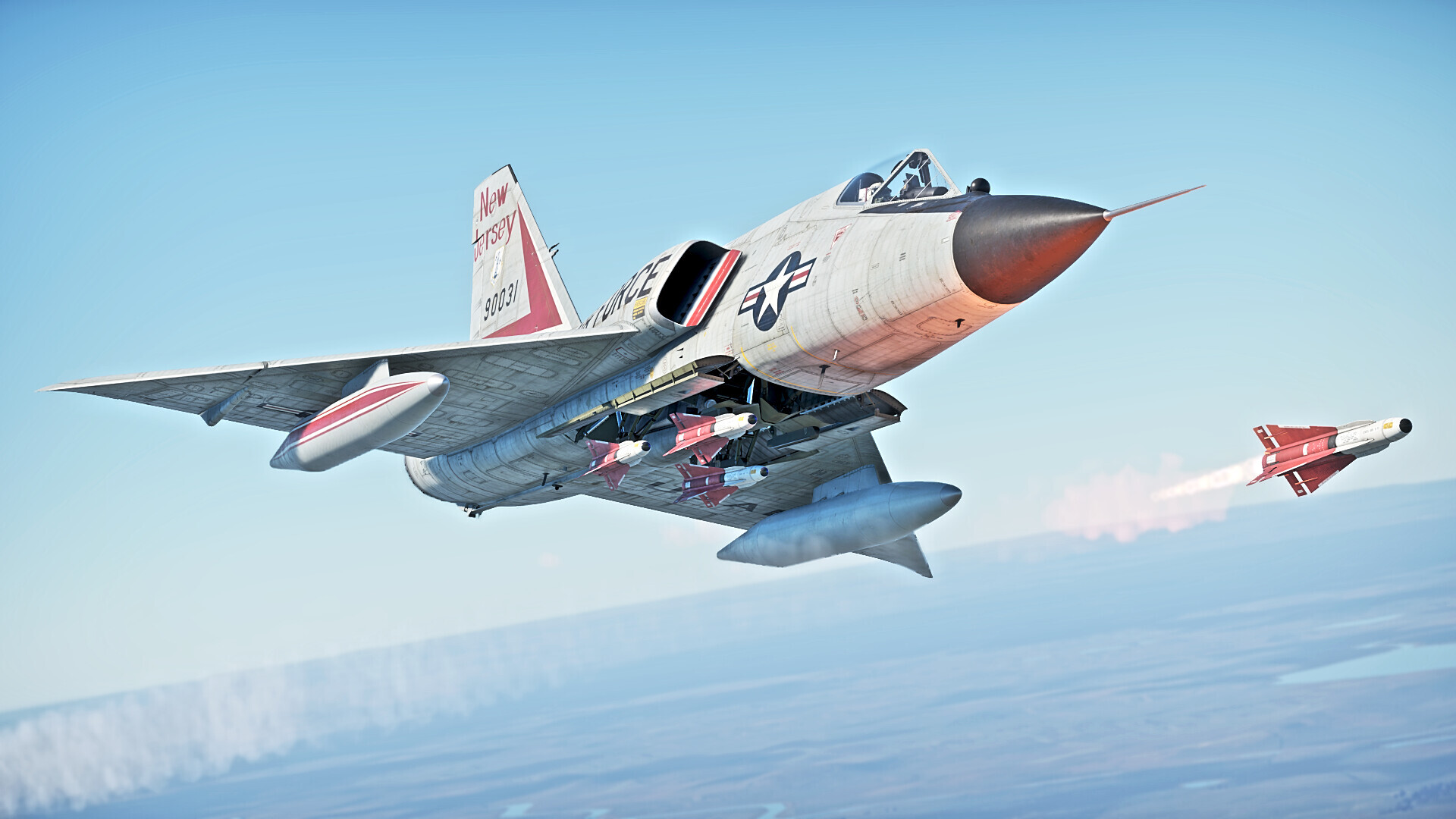
The development of jet aviation brought the world such famous deltas as the MiG-21 and the Mirage. However, their American counterparts did not enjoy similar success. The Air Force was left with only a failure of F-102 and an attempt to improve it, the F-106. This attempt was successful, and after the aircraft entered service in 1959, pilots deeply loved it for its excellent performance. In the game, the Delta Dart lives up to that love. It's a fast aircraft with powerful air-to-air weapons and an unusual missile layout in the bomb bay. So, what's the catch?
| Pros | Cons |
|---|---|
| Incredibly high flight speed | Slow missiles without proxy fuze |
| Powerful 20 mm cannon | Quickly loses speed on turns below 750 km/h |
| HMD | Open bomb bay blocks the gun |
| Good energy retention at speeds higher than 850 km/h | Big size |
| Lack of air-to-ground weaponry |
Flight characteristics
The F-106A is equipped with a Pratt & Whitney J75-P-17 engine that produces over 11,000 kgf of thrust with afterburner. This allows the aircraft to accelerate to a maximum speed of Mach 1.2 (approximately 1,450 km/h) at ground level, which is its maximum speed by IAS. At an altitude of 5 km, the aircraft can easily accelerate to Mach 1.6 but is still limited by its IAS. Nevertheless, the aircraft's acceleration is impressive across the entire speed range. The only comparable competitor is the F-104, but it has its own issues.
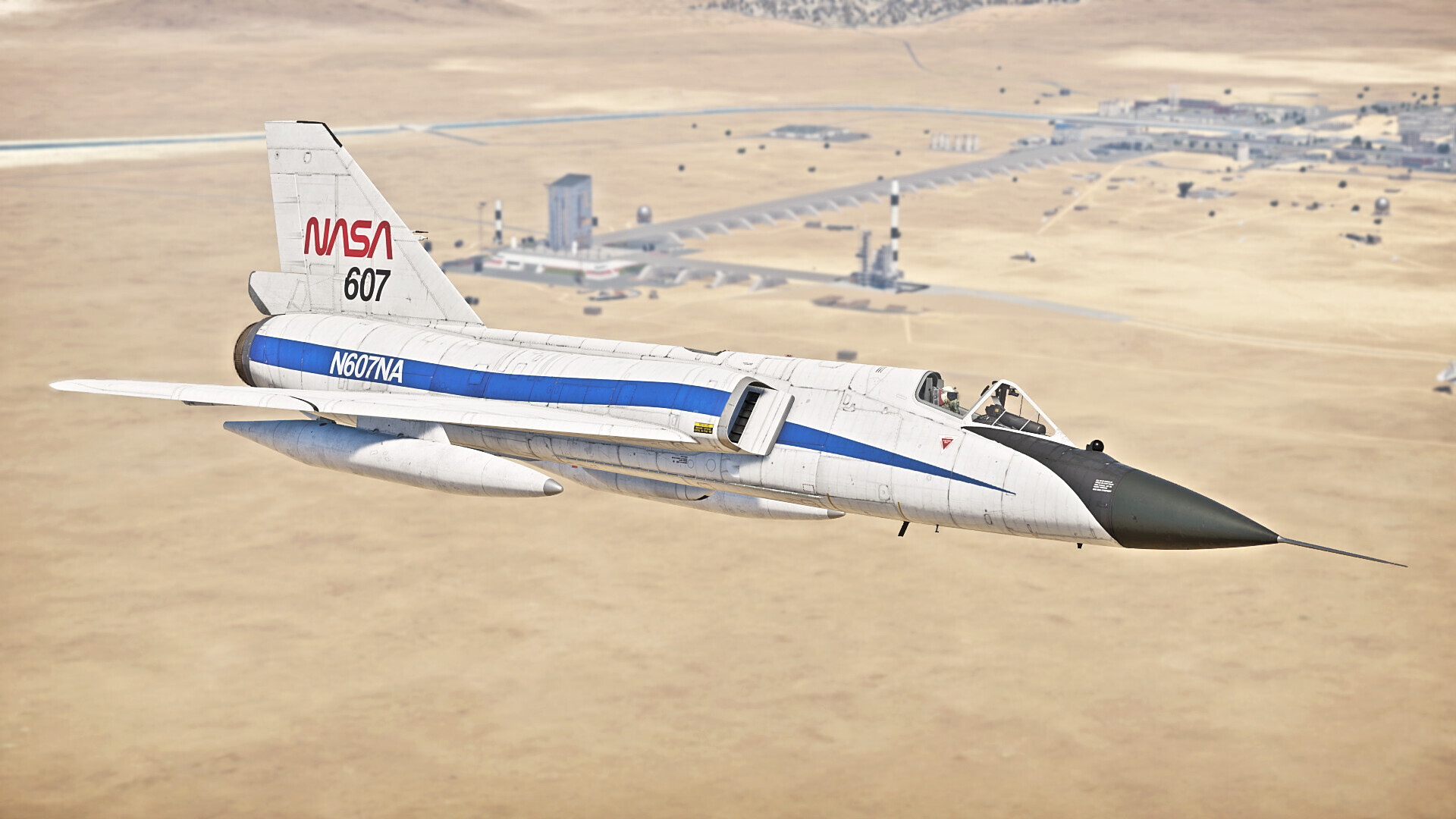
The Delta Dart's maneuverability is questionable due to its delta wing design. Below 750 km/h, the aircraft becomes significantly more maneuverable, but only for a couple turns. If you pull too hard, you can easily lose all your energy and get shot down quickly. Above 800 km/h, the F-106A turns less sharply. However, if you don't pull too hard, it doesent lose much speed. This makes it easy to outmaneuver some opponents. Depending on the speed, it's possible to outmaneuver aircraft such as the Hunter or the Su-7.
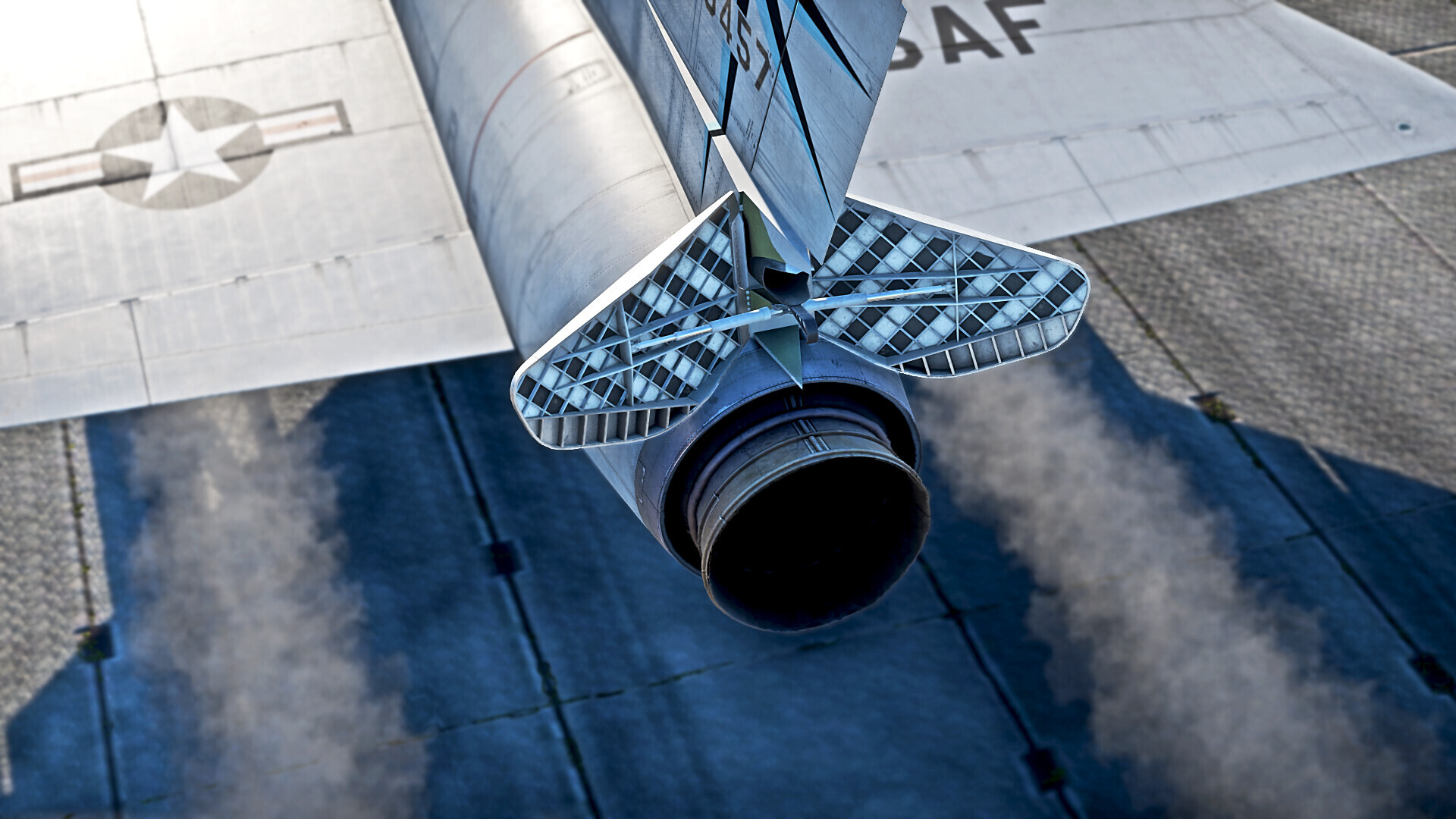
The F-106 has no flaps, but it gets an airbrake. It also has a drogue parachute. Landing gear breaks at speeds of 400-500 km/h or higher.
Armor and survivability
Like many other jet fighters, the F-106A has poor survivability. It has no armor, is enormous, and nearly the entire delta wing is filled with fuel tanks. As a result, hitting any part of the Delta Dart will severely impair its performance or get it shot down.
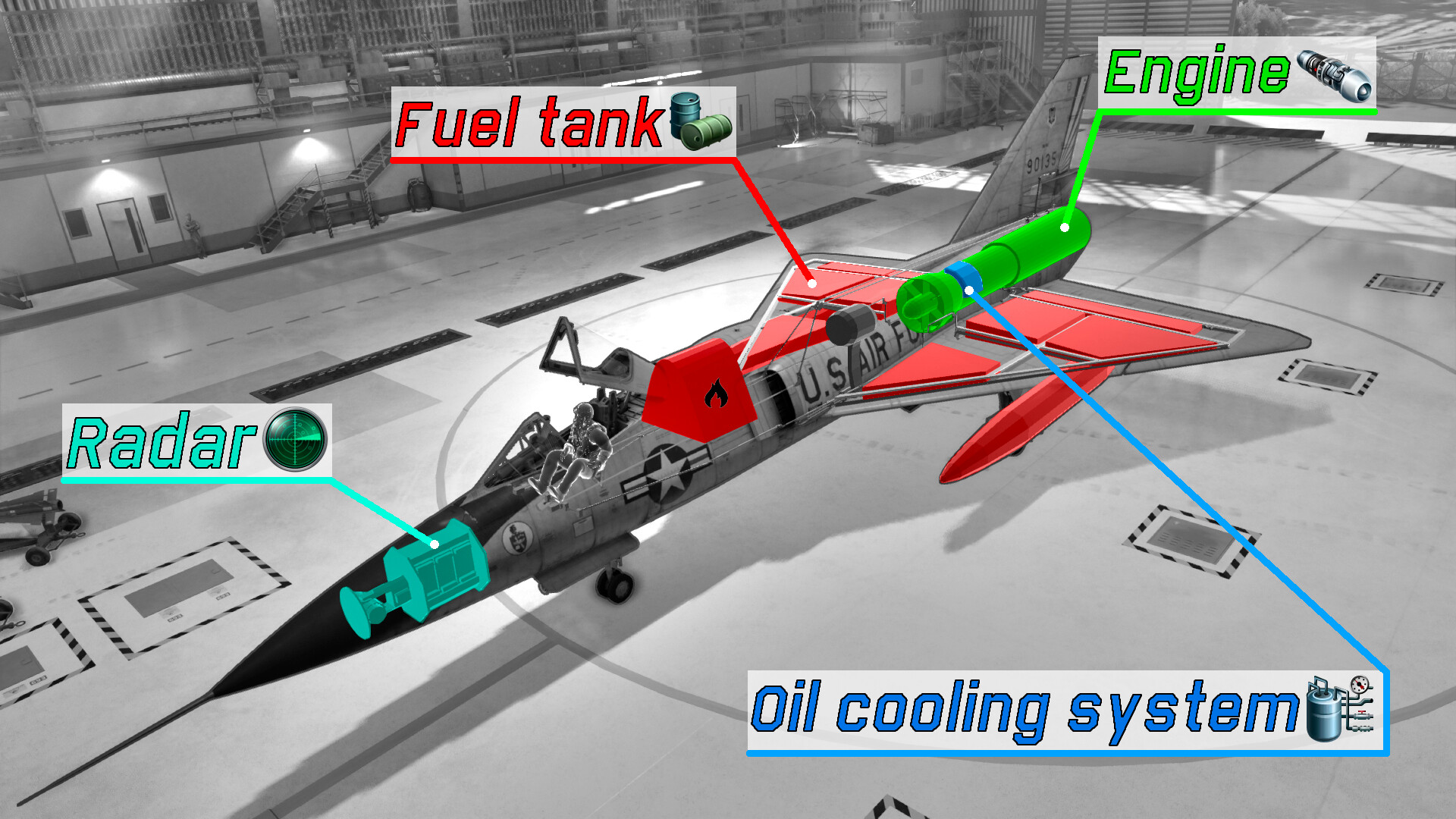
Worse is, it lacks any countermeasures or RWR. Lacking RWR is not that much of an issue, since it does not have to fight against the AAA and early radar missiles are uncommon. But lacking flares means a good launch of a missile like the Shafrir 2 is incredibly hard to dodge, if at all possible.
Armament
Cannon
The Delta Dart is armed with a single 20mm M61 cannon mounted on the bottom of the fighter’s fuselage. It has an ammunition load of 650 rounds. The cannon has excellent ballistics and an extremely high rate of fire, firing 4,000 rounds per minute. These characteristics make its awkward underbelly mounting hardly noticeable in combat. The following ammunition belts are available for the M61:
- Default: HEF-I/API-T/AP-I
- Air targets: HEF-I/HEF-I/API-T/HEF-I/HEF-I/AP-I
- Armored targets: API-T/AP-I/AP-I/AP-I/HEF-I
- Stealth: HEF-I/AP-I/AP-I
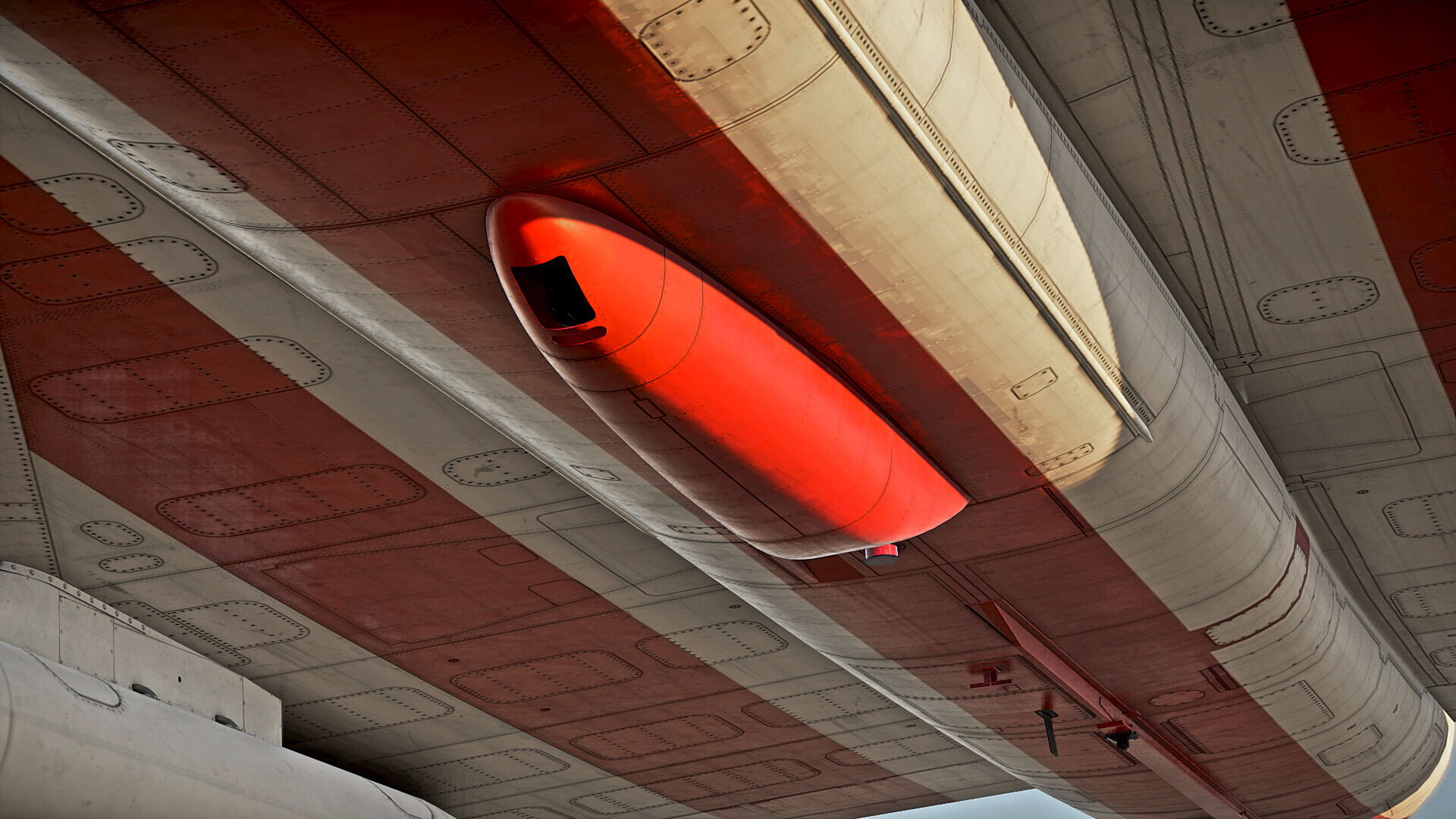
Both "Armored Targets" and "Air Targets" are effective against aircraft. They often knock pilots out and shoot off the enemy's wings. The "Stealth" belt lacks tracer rounds, but this is rarely a disadvantage in combat.
Suspended armaments
The F-106 can only carry 2 fuel tanks and 4 AIM-4 missiles:
- AIM-4G Super Falcon: a rear-aspect IR missile which superficially has good characteristics: maximum G-load of up to 27 G and a theoretical engagement range of 5.5 km. In practice, however, these missiles are extremely slow and quickly lose their modest speed once the motor stops. Additionally, the missile flies in a straight line for part of its flight. It is most effective against slow-moving targets, even those aware of the launch. the AIM-4G also lacks a proxy fuse and requires a direct hit.
- AIM-4F Super Falcon: an all-aspect SARH missile with identical characteristics. Since radar-guided missiles are still uncommon among aircraft and RWR are uncommon, the enemy may fail to detect the launch altogether or use flares that the AIM-4F will ignore. After launch, the missile flies straight for a short time without turning. Like the AIM-4G, it lacks a proxy fuse and requires a direct hit.
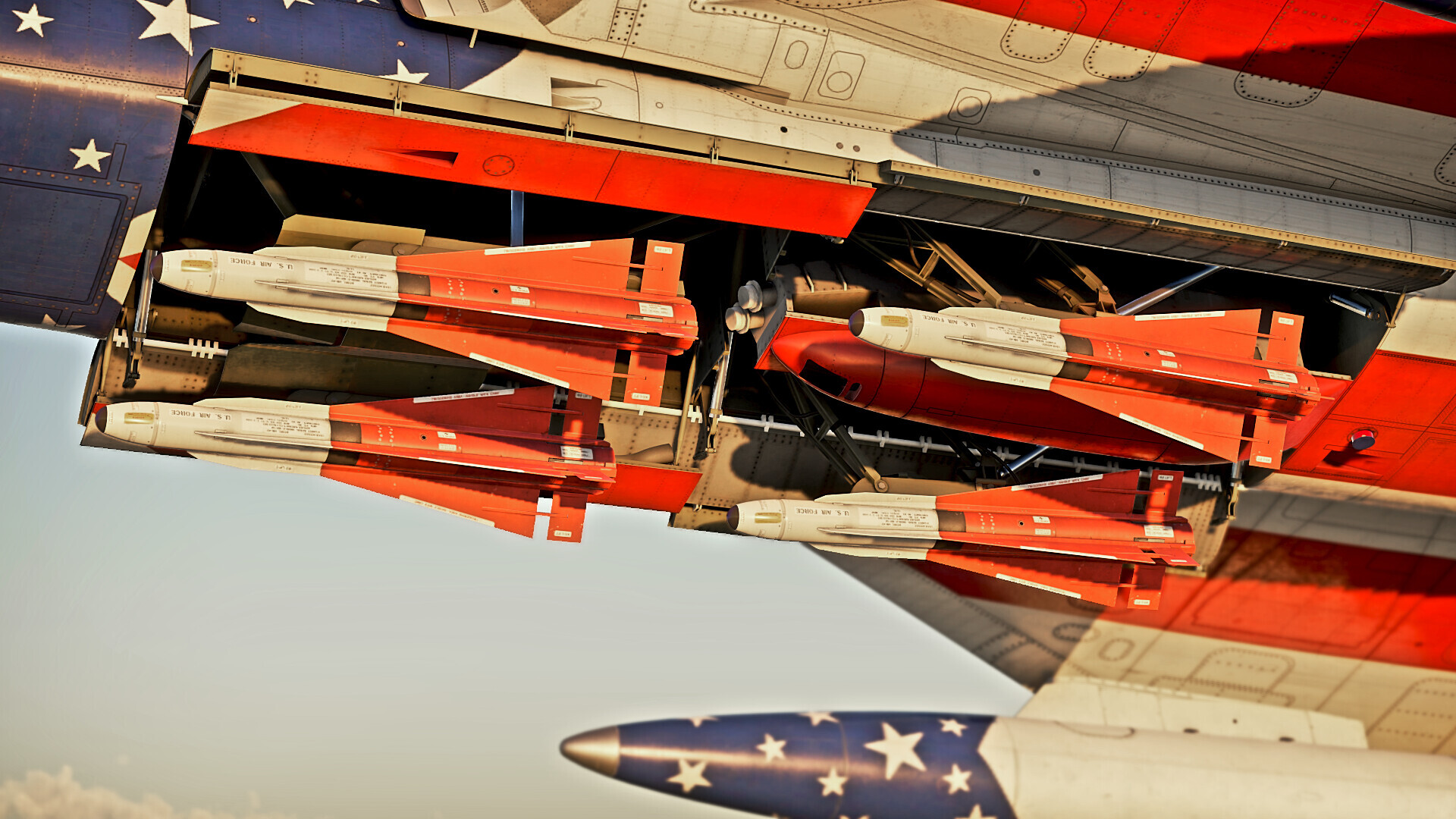
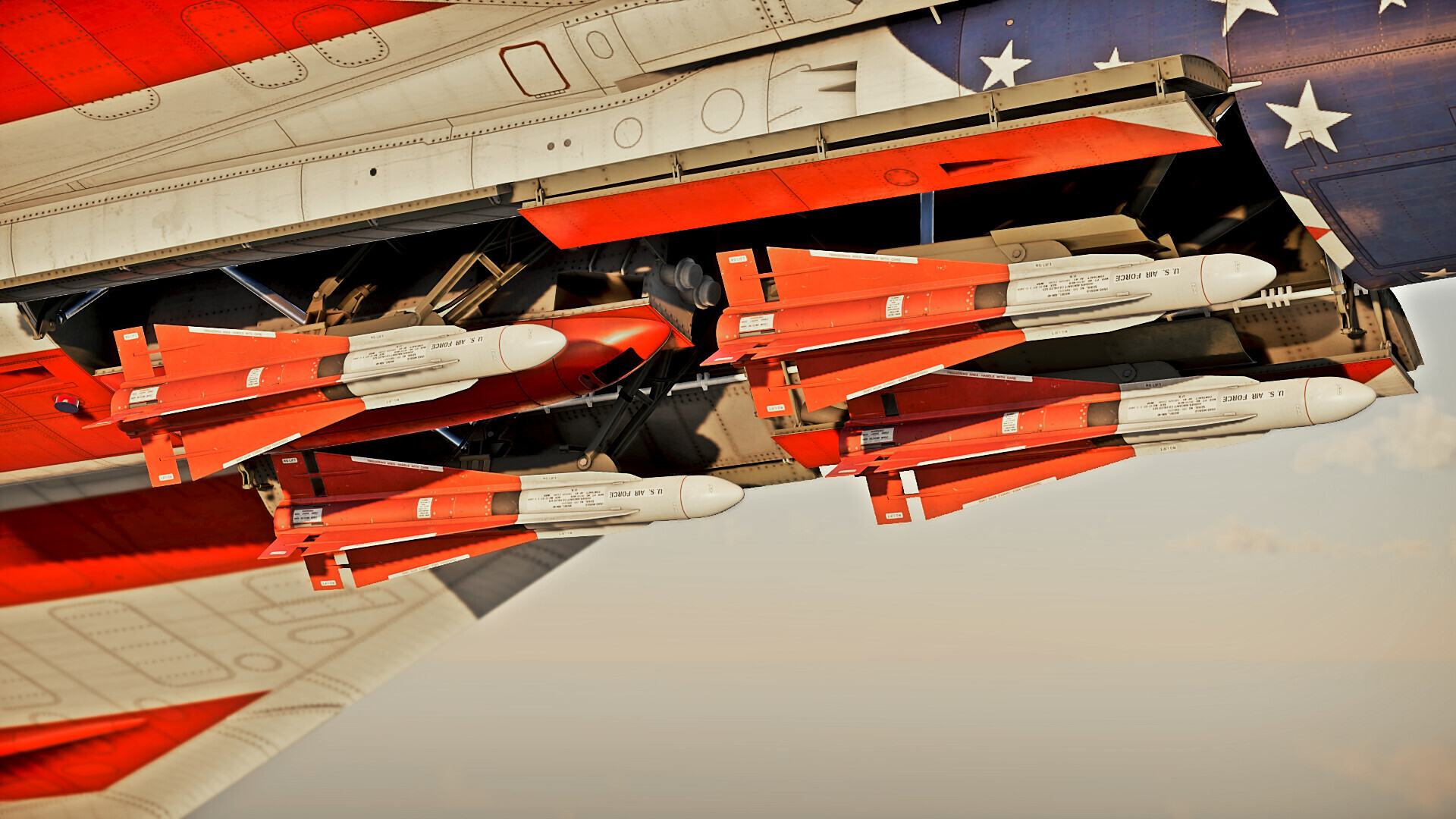
Note: to launch missiles, you must open the bomb bay, which blocks the cannon. For greater convenience, assign a button to "Open bomb bay door". You can then use this button to open the bomb bay in advance of launching a missile or closing it before firing the cannon.
Radar
The Delta Dart also has the relatively early MA-1 radar. While it cannot detect targets close to the ground and lacks IFF, it is sufficient for detecting and locking onto targets and launching the AIM-4F. The IRST is a nice bonus, but it is useless. The radar and missiles can be directed in the desired direction using the HMD.
Combat usage
The F-106A is rather one-dimensional in combat. It performs best in a speed-based combat: flying in a straight line, catching distracted opponents, and frequently switching targets while avoiding dogfights. For a standard engagement, you can take 16 minutes of fuel plus two fuel tanks, or 20 minutes. However, the latter might not be enough, while you also dont have an ability to dump fuel if the combat starts very early. Missile load is completely up to pilot's preference.
An alternative tactic for using the Delta Dart is to target enemies who have become separated from the main group. In such situations, you can take advantage of your speed and maneuverability since energy loss isn’t as critical. Gain altitude right from the start of the fight to do this. You can even launch careful head-on attacks, firing a burst and immediately dodging the enemy. Its just important not to head-on planes like the MiG-21S as they have radar-guided R-3Rs, which are way better for this purpose than the AIM-4Fs.
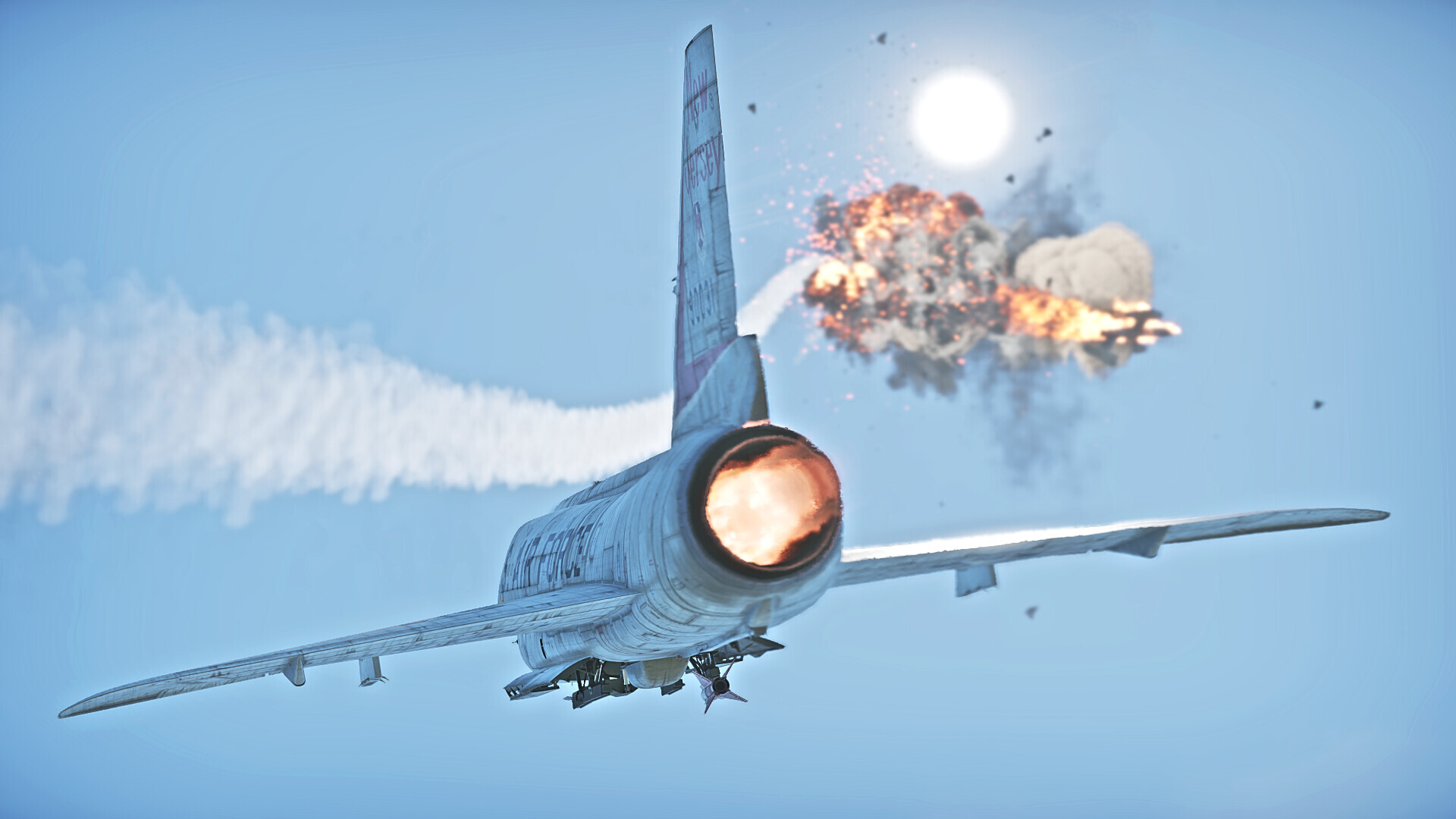
Meanwhile you can take out distracted or near-stalled opponents with your missiles or cannon. In a one-on-one confrontation, there are two possible scenarios. You can either maintain a speed of around 800–950 km/h and wait for your opponent to lose speed or make a sharp run at them at the cost of all your energy. The first option works against most opponents, while the second can be effective against other F-106As or Su-7s.
When launching an AIM-4, pay attention to the launch range and your opponents' flight speed. Against extremely slow enemy aircraft (300–500 km/h), you can launch an AIM-4G from up to a kilometer away, but it will miss if they use flares. The ideal engagement range is narrow—600–750 meters or closer, depending on the relative speeds. If launched too close, the missile won't turn in time; if launched too far away, it will simply run out of speed.
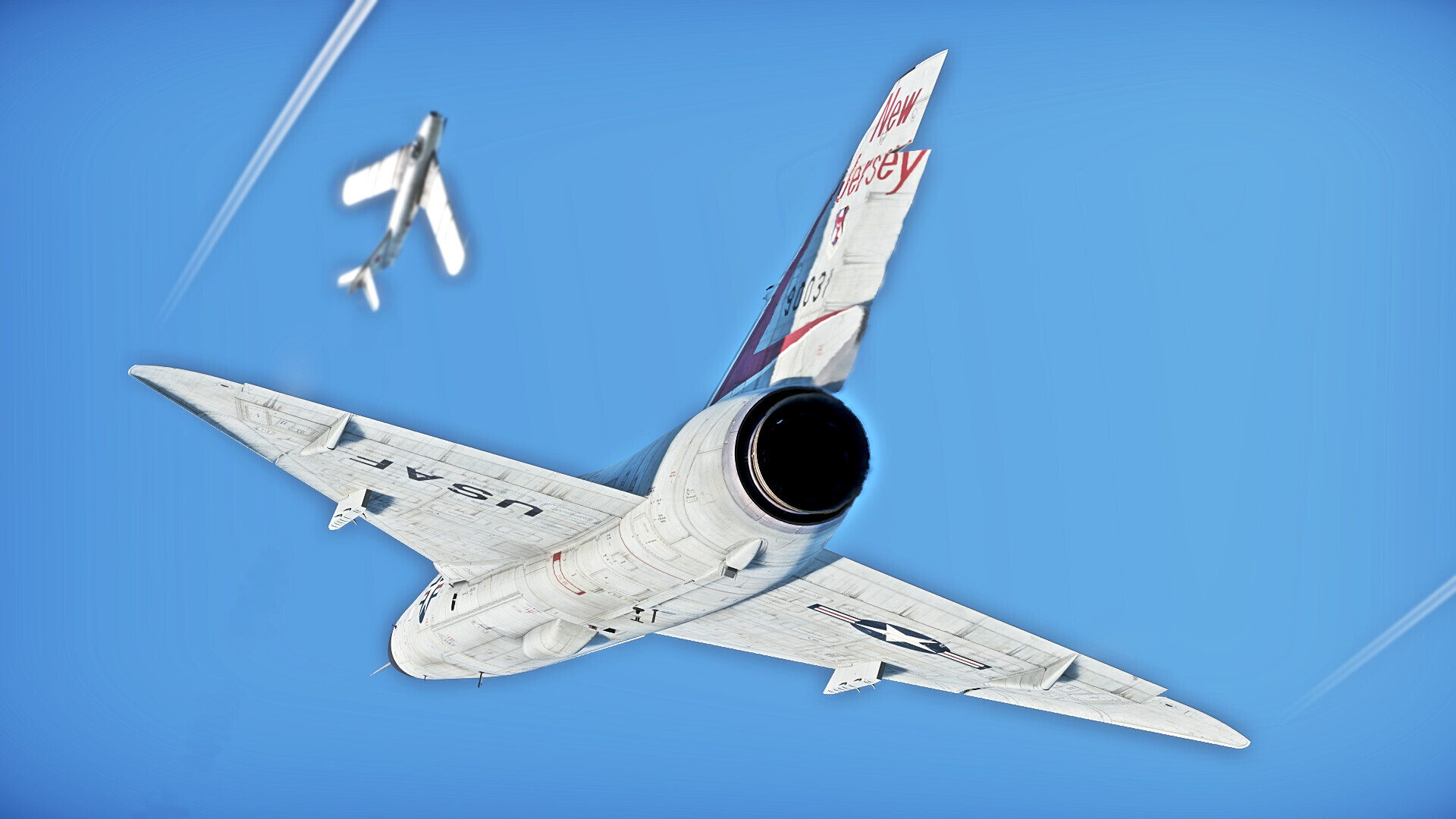
The AIM-4F can be launched head-on, but you need to do so fairly early because the missile flies in a straight line for a long time before turning. Alternatively, you can fire it at aircraft without RWR or at the enemies with flares which expect an IR missile. Often, they either don't see the launch or dont bother turning, relying on countermeasures. Bombers are particularly prime targets for both AIM-4 variants because they simply cannot dodge the missile. Note that an open bomb bay with missiles blocks the cannon.
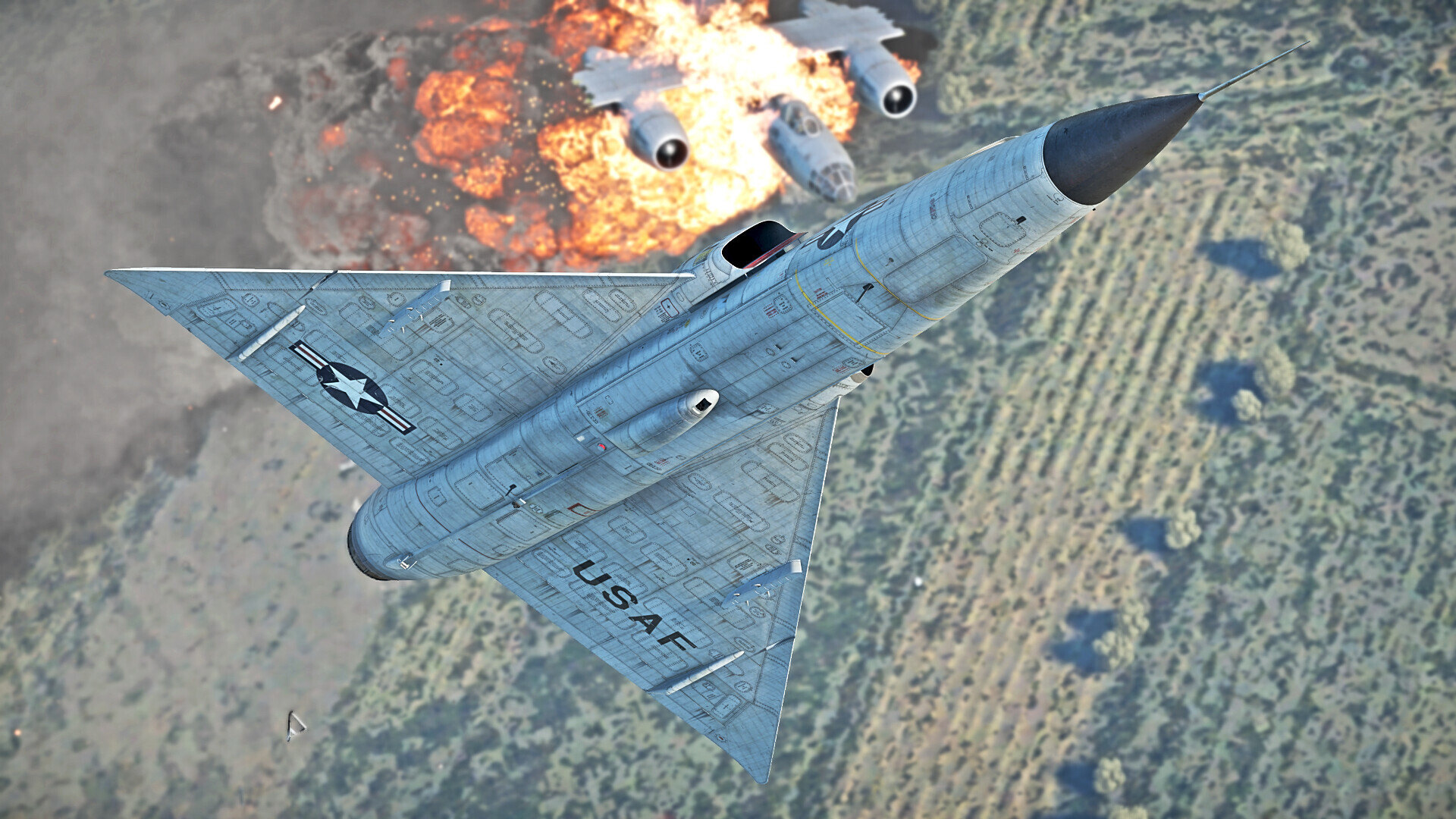
In mixed battles the only thing the F-106A can do is to be a fighter aircraft. It lacks RWR and countermeasures, as well as external ordnance for attacking ground targets. While it can still attack with its cannon, there is a high likelihood of being shot down by the enemy AAA before reaching the target. Therefore, it is better to attack enemy aircraft while avoiding the battlefield itself.