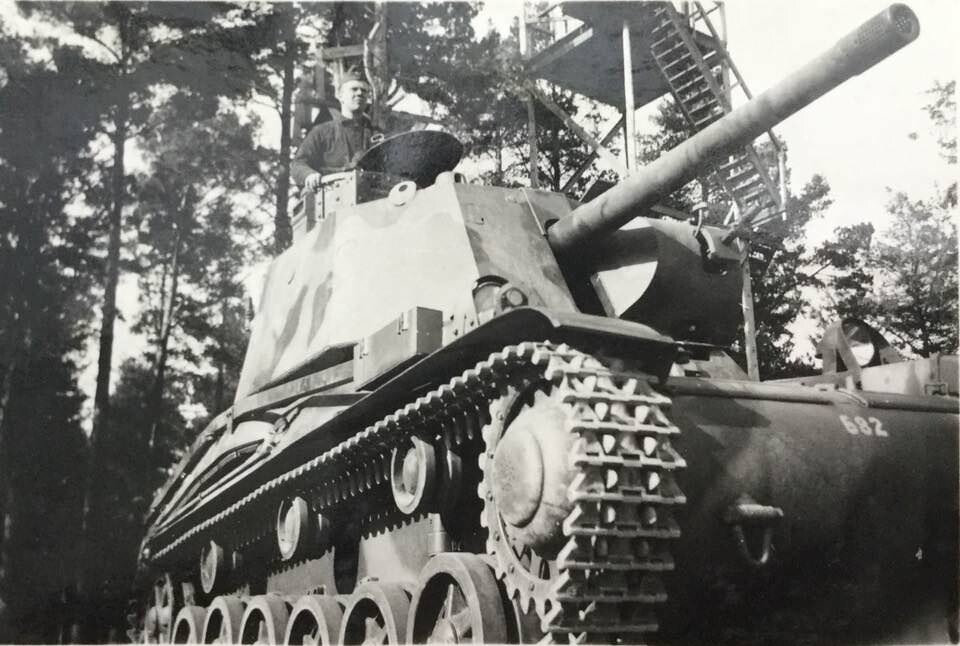
The Lago series refers to Landsverk’s production designation of the Stridsvagn m/42, which served as Sweden’s standard medium tank during the end of World War II, which began as an export product and ended up in the use of the Swedish Army where it would serve for decades to come. This article provides an overview of the vehicle’s history and fate.
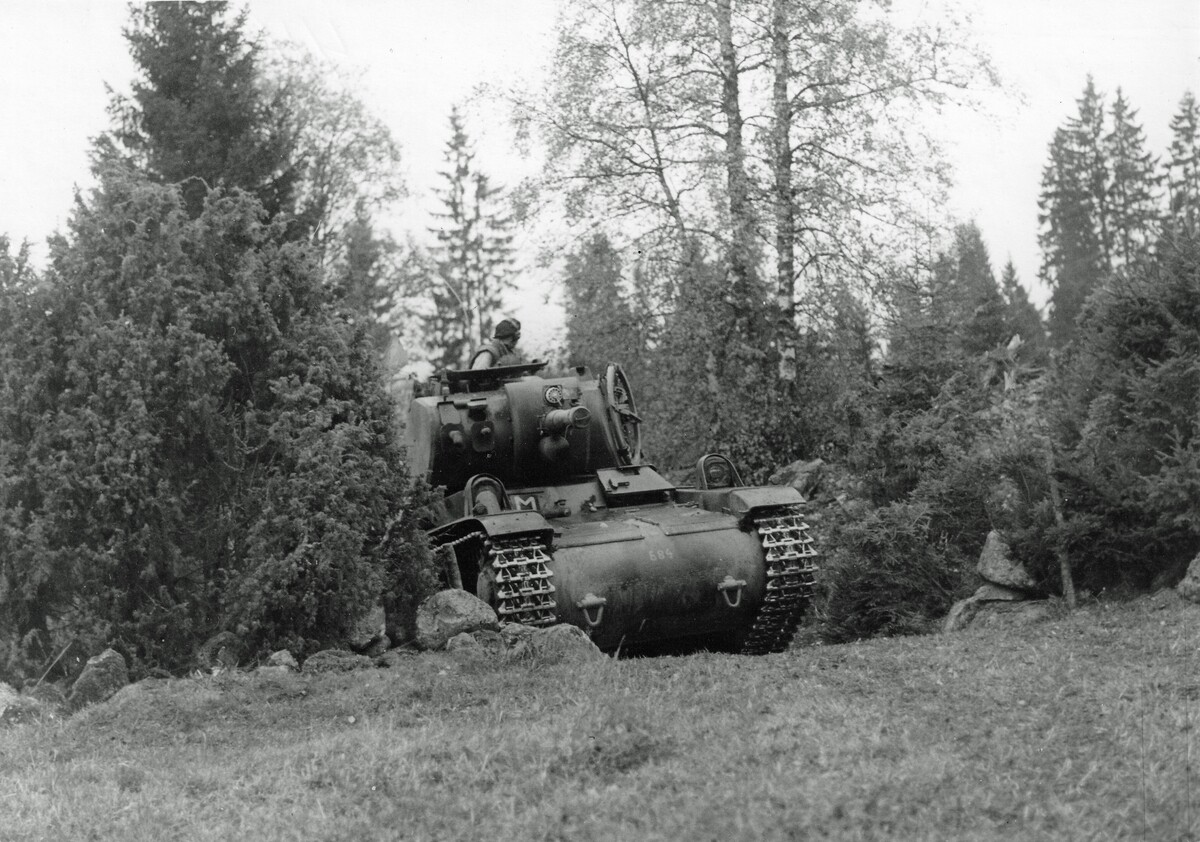
Initial concept and plans
In the mid-1930s, Landsverk received a request from Hungary to develop a new, modern medium tank for its army. Hungary was already a customer and held a license to produce the L-60 light tank domestically. This new design was therefore heavily based on the earlier L-60 series, sharing several features but incorporating thicker armor and a larger-caliber main gun. The Hungarian specifications called for a medium gun between 37 mm and 57 mm, along with the capacity to mount three to four machine guns of various types.
The final prototype design was completed in 1938, after which Hungary ordered a single prototype for testing. By this time, AB Landsverk had transitioned from its older numeric designation system, and the new vehicle was designated Lago. The sole prototype, known as Lago I, weighed approximately 15–16 tons and featured a turret similar to that of the L-60, with mounts for up to four machine guns as required. At Hungary’s request, the vehicle was to be armed with a 40 mm 37.M gun, accompanied by three 8 mm 34/40.M machine guns—two coaxial and one in the rear of the turret—and a 12.7 mm 40.M heavy machine gun mounted in the hull to be completed in 1940.
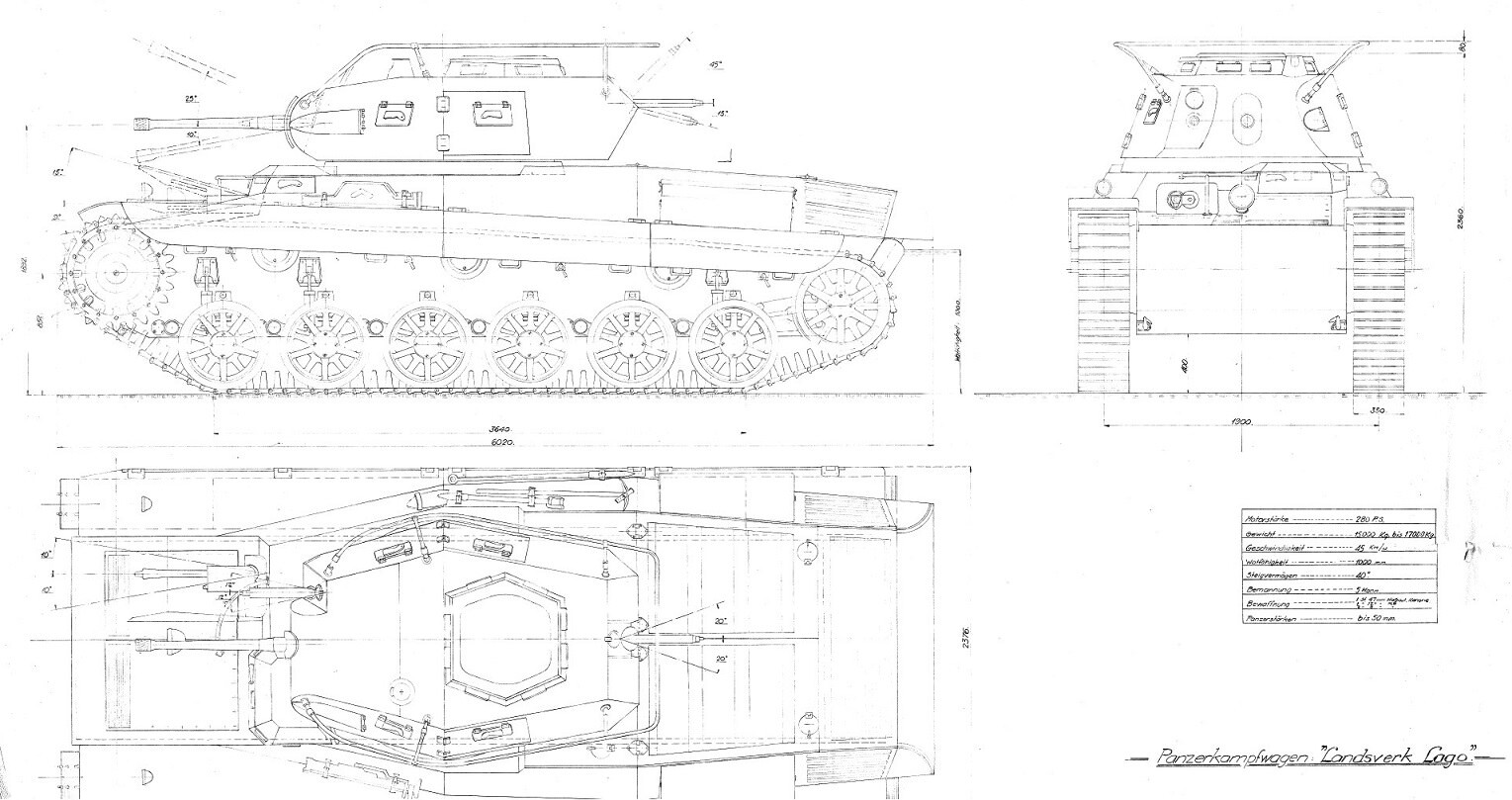
Although the schematic was completed in 1938, the prototype was not finished until early 1941. By that time, the original design had undergone significant changes to meet Hungarian military standards. It was intended to compete for adoption by the Hungarian Army, going up against vehicles such as the Italian M13/39, the Praga V-8-H, and the Škoda T-21.
During trials in Sweden, the prototype was powered by two Scania-Vabis 1664 engines paired with a German electromagnetic gearbox. However, the vehicle only featured a wooden mock-up turret and possibly a dummy gun or a smaller 37 mm Kan m/38 for testing. Before the trials could progress further in 1941, Hungary had already adopted the Škoda T-21. Following Hungary’s entry into World War II, Sweden imposed an export ban, leading to the project’s cancellation.
Sweden’s need for heavier tanks
In mid-1941, Sweden was in dire need of upgrading and strengthen the tank forces with the order of an additional 116 new light tanks. KAF were also given the authorization to acquire an additional 160 new heavier tanks to bolster the Swedish defensive power. These new heavier tanks were allowed to be a total of 22 tons, armed with a caliber minimum of 75 mm and a total armored frontal protection up to 60 mm.
During negotiations there were talks about acquiring these new tanks from Germany or Czechoslovakia but due to the Invasion of the Soviet Union and their own demands to arm their own forces, Sweden had to look internally for an answer. AB Landsverk had the solution and the answer was Lago I. Landsverk made a suggestion of a new tank with the weight of 22 tons, a 75 mm gun which met KAF’s required standards and with limited timeframe they used the Lago I as the basis for the new vehicle.
This new vehicle got the designation from the Military as Stridsvagn m/42, compared to the Lago I which used an older model turret, the new vehicle was proposed to get an improved and larger new turret to house the 75 mm gun, improvements were also made to the chassis by making it wider and longer but due to Road Traffic Regulations the vehicle was not allowed to exceed a certain width of 2.35m and with the length of the Strv m/42 this would affect the vehicle in terms of mobility performance.
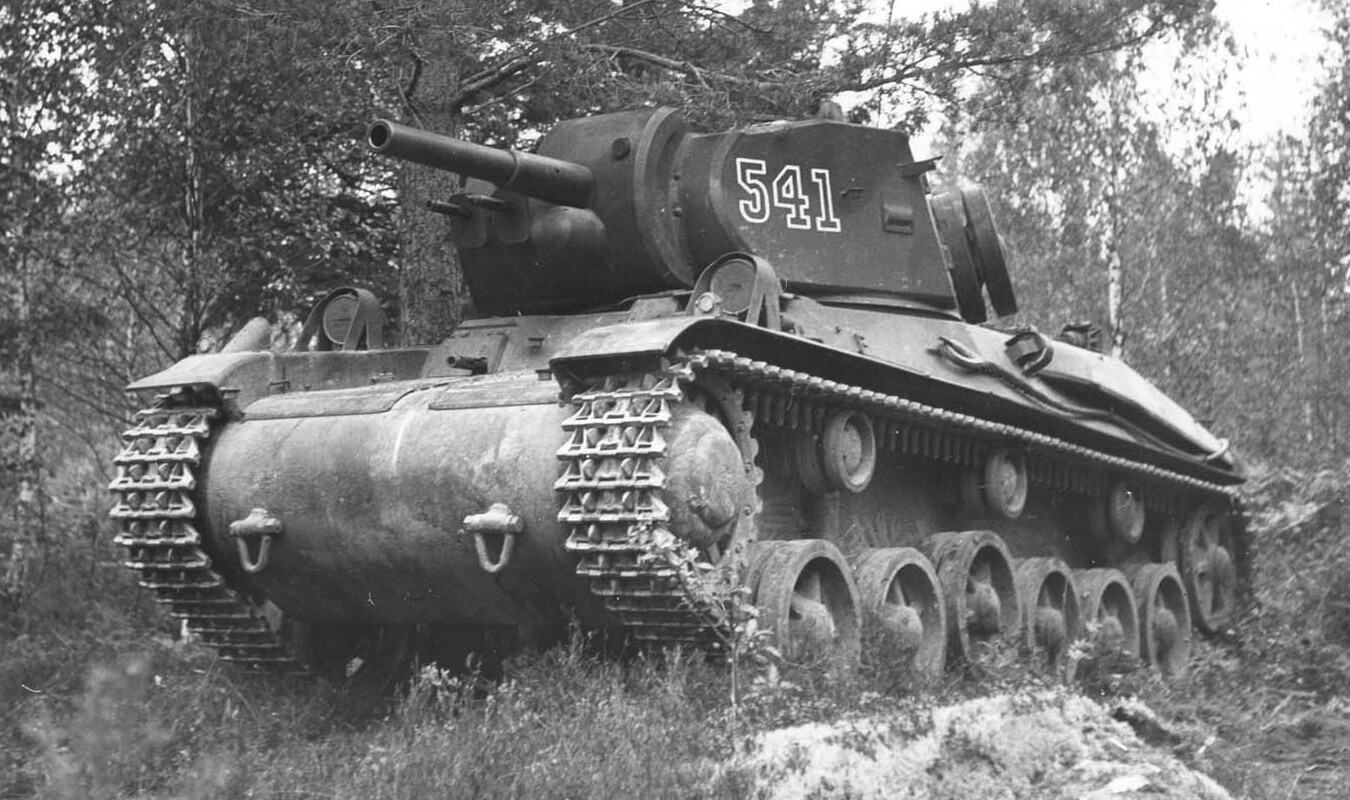
Armament for Strv m/42 was the short 75 mm Kan m/41, which made it easier for the vehicle to manoeuvre in Swedish streets and forests compared to having a longer barrel. With the increased weight, the Lago I was modified for test of a new pair of Scania-Vabis 603 engines and the German ZF Type 6 Ev 75 electromagnetic gearbox that would be fitted in the initial production model.
In November 1942 the thing was set in motion and the Swedish army made an order from Landsverk to build 100 units of the Strv m/42. This first model would go under the production name Lago II but in the army’s service it would become known as Strv m/42 TM.
Volvo’s influence
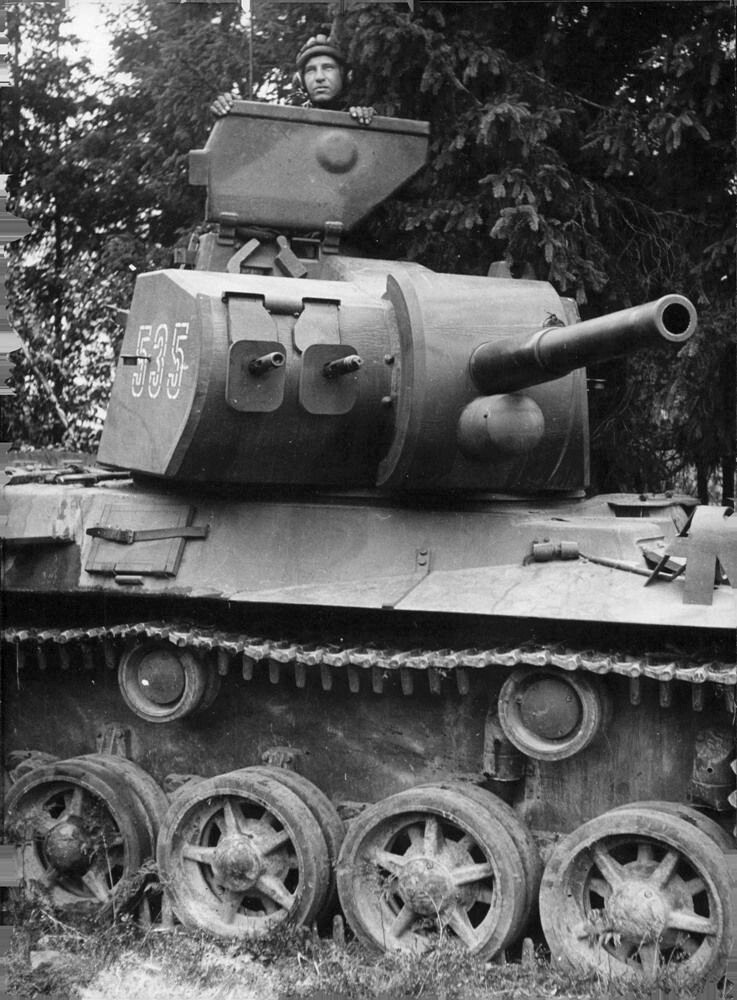
A few months later, in early 1943, the remaining 60 units were assigned to Volvo due to limited production capacity at Landsverk. This also had a positive strategic value ensuring in case one of factories were under attack the other would be able to produce the necessary parts and vehicles, also production wouldn’t be concentrated to a single area.
Volvo also introduced several improvements to the Strv m/42. Unlike the earlier model, which relied on a foreign-made gearbox, Volvo equipped its version with a Lysholm-Smith hydromechanical gearbox, which offered slightly better reliability than the German ZF gearbox. Of the 60 Volvo-produced units, 55 were powered by twin Scania-Vabis 603 engines, while the remaining 5 featured a single Volvo A8B engine, producing 380 hp compared to the 320 hp combined output of the twin-engine setup.
These two new variations would become known as the Strv m/42 TH and EH, with the corresponding production designations Lago III and Lago IV.
Problems and issues with the new tank
The Strv m/42 would face a lot of issues under its service life. The TM model would suffer from the gearbox being undersized and cause a lot of breakdowns. Since the gearbox was of German origin, the limited availability of spare parts and replacement units led to increased maintenance demands.
The EH model had a different issue with the Volvo A8B engine, it had reliability issues caused by clogged injectors and carbon build-up.
All Strv m/42 variants had issues with gearbox fires and difficulty steering during turns. Tank drivers had to develop special driving techniques to avoid wearing down the controls and brakes too quickly, which was a common problem. Another frequent issue was that the tracks could fall off unexpectedly due to weak bolts meant to hold them in place. These were just some of the many problems that affected the Strv m/42 during its service life.
End of Service
A total of 282 Strv m/42 were produced between 1943 to 1945 would comprising 100 TM, 125 TH and 57 EH variants. After 1948, all TM units would be upgraded, 70 were rebuilt into TH standards and 30 became the TV variant.
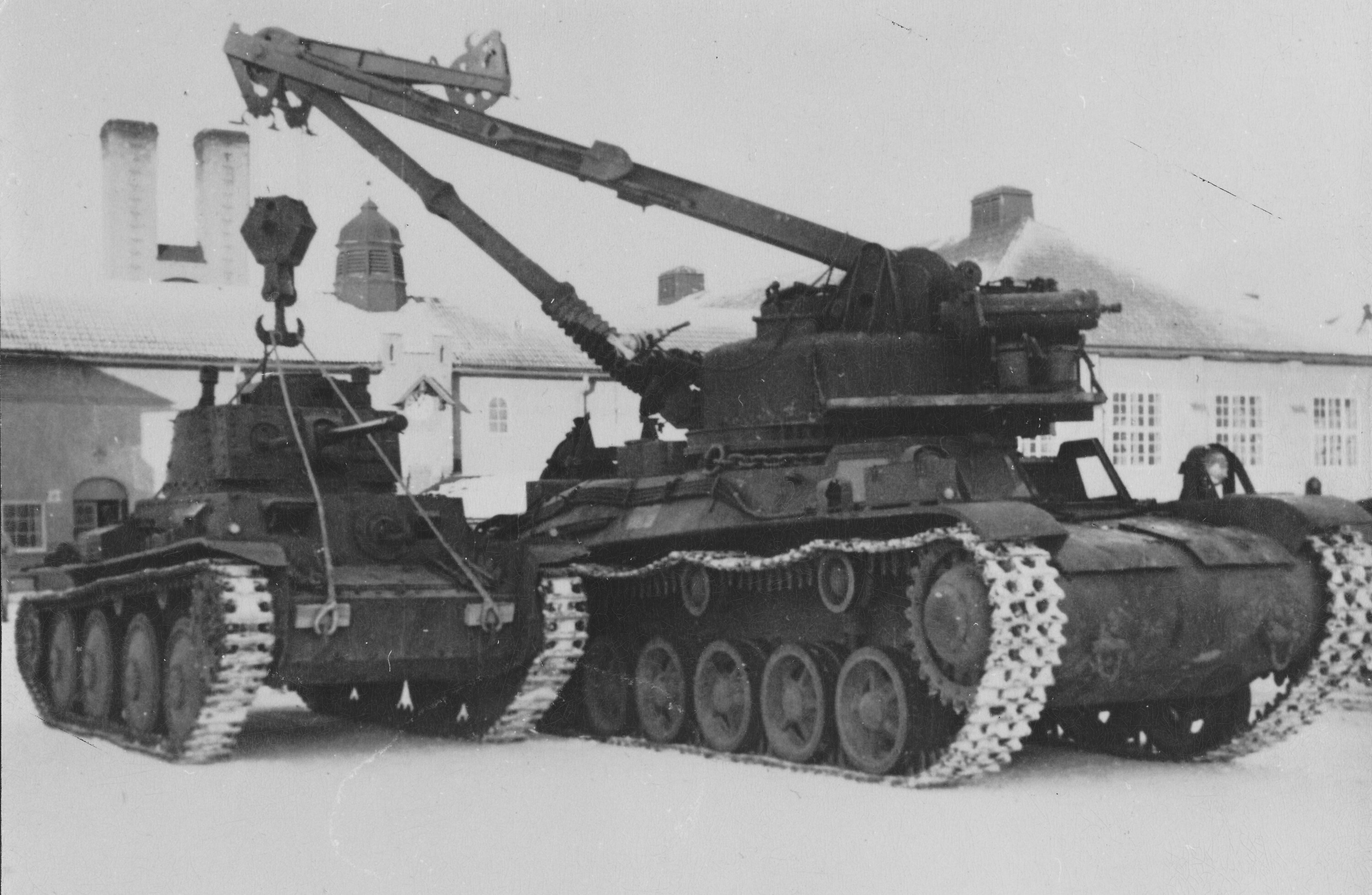
Between 1944-1945 several projects were launched using the Strv m/42 chassis in an effort to enhance the vehicle’s capabilities and firepower. While the design had been modern at the time of its introduction, by 1945 global tank development had advanced rapidly, leaving the Strv m/42 increasingly outdated. Projects such as the Strv m/42 DT, Bärgningsbandvagn m/42, and Brobandvagn m/42 were all canceled.