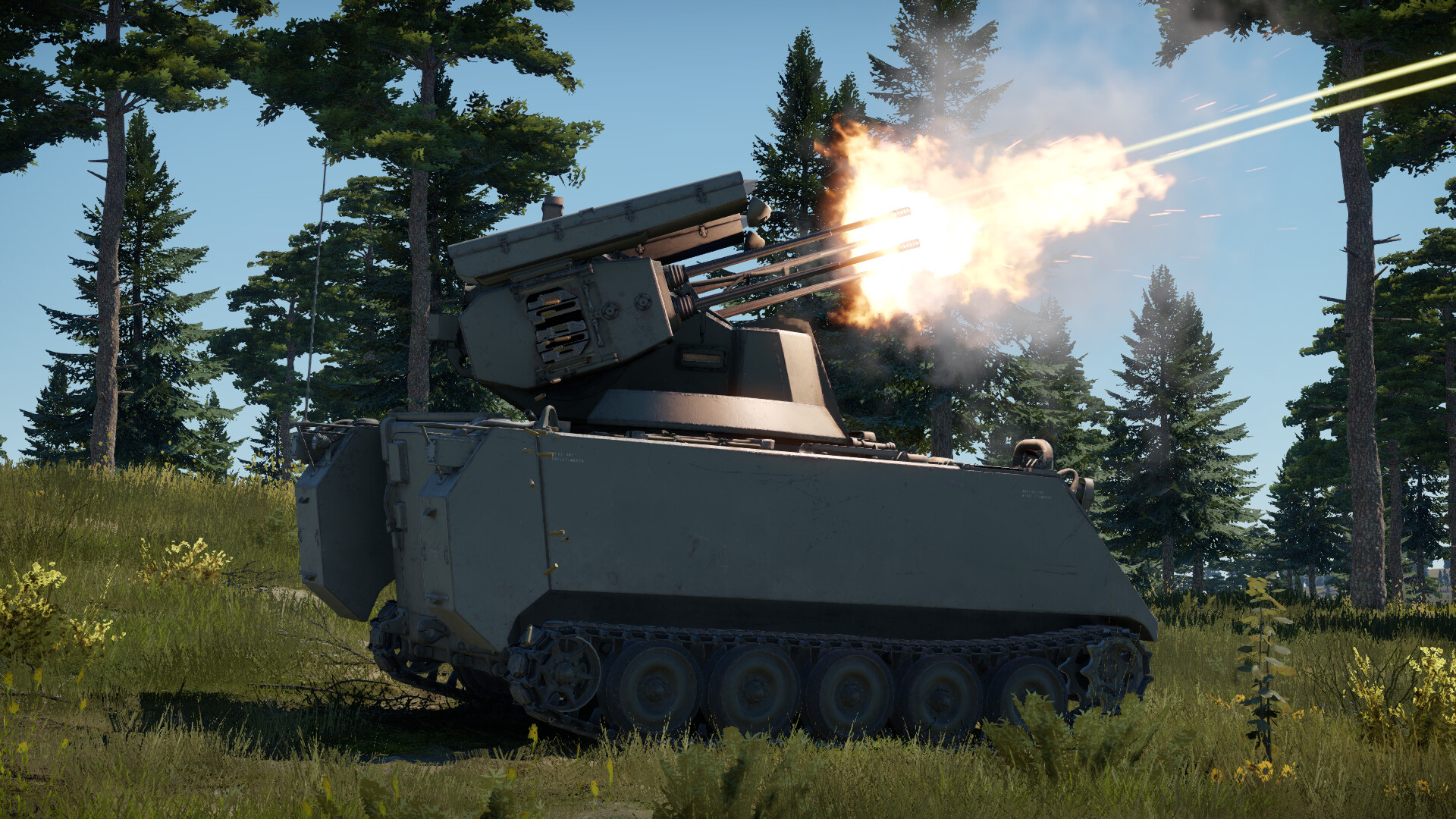
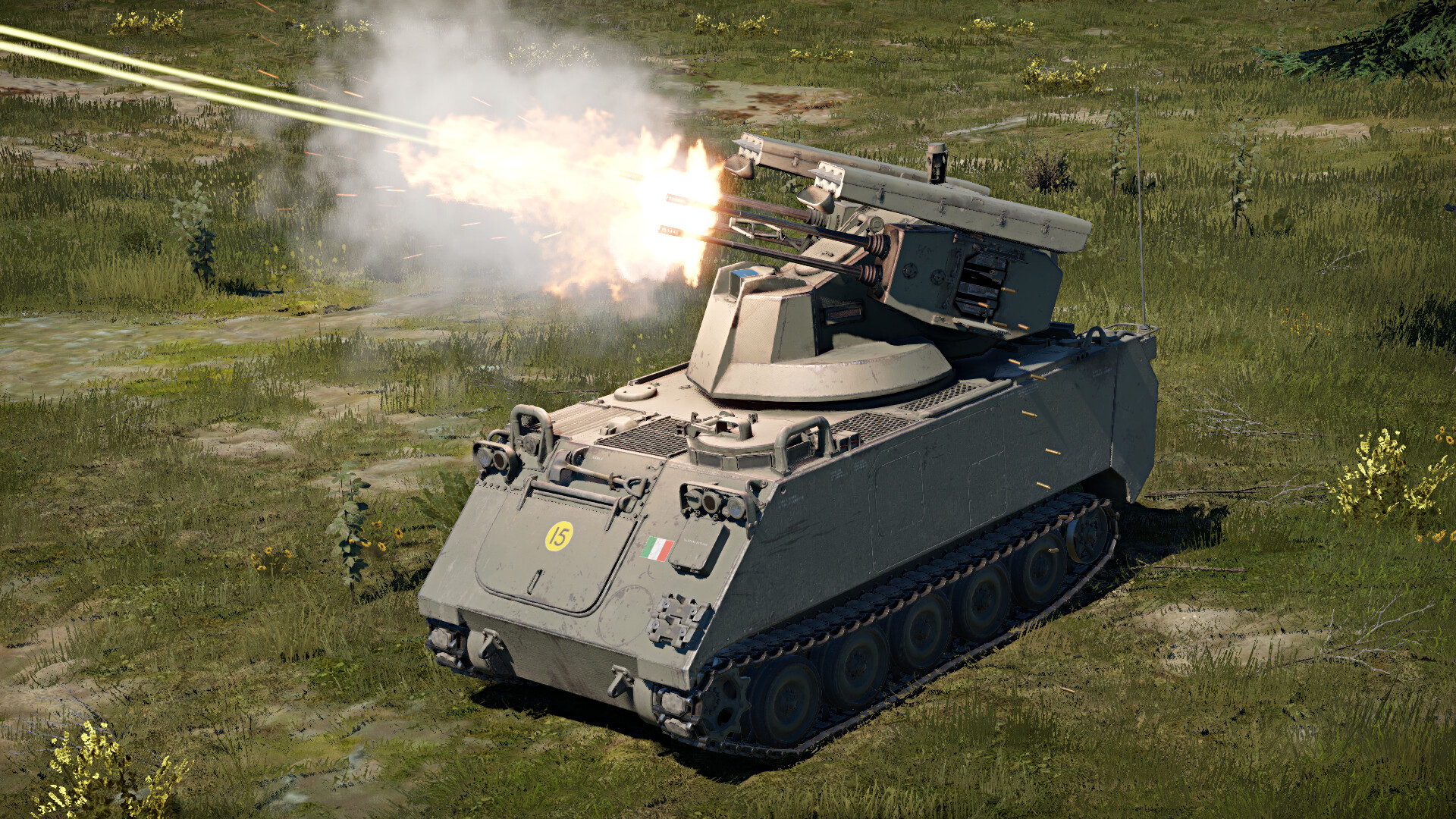
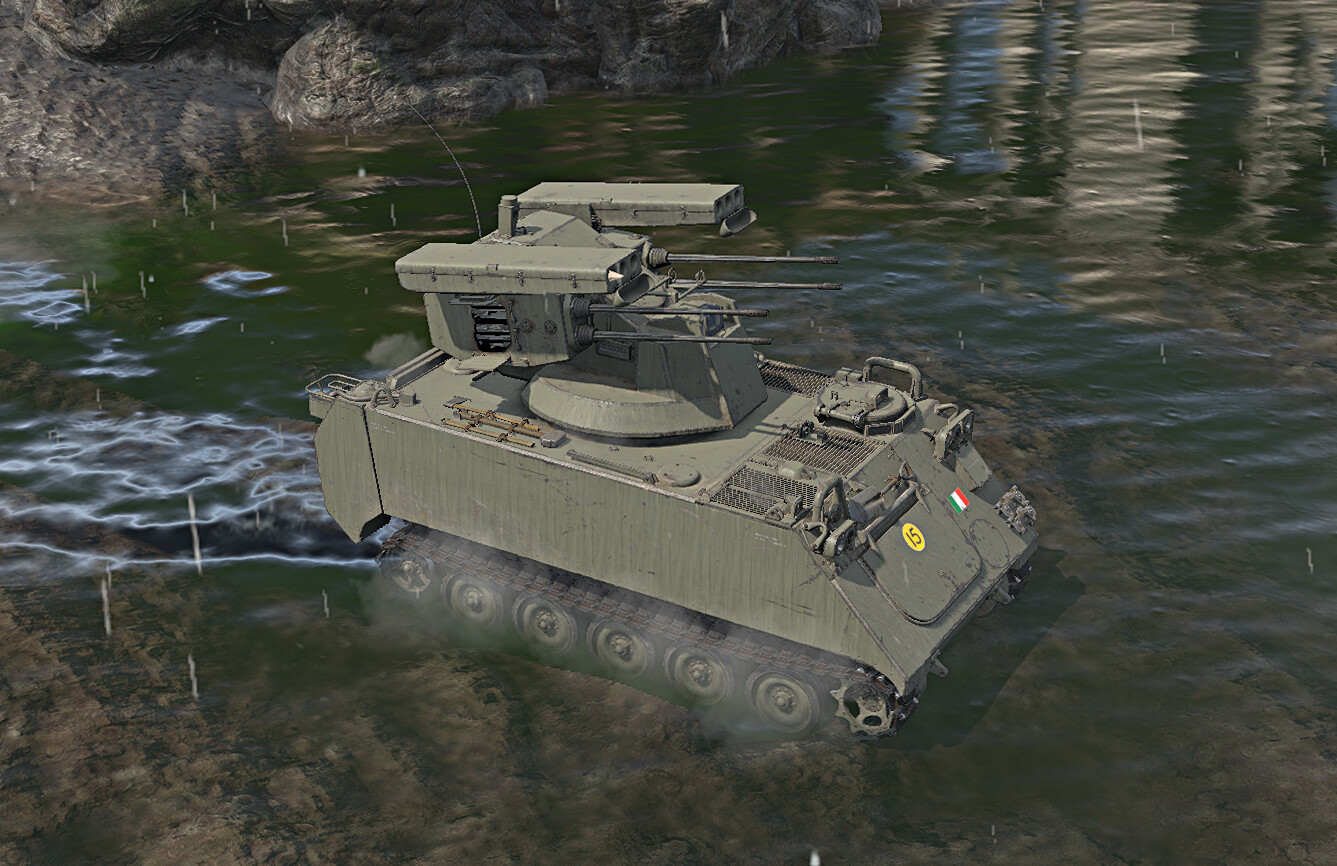
The SIDAM 25 Mistral was an attempt by Otobreda to improve upon the SIDAM 25 by adding two Mistral surface-to-air missile pods to the platform, with the goal of increasing the maximum range of engagement against air targets. Despite this effective solution to a crippling problem, the new SIDAM 25 Mistral was not adopted by any military, not even the Italian Army, which was the main and only user of the SIDAM 25. In War Thunder, the SIDAM 25 Mistral finally becomes a capable SPAA, with the ability to hit targets several kilometers away, while still retaining its four powerful 25 mm Oerlikon KBA cannons to deal with foes who get too close.
| Pros | Cons |
| Has access to 6 Mistral missiles that are uncaged, allowing the player to lead the launch | Mistral explosive mass is insufficient to down more armored aircraft, IRCCM can still be defeated easily by flares |
| Four guns with a devastating volume of fire | Main HE belt cannot hit targets beyond 2.35 km, APDS belt only has 60 rounds |
| Has access to APDS rounds | Armor can be easily defeated by 12.7 mm and any caliber above that |
| TV tracking does not alert the target | No radar, no night vision nor thermal imaging |
Armor layout
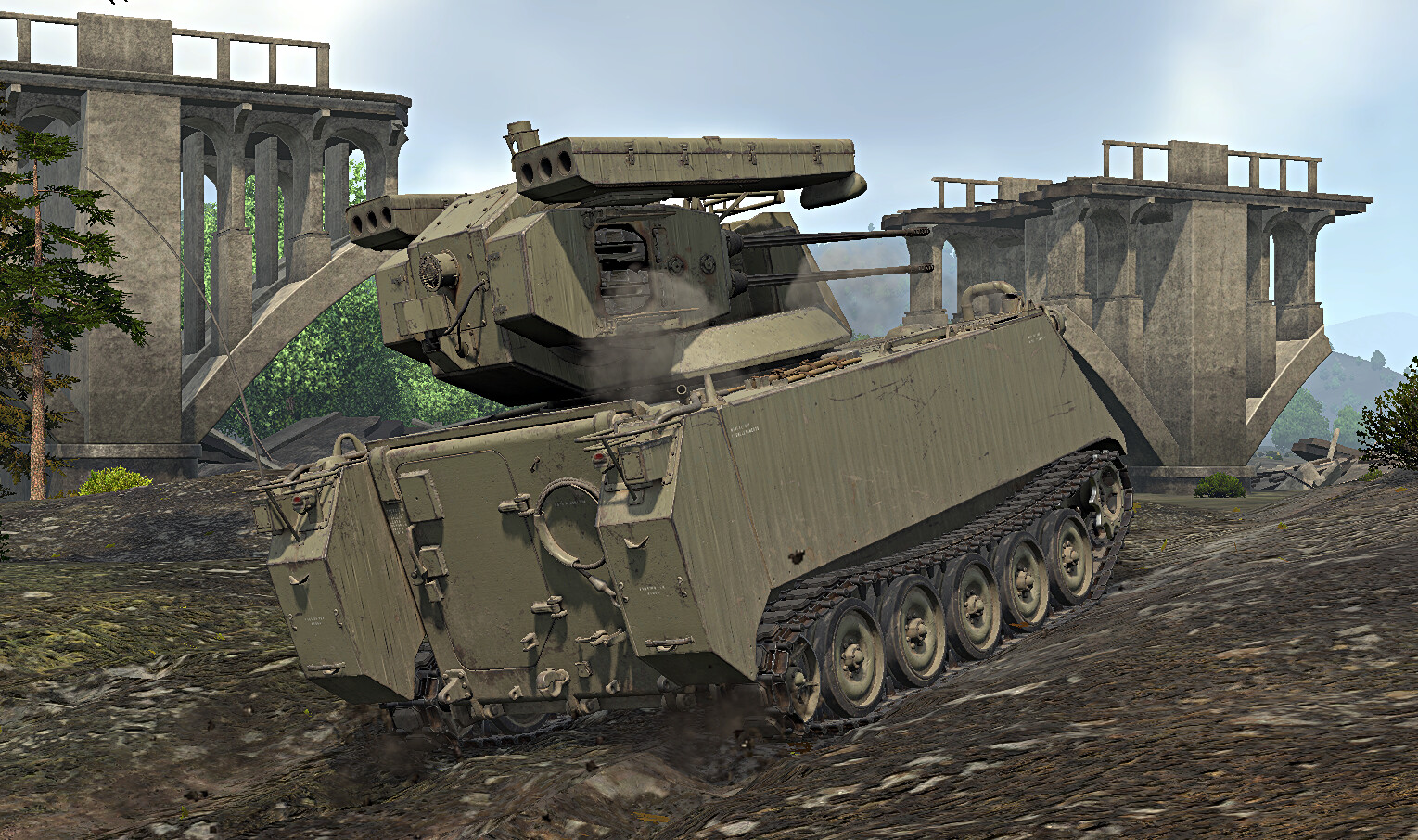
The SIDAM 25 Mistral is based on the exact M113 chassis of its predecessor, the SIDAM 25, and retains its very limited protection features. Both the hull and turret are made of aluminum alloy 5083, which can stop small arms fire up to 7.62 mm, but everything else above that, even 12.7 mm, will penetrate easily. The thickest part is the sides of the hull, for a total thickness of 44 mm, but the plates are not angled, reducing the effective thickness by a significant amount. The most protected part of the vehicle is the front, with two 38 mm angled plates and the propulsion components (engine, transmission, and radiator) right behind them.
Despite the crew not being exposed to the elements, a good rule of thumb is not to get shot and to especially avoid artillery.
Fun fact: The armor is so thin that most APHE rounds will not fuze.
In general, the SIDAM 25 Mistral’s protection is comparable to that of several SPAAs of other nations at the same BR range, such as the Machbet and Roland 1, not taking into account those other platforms based on MBT hulls, the Gepard 1A2 and the M247 being prime examples.
Survivability
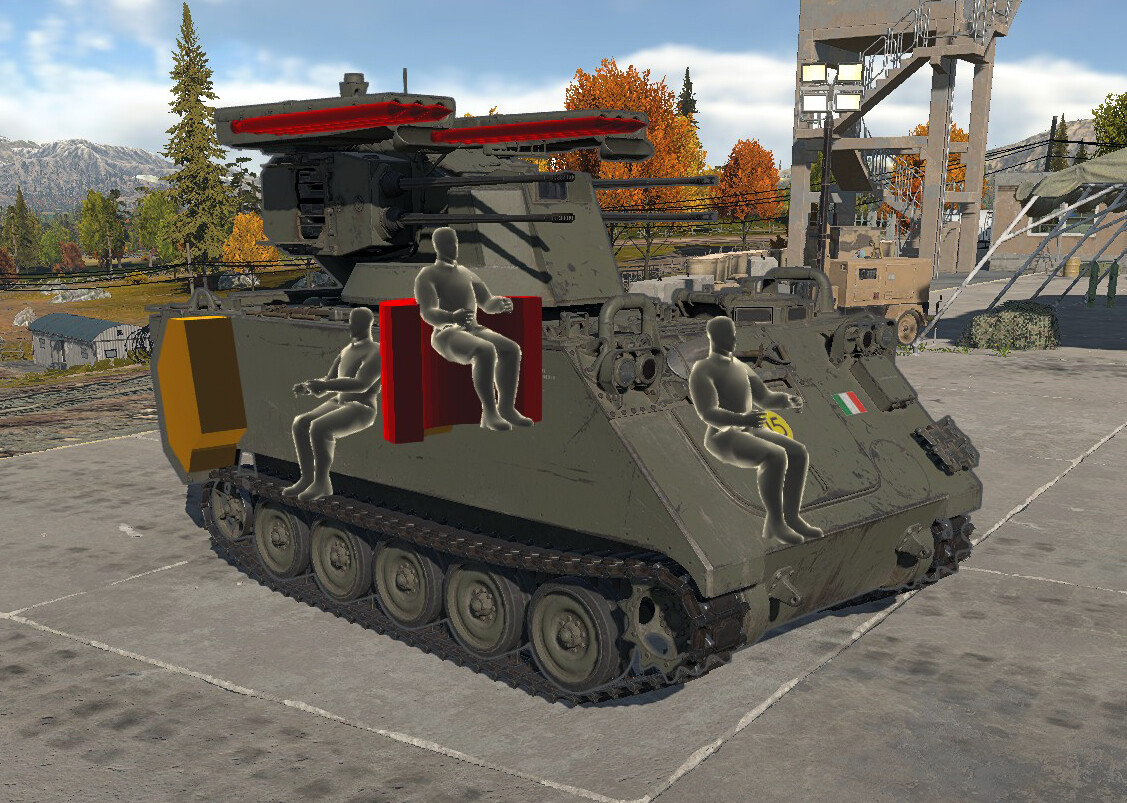
Just like on the SIDAM 25, the crew on the SIDAM 25 Mistral is composed of three members: driver, commander, and gunner. The driver sits in the forward-left part of the hull, and the commander sits inside the turret, while the gunner is located in the back of the hull. The commander’s seat inside the turret is surrounded on 180° by the ammunition stowage. This stowage, despite not taking up too much space, is still very susceptible to damage from artillery and HE shells. A thing to keep in mind is the presence of the six Mistral missiles on the top of the turret. Although it’s not easy, they might still be hit and detonate, leaving the vehicle without its way of hitting targets at longer ranges.
Two external fuel tanks are located on the back of the vehicle. These can occasionally absorb an incoming round, but most of the time when hit, they will cause an explosion and an external fire without heavy consequences to the vehicle.
Overpressure is one of the biggest dangers for the SIDAM 25: HE rounds of calibers above autocannons will most of the time guarantee a premature return to the hangar.

Mobility
Despite the addition of the two missile pods on top of the turret, the overall weight of the SIDAM 25 Mistral did not change from its predecessor, and it features the exact same characteristics. This vehicle retains the same engine and transmission as the standard M113. The engine, being small, is relatively quiet, and it can help avoid detection while playing on smaller maps. It is much slower and more sluggish compared to the Ozelot or the Type 93 due to a lower power-to-weight ratio, but it is more nimble in contrast to SPAAs based on main battle tank chassis, such as the M247 or even similarly sized vehicles, like the Lvrbv 701.
The SIDAM 25 can reach a maximum of 64 km/h forward and 15 km/h in reverse. These values are sufficient to allow the vehicle to move beyond the spawn and reach other parts of the map. The problem lies in the lack of power and traction to cross slopes and hills, a common trait among M113-based vehicles. It is best to stick to flat parts of the map and avoid difficult terrains and obstacles. Should it be necessary to travel over a hill, it is best to stick to a road.
Optics and electronics
The SIDAM 25 Mistral is equipped with the identical optronic system found on the previous model, the SIDAM 25. This system is composed of a day sight unit and a laser rangefinder, which allow the vehicle to track an air target, determine the distance, and provide a firing solution. This SPAA lacks any sort of detection systems, such as radar or IRST. For this reason, detection of enemy aircraft still needs to be carried out visually, acoustically, or by looking at where friendly SPAAs with radar equipment are looking.
Gunner optics
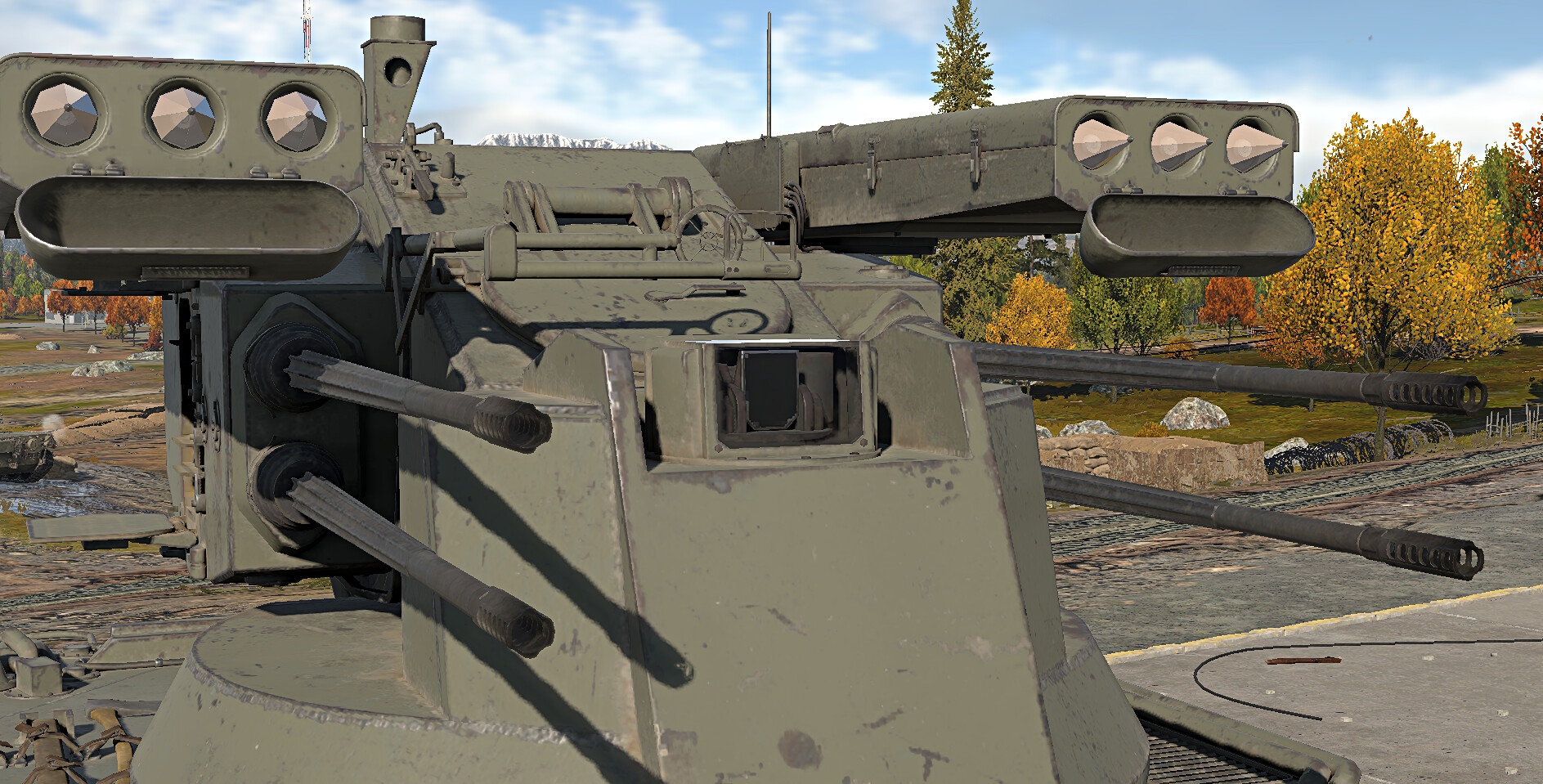
The SIDAM 25 Mistral is equipped with only one sighting device, located on top of the turret, for the commander, who sits inside the turret. The gunner sits in the back of the vehicle, manning the electronic equipment and consoles needed for the targeting and engaging of enemy aircraft. The radio station is also located there.
This optronic sighting device is designed to be used only during the day and with good atmospheric conditions. It lacks both passive night vision and a thermal imager. It has a fixed zoom with a 5.0x magnification level and a field of view of 15°.
3JB10 TV tracker
The TV tracker is an electronic device that allows the sighting system to follow, or track, a certain point or object present in the received video signal (TV channel). This is a completely passive process, which requires no emission of any kind (contrary to radar). For this reason, the tracked target does not receive any sort of notification or alarm. The TV tracking process, though, is not enough to provide a firing solution. With the addition of a laser rangefinder, it is possible to determine the distance of the target, and, through a series of calculations, a firing solution is provided.
This article provides the necessary information on how to effectively lock onto targets.
Note: The laser rangefinder modification module does not need to be researched for the TV tracker to provide the target’s distance.
Armament
25 mm Oerlikon KBA
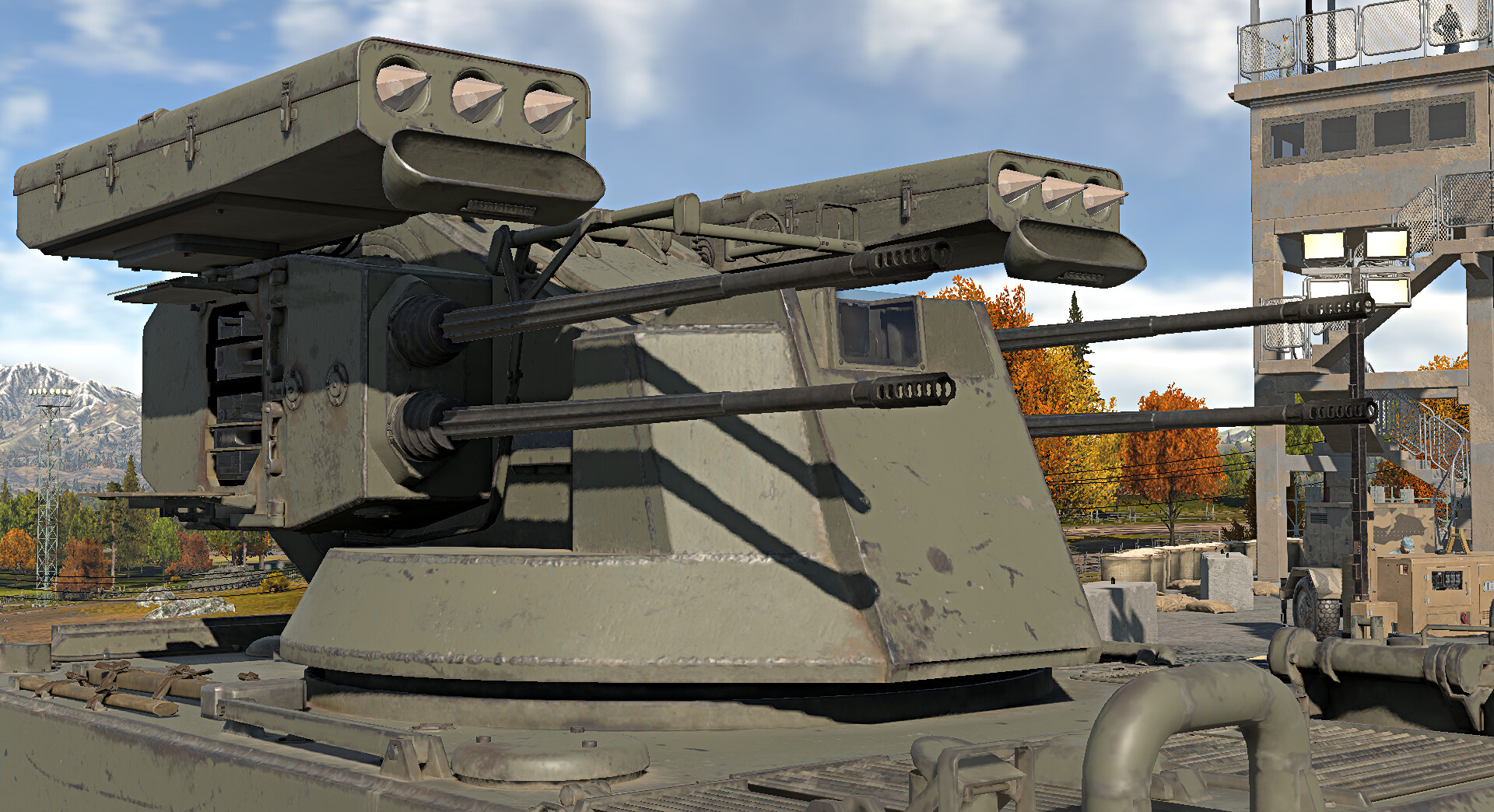
The SIDAM 25 Mistral is armed with four 25 mm Oerlikon KBA cannons, with two on each side of the turret. These cannons have each a fire rate of 550 RPM (for a total of 2200 RPM) and an ammunition count of 165 rounds (for a total of 600 M792 HE rounds and 60 M791 APDS rounds). Switching between belts can take from 1.3 to 1 second, depending on the crew qualification.
The turret, which holds and houses the guns, is stabilized on two planes, can rotate 360°, and can elevate the guns to +87° and depress to -5°.
| Name | Type | Max penetration at 100 m, flat surface | Intended usage |
| M792 | HEI-T | 6 mm (kinetic effect) — 3 mm (explosive) | Against aircraft or soft ground targets (exposed crew) |
| M791 | APDS | 73 mm | Self defense against armored targets, especially the sides or aircraft beyond 2 km distance |
Mistral SATCP
The main addition to this vehicle is the two Mistral missile pods. Each pod contains 3 missiles and is mounted on top of the 25 mm cannons, binding the movement and aiming of the guns and of the missile pods together. The Mistral missiles are infrared, fire-and-forget missiles designed to hit aircraft at short ranges. These are uncaged missiles, allowing the player to lock onto a target and still move the turret while maintaining the lock, giving the chance to lead the missile before its launch.
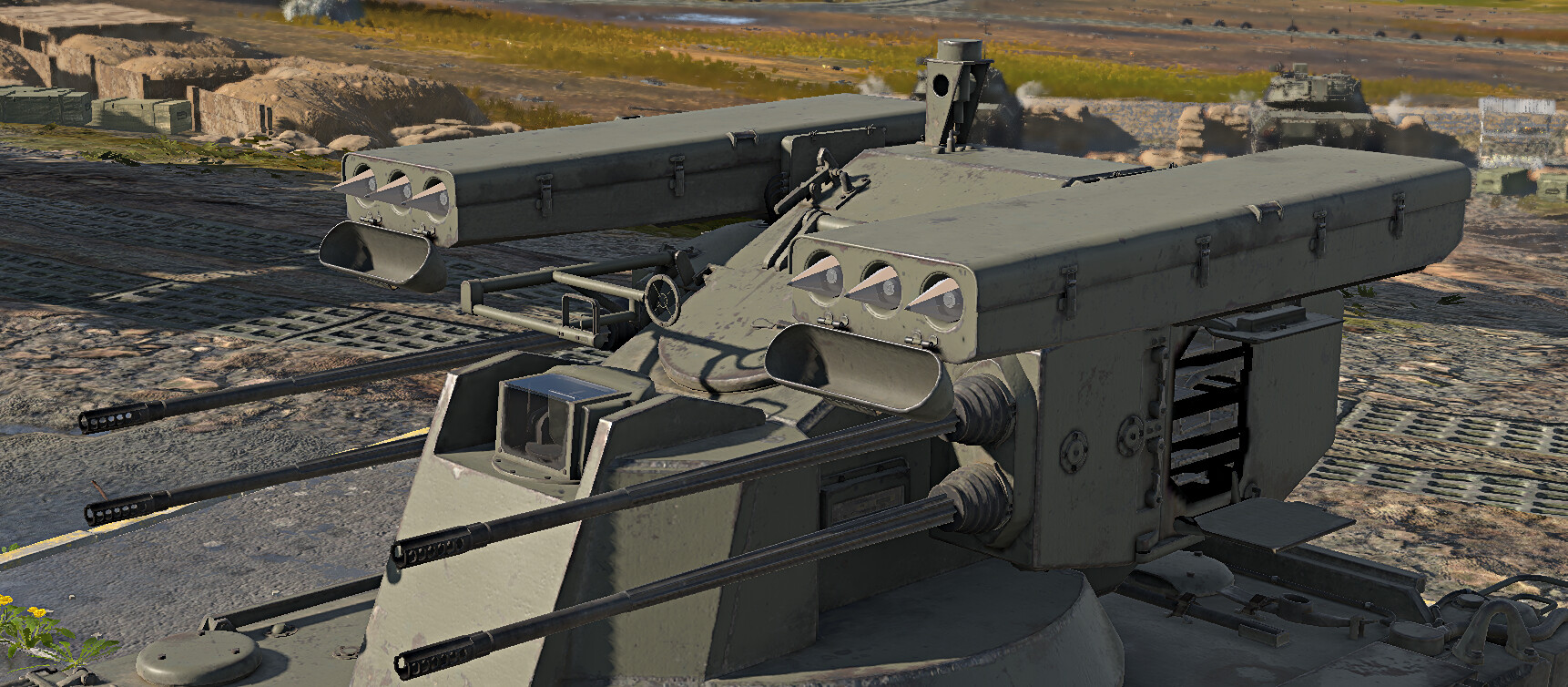
Compared to their main counterpart, the Stinger, Mistral missiles are faster and able to turn and maneuver better. They also have a much larger warhead, with more than three times the equivalent explosive filler and double the trigger radius of its proximity fuze. The seeker head on the Mistrals, though, is significantly more susceptible to flares, despite having IRCCM, making Stingers more resistant to such countermeasures.

Despite the respectable amount of explosive in its warhead, the Mistral can struggle to down some of the bigger, more armored aircraft (such as Mi-24 helicopters). Therefore it is suggested to fire at least 2 missiles at those kinds of targets.
Camouflages
The SIDAM 25 Mistral can be customized with four camouflages. Two of these can be unlocked just by defeating a certain amount of enemies (1 enemy destroyed equals to 5 points), while one can only be unlocked via Golden Eagles.
- Standard
- Desert camouflage (late) — 320 points or 200 Golden Eagles
- Tricolor late camouflage pattern — 200 Golden Eagles
- Winter camouflage — 650 points or 200 Golden Eagles
Camouflages showcase
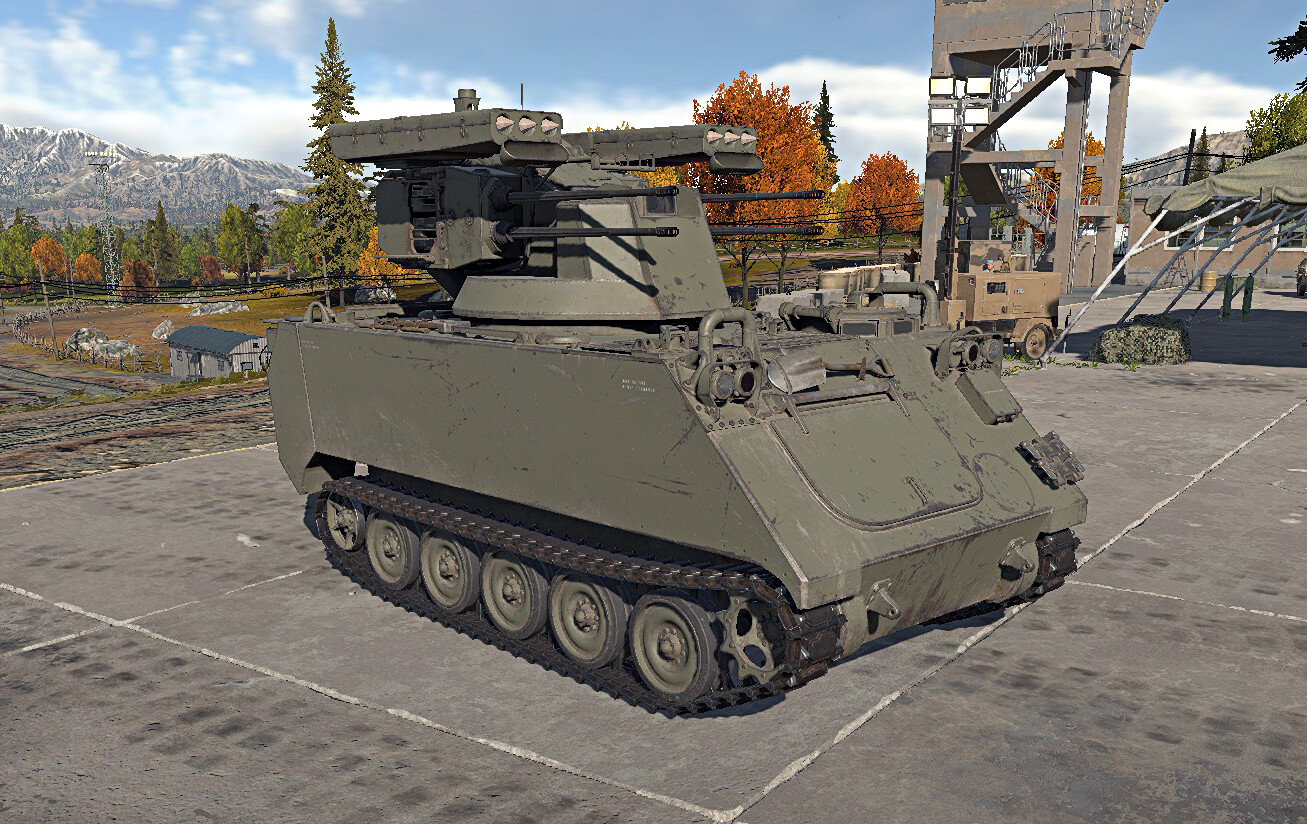
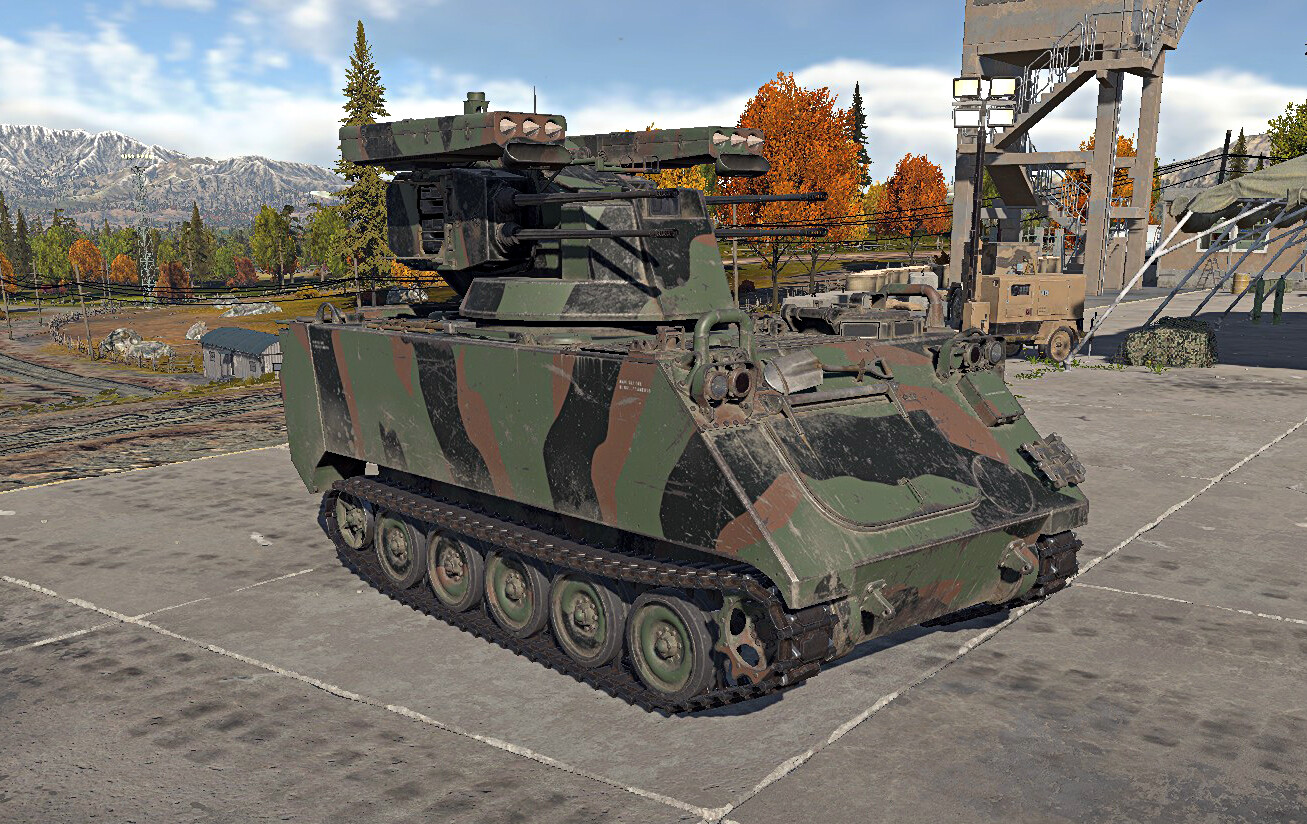
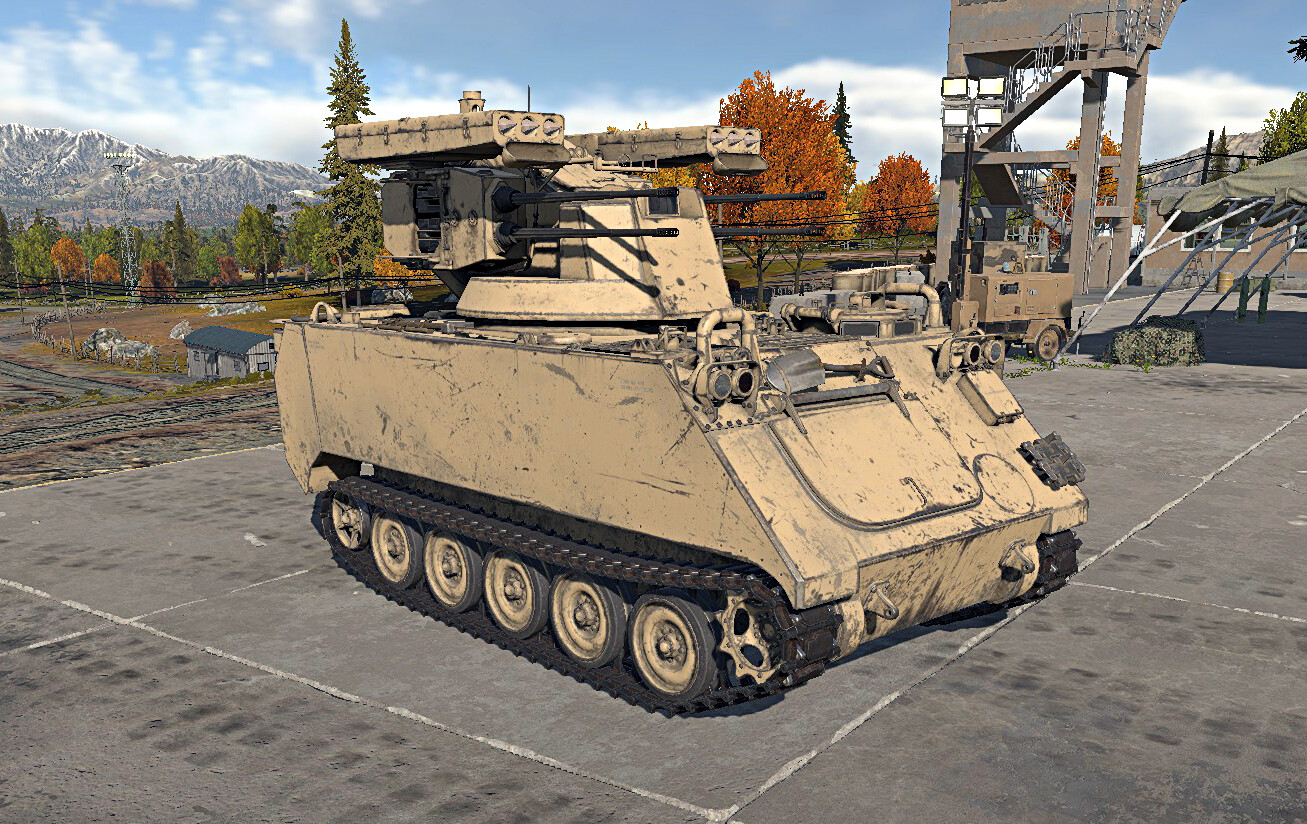

Considering the defensive style of gameplay of the SIDAM 25 Mistral, it is advisable to pick a camouflage that is well-suited to the map in which the match will take place, especially when in desert or winter locations.
Usage in battle
The SIDAM 25 Mistral’s lack of armor, speed, and ammunition capacity to deal with ground targets limits the player to a defensive playstyle focused on providing anti-air coverage for the team.
Taking this vehicle as a first spawn is not advisable unless an early-match helicopter rocket run is expected from the enemy team (especially against those nations equipped with MI-24s).
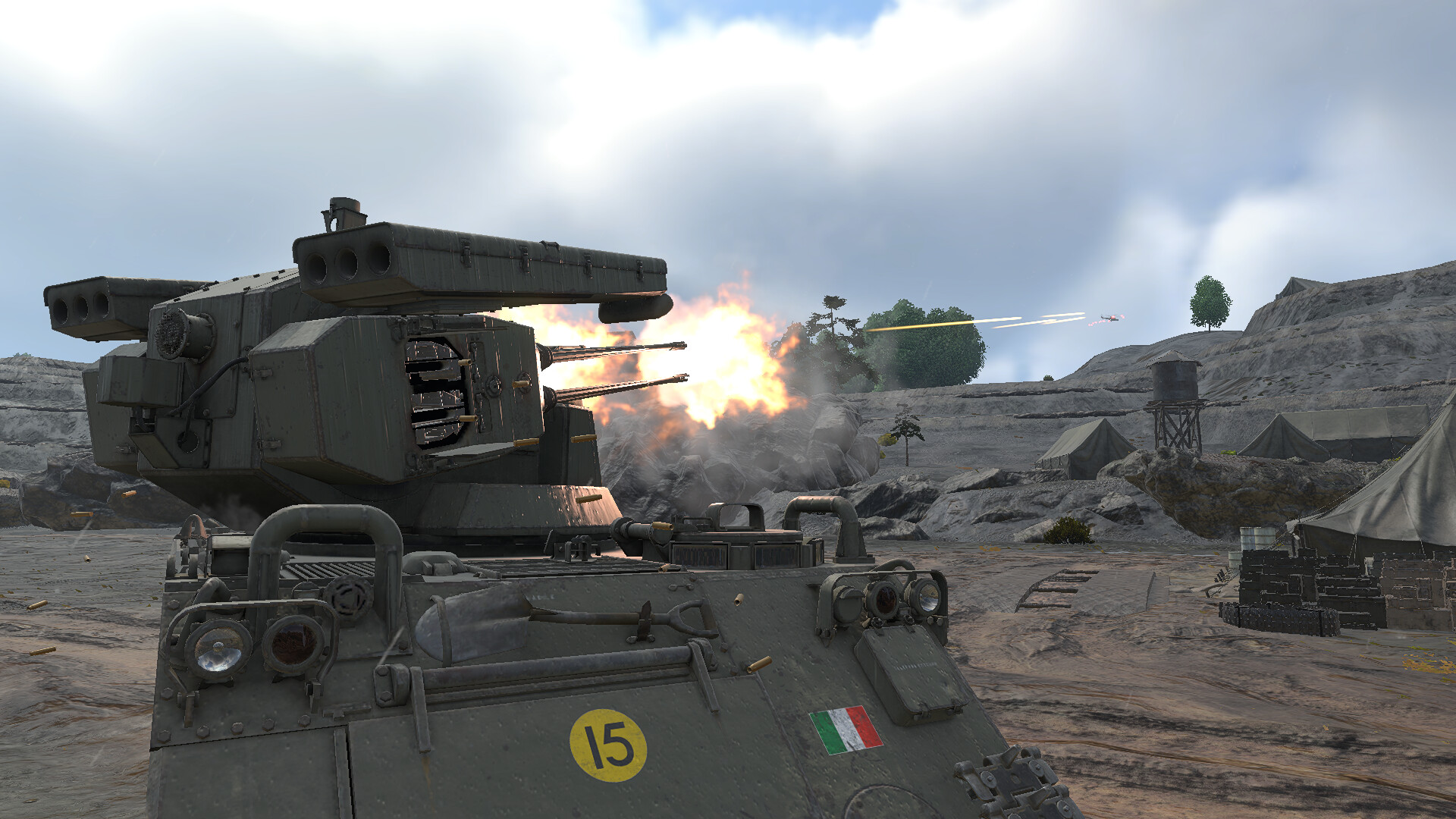
Once the enemy team has accrued enough spawn points to bring aircraft into the battle, the SIDAM 25 Mistral can spring into action. It is advisable to leave the spawn and move to a protected area (behind a hill or a rock, between buildings, or even vegetation if nothing else is available). From this position, the player should be ready to ambush whatever enemy flying object is in range of its six Mistral missiles. The player should also pay attention to scout drones: the TV tracking system of the SIDAM is precise enough to destroy them with the vehicle’s guns, should the target be in range.
The Mistral missiles should be used as the main weapon against the enemy, with the exception of very low-flying targets and those who get too close. In those situations, the guns should be preferred. The Mistrals are generally pretty precise, but they struggle against very fast jets, especially when these targets are deploying flares. In such a situation, it is better to wait for the target to come back for another run and engage them at an angle that would put them at a disadvantage (from the rear or frontally).

Facing ground targets should be avoided on almost every occasion. Even though the SIDAM 25 Mistral is armed with powerful APDS rounds, there simply are too few to sustain a fight. APDS should be seen as a way to defend oneself from enemy ground vehicles that managed to get too close. Main battle tanks should only be attacked on the sides, since most tanks have more than enough armor on the front to negate APDS of such small caliber. Light tanks can generally be engaged in any direction, keeping in mind the location of the crew inside it to ensure its destruction. Some light tanks, such as the Radkampfwagen 90 and the Type 16 (FPS), have extremely angled upper front plates and sharp turret armor, making them immune to damage to the fighting compartment. Those kinds of light vehicles need to be shot in the sides. Should an open-top vehicle be spotted, the HE belt is actually recommended due to the higher chance of injuring the exposed crew.