
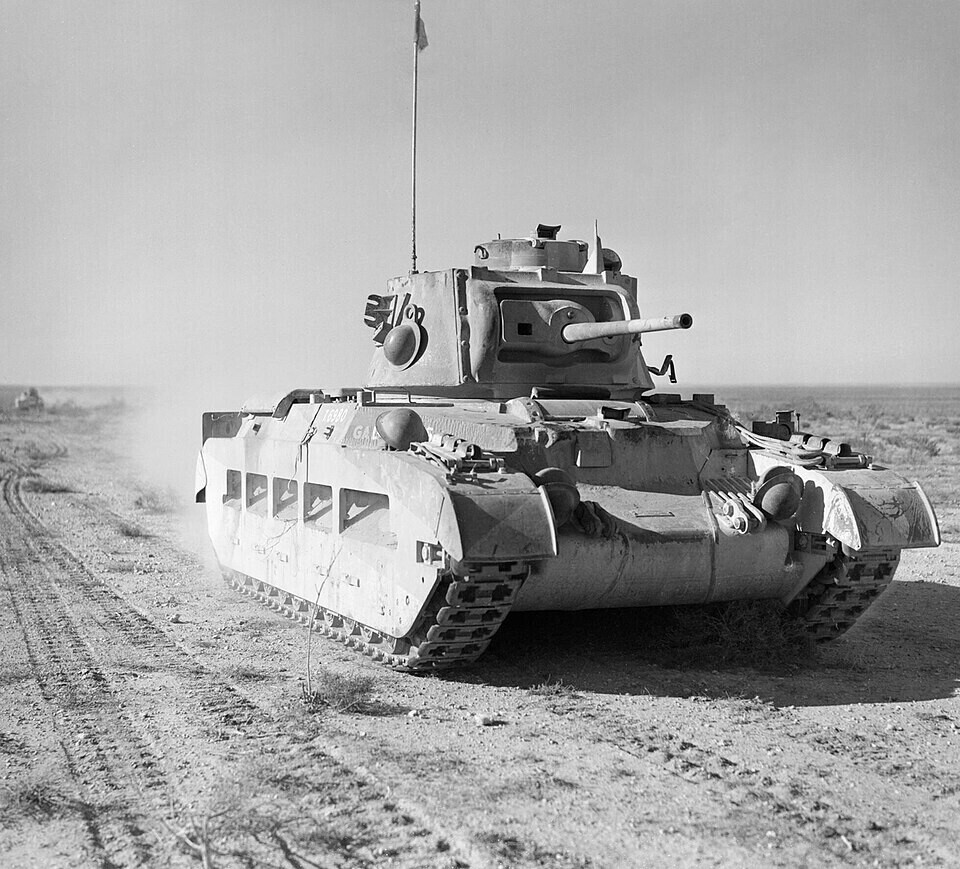
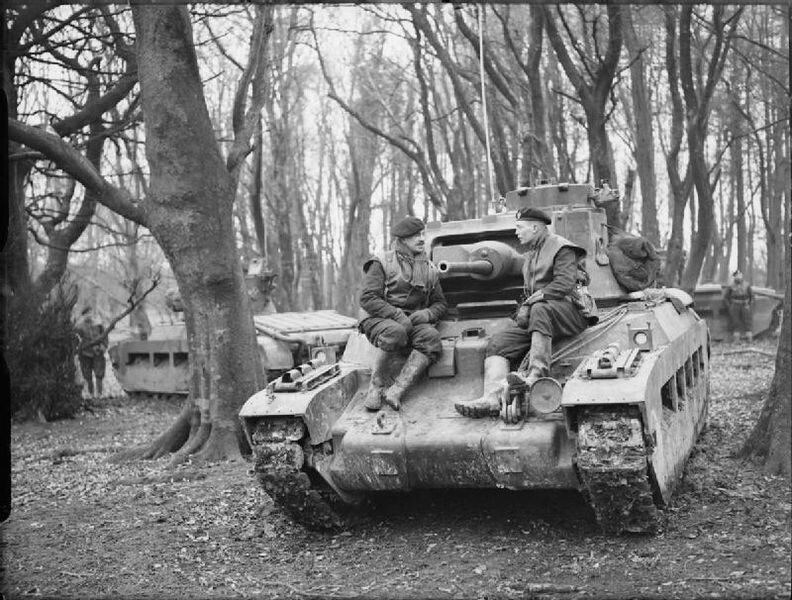
The A12 Matilda II Infantry tank was a mainstay of British tank units in the opening years of the Second World War. Its thick armour caused the enemy many headaches and gave the tank nigh-legendary staying power.
Design
The A12 design came from the Ministry of Defence’s request for an Infantry Tank. A tank capable of supporting infantry assaults, thus requiring decent armour to allow the tank to weather sustained enemy fire and a gun capable of dealing with dug-in enemy positions.
By 1936, with a war looking highly likely, Vickers were at work on the A11 tank. This was also built to fill the infantry tank role but was found severely lacking in armour, armament and crew ergonomics. This design gained the name Matilda due to its ungainly appearance.
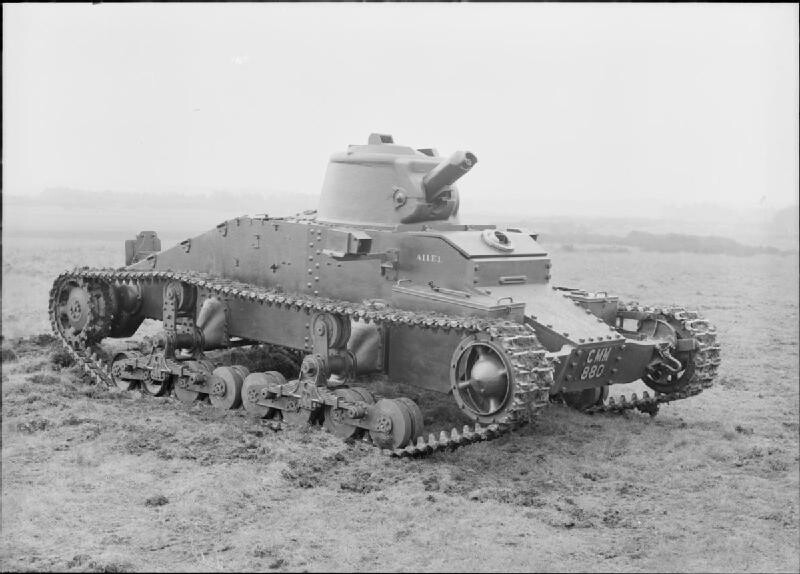
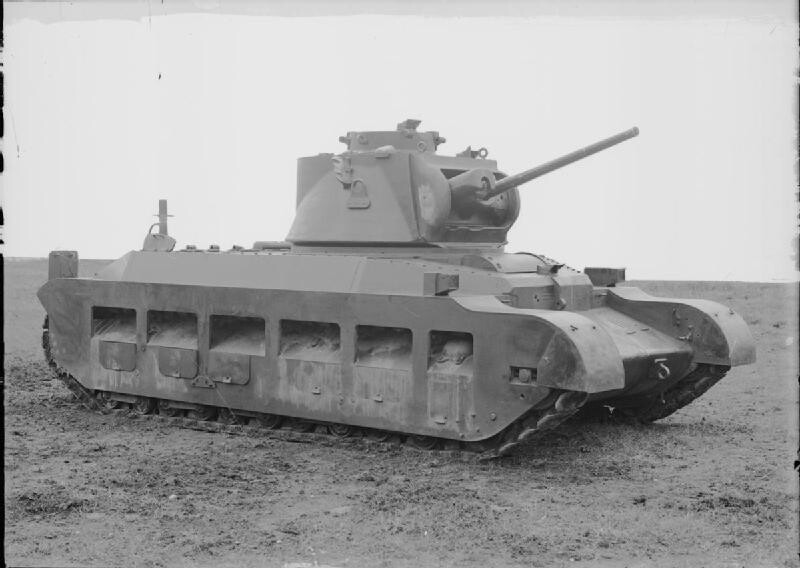
Vickers, seeing the A11's deficiencies, began work on the A12 design. This tank was completely different to the A11. The design emphasised armour and was larger and much heavier than the A11, drawing on elements of the earlier A7 prototypes, notable the suspension arrangement. This design was also named Matilda, though usually was referred to as the Matilda II to avoid confusion with the A11 Matilda.
The A12 Matilda II weighed 25 tonnes and was armed with the ubiquitous Ordnance QF 2-pounder gun found on almost every British tank at the time. A coaxial machine gun was mounted to the right of the cannon. The MG helped make up for the lack of high-explosive ammunition available for the 2-pounder which was much better suited to anti-armour combat. The front plate was 78mm thick, thicker than any tank in service at the time — even the huge French Char B1 only had 60mm of frontal armour. The turret was a single cast unit with 78mm thick walls all-round and 20mm of armour on the roof. The side armour was 65-70mm and the rear glacis was 55mm. This level of armour would be unsurpassed for years and was the defining feature of the Matilda.
The power was supplied by an AEC power unit consisting of two bus engines stacked on top of each other and sharing an output shaft. This arrangement led to some technical difficulties as if one engine failed then the other was usually also prevented from moving and it was complex to maintain. Total power output was roughly 190hp meaning the Matilda could only reach 16mph at full power on a level road. This was deemed adequate for supporting an infantry advance however, as the expectation was that Cruiser Tanks such as the Crusader would be used when speed was required and perform flanking manoeuvres.
A particular issue of the Matilda was its steering system, made by Rackham, which was always found to be somewhat fragile and unreliable. Various measures were taken in-theatre to try and prevent the steering units from becoming worn out or over-stressed such as speed limits or towing the tanks behind artillery tractors, but the problems were never fully resolved.
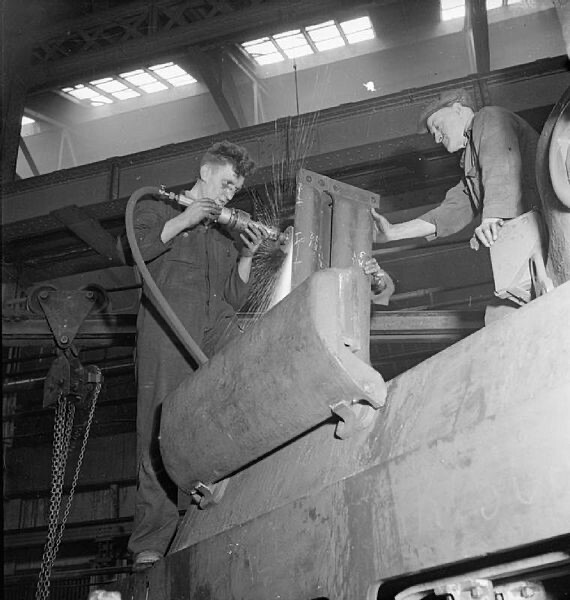
Production of the Matilda was a complex process due in part to both the front of the hull and the entire turret being one-piece cast units. The front of the hull in particular caused problems as often parts of it were thicker than required when the part came out of the mould, so had to be found down, a laborious task which required skilled workers. Part of the reason the Valentine replaced the Matilda was due to it being easier and cheaper to produce. Some of the manufacturers of the Matilda included Harland and Wolff in Belfast, a company best known for producing the SS Titanic of iceberg-hitting fame. By the time production ceased in 1943, 2987 Matilda IIs had been built.
Service History
France
On the first day of the Second World War only two Matildas were serviceable. The first batches were to arrive later that year however, and the initial production Mark Is were sent to France with the 7th Royal Tank Regiment (RTR) as part of the British Expeditionary Forces (BEF) in 1940. When the Germans launched their surprise assault through the Low Countries, the BEF and French armed forces were caught off-guard and soon were forced into a fighting retreat by Rommels’ Panzers. Only 20 Matilda IIs were available — the 7th RTR was mostly comprised of A11 Matilda Is.
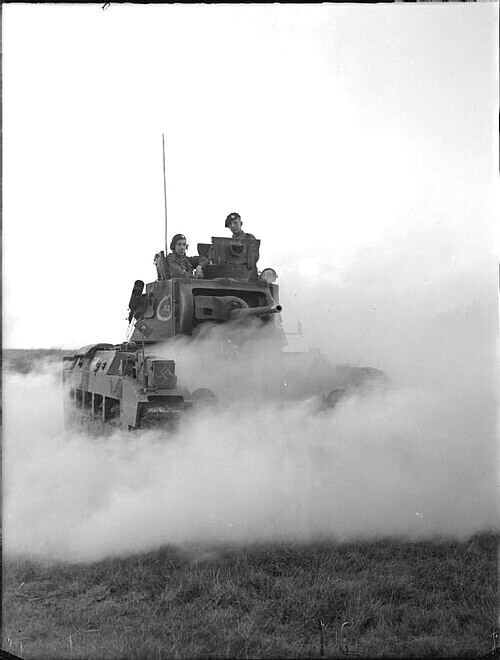
All of the available Matilda IIs were committed at the Battle of Arras on the 21st of May 1940. The enemy forces found that their tanks and anti-tank guns were useless against the Matilda IIs and began to panic. British forces were able to advance up to 14km into enemy lines before the evening, capturing hundreds of soldiers and destroying dozens of tanks, for the loss of only two Matilda IIs, though many more A11s. The panic caused by the seemingly unstoppable advance of 7th RTRs’ tanks almost led to a rout before the German commander Erwin Rommel personally ordered his anti-aircraft 88mm guns (the infamous Flak 88s) to fire upon the advancing British tanks. Nearly all of the Matildas were destroyed though two were later captured intact having retreated and been abandoned.
After the Fall of France the British Army slowly rearmed and re-equipped. The slightly improved Matilda IIA Mark IIs came into service in late 1940, with a BESA machine gun in place of the Vickers carried by earlier versions. The large trench-crossing tail also disappeared, having proved useless in France. The Matilda IIA Mark III replaced the troublesome AEC engines with a Leyland unit which was more reliable and gave the tank a longer range, though brought little improvement in mobility.
North Africa
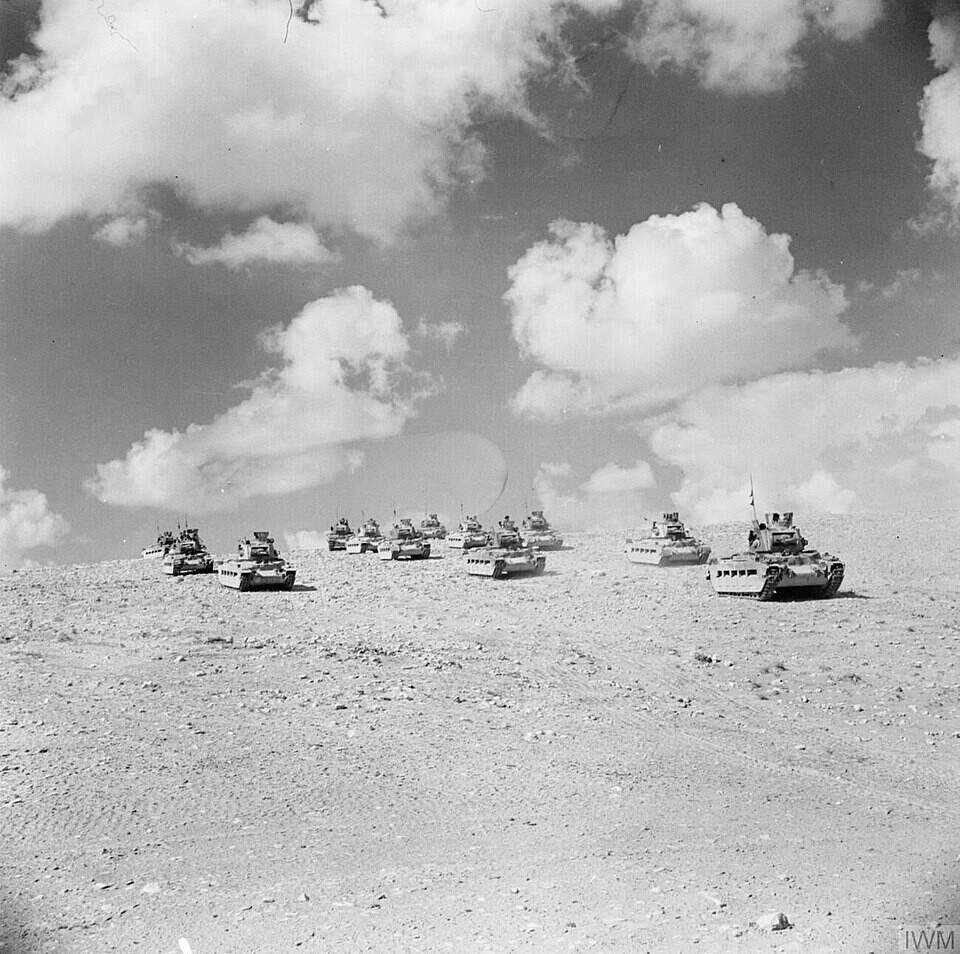
As British attention turned to the fighting in North Africa, the Matilda was again sent into the thick of the fighting. The “Queen of the Desert” proved highly effective against Italian armour and anti-tank guns. It was here that the Matilda’s reputation for being nigh-indestructible started to grow.
In an action against Italian forces in Nibeiwa on the 9th of December 1940, the 7th RTR -now fully equipped with Matilda IIs — supported by infantry of the 4th Indian Division were able to force around 4000 enemy soldiers to surrender for the loss of only two men killed and five injured from the 7th RTR. An Italian doctor referred to the Matildas as “the nearest thing to hell I ever saw”.
As Commonwealth forces advanced, retreating Italian forces spread tales of the “invincible” Matilda. Crews found this to be not far from the truth. One commander reported after a battle that his tank showed evidence of 46 direct hits and that everything breakable — lights, aerials, water cans — had vanished from the exterior but that the tank was still operational. At the same time, a strict 7.5mph speed limit was imposed on Matildas to try and limit wear and tear to the delicate steering systems — a perennial issue for the type. When they reached Tobruk, the remaining Matildas had to be withdrawn by rail and sea for repairs, each tank having done well over 1,000 miles.
When General Rommels' Afrika Korps joined battle in 1941, the Matilda’s armour was still enough to protect against smaller-calibre anti-tank weapons, such as those on Panzer IIs and early Panzers IIIs and IVs. However, when the feared Flak 88s began to be deployed more frequently, the Matildas, and other British tanks, quickly began to suffer. The 88s could easily out-range the 2-pounders and were often set up in batteries creating kill-zones into which British forces would be drawn. In one action in 1941, 64 Matildas were lost, their slow speed making them easy targets for well-trained gun crews.
The Queen of the Desert was not finished yet, however. In the hands of skilled crews such as the 7th RTR, and under the command of officers aware of their strengths and weaknesses, the Matildas still achieved success into 1942. The introduction of the powerful Panzer III Ausf J spelt the end for the Matilda in frontline service however. By the Second Battle of El Alamein in October 1942, the only Matildas involved were 9 Matilda Scorpions — anti-mine tanks with large spinning flails on the front.
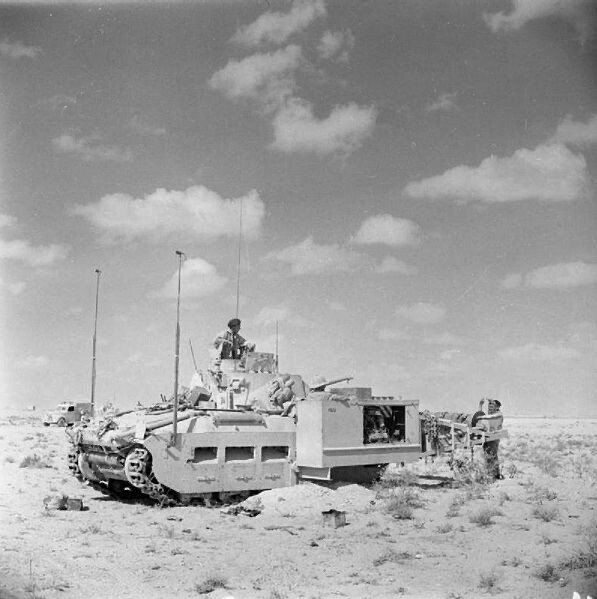
More capable tanks such as Valentines, Shermans, and Grants replaced the Matilda in North Africa, and surviving tanks were either sent back to Britain for training purposes or to the Far East. The final order for Matildas was placed in 1942 for 75 tanks and production finished in 1943.
The Far East
In the Far East, the Matilda’s armour was both a benefit — as the Japanese lacked almost any weapons capable of penetrating it — and also a drawback as the oft-mountainous terrain was almost impassable to the heavy tanks.
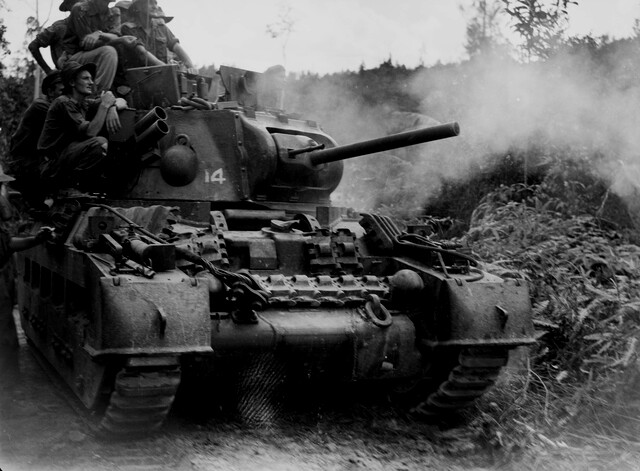
Australian forces, in particular, seemed to take a liking to the durable Matilda and used them all the way through to 1945 in frontline combat, long after the British had relegated them to other duties. New variants included the Frog — equipped with a flamethrower in place of the main cannon — which was used in much the same way as the Churchill Crocodile. The Close Support (CS) version — which had seem some limited use in North Africa — toted a 3-inch howitzer for cracking open fortifications and saw extensive use across the region. Crews also modified their tanks in-theatre, adding additional armour, plates to prevent jungle greenery from clogging the suspension and tracks, and infantry telephones to allow soldiers to communicate with the crew. A ring of armour was often installed to protect the turret ring — often the only point enemy guns were capable of damaging — and extra armour for the tracks was not uncommon.
Back in Europe
Although no longer in frontline service by 1943, several variants of the Matilda were created to support the Allied advance through Italy and later through Normandy and France. The HQ variant was equipped with a howitzer for firing smoke shells to cover advances, and the Scorpion Mark I and IIs already mentioned cleared mines using large motorised flails. In 1944 the Matilda Canal Defence Light — one of Hobart’s Funnies — used the huge searchlight in its turret to support nighttime amphibious crossings and to spot possible counter-attacks.
Despite plans to up-gun the tank, its 137cm turret ring was too small to effectively accommodate guns larger than the 2-pounder. An attempt was made to fit a slightly larger ring and turret but this led nowhere.
As part of the Lend-Lease scheme, many Matildas were sent to Russia, to help them fight. Just over a thousand — a third of the total produced — reached Russian forces though 166 were lost to the Atlantic when transport ships were sunk.The Matilda fought at the Battles of Moscow and Leningrad but was found to be unreliable in the freezing conditions, having similar issues to the Panzers in the mud and snow. By 1943 the Matilda had almost disappeared from Russian service.
The Crew’s View
British and Commonwealth crews were on the whole, quite positive about their armoured steeds. They were extremely pleased about the armour protection with some crews reporting their tanks withstanding direct hits by 105mm artillery at close range. They also recognised the benefits of the British doctrine of firing on the move over the Panzers' practice of stopping before firing and would use this and smoke screens to get up close with enemy tanks which “They did not like”.
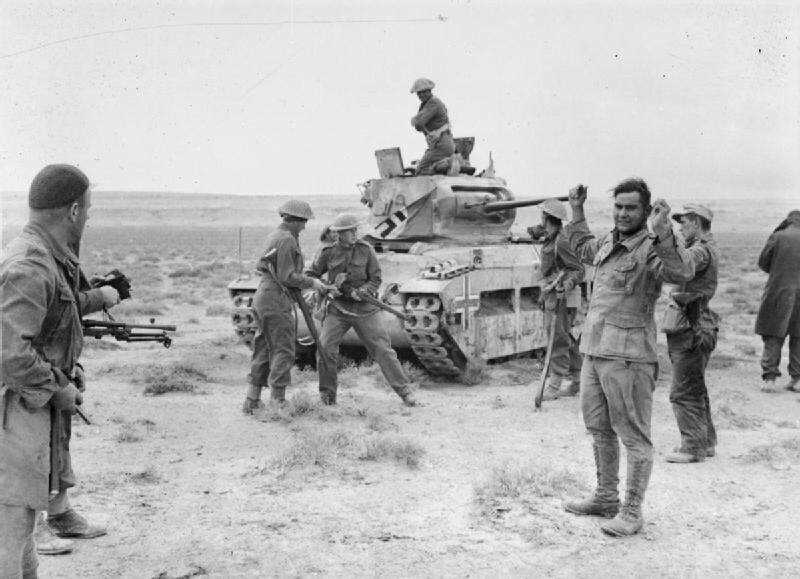
Tellingly, captured Matildas also proved popular with their German crews due to their armour. Once they had been re-painted with Balkenkreuz and other prominent identification markings, they were sent back into battle to sow confusion. This led to confusion on both sides however, as the markings were not always visible, but the silhouette was unmistakably that of a British tank so captured tanks were sometimes fired upon by their own guns.
Russian crews however, were usually more negative about the type. They disliked the weak armament and poor mobility which was made even worse by the mud and snow of the Eastern Front. The contemporary KV-1 and T-34 performed better in these conditions, were better armed, and had similar degrees of armour protection to the British design.
Final Thoughts
Despite initial successes, the Matilda’s design was soon proved to be lacking in key areas such as armament and mobility. By 1943, the type was throughly obsolete in the European and Mediterranean theatres as its one redeeming feature — its armour — was outclassed by advancements in weapons technology. Its place on the front line was eventually taken by a design that was better armed, better armoured, more mobile, and crucially more adaptable — the Churchill. Despite this, the Desert Queen served with distinction in the jungle campaigns of the Far East, where it never lost its throne to the Iron Prime Minister or Iron Cathedral.
Sources
- Tank-AFV (?). Infantry Tank Mark II, Matilda.
- RommelsRiposte (2008). Some views on the Matilda II
- Diamond, J (2015). Queen of the Desert: The Infantry 'Matilda' Tank
- Key Military (2025). Queen of the Desert