
The Swedish AJ37 Viggen is a strike aircraft boasting a deadly armament of missiles and guns, combined with an extremely powerful engine. In the hands of a good pilot, it can cause chaos on the ground forces below. It is a huge upgrade from the previous strike aircraft in the Swedish tech tree, the A32A Lansen, with much better capabilities including its weaponry, radar, RWR, and more.
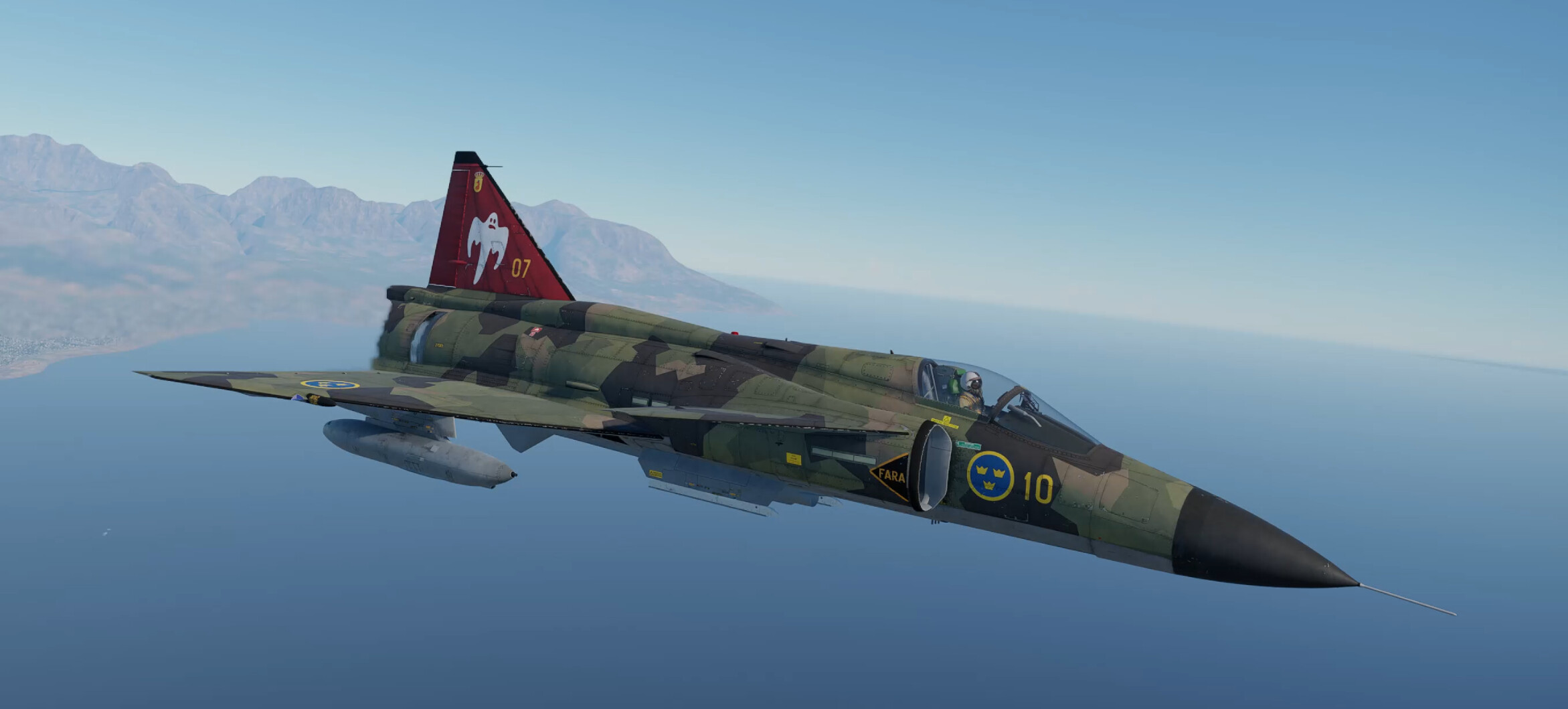
The AJ37 Viggen is an exceptional aircraft! Many will find the radar to have a huge advantage over other aircraft, such as the MiG-21. It has many features and loadout options and the flight performance is on par with that of higher tier aircraft. At its B.R. it controls the entire battlefield and can determine a victory or a defeat. The only big downside of this aircraft is that it can only carry so many weapons, with no internal gun or countermeasures.
| Pros | Cons |
|---|---|
| Powerful engine | Afterburner uses fuel fast |
| Fire-and-forget missiles (air-to-ground) | RB75s are slow and can easily get intercepted |
| Powerful radar with pulse-doppler mode and IFF | Small vertical search angle (8°) |
| IRST (will not alert RWRs) | Can be difficult to read |
| RWR with most common bands | Only has 2 threat types, cannot identify vehicle |
| Diverse loadout options | Only 4 hardpoints |
| Thrust reverse for short landings | None |
| Countermeasure pod | Only 24 flares in 1 pod |
Aircraft History:
In the 1950s and early 1960s, Sweden needed a strike fighter to replace the aging SAAB 32 Lansen platform, and a more air-to-air combat-focused aircraft to replace the SAAB 35 Draken. SAAB then came up with the Viggen platform and its variants. The JA37 (that we also have in game) is the air-to-air variant and the AJ37 is the ground attack variant, with the “AJ” standing for “Attack Jakt” (strike fighter). Other variants such as reconnaissance, maritime patrol, and trainer jets, also existed. The ground attack variant is the one we will focus on today.
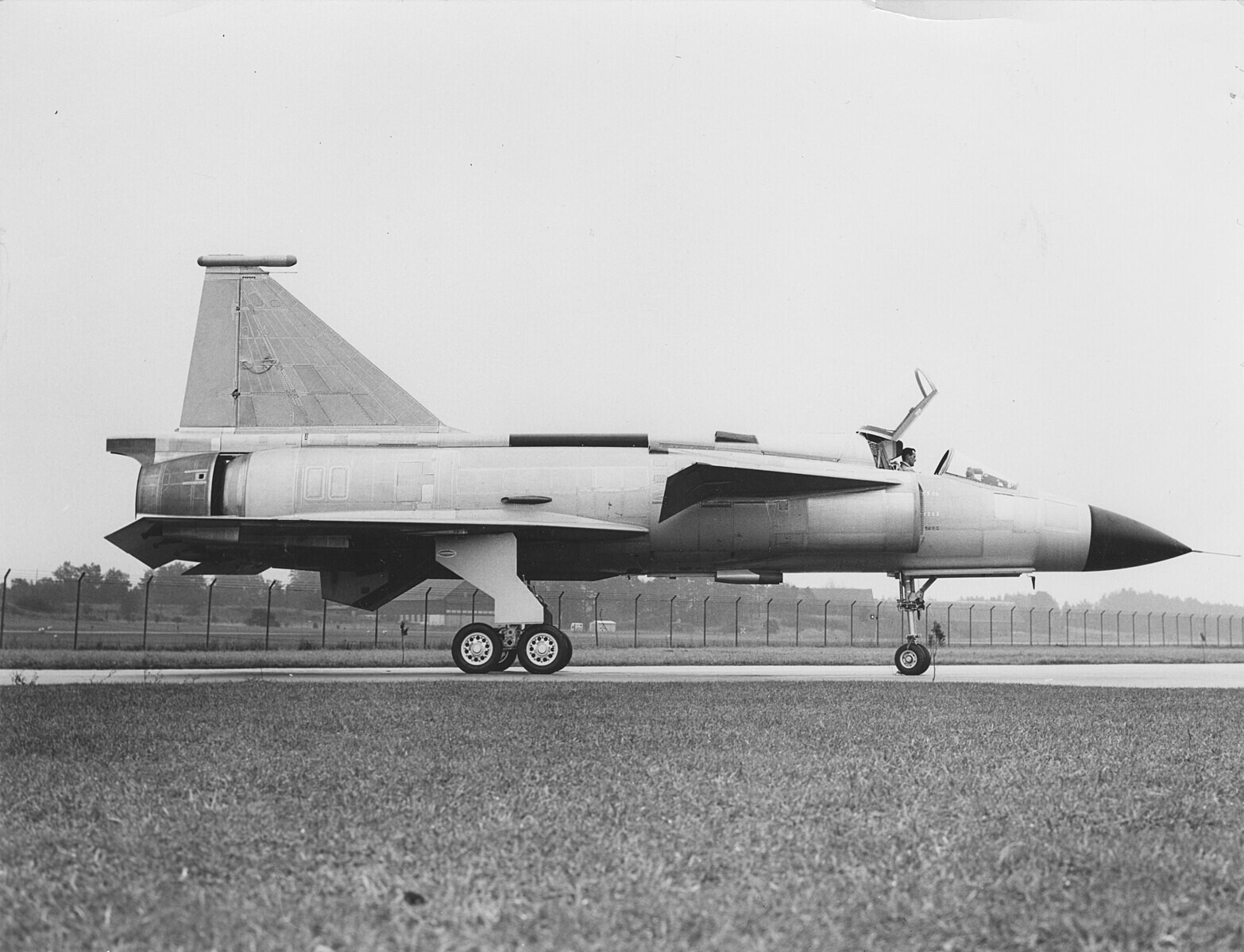
The Viggen was equipped with state of the art electronics, often considered the best of its kind. It would also make use of the RM8 afterburning engine, which is a licensed version of the Pratt & Whitney JT8D-22 that was used on 727 and DC-9 airlines, except it was fitted with a domestically-designed afterburner and thrust reversal. At the time, Sweden was making/converting roads into fully capable runways by expanding width and increasing the length, while still allowing public transportation. It was also fitted with a thrust reversal, which helped validate it for the required short landings the aircraft would need to perform on some of these roads. The aircraft was also fitted with an automated ILS, but this is not modeled in-game.
The first prototypes of the Viggen were ordered in 1965, which then rolled out of the factory in November of 1966. Finally in February of 1967 it got to the skies for testing, flown by Erik Dahlström. Eight (single seat) prototypes were made, with SAAB improving the aircraft each time. The last 3 prototypes were very close to the AJ37 that they would later produce for service. During testing, there was an incident in which a test pilot was killed by triggering the ejection seat while the aircraft was still on the ground. It was found that the aircraft had to be going at least 75 KPH (47 MPH) for the ejection seat to function safely.
100 Viggen platforms were initially ordered in 1967, with 82 of them being the AJ37 variant and the other 18 being the SK37. The order was eventually increased to 180. In 1971 the first batch of ordered AJ37s were delivered, however the first aircraft had an accident later that year relating to its thrust reversal system. Throughout its service, the Viggen suffered multiple losses, mostly due to weak wing construction, but the problem was later fixed. One notable incident occurred when a Soviet submarine carrying torpedoes with nuclear warheads ran aground in the Karlskrona archipelago of southern Sweden. The AJ37 was ordered to prevent a Soviet recovery team from accessing the sub, but following a 10 day stalemate the sub was returned. Finally, in November of 2005 the aircraft was retired, with two SK37 variants serving another few years assisting the development of JAS39 Gripen radar.
Aircraft armament:
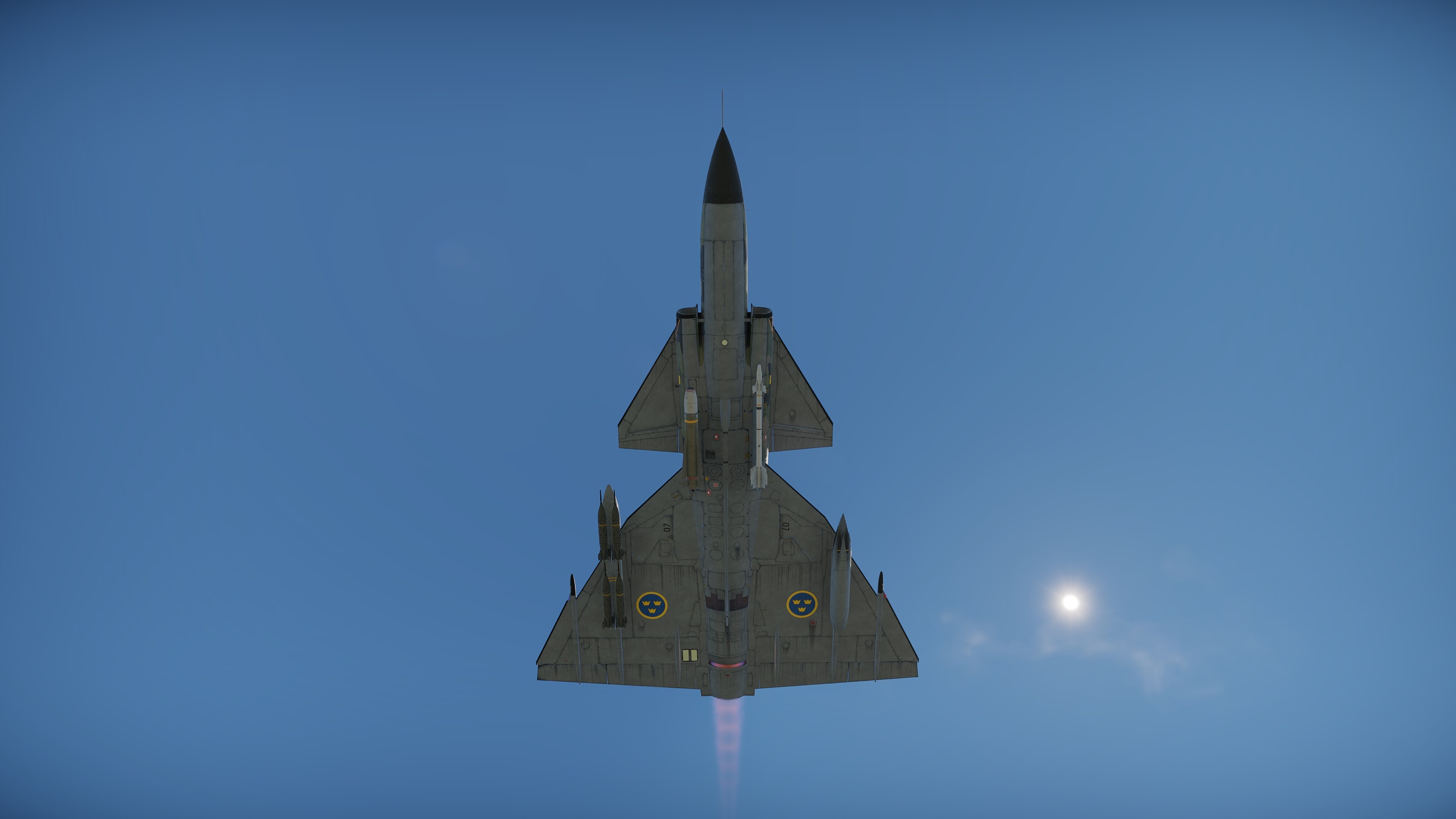
From dumb bombs to fire-and-forget missiles, the AJ37 Viggen has various weapon loadouts for a multitude of combat scenarios. The pilot will have to make sacrifices, however, as the aircraft only features four hardpoints (with a fifth reserved for a fuel tank) and no internal gun or countermeasures.
- RB75(T): The RB75, an imported AGM-65, is the primary weapon for destroying tanks, with the T variant having a slightly larger warhead. It uses TV guidance and is quite slow.
- RB24(J) air-to-air missile: The primary weapon for air-to-air combat is the RB24J, a heat-seeking missile that is an imported AIM-9P. The regular RB24 is an AIM-9B with a caged seeker and is not recommended for combat. Somewhat limited by its effective range, ~2.5km.
- m/70 rocket pods: 4×13.5 cm rocket pods, with six rockets in each. A ballistic computer is included to help aiming.
- m/71 bombs: 16x m/71 dumb bombs, which have a relatively small warhead but can destroy tanks if they are dropped accurately. Bomb-tossing can be effective on SPAAs. It has a CCIP, and the option to carry the same bomb with a high-drag tail.
- m/55 gun pod: 2×30mm m/55 gun pod, with 150 rounds of ammunition each. Extremely effective ammunition for both air and ground targets, however it should be noted when carrying only 1 gun pod aiming can be difficult due to the placement of the pod.
Flight Performance and Survivability
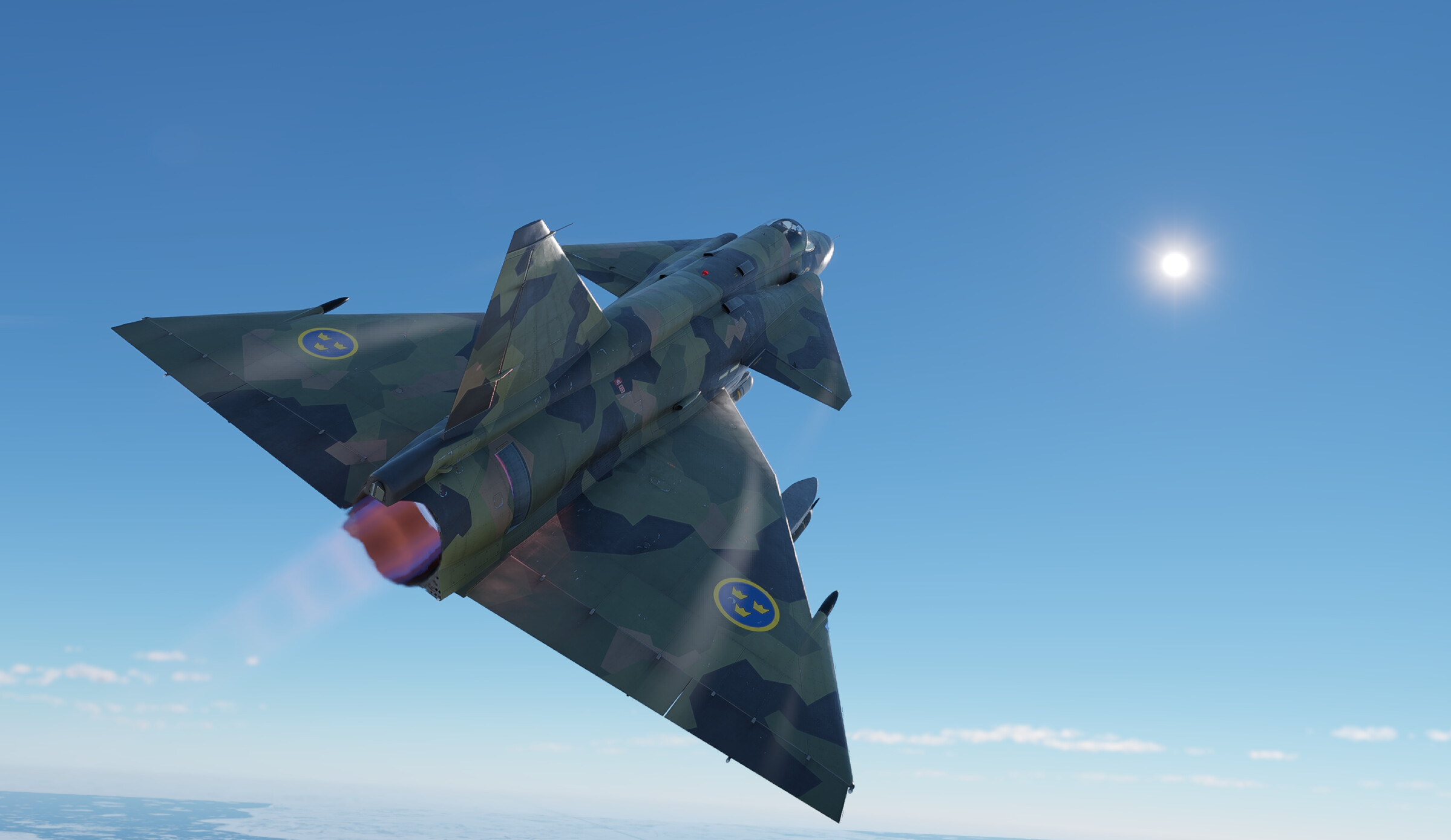
The AJ37 Viggen has a unique flight performance unlike many other aircraft in War Thunder. Its powerful RM8 engine and afterburner give it powerful acceleration at low altitudes, while the canard-delta wing design allows for agile maneuvering during attack runs. However, its large airframe and limited energy retention make it less effective in sustained dogfights. The Viggen excels in fast, low-level strikes and quick disengagements rather than turn-fights with designated fighter aircraft. The Viggen’s relatively large wingspan and overall size contribute to its stable handling at high speeds but also make it a much bigger, easier to hit target than other jets.
In terms of survivability, the AJ37 can take a few hits but shouldn’t be relied on to withstand heavy fire. Its airframe is sturdy enough to survive minor damage, yet large control surfaces and an exposed engine leave it vulnerable to severe and critical hits. The lack of advanced RWR with identification can make it vulnerable in some situations. One flare pod only contains 24 flares which are effective, but should be used wisely. Pilots must rely on speed, terrain masking, and some boom-and-zoom style tactics to stay alive.
Air-to-ground gameplay:
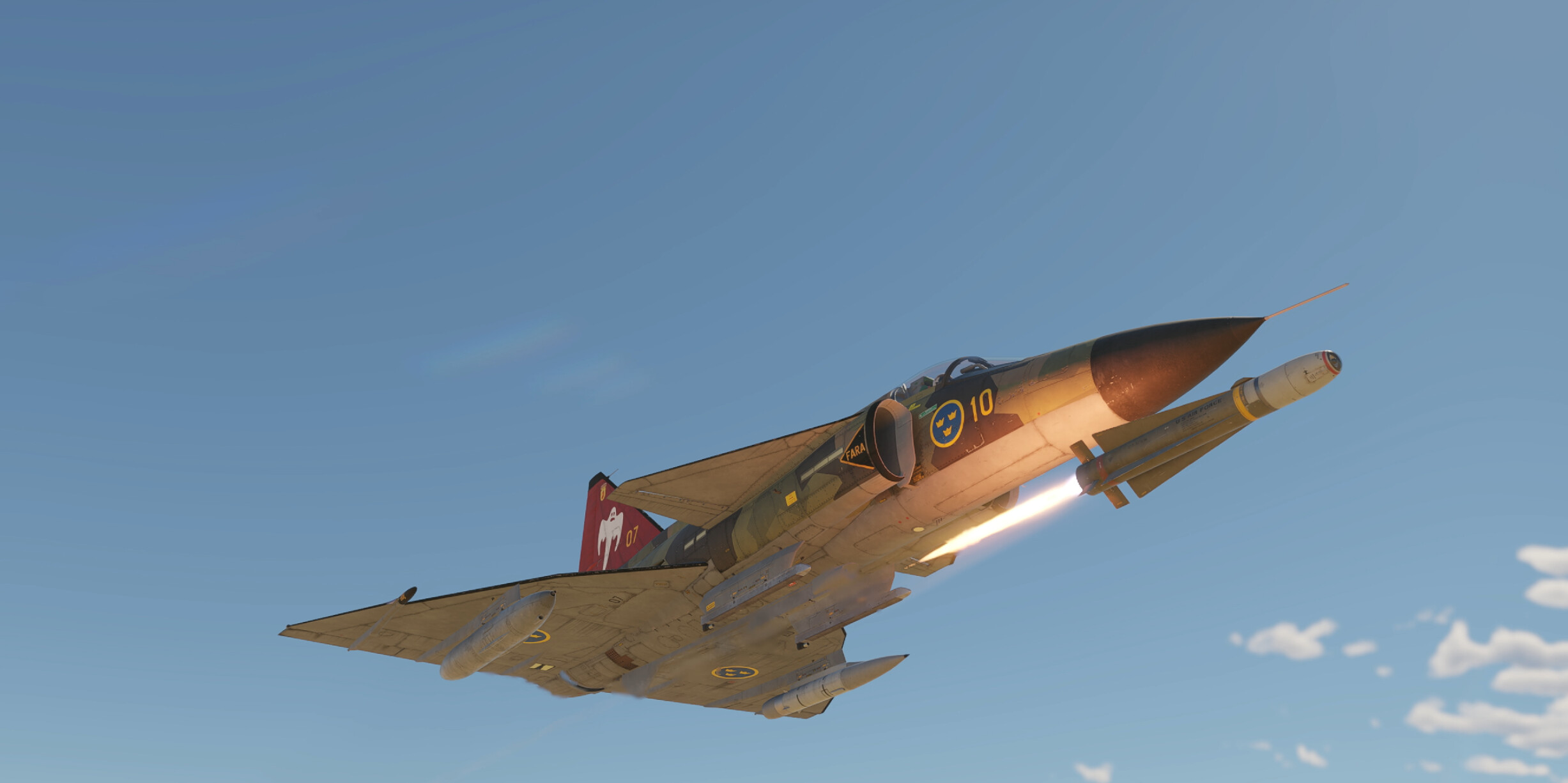
The AJ37 includes many features that help it overcome enemy air defenses and destroy ground forces. First of all, its engine, the RM8. It has a respectable thrust to weight ratio of approximately 0.76, which provides more than enough power when ground-pounding. The aircraft can easily hit Mach 1+, and fly high enough to avoid some air defenses. However, space climbing is not advised because you will be an easy target for other jets with missiles, like the MiG-23 and MiG 27. Flying too high may also put you out of range of the RB75 missile. The RWR is a big upgrade from the A32A. It can detect more radar bands and from a greater range, with tracking detection.
The best strategy is to fly low until about 6km away from the battlefield, then pop up quickly and fire missiles at unsuspecting anti-air. A well balanced loadout for ground attack includes 2x RB75T, 1×30mm gun pod, and 1x flares/chaff pod. The gun is always helpful for light targets, aircraft, or helicopters, and the countermeasure pod can save you from heat-seeking missiles and confuse enemy radar systems. Sadly the aircraft in-game cannot carry more than 2 RB75s and has limited hardpoints, but the next tech tree variant, the AJS37, can carry more weapons.
Air-to-air gameplay:
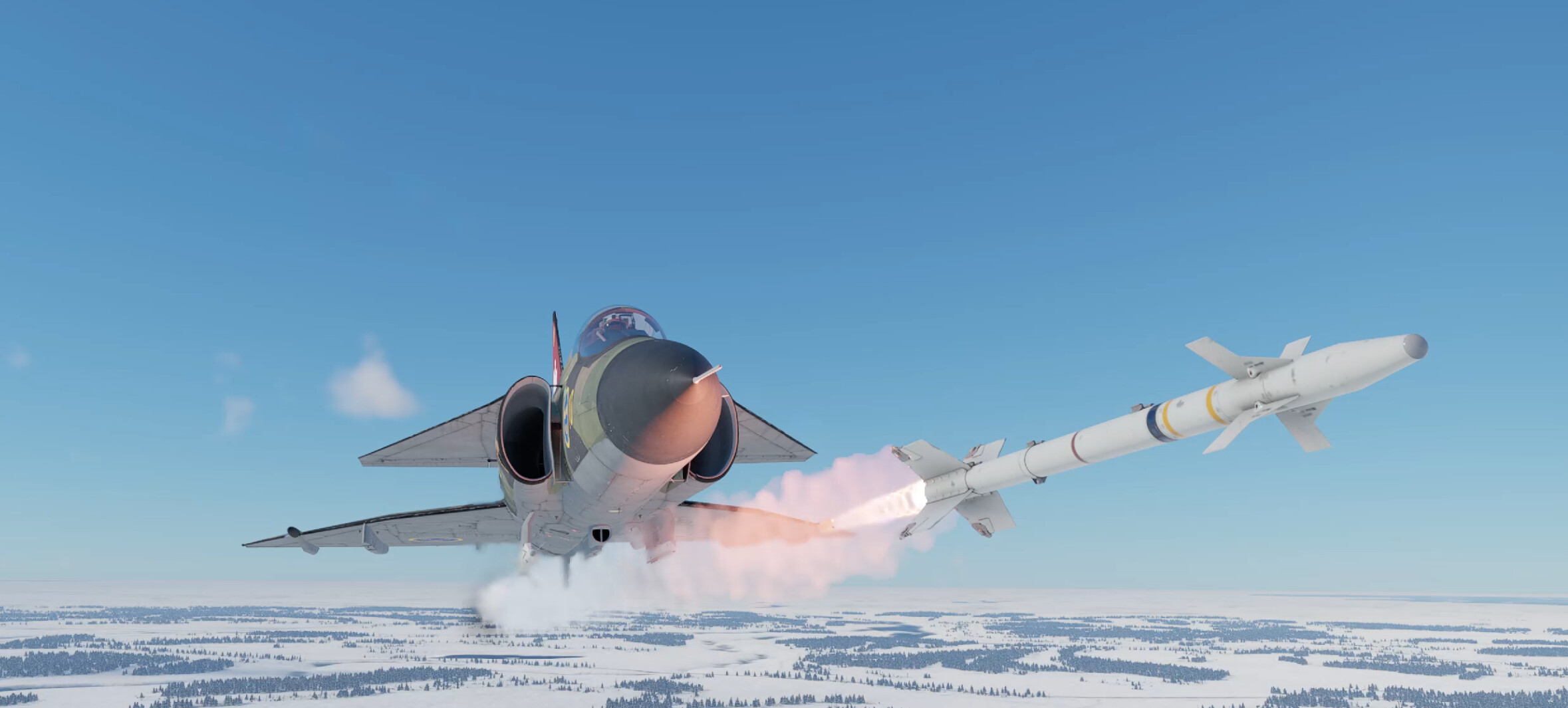
For gameplay in air battles or CAP duty, the Viggen has some useful features and limitations. Like previously mentioned, the aircraft has a powerful engine, the Volvo RM8. This can be used to outrun enemies that are on your tail, and the speed is always helpful for launching your missiles farther. On the topic of missiles, 2 RB24J can be mounted on your aircraft. They are imported AIM-9Ps with subpar range and decent agility. You can slave the seeker to your radar, which can help in certain scenarios. Dog fighting is not recommended because the Viggen has a very large airframe and can be easily hit with guns.
Speaking of radar, the AJ37 has a very powerful radar with pulse-doppler capabilities and a long range. Once you are closer to an enemy, you can switch to IRST to not alert the enemy’s RWR systems. The RWR on the Viggen is not the best, but has tracking detection. The RWR can detect bands E-J, but cannot identify what aircraft or SPAA is tracking you.
Pulse-doppler is a radar search mode that filters out ground clutter to make it easier to detect aircraft flying close to the ground. On the radar screen it is shown as “SRC PD,” short for “search pulse-doppler.”