As World War II reached its final stages, Japan faced increasing challenges in maintaining air superiority. The introduction of the Type 5 Fighter (Ki-100) marked an important attempt by the Imperial Japanese Army to adapt to wartime conditions by replacing unreliable liquid-cooled engines with more dependable air-cooled alternatives. Developed from the Type 3 Fighter (Ki-61 Hien), the Type 5 Fighter proved to be one of the most effective Japanese interceptors of the war.
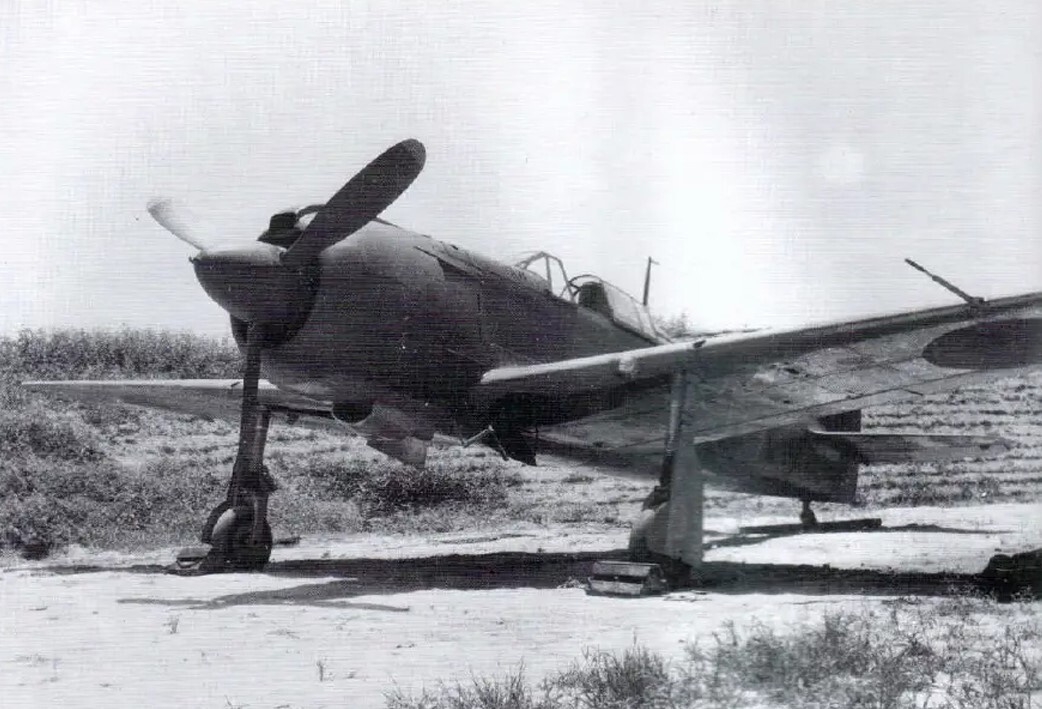
This article explores the development, modifications, and operational history of the Type 5 Fighter I Model Ko and Model Otsu, as well as the design choices that shaped its performance. From its teardrop canopy modifications to its Ha-112-II engine conversion, each aspect of the aircraft was refined to improve reliability, maneuverability, and overall effectiveness in aerial combat.
Through historical photos and detailed technical insights, this article provides a closer look at one of Japan’s most underrated fighter aircraft, offering a glimpse into the ingenuity and struggles of wartime aviation development.
Despite its late introduction, the Type 5 Fighter demonstrated superior climb rate, agility, and durability, surpassing the expectations of both the Japanese Army and Kawasaki engineers. However, production delays and military bureaucracy prevented it from making a significant impact on the war.
Table of Contents
| Chapter | Paragraphs | Content |
| 1. The Type 5 Fighter I Model | Type 5 Fighter I Model Ko, Development and Modifications of the Type 5 Fighter | Squadron, Prototype and markings and the, Armament, Modifications, Mitsubishi |
| 2. Ki-61 Type-3 Attacker Design that led to the Type 5 Fighter Model I (Ki-100) | Development history and relation to Ki-61 | The history on the effect of the Ki-36 on the Ki-100 |
| 3. Development and Modifications of the Type 5 Fighter | Development and Modifications of the Type 5 Fighter | Engine conversion, led by engineer Tomio Oguchi |
| 4. Structural Modifications and the Introduction of the Type 5 Fighter I Model Otsu | Kawasaki’s Engineering Challenges | Structural properties, Armament, Engines, Focke-Wulf, Kurt Tank, Ki-100 |
| 5. Detailed Close-Ups of the Type 5 Fighter Model Otsu where the air-cooled Ha-112-II engine propeller axis was lowered by 60mm compared to the previous liquid-cooled engine configuration. | Detailed Close-Ups of the Type 5 Fighter Model Otsu | Detailed close-ups Ki-100, Transition from heavy fighters to Ki-100, Distinctive looks, rear- and back view, paint, engines and bombs |
| 6. After WWII | British Requisitioned Japanese Navy Aircrafts | British Inspections, Singapore, Cockpit, Research, Post-WWII development, ATAIU-SEA and Kawasaki Seiki |
The Type 5 Fighter I Model (Ki-100-I)
At the end of the war, the 2nd Squadron of the 59th Flight Regiment stationed at Ashiya Airfield in Fukuoka Prefecture had Type 5 Fighter I Model Ko aircraft. This version, with its fastback-style fuselage, was originally an incomplete Type 3 Fighter II Model that had been converted into a Type 5 Fighter. The aircraft bore the 59th Regiment’s distinctive tail markings, with the 2nd Squadron’s insignia painted in red with a white outline.
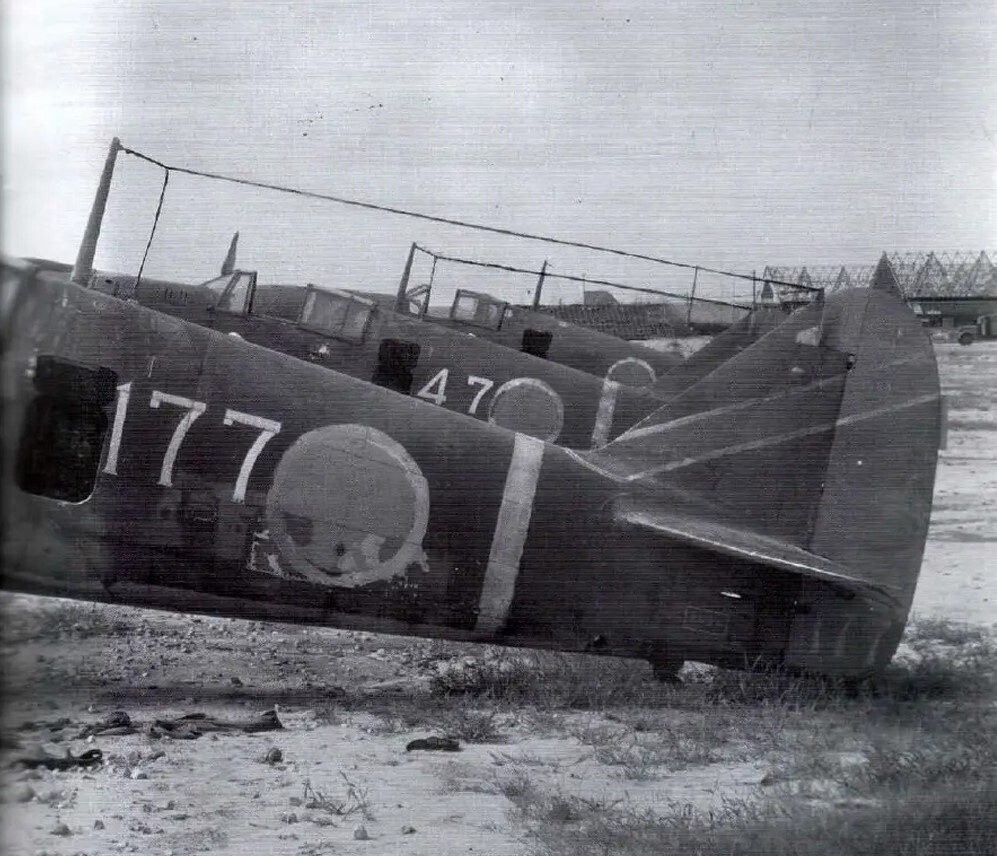
3rd Squadron at Ashiya Airfield
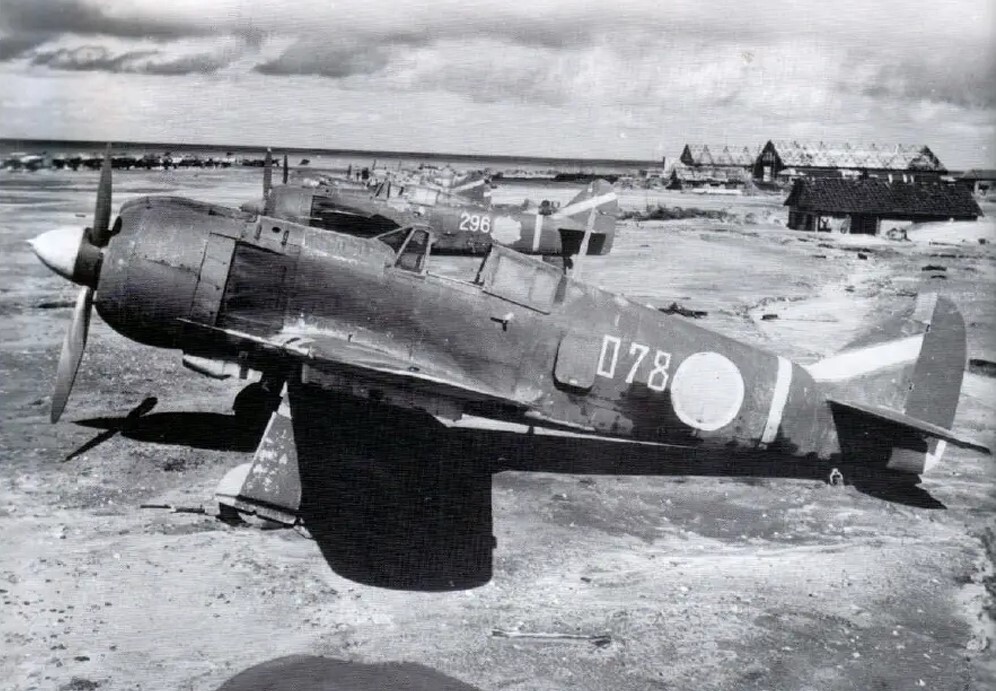
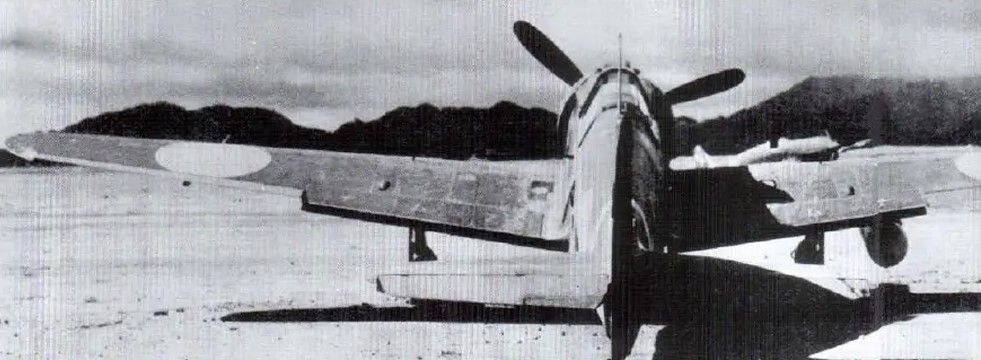
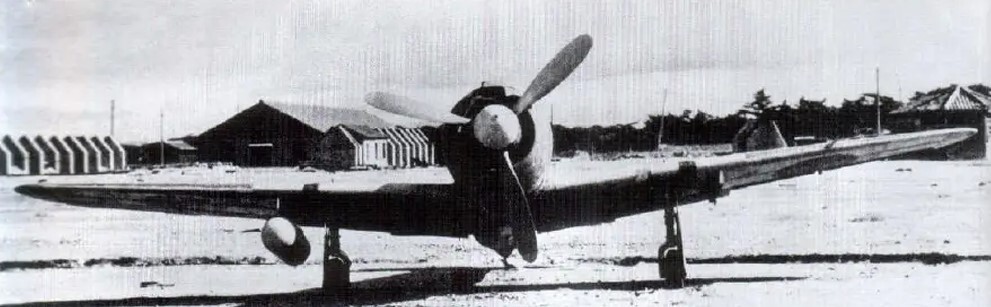

A similar aircraft from the 59th Regiment appears in another photograph, capturing a lineup of planes from the 3rd Squadron at Ashiya Airfield during the war’s final days. The aircraft are arranged in order by their identification numbers: “078”, “296”, and “153”, with “153” with a U.S. aircraft kill marking next to the cockpit. (See “Photos from October 17, 1945”)
The “078” aircraft, closest in the image, has a replacement rudder (possibly from a Type 3 Fighter), disrupting the squadron markings. One distinguishing feature of the 59th Regiment’s Type 5 Fighters was that the main landing gear covers were painted the same color as the upper fuselage, and aircraft numbers (the last three digits of the serial number) were prominently displayed in white in front of the fuselage Hinomaru (Japanese roundel).
The 3rd Squadron’s insignia was painted with a red outline. In the background, beyond other Type 5 Fighters, Type 3 Fighters assigned to a special attack (kamikaze) unit are also visible, parked near the Genkai Sea. This photo was taken by the U.S. Marine Corps in October 1945, after the war.
Photos from October 17, 1945
Three images in this article show a Type 5 Fighter I Model Ko (“153”) from the 3rd Squadron of the 59th Flight Regiment, taken by the U.S. Marine Corps at Ashiya Airfield in Fukuoka Prefecture. In one close-up shot, the kill marking for a U.S. aircraft (possibly a P-51 Mustang) is clearly visible near the cockpit. This aircraft was reportedly flown by 3rd Squadron Leader Lieutenant Ogata Naoyuki.

Ki-61 Type-3 Attacker Design that led to the Type 5 Fighter Model I (Ki-100)
To grasp the origins of the Ki-100, one must first examine another aircraft entirely — the Ki-61 — which made its maiden flight just a week after the Pacific War commenced.
Ki-61 Type-3 Attacker design
In mid-December 1941, just one week after the outbreak of the Pacific War, the first prototype of the Ki-61 took its maiden flight. During test flights in Kagamihara, the aircraft achieved an impressive top speed of 590 km/h, which was considered extraordinary at the time. Due to its outstanding performance in subsequent evaluations, the first production model was completed as early as August 1942 under the name Type 3 Fighter “Hien”.
Earlier, in February 1940, the Japanese Army had commissioned Kawasaki to develop two new fighter aircraft: the Ki-60 and the Ki-61. The Ki-60 was designed with a focus on speed, performance, and firepower, while the Ki-61 aimed to balance speed and maneuverability.
The Role of a Fighter Aircraft
“Simply put, the primary mission of a fighter aircraft is to achieve air superiority. It must be capable of easily intercepting and shooting down all types of enemy aircraft. Therefore, it must excel in speed, firepower, and maneuverability. However, these three attributes are often technically conflicting, making it a challenge to balance them.
Additionally, for a fighter to be practical in real combat, factors such as takeoff and landing performance, flight endurance, and maintenance complexity must also be taken into account.
The Army designated the Ki-61 as a light fighter, but from my perspective, based on past lessons from the Ki-10 (Type 95 fighter, a biplane) and the Ki-28 (a low-wing monoplane), I intended to integrate all past experiences to develop my ideal fighter—regardless of whether it was classified as a light or heavy fighter.”
- Takeo Doi, Primary designer of the Ki-61 and Ki-100.
Design Features of the Ki-61
One of the key design features of the Ki-61 was its emphasis on turn rate and climb performance during aerial combat. This philosophy was carried over from the Ki-28 and led to a wing area of 20m², a wingspan of 12m, and a relatively high aspect ratio of 7.2. This design choice was crucial because, at high altitudes, wing loading becomes a significant factor in combat performance. The 12m wingspan also allowed the landing gear to be fully retracted into the wings, while the underside of the fuselage was efficiently used to house the fuel tanks and radiator.
Over time, several modifications were made to the Type 3 Fighter (“Hien”), based on combat experience. In April 1942, an improved version, the Ki-61 Model 1, was introduced. Around this period, B-29 bombings over mainland Japan intensified, and by August 1944, the worsening war situation forced military authorities to drastically reduce the production of the Ki-61. By October 1944, an urgent decision was made to equip unfinished Ki-61 airframes with air-cooled engines, leading to the development of the Ki-100.
In the end, a total of 374 units of the Ki-61-II were produced before the war ended, but 275 of them were converted into Ki-100s, leaving only 99 units in their original form.
Development and Modifications of the Type 5 Fighter
The team responsible for the engine conversion, led by engineer Tomio Oguchi, worked under extreme pressure, even staying overnight in the design office to complete the modifications. As a result of their intense efforts, the first prototype was completed in an astonishingly short timeframe of just three months after the decision to switch engines was made.
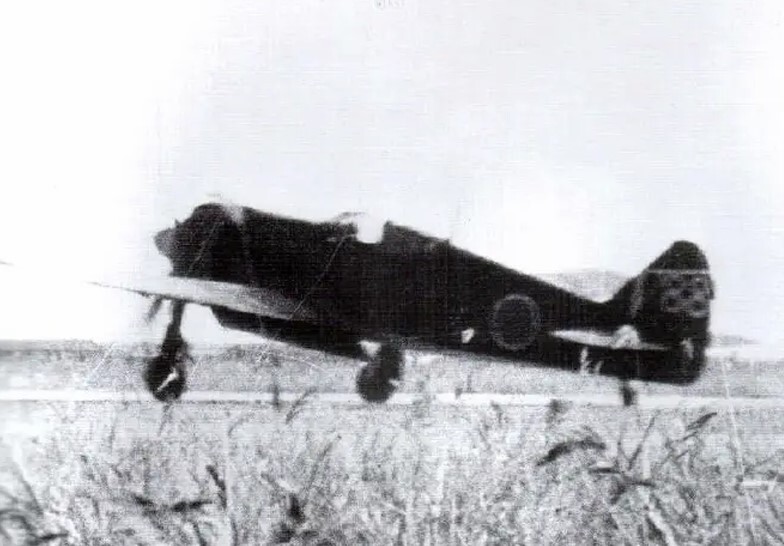
A separate image, taken at Chofu Airfield post-war, shows a Type 5 Fighter I Model Ko numbered “32”, formerly belonging to the 244th Flight Regiment. The 244th Regiment had transitioned to the Type 5 Fighter on May 17, 1945, when it relocated from Chofu to Kyushu.
However, this particular aircraft remained behind, likely due to engine trouble, and was left at Chofu until the war ended. From this angle, the Type 5 Fighter maintains a sleek and well-proportioned appearance, making it hard to believe that it was originally a Type 3 Fighter modified from a liquid-cooled to an air-cooled engine.
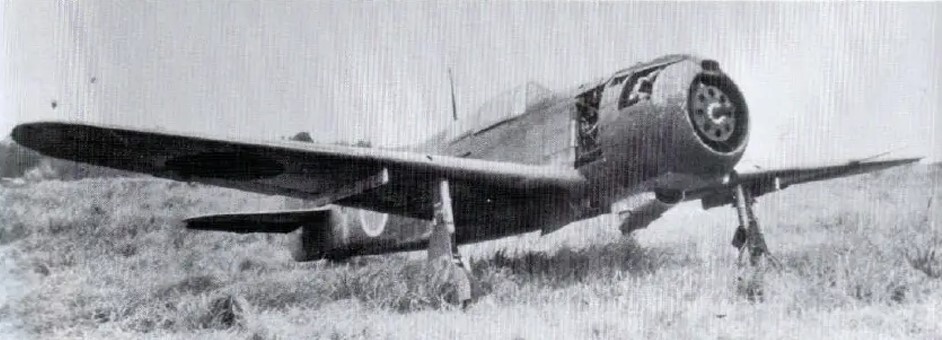

The second picture shows the same 244th Regiment aircraft (“32”), with its partially faded squadron insignia from its Type 3 Fighter days still visible on the tail. The landing gear covers are painted to match the upper fuselage and have the aircraft number “32” in white with a border.
The decision to replace the liquid-cooled engine with an air-cooled one for the Type 3 Fighter was made on October 1, 1944. If the Army had properly assessed the Ha-40 liquid-cooled engine’s operational challenges, the Type 5 Fighter could have entered service by the summer of 1944, making its delayed introduction another major failure of Army aviation administration.
A Type 5 Fighter I Model Ko (“22”), previously belonging to the 244th Flight Regiment, was abandoned at Chofu Airfield and remained there until the end of the war, similar to the “32” aircraft as seen in the picture above. Judging by its damaged state, this aircraft was likely decommissioned due to an accident.

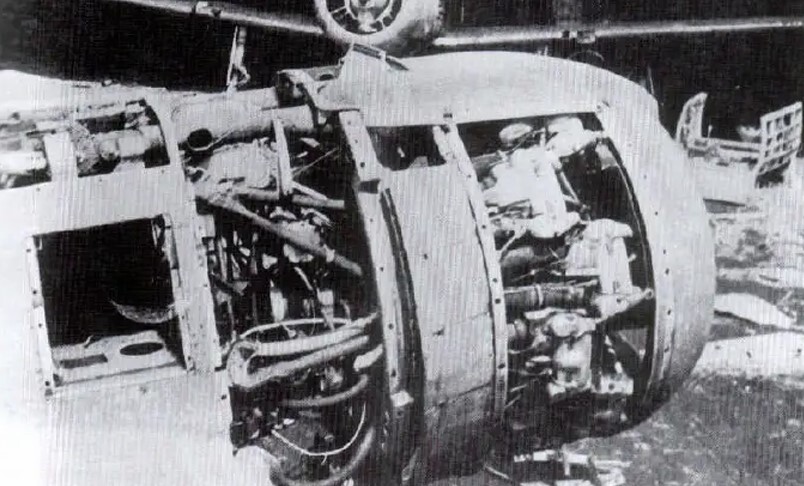
A close-up of the nose section of a 244th Regiment aircraft shows several missing panels, providing a clear view of the Ha-112-II engine and its auxiliary components. The Ha-112-II, manufactured by Mitsubishi, was known in the Japanese Navy as the “Kinsei” Model 61-62. It had already been successfully used in the D4Y3 Suisei (Judy) dive bomber and Type 100 Command Reconnaissance aircraft. As a 1,500-horsepower-class engine, it had a proven track record of reliability and performance.
A cockpit view of the Type 5 Fighter prototype (possibly the first unit built) shows an instrument panel layout similar to that of the Type 3 Fighter, though with some differences in the central panel arrangement. Three additional instruments, mounted on the right side panel, were used for performance testing and were not present in production models. The empty spaces at the top left and right of the panel were originally intended for Ho-5 20mm cannons, but they were not installed in this prototype.
Structural Modifications and the Introduction of the Type 5 Fighter I Model Otsu
In February 1945, following the official adoption of the Ki-100-I as the standard Type 5 Fighter, Kawasaki initiated two key design modifications. One of the most significant changes was the replacement of the fastback-style canopy, which had been a feature since the Type 3 Fighter, with a teardrop-shaped canopy. This modification aimed to improve rear visibility, a change requested by the Japanese Army.
The structural adjustment was relatively simple:
- The upper fuselage frame behind the cockpit was trimmed down.
- A new rear canopy section was built.
- The fairing at the base of the vertical stabilizer was slightly modified.
By April 1945, the first prototype of this improved version was completed, resulting in a more streamlined and modern design that replaced the previously bulky appearance. This teardrop canopy version was informally designated as Model Otsu, while the earlier version retained the designation Model Ko. However, this distinction was not officially recognized by the military.
Some maintenance records suggest that the Model Otsu had a lighter armament configuration, removing the two Ho-103 12.7mm machine guns from inside the fuselage, leaving only two Ho-5 20mm cannons in the nose. However, reports indicate that many 5th Regiment aircraft retained their original armament configuration, meaning the gun removal may not have been a standard production change.


Kawasaki’s Engineering Challenges
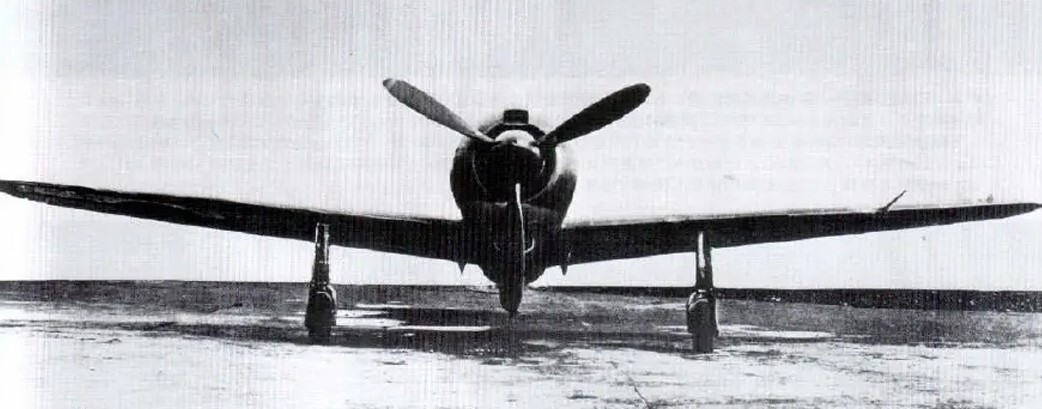
This chapter contains three official Kawasaki reference photos showing the first Model Otsu prototype from various angles. A rear view highlights the narrow 84 cm fuselage, which had to accommodate the Ha-112-II engine with a large 121.8 cm diameter. The Kawasaki engineering team put significant effort into achieving a seamless integration of the engine with the aircraft’s compact airframe.
The engine installation drew inspiration from the German Focke-Wulf Fw 190 A-5, which had been imported from Germany. The work of German aircraft designer Kurt Tank unexpectedly influenced the Ki-100's engine cowling design, proving beneficial.
A frontal view reveals the efforts to reduce aerodynamic drag around the large-diameter Ha-112-II engine, with the cowling tapering sharply towards the front intake. The square-shaped air intake above the engine opening was specifically designed for the downdraft carburetor system.
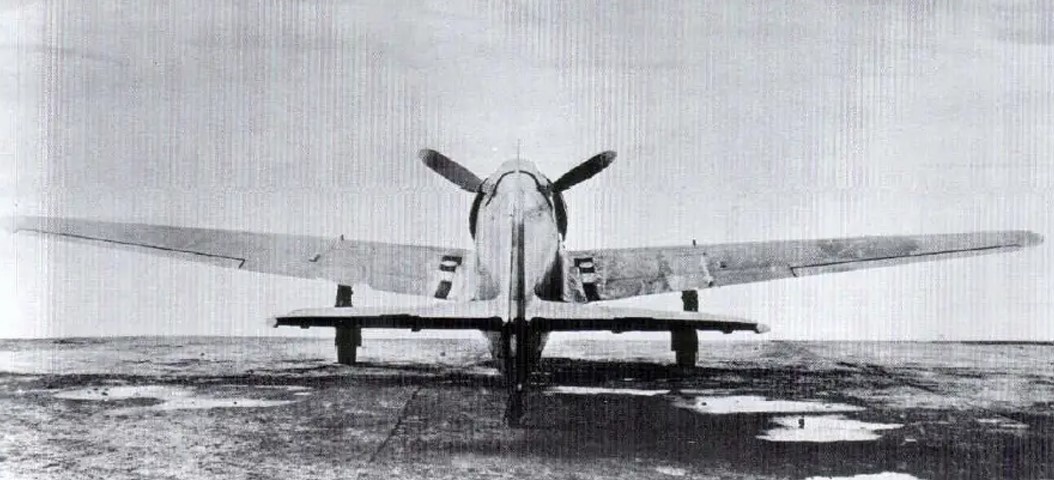
Type 5 Fighter Model Otsu at Kiyosu Airfield
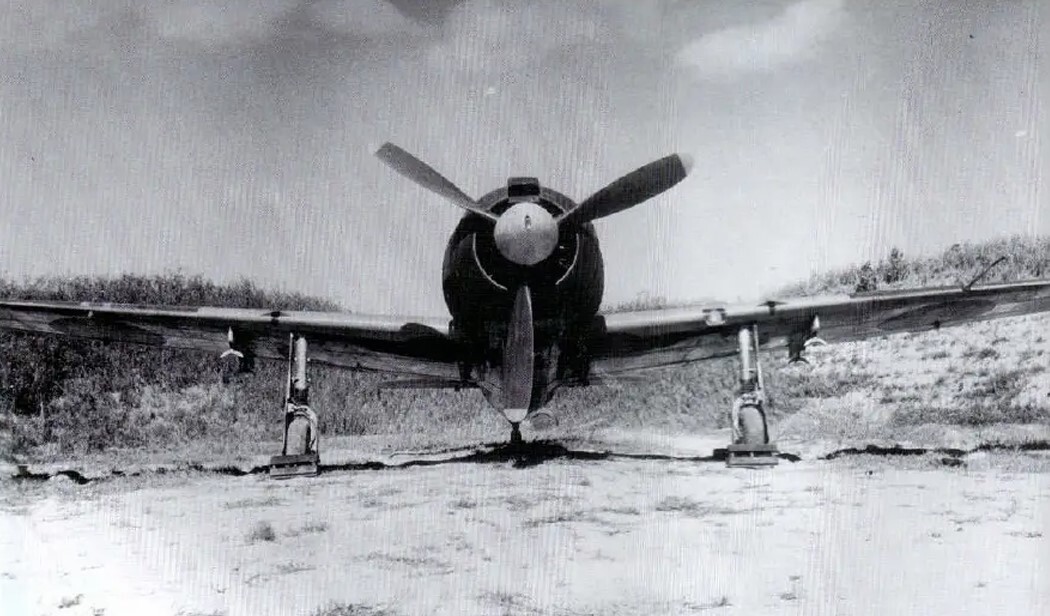
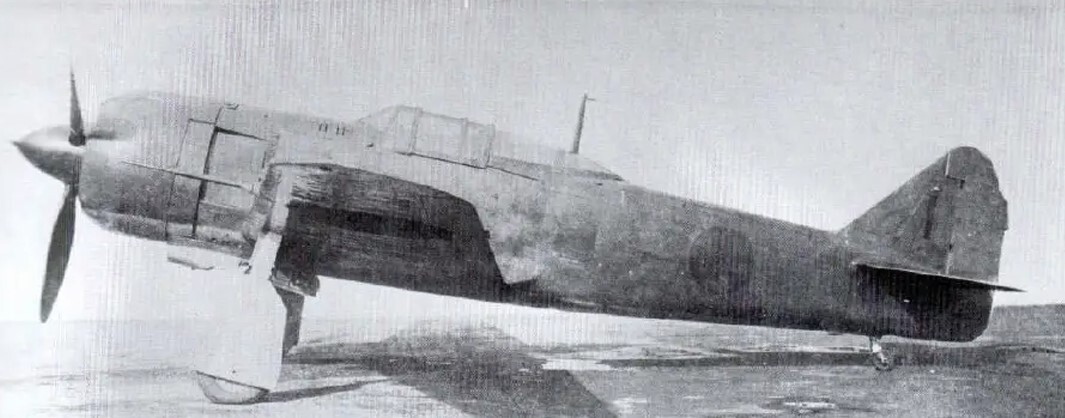
This Type 5 Fighter I Model Otsu, photographed at Kiyosu Airfield between June and July 1945, belonged to the 5th Flight Regiment. Since it had only recently been assigned to the unit, it lacked squadron markings at the time. Unlike some modified aircraft, this one retained its primary armament.
With the switch to the air-cooled Ha-112-II engine, the propeller axis was lowered by 60mm compared to the previous liquid-cooled engine configuration. As a result, while the aircraft still used a Hamilton-style “Be-26” propeller, its diameter was reduced by 10cm, measuring 3.0 meters, compared to the propeller used on the Type 3 Fighter II Model.
This propeller was a broad-blade type, commonly referred to as a “Model Propeller”, and was also used on the Type 100 Command Reconnaissance Aircraft III Model, which was equipped with the same Ha-112-II engine.
Performance Trade-offs of the Air-Cooled Conversion
This snapshot, taken from a different angle, shows the same Type 5 Fighter I Model Otsu as in the previous header images. The switch to an air-cooled engine resulted in increased aerodynamic drag, which negatively impacted the aircraft’s top speed. Despite the new engine producing 50 more horsepower, the maximum speed dropped by 30 km/h, reaching only 580 km/h, compared to the Type 3 Fighter II Model Kai.
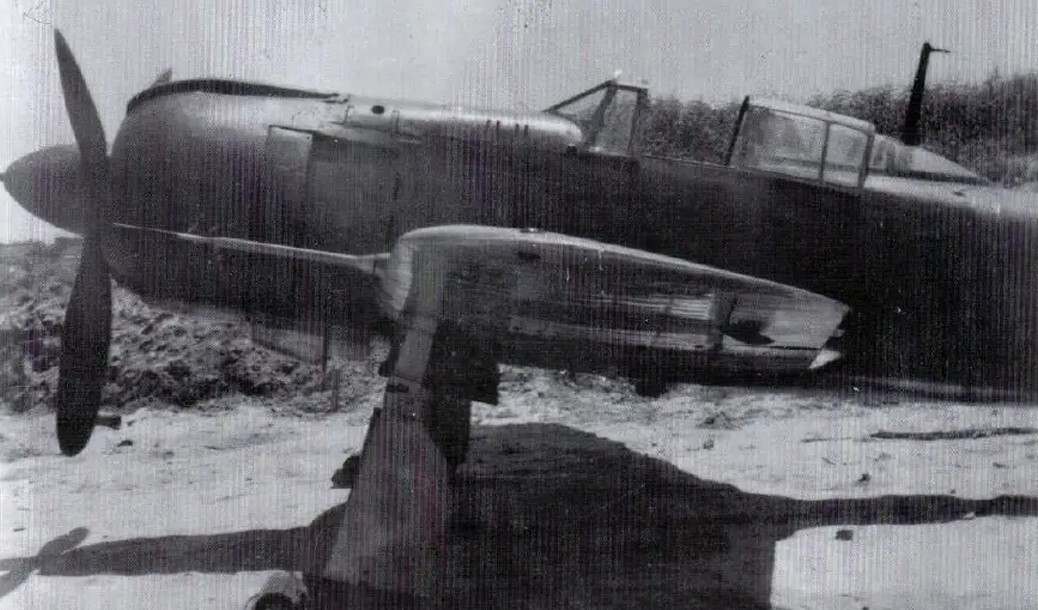

However, the trade-off was a dramatic improvement in operational reliability. The removal of the heavy liquid-cooling system reduced the aircraft’s weight by 330 kg, leading to better climb performance and improved maneuverability. In fact, the results exceeded the expectations of both the Japanese Army and Kawasaki.
This success raised a critical question: why had the switch to an air-cooled engine not been made sooner? The delay highlighted poor decision-making by military leadership, which had held back a potentially superior fighter due to bureaucratic hesitation.
Distinctive Appearance of the Type 5 Fighter Model Otsu
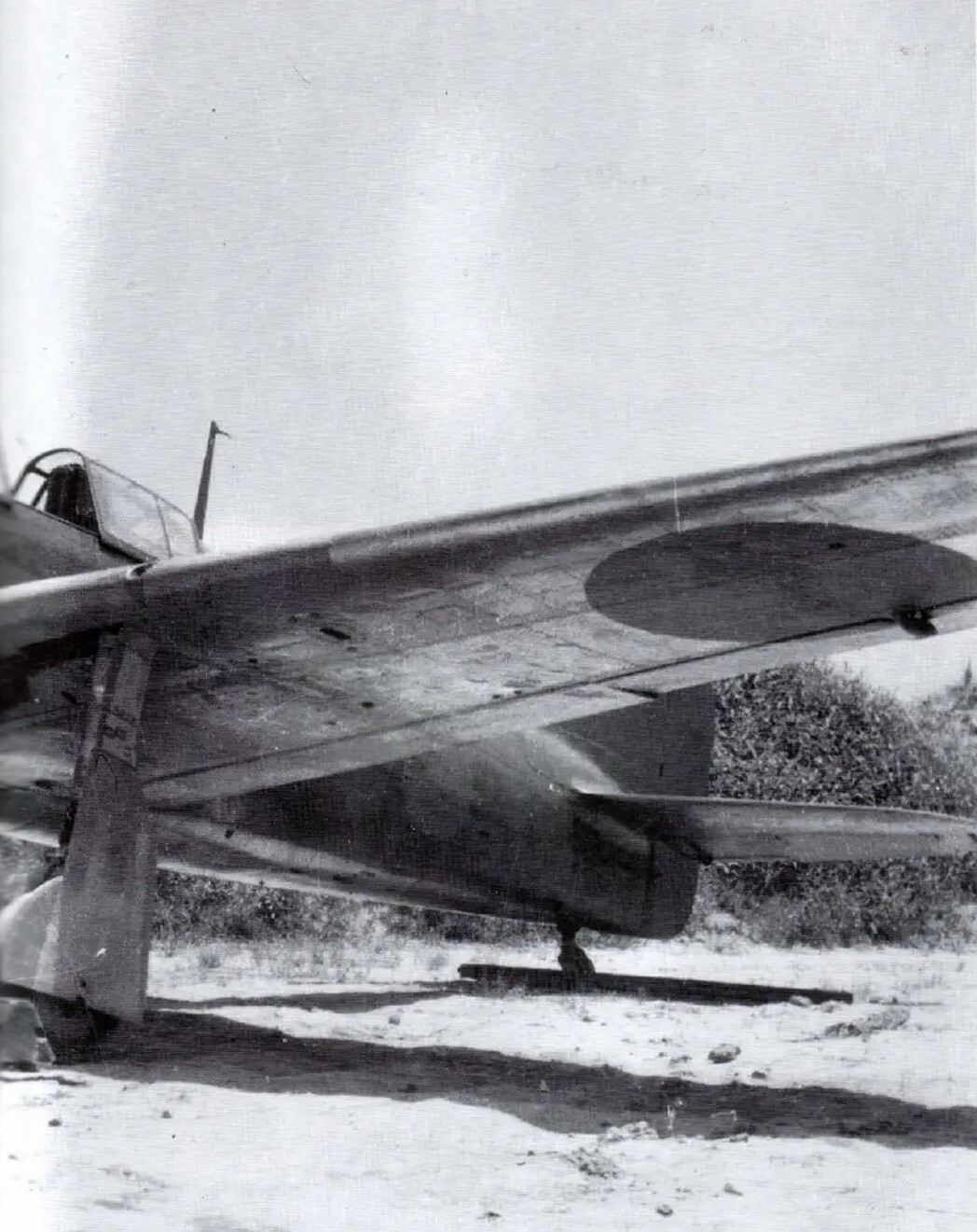
This left-front, low-angle view of a 5th Flight Regiment Type 5 Fighter highlights the aircraft’s thicker nose section, giving it a more powerful and aggressive appearance compared to the Type 3 Fighter.
To simplify the production process, the aircraft was delivered with an unpainted duralumin underside, just like the Type 3 Fighter. From this angle, the fairing used to smooth out the fuselage underside—installed after the removal of the radiator system—is clearly visible.
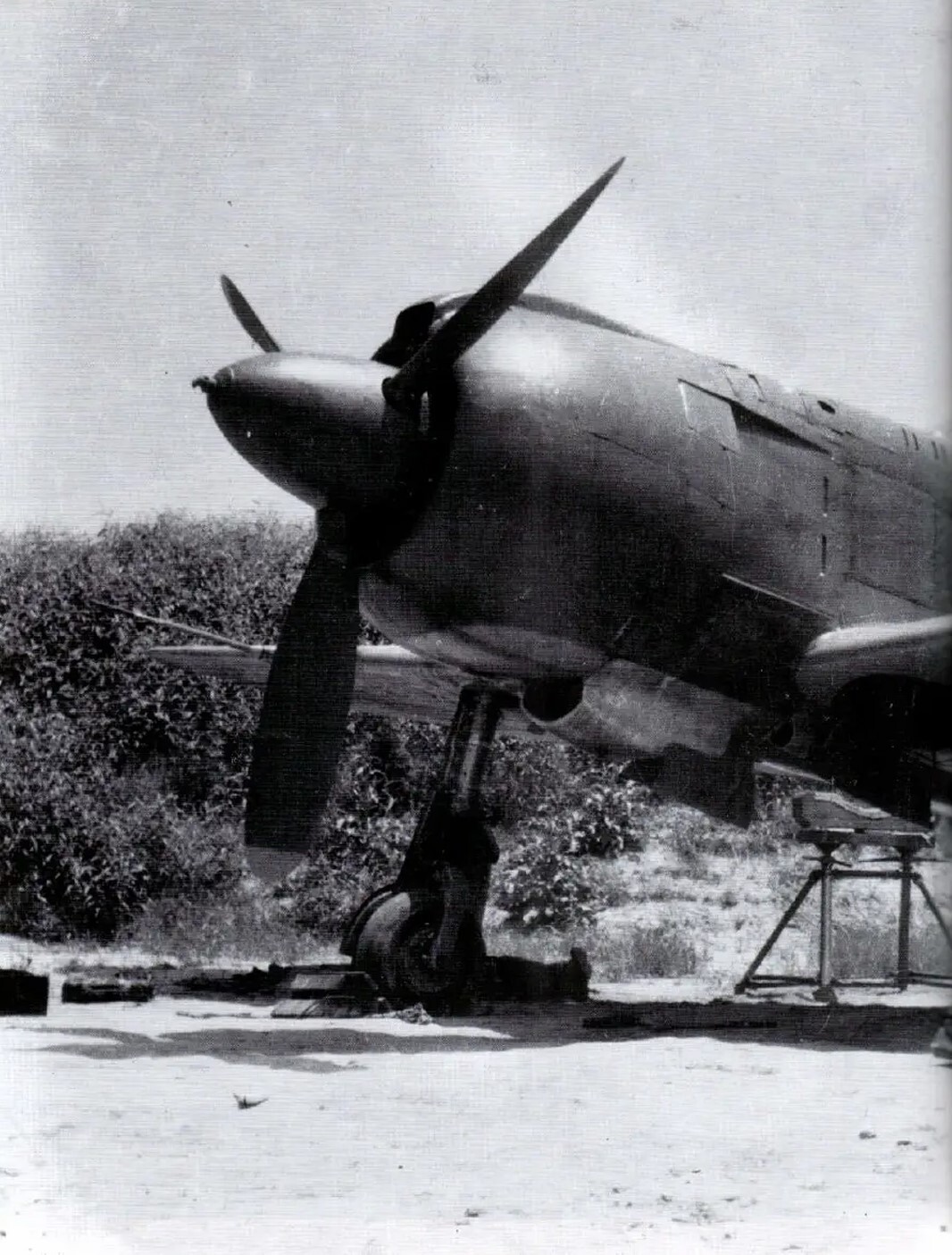
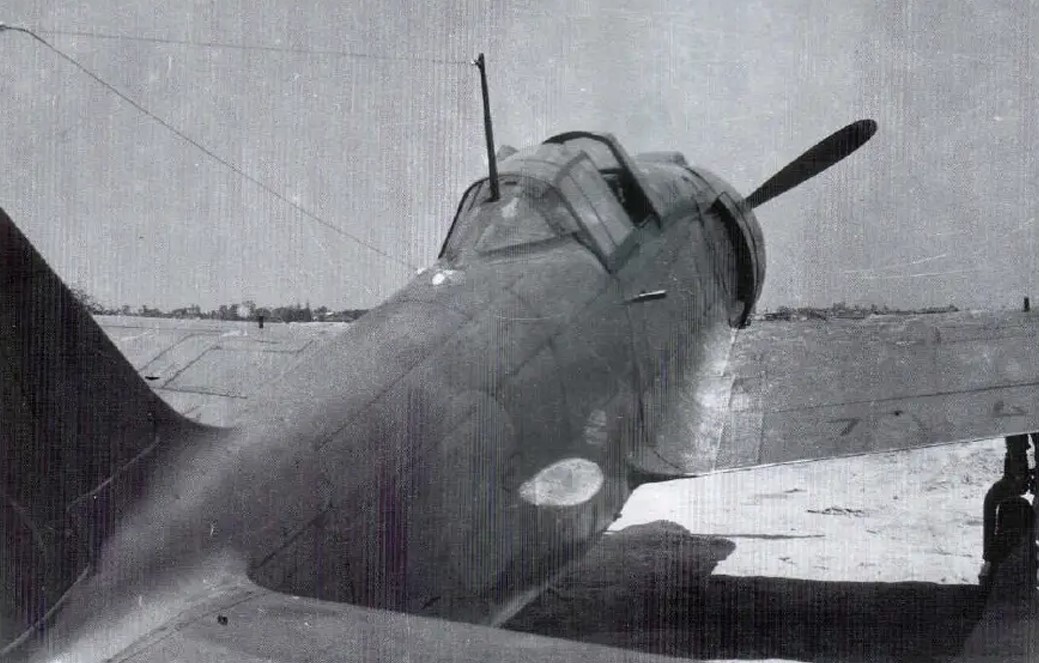
Rear and Side View of the Type 5 Fighter Model Otsu
This rear-side view of a 5th Flight Regiment Type 5 Fighter I Model Otsu clearly showcases the teardrop canopy modification, as well as the narrowed fuselage profile, achieved by trimming down the upper rear fuselage paneling. The smooth transition from the exhaust outlets to the fuselage is also evident.
Additionally, a large wing root fillet was added to the base of the wings, internally reinforced for structural strength. Several features are visible:
- The white teardrop-shaped protrusion behind the rear canopy is a navigation light.
- The red-painted hatch in front of it is the high-pressure oil filling port.
- The white protrusion further to the left is the antenna cable entry point.
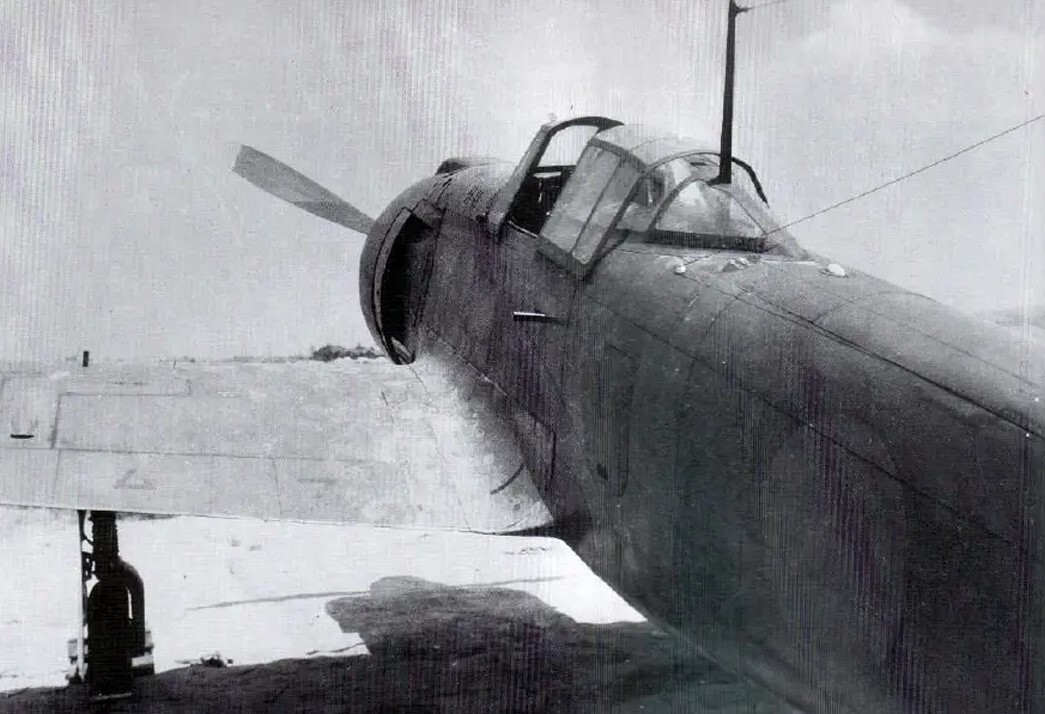
Transition from Heavy Fighters to Type 5 Fighter Model Otsu
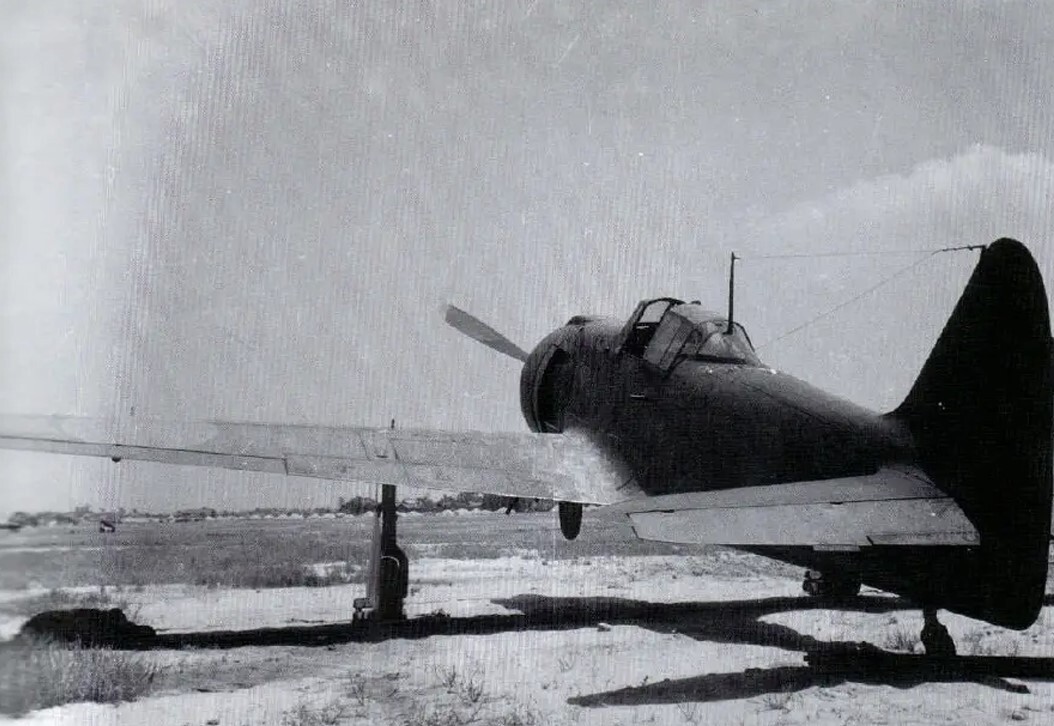
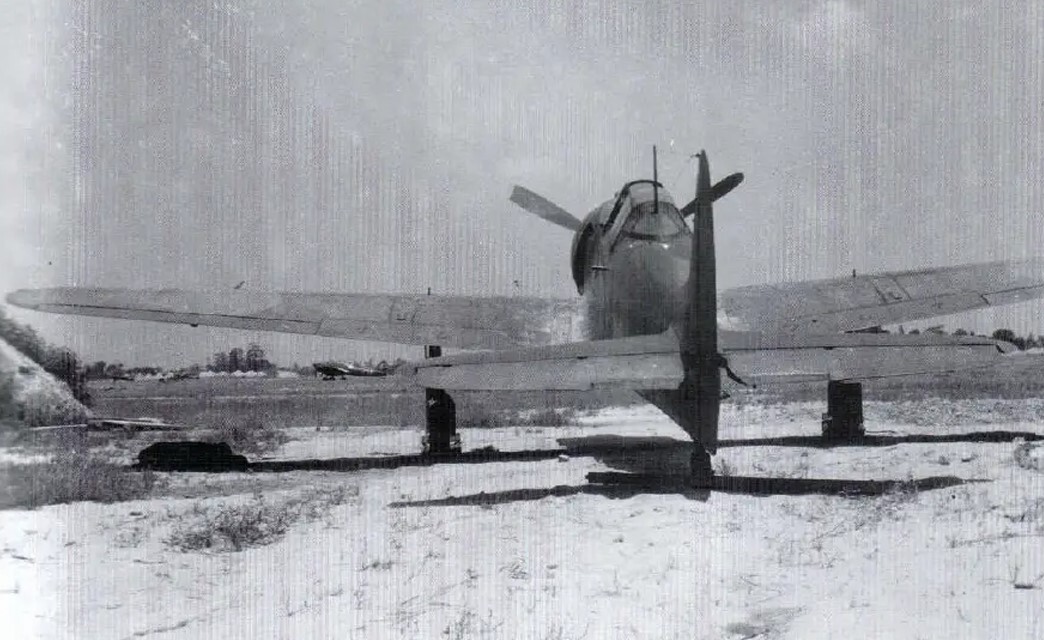
The 5th Flight Regiment had previously operated Type 2 Heavy Fighters (Ki-45 Toryū) but was among the first to transition to the Type 5 Fighter. By mid-1945, the Japanese Army faced increasing threats, not only from B-29 bombers but also from their P-51 Mustang escorts and U.S. Navy carrier-based fighters. Under these conditions, the slower and less maneuverable Type 2 Heavy Fighter was no longer viable as an interceptor, leading to its replacement.
The conversion to Type 5 Fighters began in late May 1945, and by the end of the war, about 20 aircraft had been delivered to the unit. However, the full transition was never completed. In the lower left background of the second photo, remnants of the older Type 2 Heavy Fighters can still be seen, scattered across the airfield.
Detailed Close-Ups of the Type 5 Fighter Model Otsu where the air-cooled Ha-112-II engine propeller axis was lowered by 60mm compared to the previous liquid-cooled engine configuration.
Close-Up of the Lower Nose Section
The first image provides a detailed view of the aircraft’s lower nose section. Notably, the indentation around the exhaust outlet is clearly visible. Also present is the crank bar inserted above the oil cooler, which was used as a manual starter handle for the inertia start system.

Right-Side Nose and Main Landing Gear Close-Up
- The cowling flaps are in a closed position, which causes the exhaust pipes to protrude slightly when viewed from the side.
- The rear shutter of the oil cooler is also in the closed position.
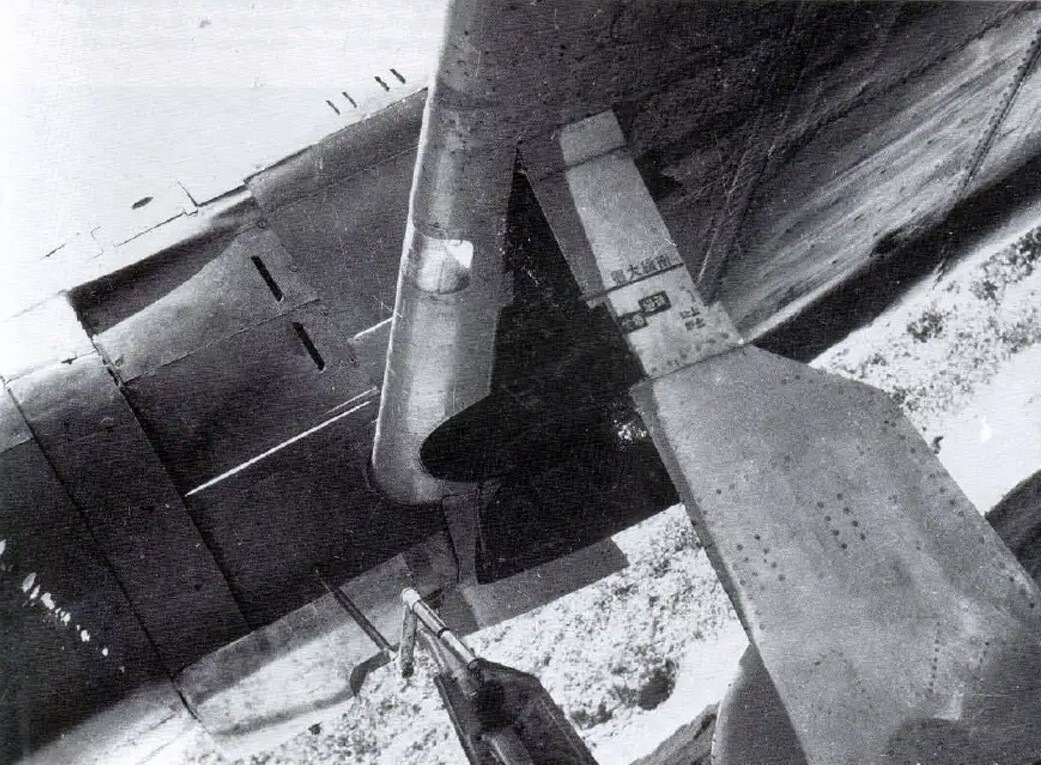

Close-Up of the Left Main Landing Gear and Wing Root
- The rivets on the unpainted main landing gear covers and wing underside are clearly visible.
- The transparent glass section on the leading edge of the wing houses the landing light.
- Just beyond this, a red cross marking partially reveals the firing port for the Ho-103 12.7mm machine gun mounted inside the wing.
- The lines and markings on the upper section of the landing gear cover indicate the compression positions of the oleo strut under different weight conditions.
- If the lower main landing gear cover reaches the “Maximum Compression” line, it means the aircraft has reached its operational weight limit.
The 3rd picture shows a rear-right snapshot which highlights the differences introduced by the teardrop canopy modification. Unlike the Model Ko, where the central sliding section of the canopy moved straight backward, the Model Otsu’s canopy slides slightly downward at the rear when opened.
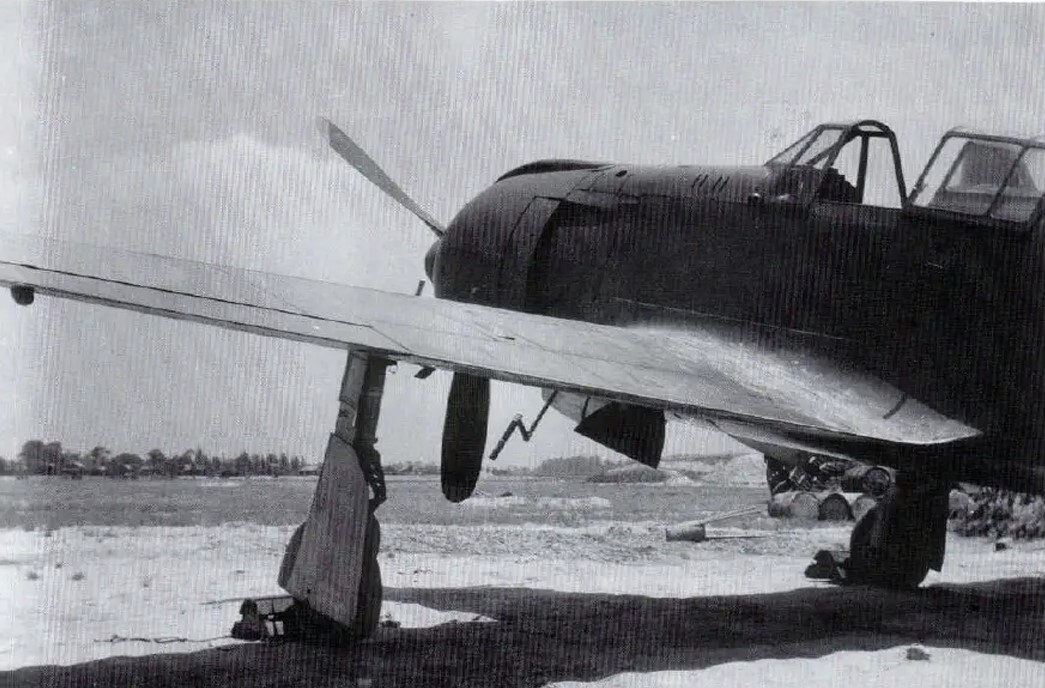

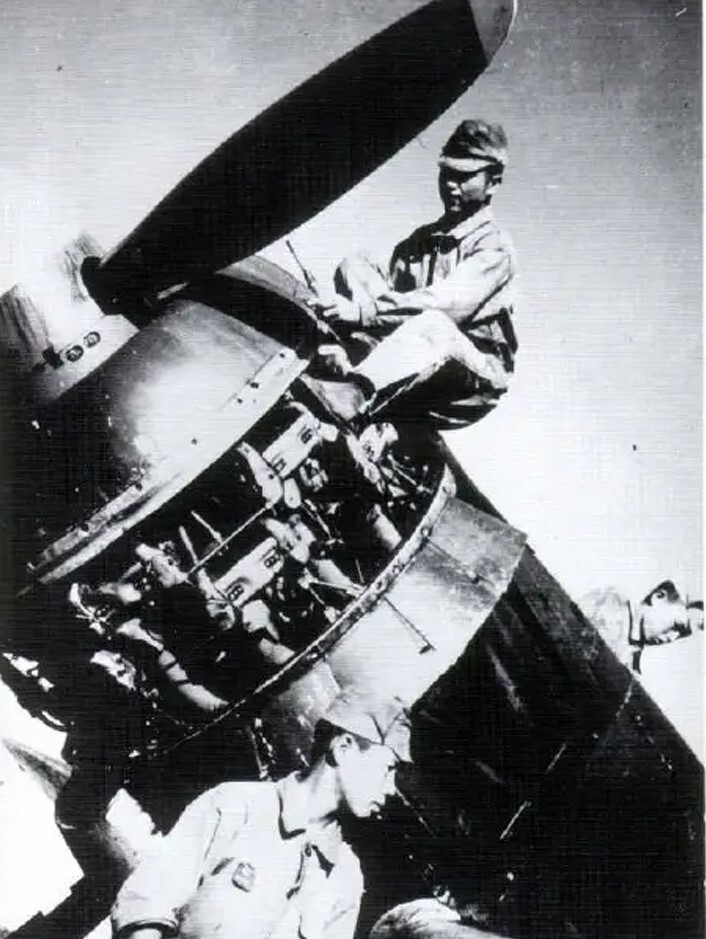
Maintenance on the Ha-112-II Engine of a Type 5 Fighter Model Otsu
This image shows a Type 5 Fighter I Model Otsu from the 5th Flight Regiment undergoing engine maintenance.
- The Ha-112-II engine is exposed as the aircraft is being serviced.
- A close-up view of the Hamilton-style “Be-26” propeller spinner and the engine cowling is visible, highlighting the aircraft’s front-end design and aerodynamics.

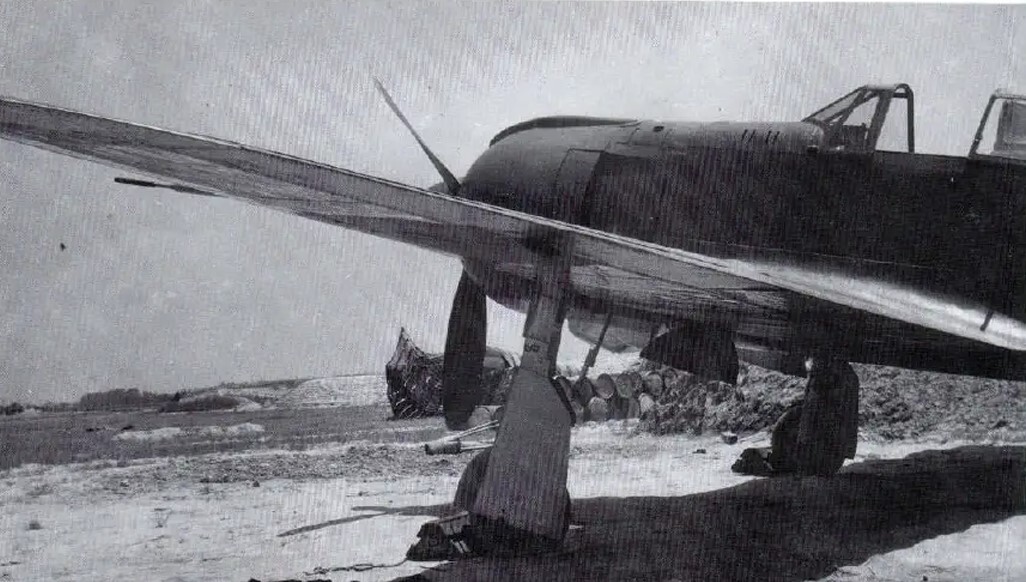
Type 5 Fighter Model Otsu at Kiyosu Airfield
In this image, a 5th Flight Regiment Type 5 Fighter Model Otsu is on standby at Kiyosu Airfield.
In the foreground, an air-to-air “Ta” bomb, designed for use against large enemy bombers, is suspended under the left wing. However, the 5th Flight Regiment never had the opportunity to use these bombs in actual combat.

Close-Up of the Nose Underside
- The main oil cooler unit is partially embedded in the fuselage underside, but it still sticks out significantly, contributing to aerodynamic drag.
- As you can see on the end of the main oil cooler; the rear shutter of the oil cooler is fully open, allowing for maximum airflow.
- To the right side of the image, the crank handle for the inertia starter system is visible.

After World War II
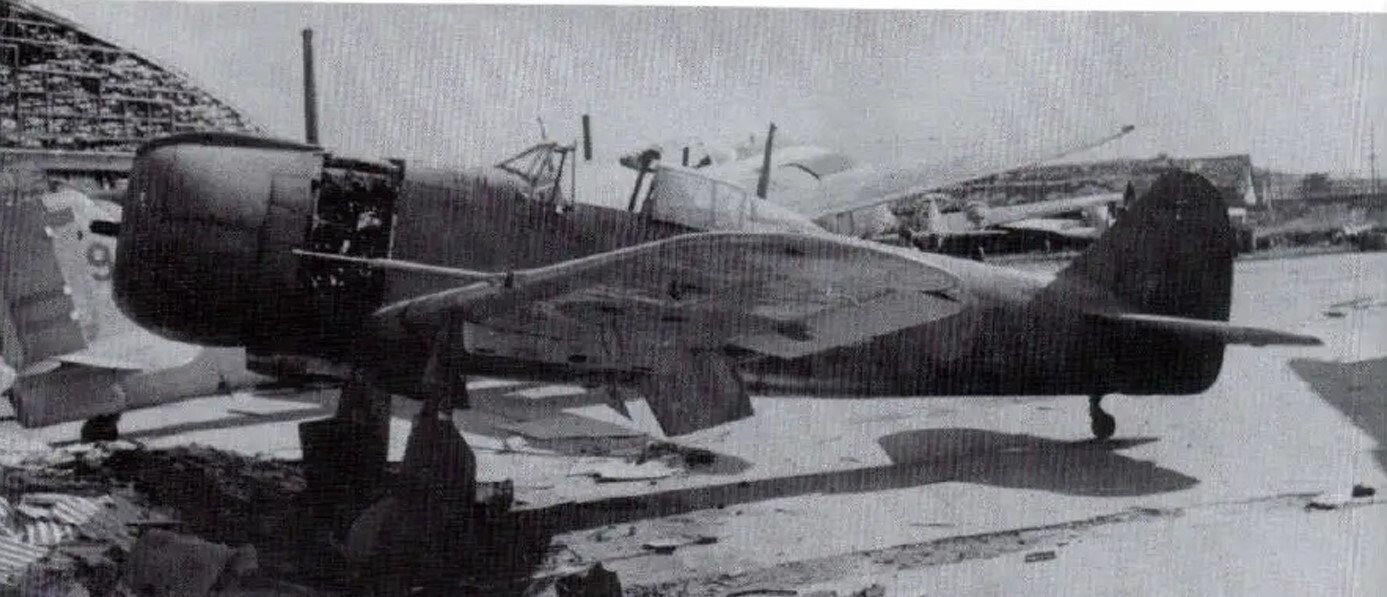
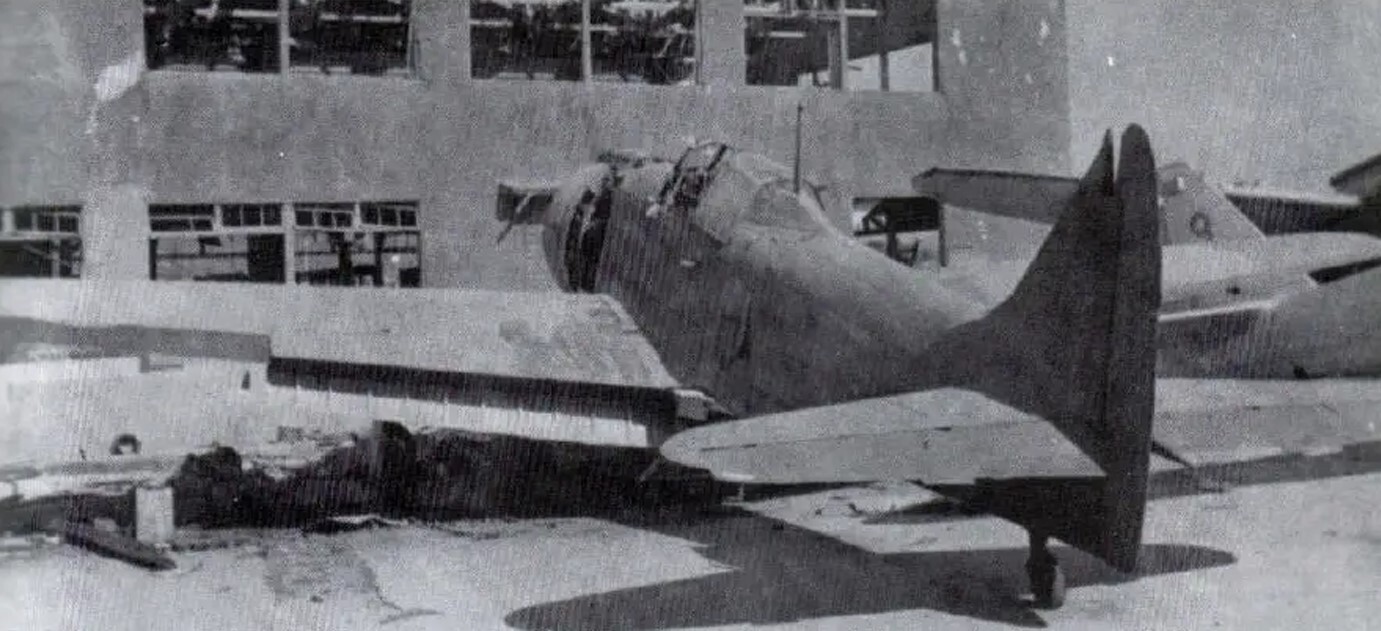
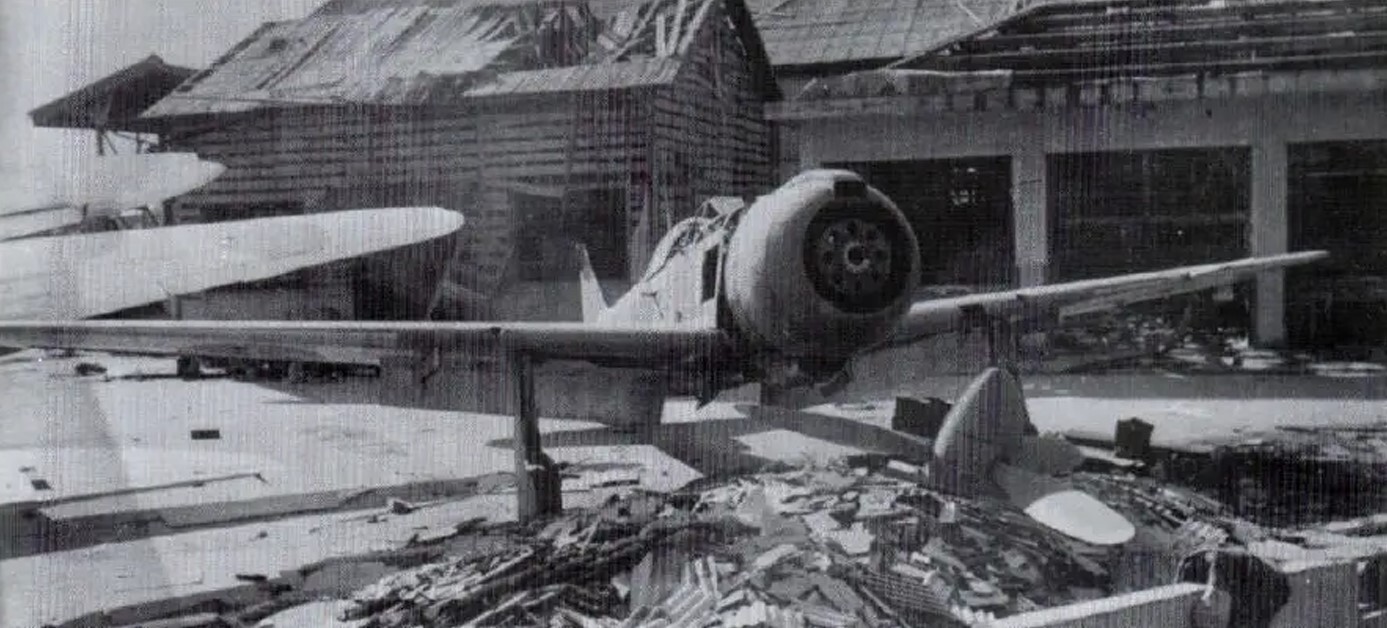
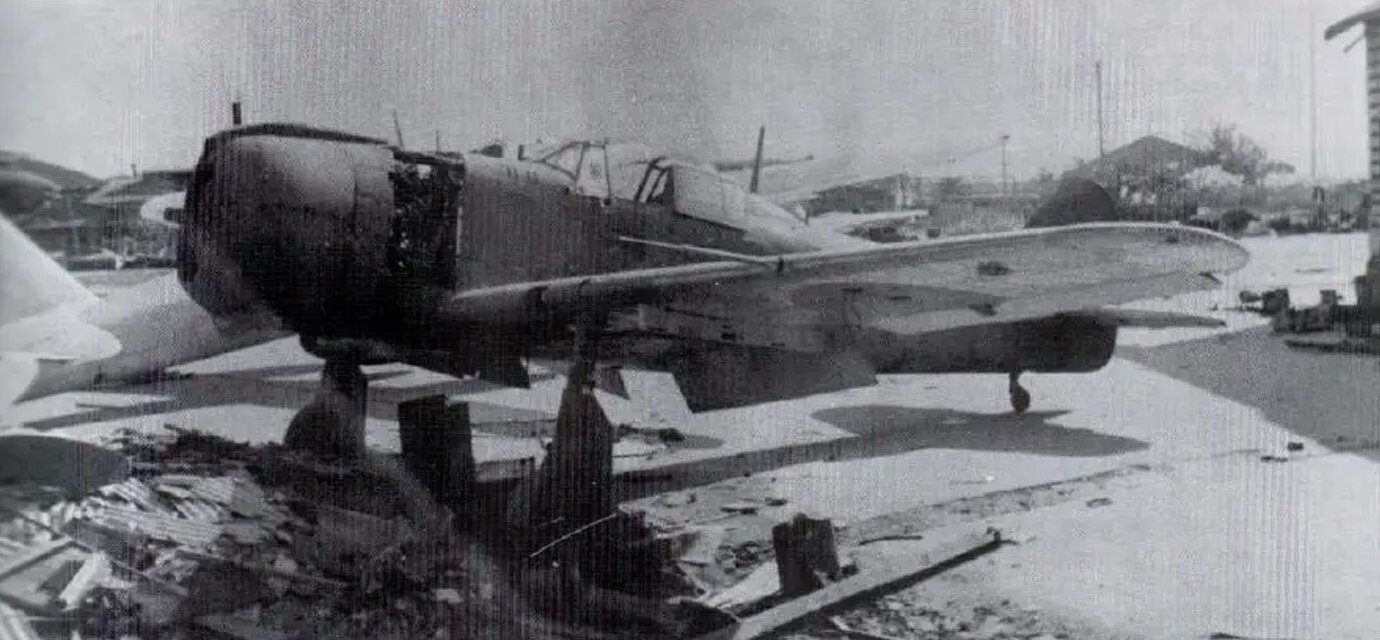
After the end of World War II, a Type 5 aircraft was left abandoned in Kawasaki Aircraft’s Gifu Factory as shown below.
The Army had high expectations for the Type 5 aircraft, and an urgent mass production order was given. Thanks to the efforts of Kawasaki, production numbers soared, reaching 36 aircraft in March, 89 in April, and 131 in May of 1945.
However, on June 22 and 26, the factory was heavily bombed by B-29s, destroying most of the facilities. Although there were still some aircraft completed before the bombings, 88 were produced in June. In July, only 23 were made, and in August, the production sharply dropped to just 10, causing the entire operation to shut down.
In the photos, you can also see the Ki-102 attack aircraft, which was being produced at the same factory.
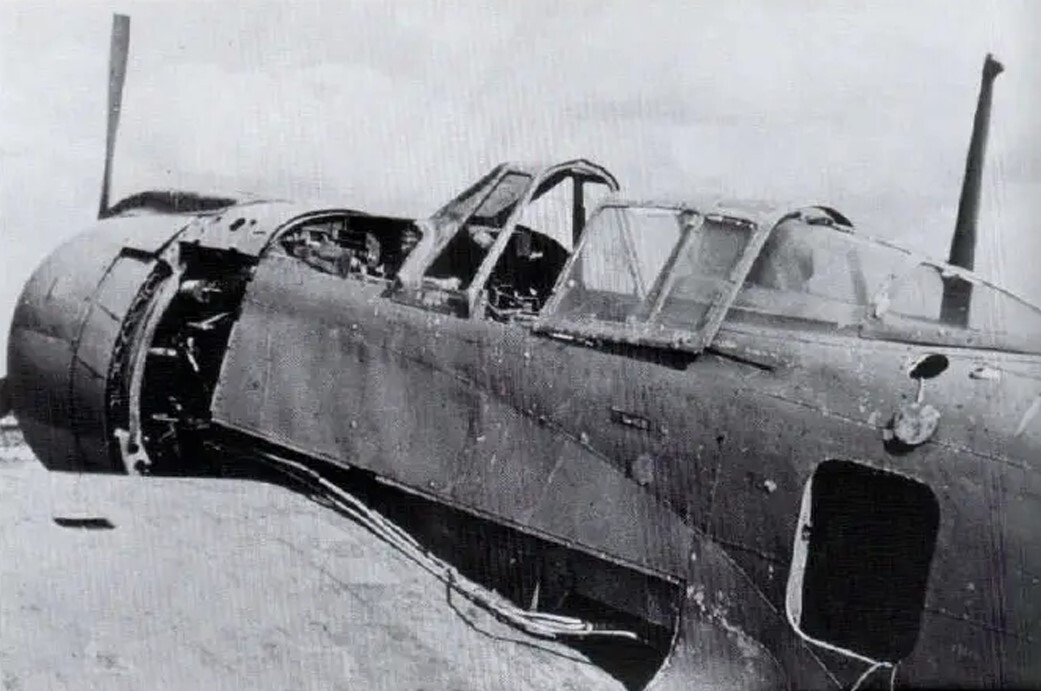
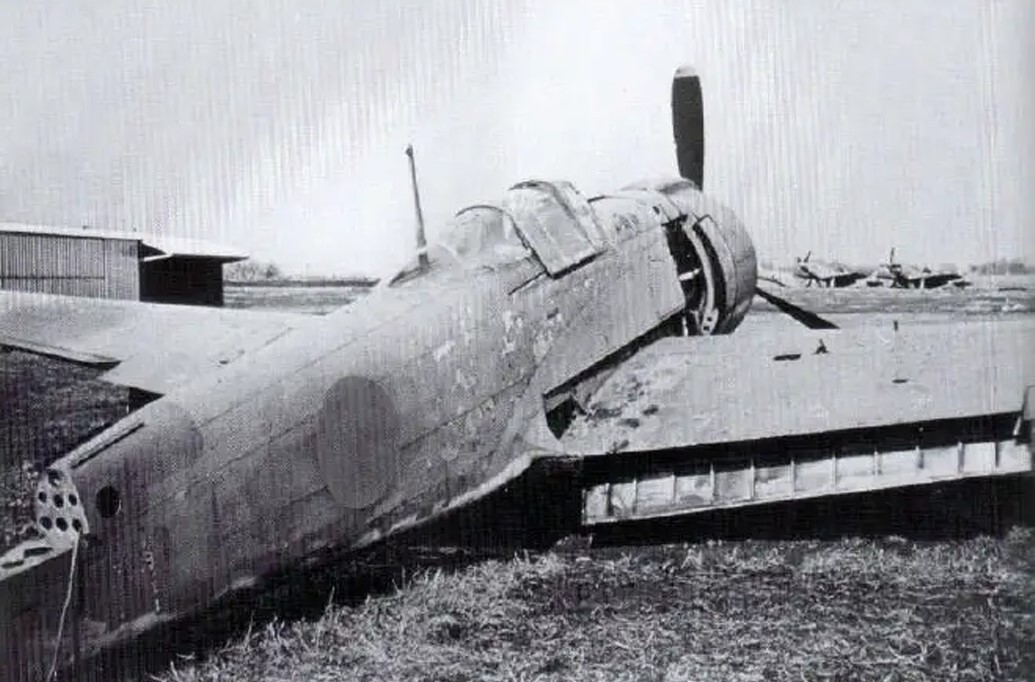
After the war, a Type 5 Fighter Model I aircraft was transported to the United States for investigation and research.
The photo shows the aircraft abandoned around 1946 at Illinois Airport. It is believed that the aircraft was acquired by the University of Illinois as surplus military equipment, though the exact details are unclear.
The plane is in poor condition, with missing parts such as the tail, wing root fillets, and spinner. However, this damage allowed for some insight into the internal structure of the aircraft.
Records indicate that the U.S. military selected four Type 5 Fighter Model I aircraft and one Type 5 Fighter Model II aircraft for transportation to the U.S., but it is uncertain whether all were actually sent. The subsequent fate of the aircraft in the photo is unknown, but it is likely that it was scrapped.

British Requisitioned Japanese Navy Aircrafts
After Japan’s defeat in World War II, Britain, the former colonial ruler of the Malay Peninsula, took control of a large number of Japanese troops stationed around Singapore. The Japanese had used Singapore as their largest military base in the region.
As part of their post-war efforts, the British requisitioned Japanese navy aircraft, selecting 64 planes to be transported to Japan for further study. However, unlike the United States, Britain lacked the capability to use light aircraft carriers for these transports. As a result, only four aircraft were ultimately sent to Japan: the Type 52, the Type 100 Model III, the Type 5 Type I, and the Type 4 basic trainer.

During World War II, most Type 5 aircraft were assigned to air defense units on the Japanese mainland. The only non-mainland unit operating Type 5s was Taiwan’s 17th Flight Squadron. The Royal Air Force Southeast Asia Aviation Technical Intelligence Unit (ATAIU-SEA), responsible for seizing Japanese aircraft, was stationed in Taiwan, but no records exist of their involvement with the Type 5 there. If a Type 5 was indeed captured near Singapore, it was likely a sample aircraft assigned to the 1st Field Replacement Squadron, which was based in the same region.
After its examination was completed, the Type 5 was relocated multiple times but remained well-preserved. In July 1986, after 41 years of silence, its engine roared to life again. Unfortunately, due to missing parts, the aircraft was no longer capable of flight. Photos from the test run on July 4th show the aircraft’s powerful exhaust emissions, demonstrating the strength of its 1,500-horsepower, 14-cylinder air-cooled engine.
The British dedication to preserving such historical machines is truly admirable. Today, the engine has been relocated from RAF St Athan to RAF Cosford, where it is displayed in the base museum.
Unfortunately, this machine is not original.
Since the original paint was once removed, the color tone and markings of the current paint are not accurate. The dark green color on the top surface is a darker tone unique to Kawasaki Seiki, and it is correct to leave the bottom surface unpainted with duralumin. The unit mark on the vertical tail indicates 5 squadrons, but even though the original belonged to the 1st War Replenishment Squadron, it is probably a normal aircraft.
- Francillon, René J. Japanese Aircraft of the Pacific War. London: Putnam, 1970. ISBN 0-370-00033-1.
- Francillon, René J. Japanese Aircraft of the Pacific War. London: Putnam, 2nd edition, 1979. ISBN 0-370-30251-6.
- IJA TYPE 5 FIGHTER KAWASAKI Ki-100 Pictorial BOOK, FAOW #23, BUNRINDO, 1990.
Disclaimer:
Due to the rarity of the aircraft, disinformation, and lack of documents — all pictures are from: IJA TYPE 5 FIGHTER KAWASAKI Ki-100 Pictorial BOOK, FAOW #23, BUNRINDO, 1990.
Copyright © 1990 Bunrindo. IJA TYPE 5 FIGHTER KAWASAKI Ki-100 Pictorial BOOK, FAOW #23.