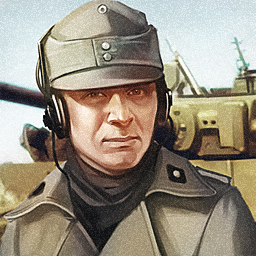
The Panzerkampfwagen Neubaufahrzeug (German for “New Construction Vehicle,” abbreviated Nb.Fz.) was a prototype multi-turreted medium tank developed by Germany in the pre-WWII era. While its service was brief and limited, its history is quite interesting. The Nb.Fz. was an early attempt to develop a German medium tank and was part of the experimentation that accompanied the development of Germany's early armored forces. It also saw limited combat during the early stages of WWII and was used extensively for propaganda purposes, despite never entering full-scale production. In today’s article, we’re going to take a look at the history of the Neubaufahrzeug, from its development and design to its limited combat service and eventual fate.
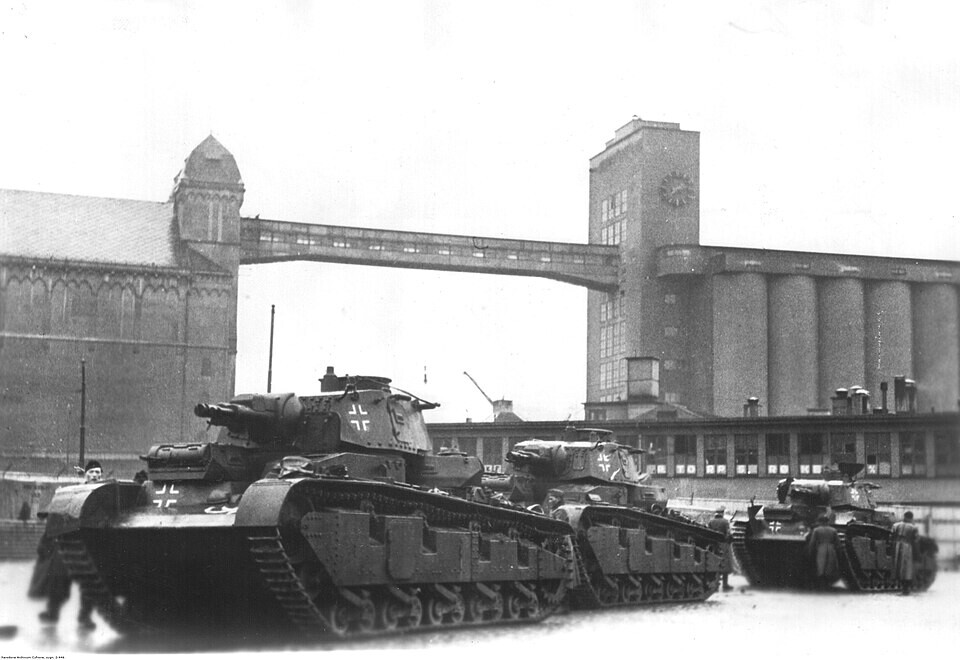
The Großtraktor
Before getting into the Nb.Fz., it's important to look at its predecessor, the Großtraktor. German for “large tractor,” Großtraktor was the codename given to six experimental tanks developed by Rheinmetall, Krupp, and Daimler-Benz, with each company producing two vehicles. The project was conducted in secret because Germany was prohibited from developing and operating tanks under the Treaty of Versailles.
The Großtraktor began in 1926, when the German Army established requirements for a new tank known as the Armeewagen 20. The design called for a tank armed with a 75 mm cannon mounted in a fully rotating turret. In 1927, Rheinmetall, Krupp, and Daimler-Benz were each contracted to produce two prototypes. Because Germany was still prohibited from openly developing tanks, the vehicles were constructed from mild steel rather than armor.
By June 1929, all six prototypes had been completed. They were subsequently sent to a secret German-Soviet testing facility near Kazan, Russia. The vehicles remained there until German-Soviet military cooperation ended in 1933, when they were returned to Germany.
By the time they returned, only four of the six Großtraktors were still operational. The surviving vehicles were used for training and took part in military exercises with the 1st Panzer Division in 1935. The two Daimler-Benz vehicles were eventually turned into monuments, with one displayed at the headquarters of Panzer Regiment 1 in Erfurt and the other at Panzer Regiment 5 in Wünsdorf.
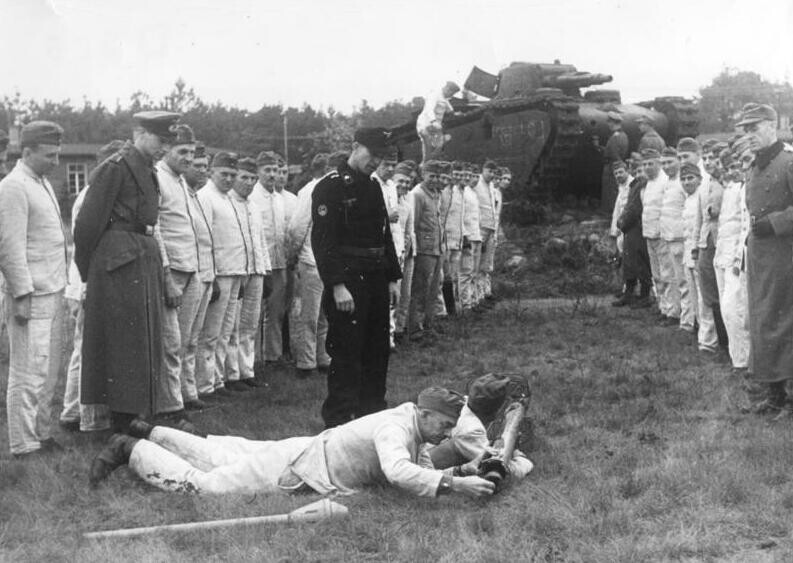
The remaining Krupp and Rheinmetall vehicles continued to serve as training vehicles, eventually being transferred to the Panzer School at Putlos. Some of the surviving vehicles were later used as targets for anti-tank weapons. None of the six Großtraktors survived the war.
Although the Großtraktor never progressed beyond the prototype stage, the project gave Germany valuable experience in designing, building, and testing larger armored vehicles. This experience would influence later German tank development, including the design of the Nb.Fz.
Why Was Germany Testing Tanks in the Soviet Union?
You might be wondering why Germany was testing tanks all the way in the Soviet Union. The answer goes back to the Treaty of Versailles. After WWI, Germany was banned from developing and operating tanks, making it difficult for the German military to openly develop new armored vehicles. To get around these restrictions, Germany secretly worked with the Soviet Union on military projects, specifically the testing of tanks.
One of these projects was the Kama tank school near Kazan, where German and Soviet personnel could test tanks, train crews, and experiment with armored warfare away from the eyes of the Allied powers. This allowed Germany to continue developing its tank technology without openly violating the Treaty of Versailles.
The cooperation ended in 1933 after the Nazis came to power, but by then Germany had gained valuable experience from the program. The Großtraktor was one of the vehicles tested there, making the Kama tank school an important part of the story behind Germany's early tank development.
Historical Note: What Is Mild Steel?
At this point in the article, you've heard me use the term “mild steel” a few times, and I will be using it more later in the article. But what is mild steel? Let's take a quick look!
Mild steel is a type of low-carbon steel that is relatively cheap, easy to work with, and commonly used in construction and manufacturing. Unlike armor steel, it is not specifically designed to resist gunfire. As a result, a tank made from mild steel could look and function much like a real tank, but its hull and turret would provide little protection against enemy weapons.
Germany used mild steel for many of its early tank prototypes because it allowed engineers to build and test vehicles without producing fully armored combat vehicles. This was especially useful while Germany was still restricted from openly developing tanks under the Treaty of Versailles.
Development
Development of the Nb.Fz. began in 1932, when the Army Ordnance Department’s Wa Prüf 6 established specifications for a new medium tank in the 15-tonne class. The project followed the experience gained from the Großtraktor program and sought to develop a new medium tank, as the Großtraktor prototypes had provided valuable experience in the design and testing of larger tanks. As a result, the Nb.Fz. retained several features and components from the Großtraktor, including its engine and transmission, while incorporating a new chassis and a multi-turret layout intended to provide the tank with greater firepower against both armored and infantry targets.
Rheinmetall and Krupp were initially involved in the project, with Rheinmetall receiving responsibility for developing the chassis and its own turret design, while Krupp was tasked with developing an alternative turret. The two designs reflected different approaches to mounting the Nb.Fz.’s 75 mm and 37 mm guns: Rheinmetall placed the guns one above the other, while Krupp mounted them side by side. The German Army ultimately favored the Krupp turret, and all three armored production vehicles built in 1936 were fitted with it.
Design
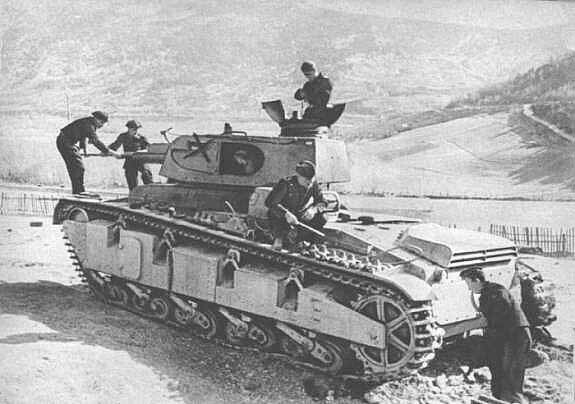
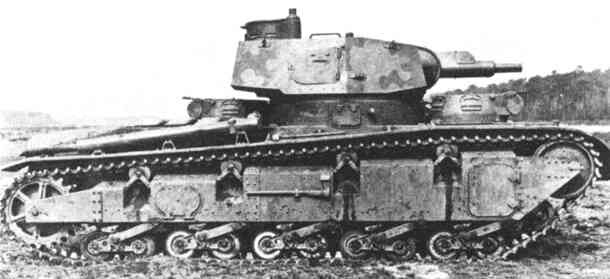
The design of the Nb.Fz. was overall not too different from other multi-turreted medium tanks of the time. It was 21 ft 10 in long, 9 ft 6 in wide, and 9 ft 6 in tall, making it a fairly large tank for its time. Its armor was up to 20 mm thick, which was not particularly heavy, but was respectable for a medium tank of the period. Where the Nb.Fz. stood out was its armament, with a 37 mm cannon, a 75 mm cannon, and three 7.92 mm machine guns laid out in three turrets. This gave it considerable firepower and allowed it to engage both armored and infantry targets. For mobility, the Nb.Fz. was powered by a BMW Va engine producing 290 hp at 1,400 RPM, paired with a ZF SSG 280 transmission. It could reach a top speed of approximately 19 mph (30 km/h) and used coil-spring suspension
For the layout, the driver was positioned at the front left of the tank, with the radio equipment located beside him. To his right was one of the machine gunners, who occupied a small turret at the front right of the hull. Behind them was the main turret, which housed the gunner, loader, and commander. The gunner sat on the left side of the turret, while the loader sat on the right, with the commander positioned above and behind them. Another machine gunner occupied a turret behind the main turret.
The 37 mm cannon's ammunition was stored in racks to the left and right of the commander, while ammunition for the 75 mm cannon was stored in the lower-left center of the hull and in the upper-right portion of the hull, above the fuel tanks.
The engine was located at the rear of the tank. Unlike many later German tanks, the Nb.Fz. also had its transmission at the rear, positioned behind the engine.
Why Multiple Turrets?
At this point, you have probably noticed that the Nb.Fz. has multiple turrets. But why would the Nb.Fz. (and many other tanks of the pre-WWII era) have multiple turrets? And that is a good question, especially since most successful tanks of WWII and beyond eventually settled on a single turret.
The answer goes back to the “land battleship” concept that became popular during and after WWI. The idea was to create large, heavily armed tanks capable of breaking through enemy lines while engaging multiple threats at once. Multiple turrets were seen as one way to achieve this, allowing a tank to engage infantry and armored targets in different directions simultaneously.
Although the concept was already becoming outdated by the late 1930s, several nations continued experimenting with multi-turreted designs. Examples include the British Independent and the Soviet T-35 and SMK. You can still see some of this philosophy in the Soviet T-28, which entered service in the 1930s and saw combat during WWII. Germany's Nb.Fz. was another attempt to explore this concept, combining a 75 mm cannon, a 37 mm cannon, and multiple machine guns into a single vehicle.
Production
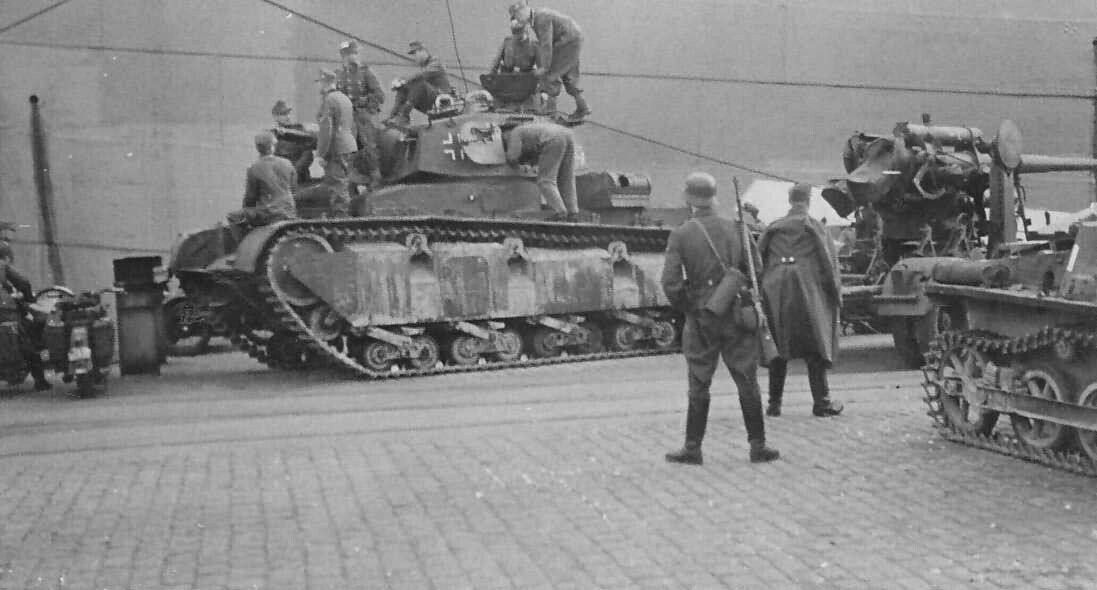
Production of the Nb.Fz. was quite short, with only five tanks ever being produced. The first two prototypes were built in 1934 from mild steel, with the first using Rheinmetall’s turret, which had the 37 mm cannon mounted above the 75 mm cannon. The second prototype was fitted with Krupp’s turret in 1935, which placed the two cannons side by side and proved to be the preferred design. Three more tanks were then built with proper armor, all using the Krupp turret. Production ended in 1936, with the five tanks serving mainly as test and evaluation vehicles rather than entering full-scale production.
The Nb.Fz. was an impressive vehicle for its time, but its size, complexity, and cost made it difficult to justify producing it in large numbers. Its multi-turret layout added considerable complexity without providing enough of an advantage over simpler designs. While its armament was impressive, the tank was relatively slow and only moderately armored. By this point, the German Army was already shifting its focus toward simpler and more practical designs such as the Panzer III and Panzer IV, making the Nb.Fz. increasingly unnecessary.
That being said, the Nb.Fz. was not a total failure. Although it never entered mass production, it gave Germany valuable experience in designing and testing larger tanks and helped shape the development of its early armored forces. In the end, the Nb.Fz. was less of a failed tank and more of an experimental step toward the much more successful tanks that followed it.
| Vehicle Designation | Type / Construction | Turret Type | Tactical number | Combat |
|---|---|---|---|---|
| No. 1 | First prototype, mild steel | Rheinmetall — 37 mm above 75 mm | 051 | No |
| No. 2 | Second prototype, mild steel | Krupp — 37 mm beside 75 mm | 052 | No |
| No. 8 | First fully armored vehicle | Krupp | 053 | Yes |
| No. 9 | Second fully armored vehicle | Krupp | 054 | No |
| No. 10 | Third fully armored vehicle | Krupp | 055C | Yes |
Note: For simplicity's sake, I will be referring to each by their vehicle number (1, 2, 8, 9, and 10).
Combat And Military Use
Propaganda
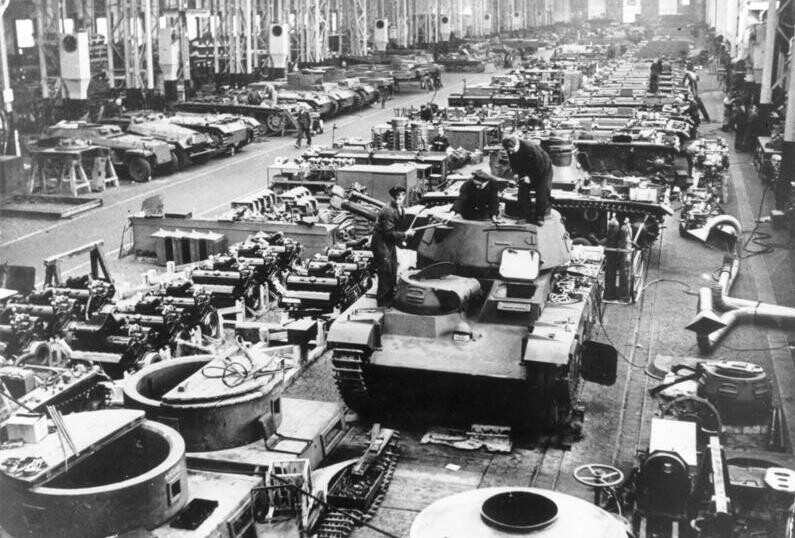
Because only five Nb.Fz.s were ever built, the tank saw very little combat, and one of its most important roles was propaganda. By 1940, Germany was already relying on the Panzer III and Panzer IV as its primary medium tanks, but the Nb.Fz. could still be used to project an image of German armored strength. The Nb.Fz.'s unusual appearance made it great for propaganda and publicity. Photographs of the large, multi-turreted tank appeared in German publications and helped portray the country's developing armored forces as modern and powerful.
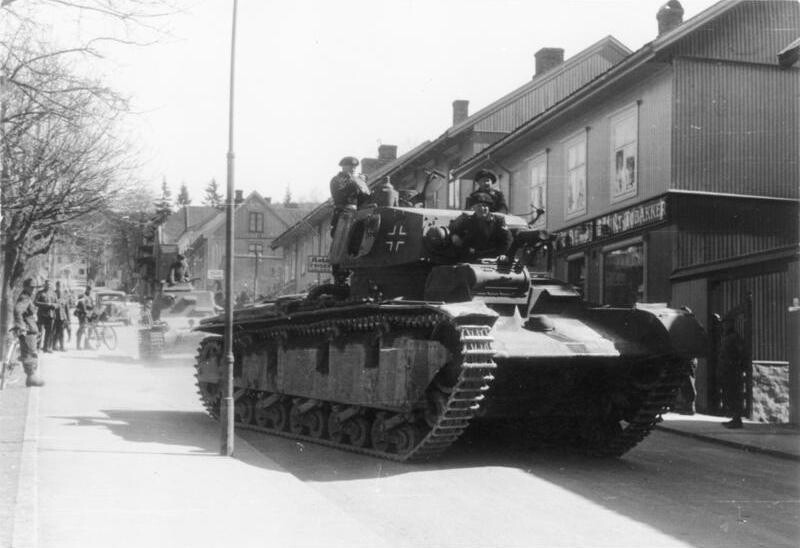
This use continued during the invasion of Norway in 1940. Three Nb.Fz.s were sent to Norway with Panzer-Abteilung z.b.V. 40, giving the vehicles an opportunity to serve both a military and propaganda purpose. Norway would ultimately become the Nb.Fz.'s only confirmed combat deployment.
Norway
Battle Of Balberg
On April 9, 1940, Germany launched Operation Weserübung, its invasion of Norway. Three Nb.Fz.s—Nos. 8, 9, and 10—were sent as part of the invasion and assigned to Panzer-Abteilung z.b.V. 40, a special-purpose tank unit formed for the campaign. The three tanks were divided between two German battle groups: No. 10 was assigned to Kampfgruppe Fischer, which was advancing north through the Østerdalen Valley, while Nos. 8 and 9 were assigned to Kampfgruppe Pellengahr, which was advancing through the Gudbrandsdal Valley.
The Nb.Fz.s quickly began experiencing mechanical problems. Both tanks assigned to Kampfgruppe Pellengahr broke down north of Lillehammer, leaving only No. 10 immediately available for combat. It was subsequently used alongside other German tanks advancing through the Gudbrandsdal Valley.
On April 22, No. 10 encountered British and Norwegian forces near Balberg, approximately 7 km north of Lillehammer. The British forces were equipped with Boys anti-tank rifles, which were capable of penetrating the Nb.Fz.'s relatively thin armor. No. 10 was hit several times, including a shot that killed one of its crew members and forced the tank to retreat.
The crew was initially hesitant to advance again, but other German units continued the attack and eventually outflanked the Allied positions, forcing them to withdraw.
Battle Of Kvam
On April 25, German forces under Kampfgruppe Pellengahr continued their advance north through the Gudbrandsdal Valley. In their path was the British 1st Battalion, King's Own Yorkshire Light Infantry (KOYLI), supported by Norwegian troops who had established a defensive position to slow the German advance. The British were also supported by five French 25 mm Hotchkiss anti-tank guns. On the German side, Nb.Fz. No. 8 was advancing alongside other tanks and infantry.
At around 11:30 AM, German forces encountered the Allied defensive position. After suffering light casualties, the Germans called in mortar and artillery fire, which inflicted heavy casualties on the defenders.
According to British frontline reports, shortly after 2 PM, Nb.Fz. No. 8 advanced down the main road through Kvam alongside infantry and other tanks, firing at British infantry and anti-tank positions. When it reached the railway station, it encountered two stone barricades and was forced to stop. The British anti-tank guns were positioned approximately 537 meters away.
One of the 25 mm anti-tank guns then struck No. 8 in the gun mantlet. The shot damaged the recoil mechanism, leaving the Nb.Fz. unable to fire either of its cannons. A second shot seriously wounded the driver, Unteroffizier Lührig, who later died from his wounds that night.
The rest of the crew survived the initial engagement. However, later that evening, at around 10:30 PM, Feldwebel Faulhaber was struck in the back by machine-gun fire and died from his wounds.
Despite the heavy casualties, the Allied defensive line held through the night. However, the British were forced to withdraw the following day, on April 26.
No. 8 could not be repaired and was eventually destroyed by German troops to prevent it from falling into Allied hands. Parts of the tank still survive today and are preserved at the Gudbrandsdal War Memorial Collection in Kvam.
Historical Note: Nb.Fz. No. 9 never saw combat in Norway. After suffering mechanical problems while advancing with Kampfgruppe Pellengahr, it was towed to Moelv and eventually transported back to Germany for repairs. After being repaired, it returned to service with the Panzer School at Putlos.
Fate Of The Nb.Fz.
What happened to the five Nb.Fz.s after their service in Norway is not entirely clear. The available records provide conflicting accounts, and the fate of some individual vehicles remains uncertain.
What appears to be certain is that none of the five Nb.Fz.s are known to have survived the war. Documents captured by the British in 1945 indicate that the vehicles were ordered to be scrapped in 1941, with most of the scrapping apparently taking place in 1942.
However, German reports tell a different story. According to these reports, three Nb.Fz.s were attached to the 1st Panzer Army and destroyed by Soviet BT-7 tanks somewhere in Ukraine in June 1941. This conflicts with the evidence that the vehicles had already been ordered to be scrapped, making it difficult to determine exactly what happened to each individual tank.
Adding to the confusion, the last known surviving Nb.Fz. was reportedly still in existence in late 1944, when a training unit used it as a practice target for teaching the Volkssturm how to operate the Panzerschreck and other anti-tank weapons. If accurate, this would have been a rather unfortunate end for a vehicle that had once represented Germany's most ambitious tank designs.
Today, only a small number of running-gear components from Nb.Fz. No. 8 are known to survive. These parts are preserved at the Gudbrandsdal War Memorial Collection in Kvam, Norway.
Thank You For Reading!
Thank you for taking the time to read this article! I hope you enjoyed learning about the Nb.Fz.'s history, and if you have any questions or think I left something out, feel free to let me know in the comments!