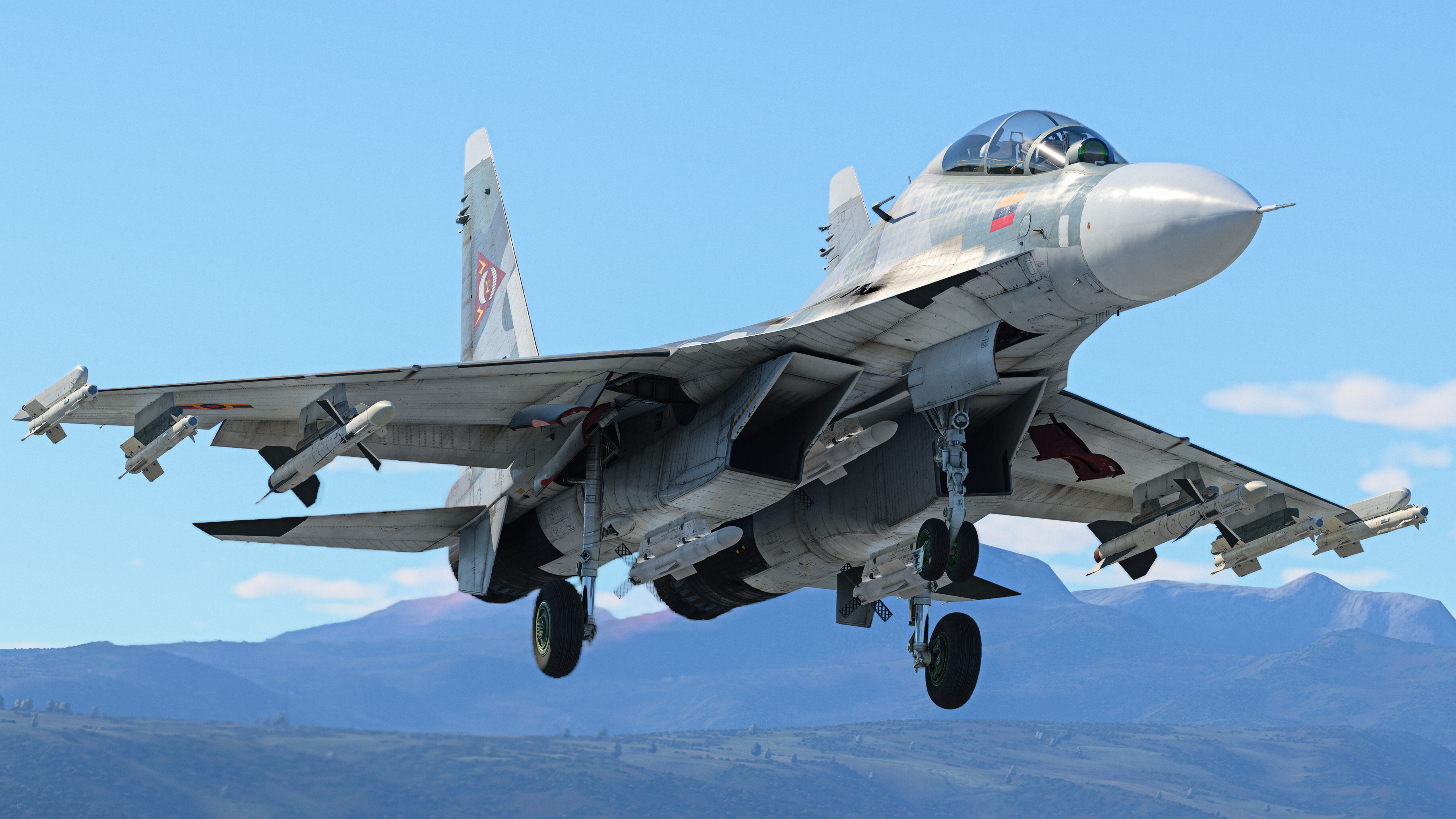
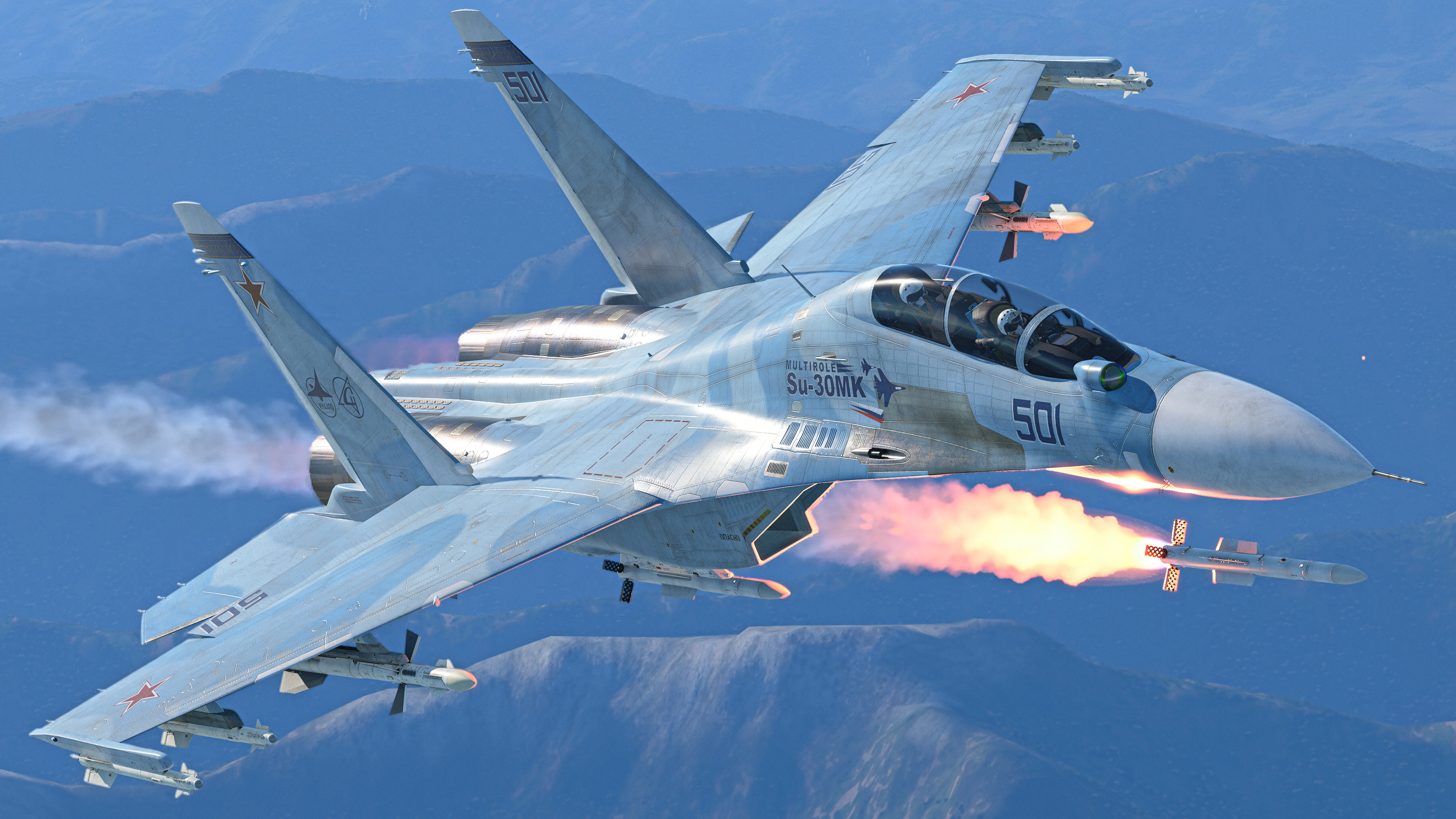
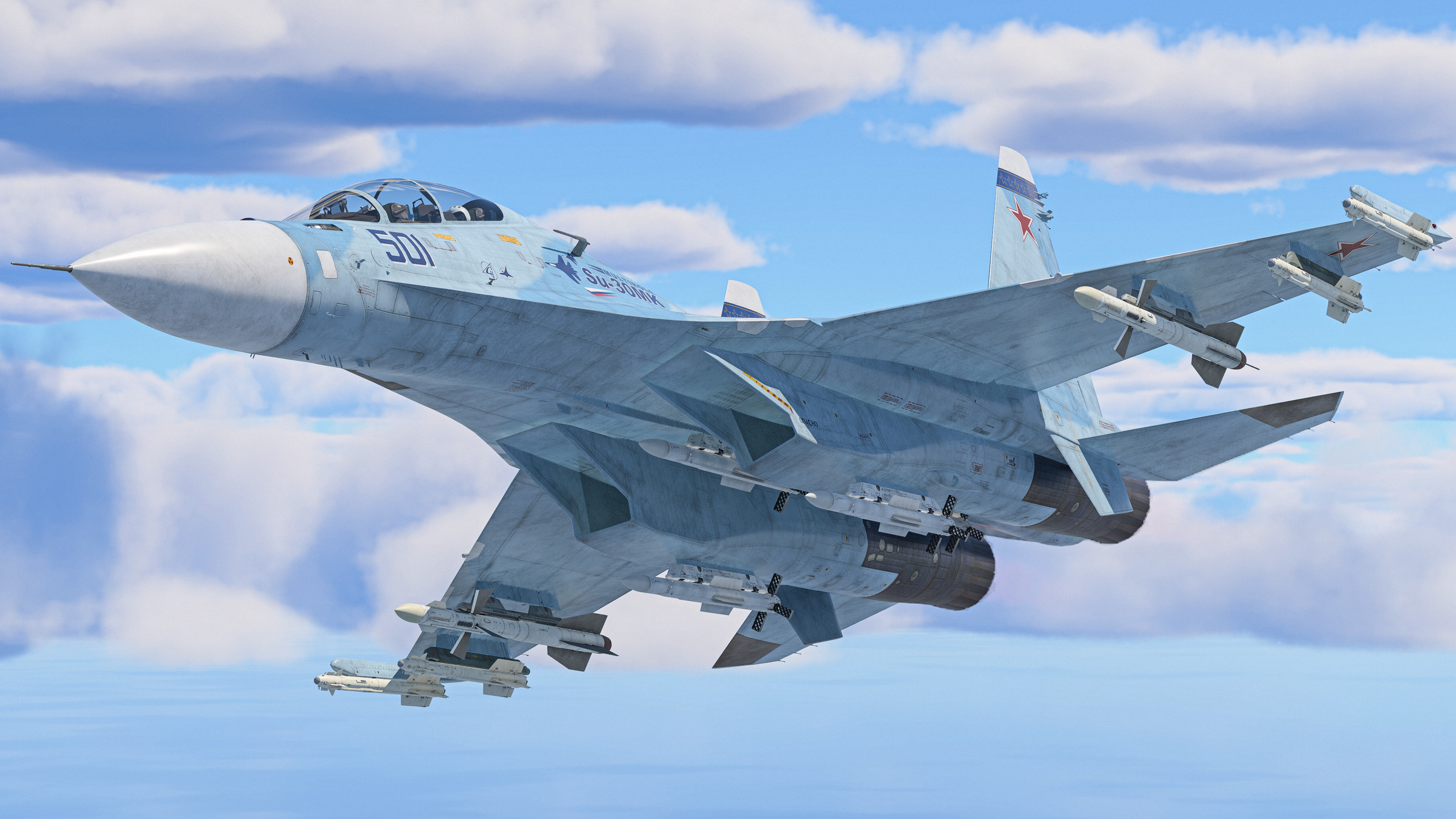
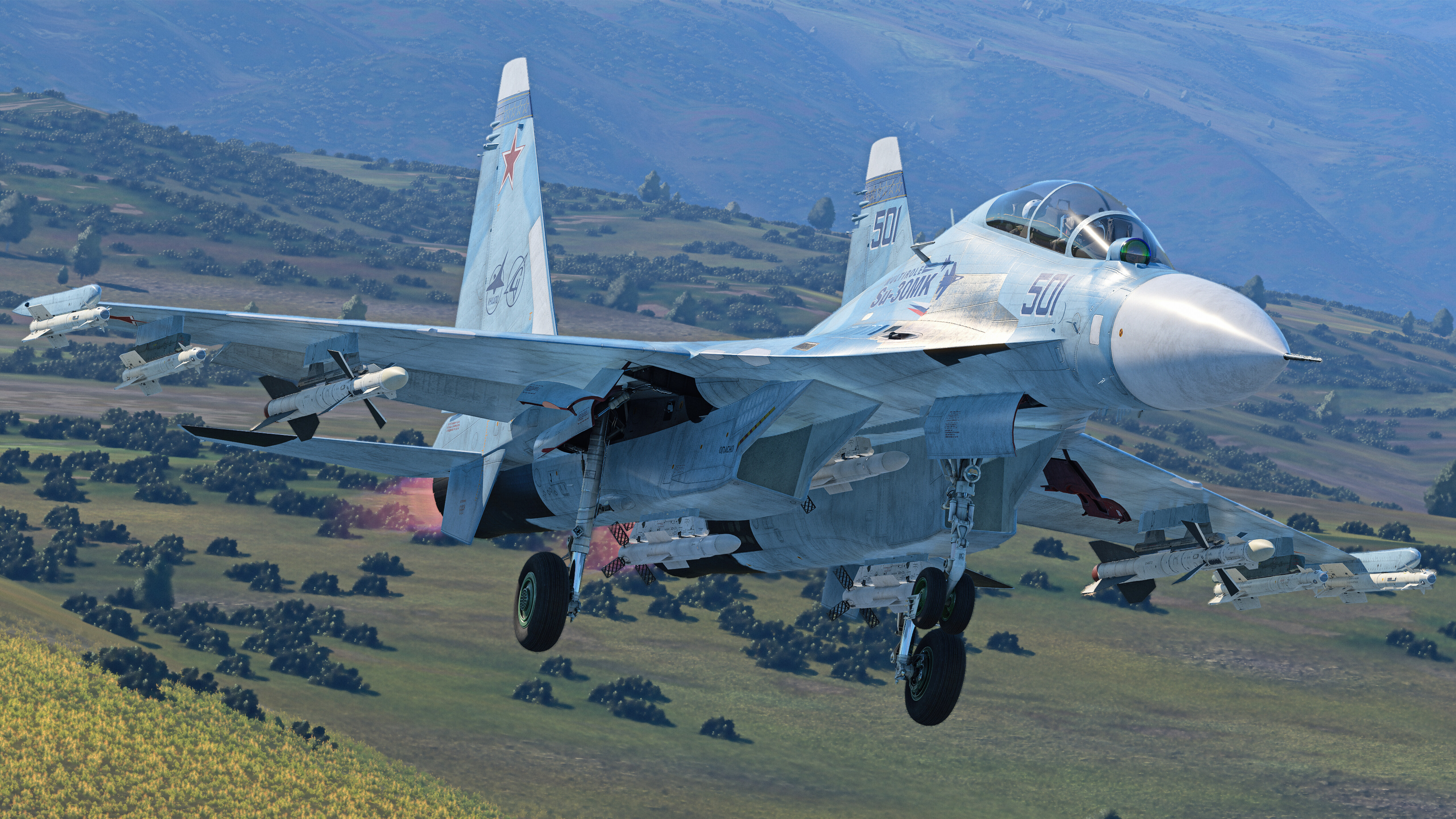
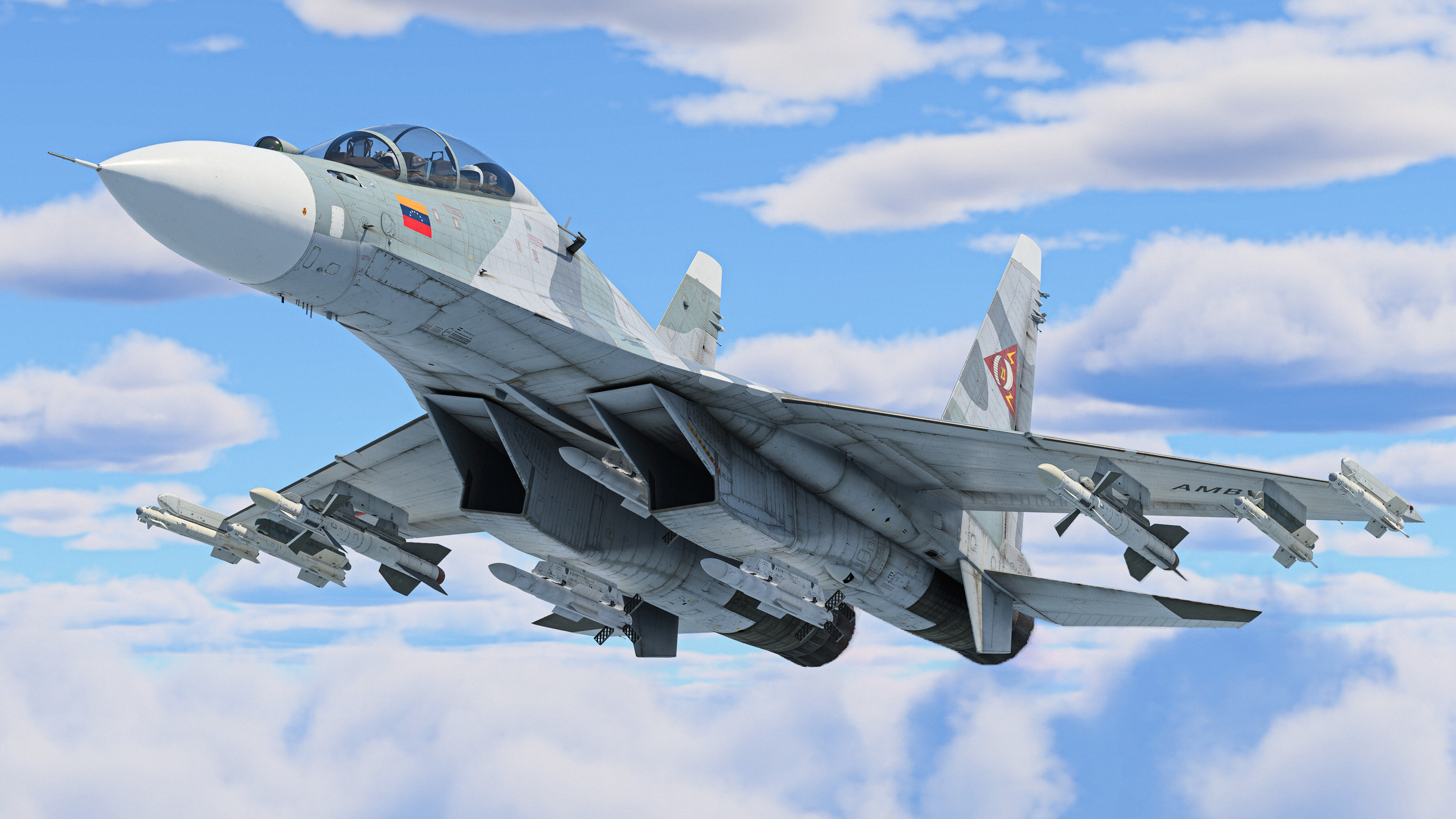
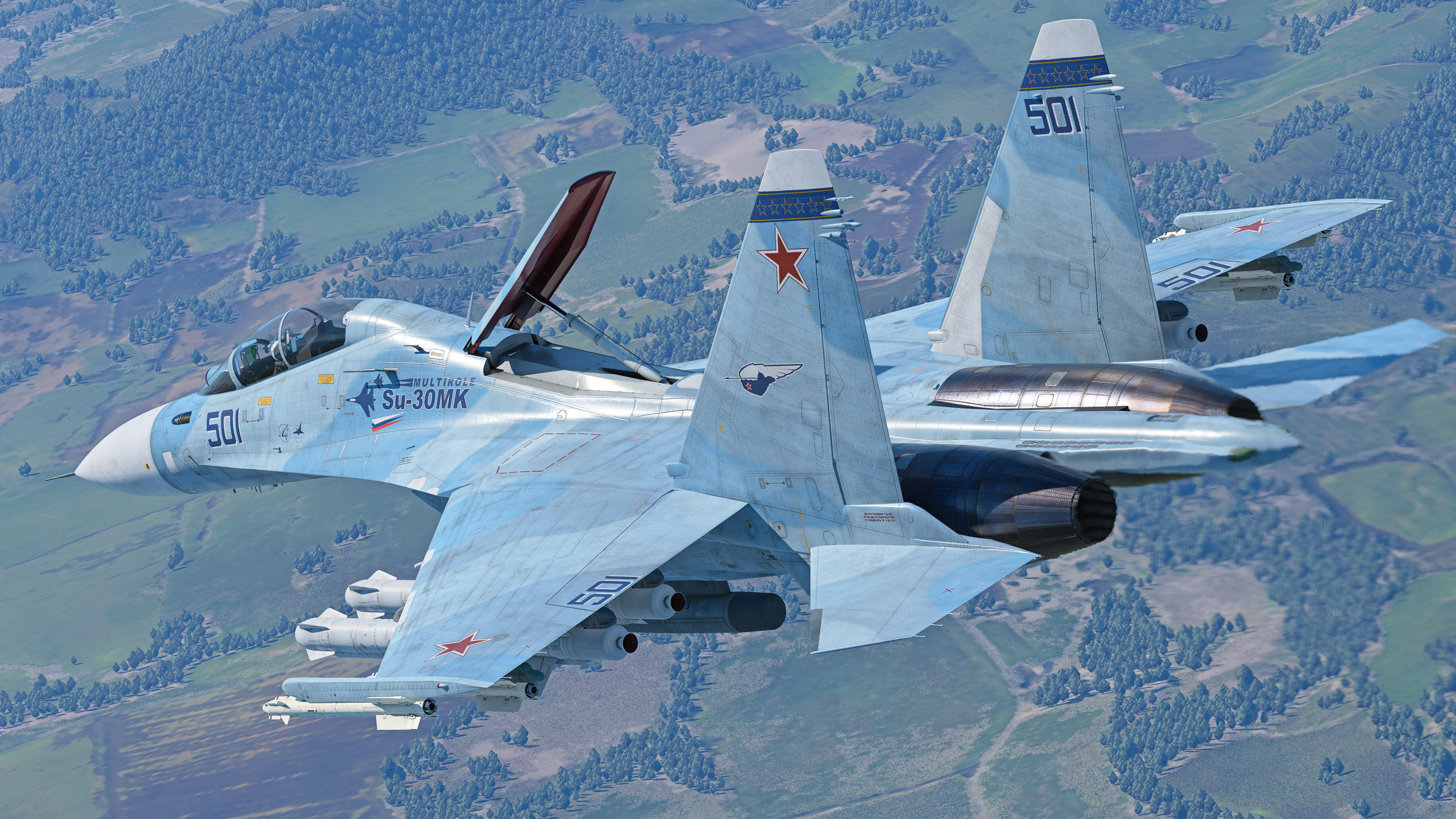
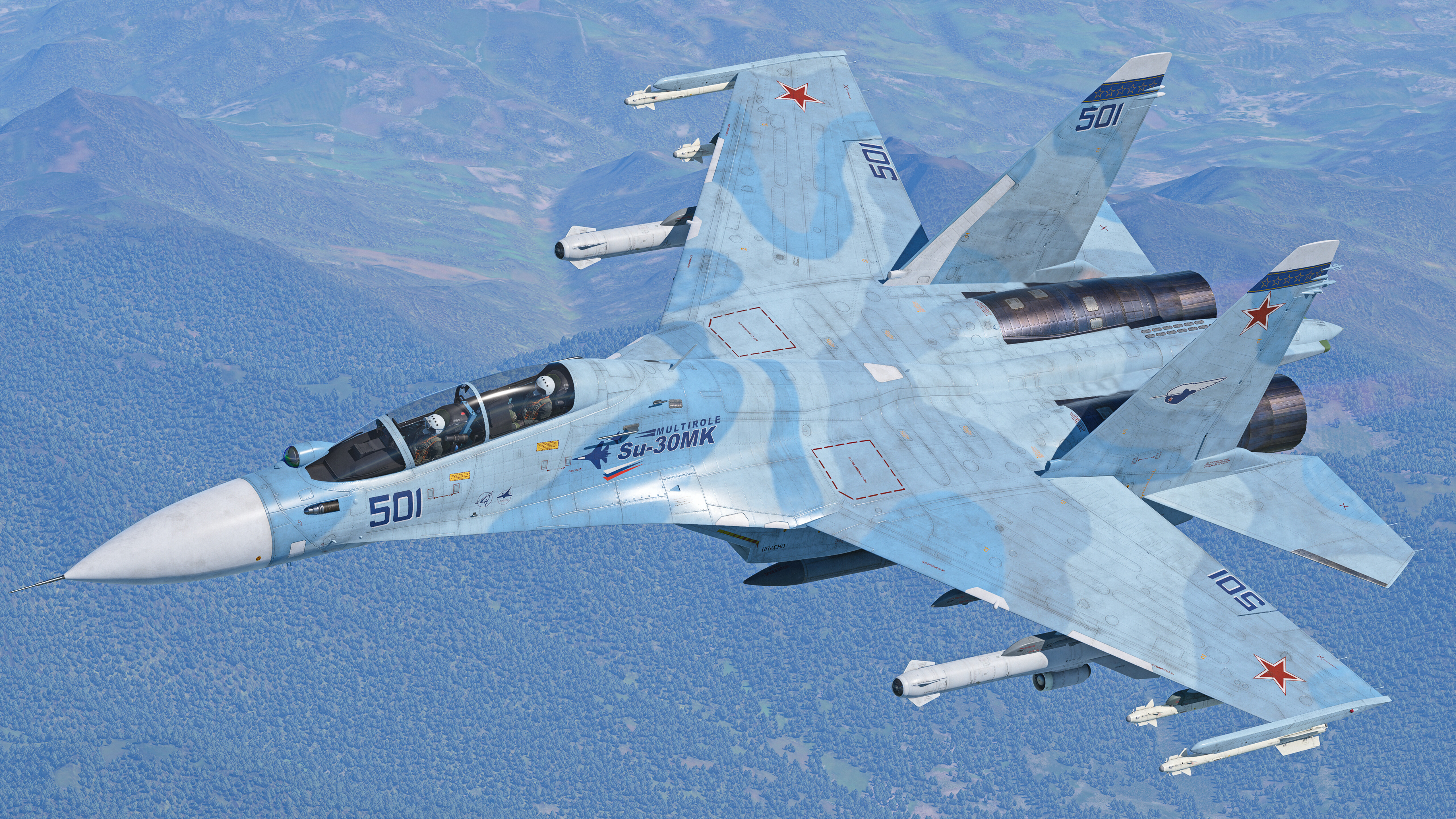
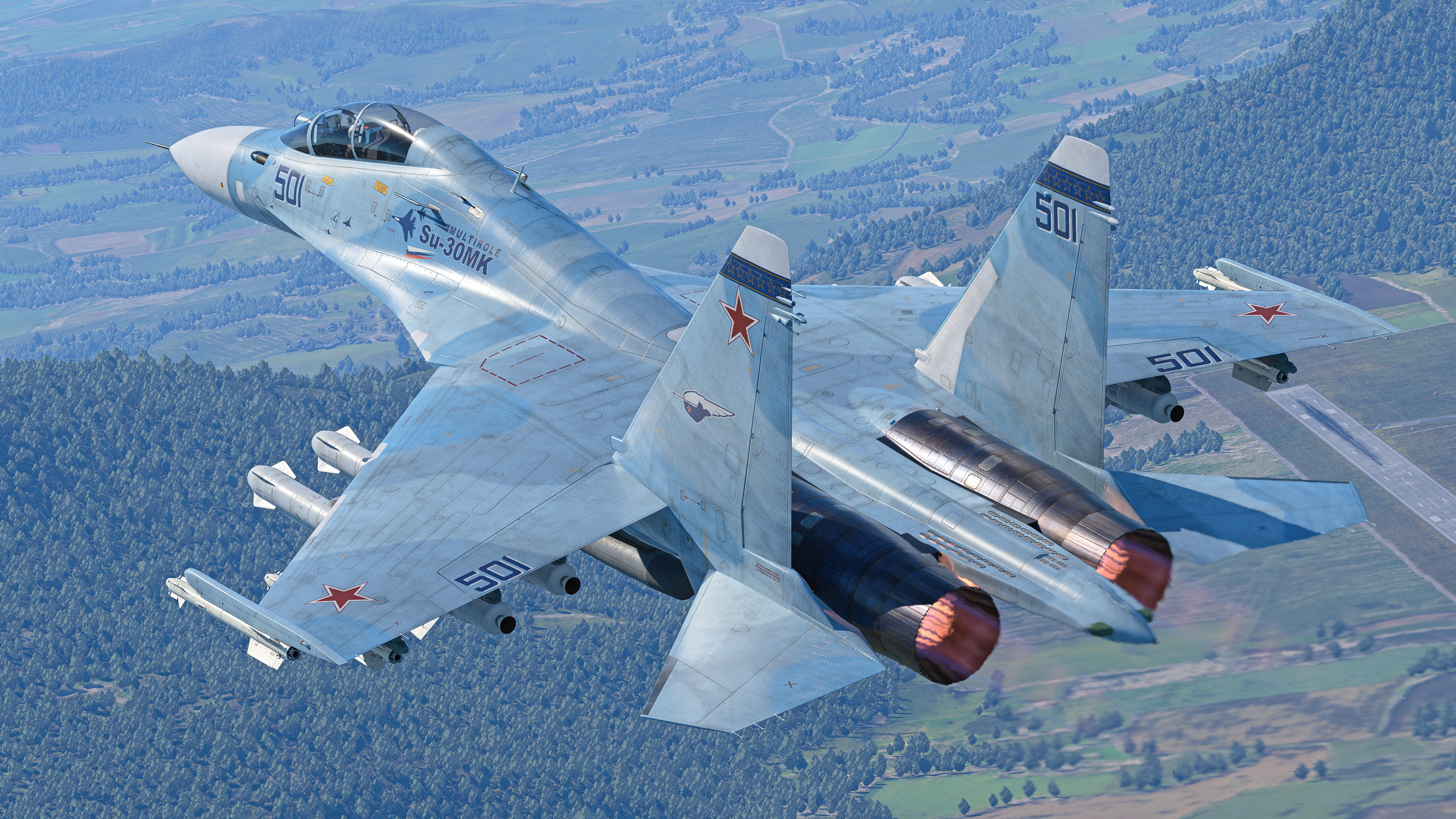
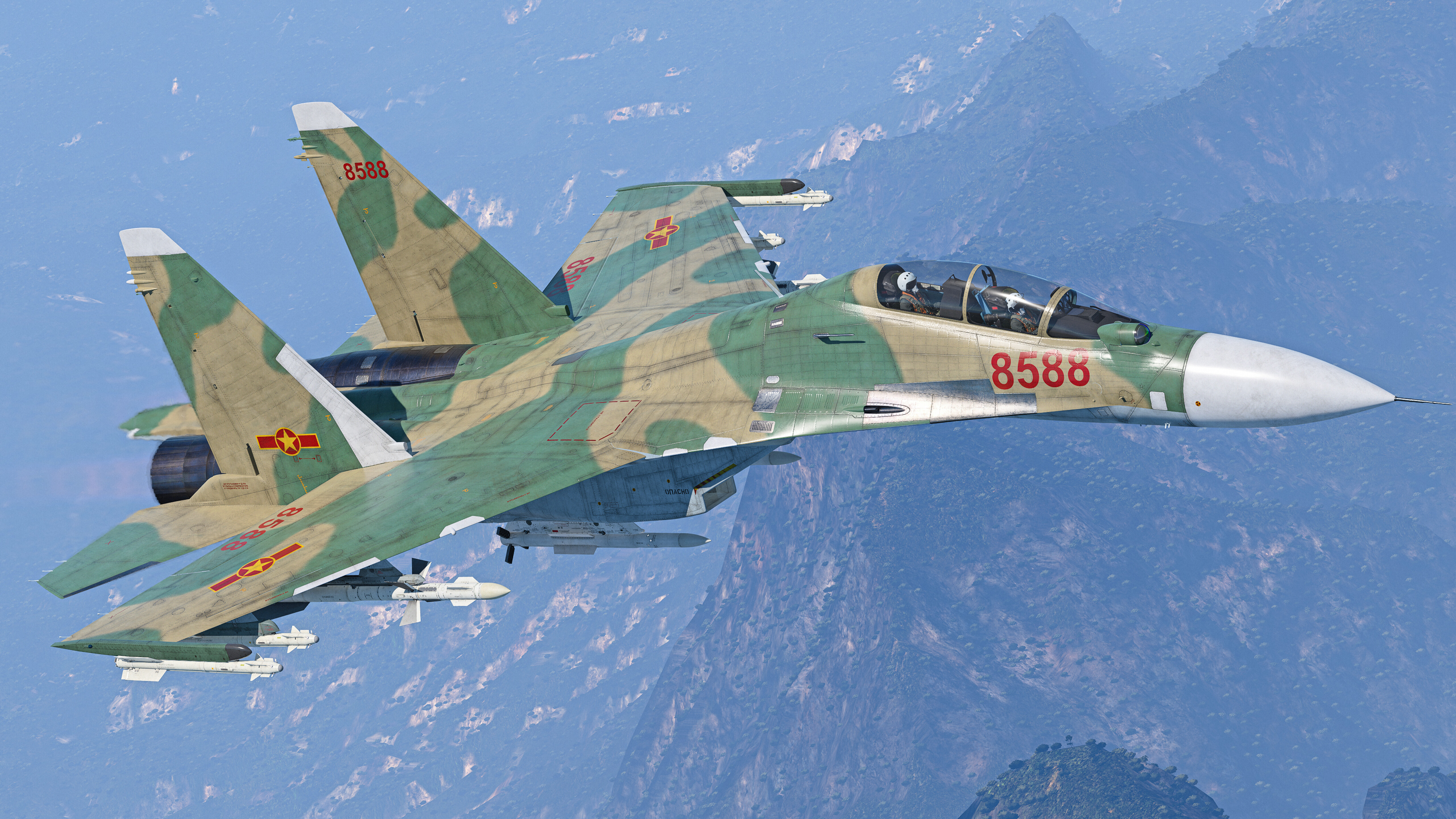
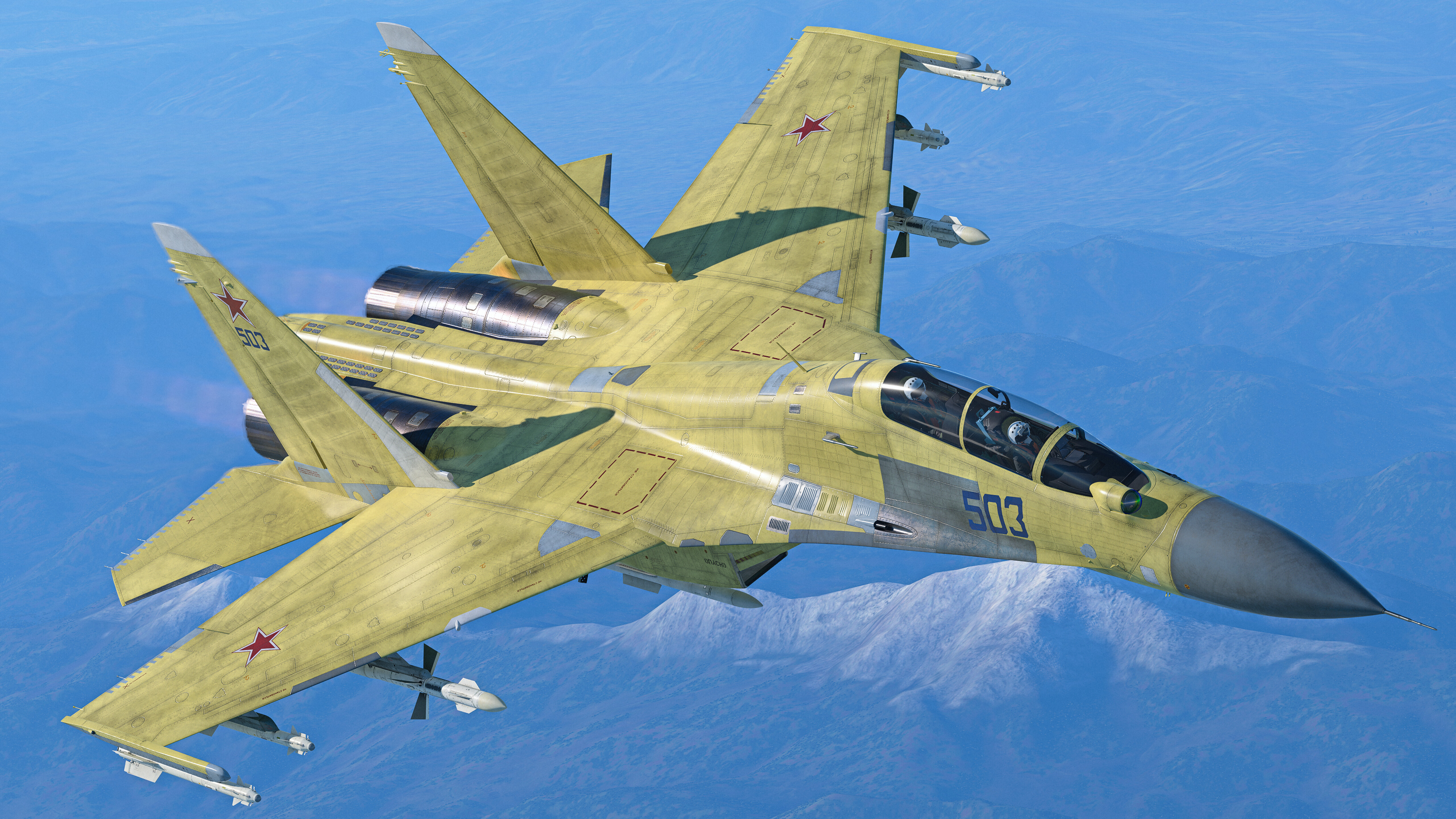
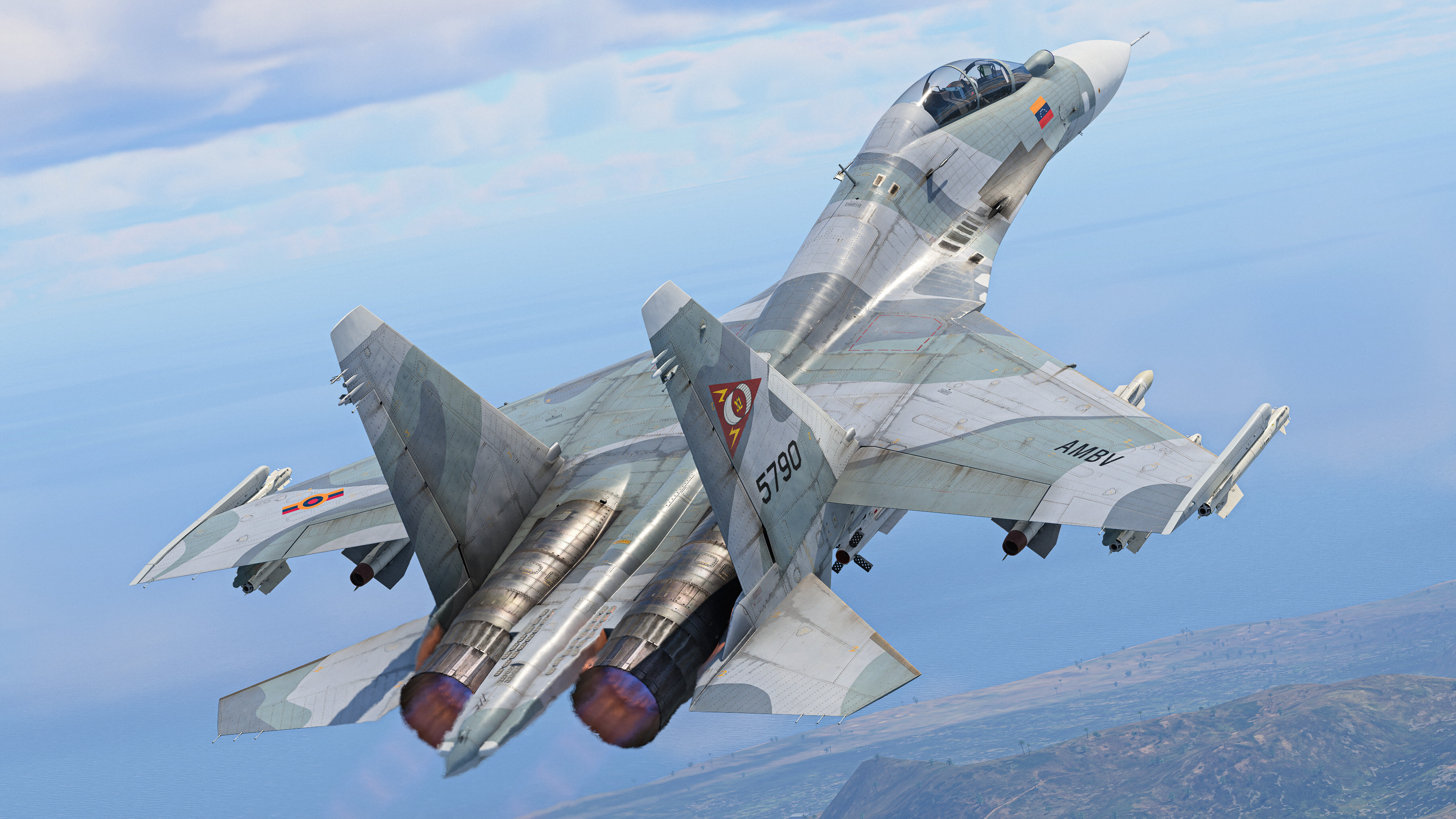
The Su-30MK2 AMV is an export variant of the Su-30, a twin-seat multirole combat aircraft capable of performing both air superiority missions and close air support. Based on the Su-30MK2 produced by the KnAAPO plant, this variant does not feature canards or thrust-vectoring engines. To avoid confusion with the Su-30MK2 operated by Vietnam, the Venezuelan version was designated Su-30MK2 AMV, standing for Aviación Militar Venezolana (Venezuelan Air Force). In War Thunder, the Su-30MK2 AMV is a strong option thanks to its wide selection of air-to-air and air-to-ground weaponry. Although heavier than the Su-27, the aircraft retains respectable maneuverability and benefits from excellent missile payload capacity, allowing it to remain effective throughout extended engagements.
| Pros: | Cons: |
|---|---|
| Good air-to-air weapons | Slow radar scan speed |
| HMS | Poor sustained turn rate |
| IRST | No targeting pod |
| Decent air-to-ground weapons | No thermals |
Air-to-Air Capabilities:
The Su-30MK2 AMV can employ a mix of infrared, SARH and ARH air-to-air weapons, giving it solid engagement options across all ranges:
- RVV-AE (R-77): The RVV-AE is the export designation of the R-77, in War Thunder both share identical performance and characteristics. This active radar-guided missile is not primarily suited for long-range BVR combat, as its effective range is noticeably shorter than that of missiles such as the AIM-120. However, it compensates with excellent maneuverability, making it especially dangerous at medium and short ranges. At longer distances, the missile tends to lose significant energy if the target performs defensive maneuvers, which makes BVR kills relatively uncommon. For best results, launches are recommended within roughly 15-20 km, although shots at up to ~40 km are possible under favorable conditions. As a general rule, the closer the target, the higher the probability of a successful hit.
- R-73E: A short-range infrared missile featuring thrust vectoring and IRCCM. When used alongside the HMS, it becomes extremely effective in close combat, enabling high off-boresight shots and giving a strong advantage in dogfights. Effective range: up to ~3 km. Note that IRCCM gatewidth effectiveness decreases as target distance increases.
- R-27ET1: A medium to long-range infrared-guided missile equipped with IRCCM. Since it relies on passive guidance, it does not trigger enemy RWR, making it especially effective for surprise attacks or flanking maneuvers. Effective range: approximately 5–10 km, depending on altitude and target aspect.
- R-27ER1: A long-range SARH missile with inertial guidance and datalink, the most capable SARH missile available in War Thunder. Its excellent energy retention allows it to remain effective at extended distances, particularly when launched at high speed and altitude. Effective range: up to ~50 km at high altitude (above ~5,000 m), dropping to roughly 10–15 km at lower altitudes.
- GSh-30-1 (30 mm cannon): The Su-30MK2 AMV is armed with a single GSh-30-1 30 mm cannon carrying 150 rounds. Although its rate of fire is lower than that of many opposing fighters, the large-caliber rounds deal heavy damage, often crippling aircraft with only a few hits. Due to the limited ammunition supply, careful trigger discipline is required.
Recommended loadout:
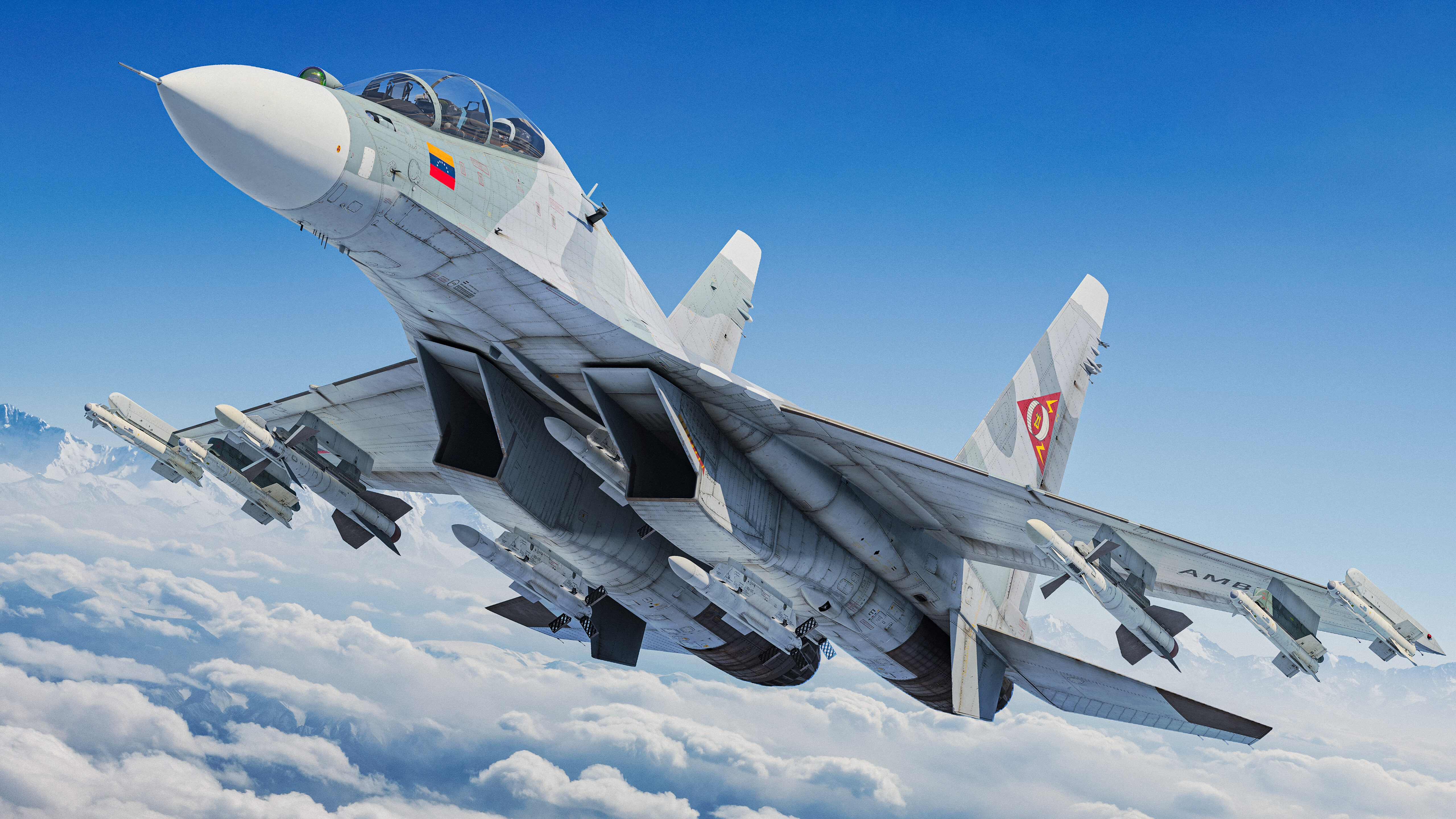
A balanced and effective air-to-air loadout for the Su-30MK2 AMV consists of 4 to 5 RVV-AE missiles, supported by at least one or two R-27ERs for longer-range engagements. The aircraft is always equipped with four R-73s on its dedicated pylons, providing strong close-range capability.
Depending on playstyle and tactical preference, the R-27ERs can be swapped for R-27ETs to favor stealthier engagements. However, it is generally recommended to retain at least one R-27ER, as it provides reliable long-range impact.
Air-to-Ground Capabilities:
In terms of unguided air-to-ground armament, the Su-30MK2 AMV has access to a wide selection of conventional bombs and rockets, allowing it to perform basic strike and ground attack missions when required.
Unguided Bombs:
- OFAB-100 (100 kg)
- OFAB-250-270 (250 kg)
- FAB-250M-62 (250 kg)
- OFAB-250Sh parachute-retarded (250 kg)
- FAB-500M-62 (500 kg)
- FAB-500Sh parachute-retarded (500 kg)
- ZB-500 incendiary bomb
Unguided Rockets:
- S-8KO rockets
- S-13OF rockets
- S-250 rockets
- S-250F rockets
- S-250FM rockets
However, the Su-30MK2 AMV also has access to guided air-to-ground munitions, including:
- KAB-500Kr / KAB-1500Kr: These are TV-guided bombs designed for precision strikes against ground targets. They are particularly effective against moving targets, as the TV seeker allows the pilot to track and correct the weapon during its descent. However, they are not glide bombs, meaning they lack extended stand-off capability and must be released within range to the target. Both variants are powerful enough to destroy virtually any ground vehicle with a direct hit.
- Kh-29L: A laser-guided air-to-ground missile with an effective range of 10 km. Its large warhead is powerful enough to destroy most ground vehicles with a single hit. However, its use is generally not recommended due to several limitations: the relatively short engagement range, the absence of a targeting pod on the Su-30MK2 AMV, and the fact that it is not fire-and-forget, requiring the aircraft to maintain laser illumination until impact. Additionally, the laser guidance can alert targets equipped with a LWS, increasing the risk of countermeasures or evasive action.
- Kh-29TD: A TV-guided air-to-ground missile offering a maximum launch range of 35 km. While this allows for long-range employment, achieving a target track lock (where the seeker actively follows a vehicle rather than a fixed point) requires a much shorter distance. This lock range depends on target size, but is typically around 6 km. When launched in point mode, the seeker will attempt to acquire and lock the first visible vehicle once it enters tracking range. This behavior can still be effective against slow-moving or stationary targets, such as SPAAs. As a TV-guided weapon, the Kh-29TD is sensitive to environmental conditions: poor lighting, darkness, or low visibility can make target acquisition difficult or unreliable. The missile has adequate flight speed, and its large warhead, identical to the Kh-29L, is capable of destroying most ground vehicles with a single hit.
- Kh-59ME: A TV-guided air-to-ground missile supplemented by inertial guidance, featuring an extremely long maximum range of up to 120 km. While this range is impressive on paper, it offers limited practical value for CAS, where such stand-off distance is rarely required. Additionally, the missile is relatively slow, giving enemy SPAAs ample time to react and potentially intercept it before impact. Its use also requires equipping the APK-9 pod, which functions as a datalink pod rather than a true targeting pod. As its full datalink functionality is not yet implemented in War Thunder, the pod mainly serves as a requirement for missile guidance and occupies a hardpoint that could otherwise be used for additional weapons. For these reasons, the Kh-59ME is generally not recommended for CAS. However, it excels in naval engagements, particularly in Simulator Battles, where its large warhead allows it to inflict severe damage to ships, often requiring only a small number of hits to sink a target.
Flight Performance:
The Su-30MK2 AMV is powered by the same engines as the baseline Su-27, but its significantly higher weight results in reduced overall performance. Acceleration is noticeably weaker compared to both the Su-27 and Su-27SM, which themselves are not particularly strong in sustained dogfights. As a result, the aircraft struggles to quickly regain speed after maneuvers, especially at lower altitudes.
Climb performance is adequate but unremarkable, further emphasizing the importance of planning engagements in advance rather than relying on raw performance. The Su-30MK2 AMV does not excel at chasing fast targets or quickly repositioning once energy has been lost, making situational awareness and positioning especially important.
In terms of maneuverability, the Su-30MK2 AMV has a poor sustained turn rate and suffers from heavy energy loss when turning. Prolonged horizontal engagements are therefore strongly discouraged, as the aircraft can rapidly bleed speed and become an easy target. Effective energy management is essential, as remaining slow in the middle of an engagement often leads to a loss with little room for recovery.
Despite these drawbacks, the aircraft retains a good instantaneous turn rate, aided by its maneuver mode. This allows the pilot to quickly point the nose toward an opponent during the first turn, making it possible to set up an early missile shot. While this can be effective in short engagements, it comes at the cost of significant energy loss. If the initial attack fails to secure a hit, the Su-30MK2 AMV is often left at a severe disadvantage, making such maneuvers a high-risk, situational option rather than a reliable dogfighting tactic.
Survivability and Avionics:
Radar (N001VEP):
The Su-30MK2 AMV is equipped with the N001VEP pulse-Doppler radar, the same system found on the Su-27SM. Overall, the radar is decent but unremarkable for its battle rating. Its scan speed is relatively slow, and targets may require multiple sweeps before being detected, especially at longer distances. While the radar has a maximum detection range of up to 100 km, it tends to struggle at such ranges in practice.
To compensate for this, the use of TWS HDN is recommended when engaging targets flying toward the aircraft, which is often the case at the start of a match. This mode improves detection reliability against head-on targets compared to standard TWS. The radar also supports IFF and HMS, providing useful situational awareness and flexibility in air combat.
One notable limitation of the N001VEP is its lack of adjustable scan volumes. It features only a single scan scope scale, meaning the horizontal and vertical scan area cannot be reduced to increase refresh rate. This can be restrictive when attempting to focus on a smaller section of airspace or when relying on faster updates for datalink and missile guidance.
Another important limitation is that the radar can provide datalink guidance to a maximum of two missiles at a time. If more than two radar-guided missiles are launched simultaneously, any additional missiles will no longer receive datalink updates and will rely solely on inertial guidance (IOG). This can significantly reduce their effectiveness at longer ranges and should be taken into account when managing multiple missile launches.
IRST:
The Su-30MK2 AMV is equipped with an IRST system, whose main advantage lies in its passive operation. Unlike radar, the IRST does not emit signals, meaning enemy aircraft receive no warning that they are being scanned or tracked, making it well suited for silent engagements.
However, the system is highly situational. Its detection and tracking range is relatively limited, with a maximum of around 20 km, and heavily depends on target aspect. Targets viewed from the rear are detected far more reliably than head-on targets. Tracking can also be disrupted by the use of flares, further reducing its consistency in combat.
The IRST cannot be used to launch or guide radar-guided missiles, limiting its offensive use to infrared-guided weapons only. Additionally, its search mode is very slow and often struggles to acquire distant targets. The system also lacks IFF, requiring the pilot to visually or otherwise confirm target identity before engaging.
RWR (L-150-14):
The Su-30MK2 AMV is equipped with the L-150-14 digital RWR, providing reliable threat detection and situational awareness. It is capable of detecting radar emissions across C to J bands, with a detection range of up to 70 km, and includes IFF, allowing pilots to better identify potential threats.
The main drawback of the system lies in its coverage blind spots. The RWR only provides effective coverage within approximately ±30° above and below the aircraft, leaving gaps in detection outside this vertical envelope. Aside from this limitation, the L-150-14 performs well and remains a useful tool for threat awareness in combat.
Countermeasure:
The Su-30MK2 AMV is equipped with 96 large-caliber countermeasures, dispensed in a single-pop configuration, with each press releasing one flare or chaff. The countermeasures are ejected upward.
While the overall quantity is not particularly high compared to some contemporaries, it is generally sufficient for most engagements when managed properly. The use of large-caliber countermeasures also improves their effectiveness, making them reliable for defeating incoming missiles.
Usage in Battles:
Air Realistic Battles:
In Air RB, the Su-30MK2 AMV performs best when operated at medium to high altitude. Climbing early allows the aircraft to take advantage of its radar, TWS modes, and long-range missile options, enabling it to engage enemies before they can threaten it directly. Priority should be given to opposing aircraft that are also climbing or operating at altitude, as this helps establish airspace control and reduces the risk of being attacked from above.
Once air superiority at altitude has been secured, the Su-30MK2 can more safely engage targets remaining at lower altitudes. However, pilots should avoid descending too aggressively or closing distance too quickly. Due to its weaker sustained maneuverability and heavy energy loss in turns, the aircraft is poorly suited for prolonged dogfights. Maintaining separation and relying on missile engagements is strongly preferred over close-range maneuvering combat.
Careful missile management is also important. The aircraft’s strong air-to-air loadout allows it to apply constant pressure, but overcommitting to close-range engagements often results in a loss of energy that is difficult to recover from. When forced into a merge, the Su-30MK2 can briefly rely on its instantaneous turn rate and high-off-boresight missiles, but such situations should be treated as a last resort rather than a primary tactic.
Close Air Support:
When employed in a CAS role, the Su-30MK2 AMV benefits greatly from the use of terrain masking. Attacks should be conducted quickly, with weapons released from safe distances whenever possible, followed by immediate repositioning behind cover. Prolonged exposure over the battlefield significantly increases the risk of being targeted by enemy air defenses.
Due to its limited agility, the aircraft can struggle to evade SACLOS-guided missiles, making situational awareness and timing critical. As a result, CAS is best performed through short, decisive attack runs instead of prolonged exposure over the battlefield.
Credits:
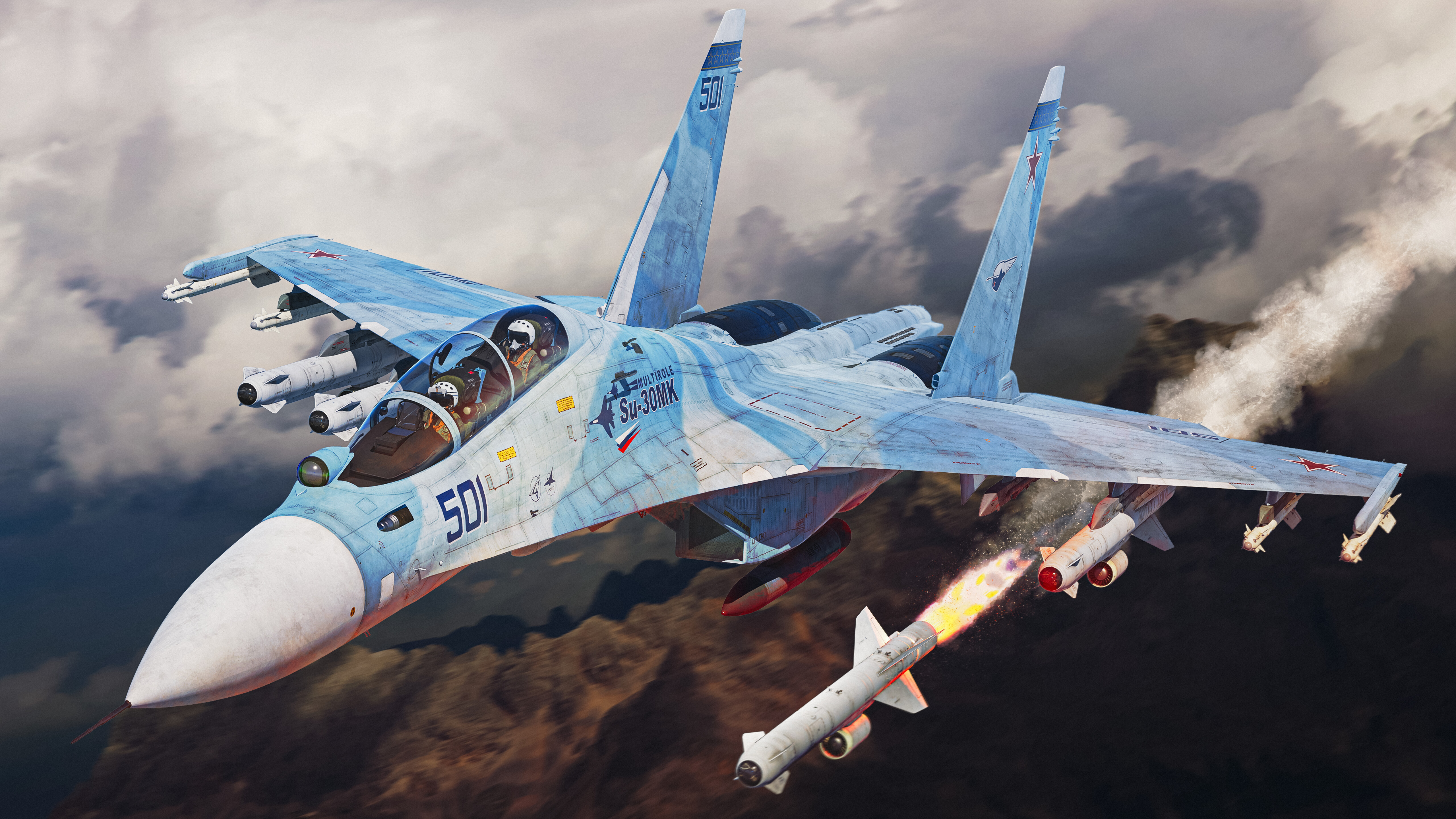
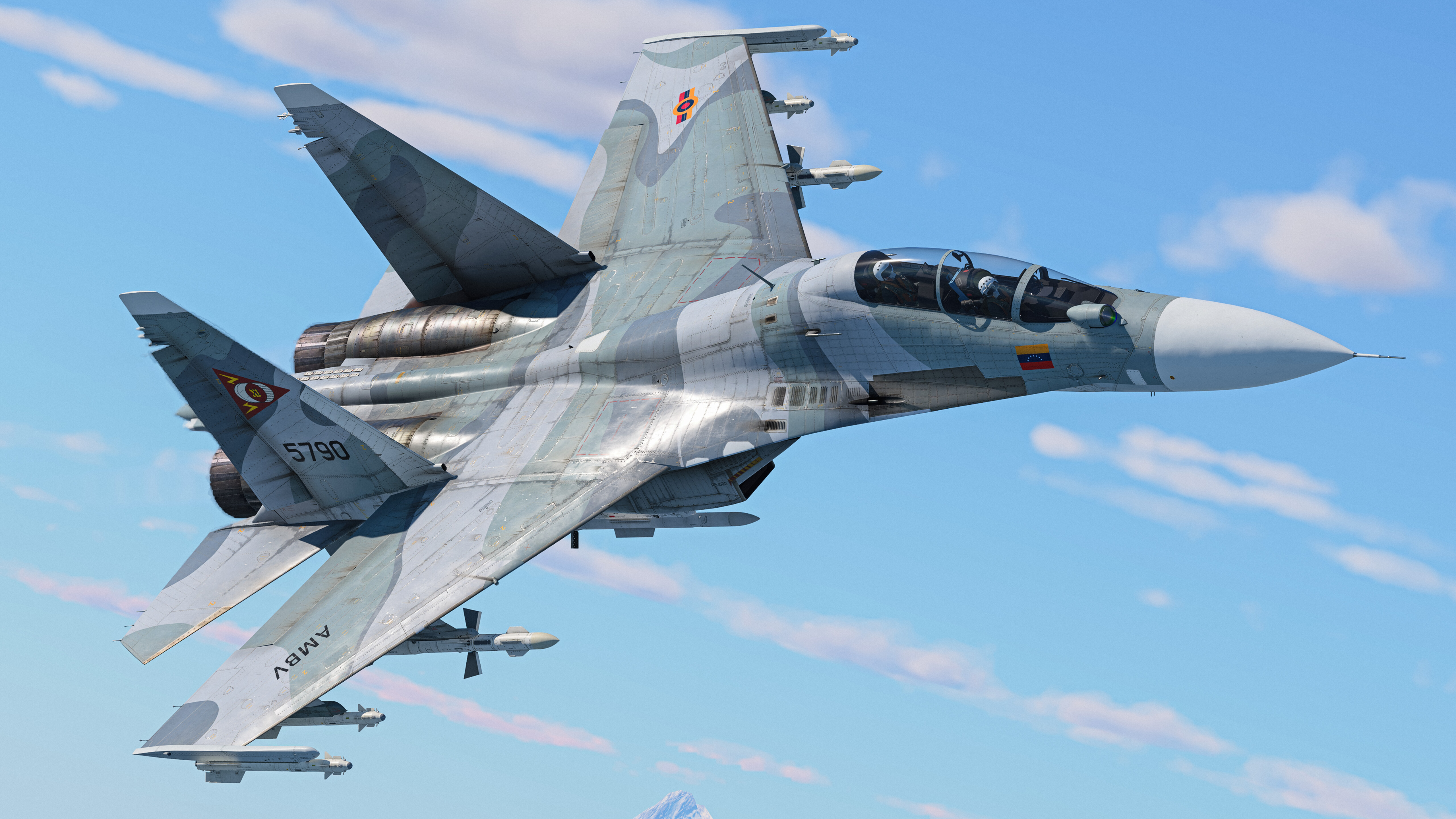
The images used in this article were specially created and provided by KohleR for this article. His work greatly enhanced the visual quality of the article, and without it, the article would not have been the same.