
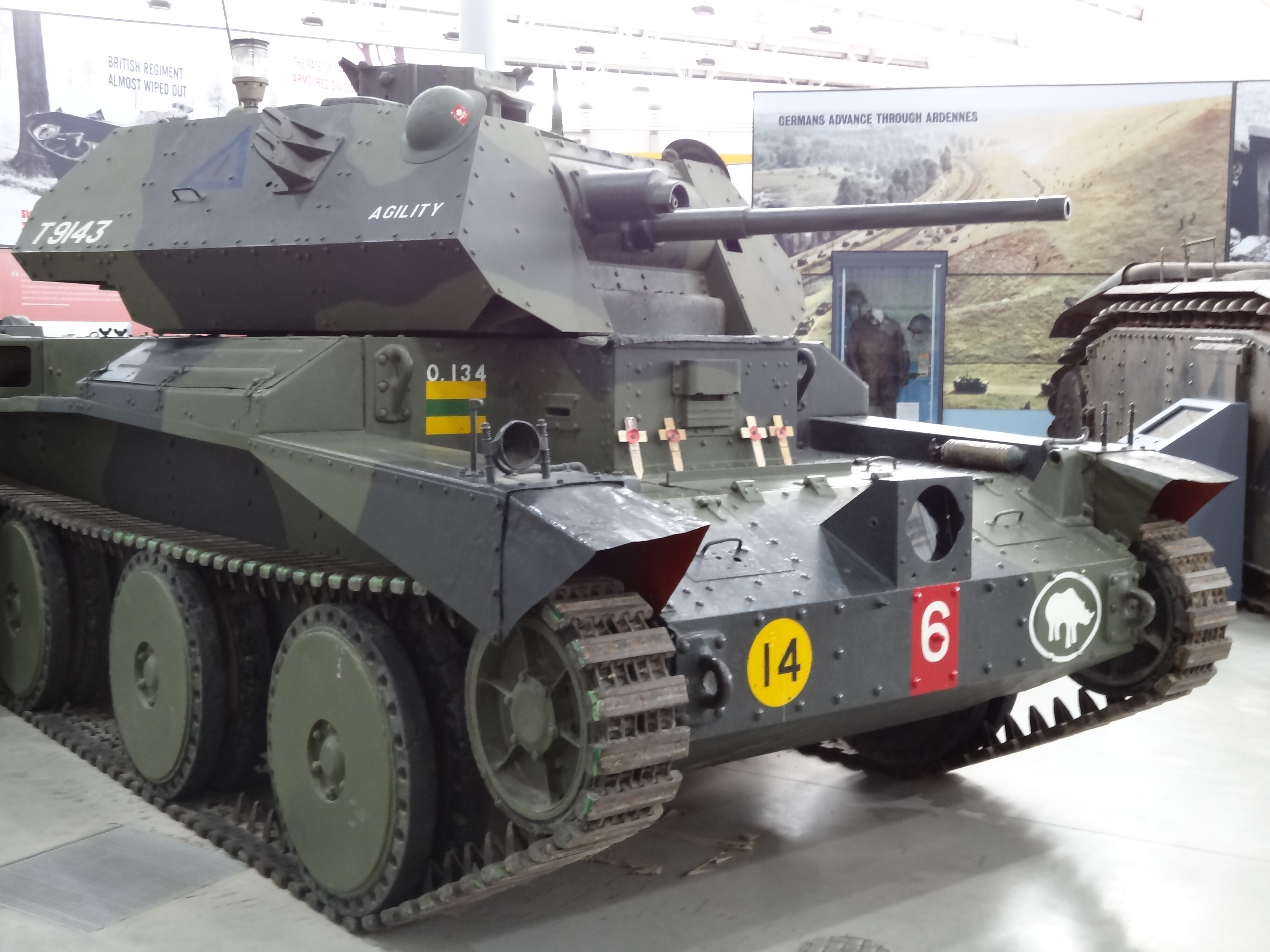
The A13 series of tanks was a range of similar British cruiser tanks produced just before, and for the first few years of, the Second World War. They adhered almost single-mindedly to the doctrine of speed and mobility above all else, meaning they were quickly outclassed by newer designs on both sides. Despite this they had a strong impact on the development of British tanks for several years and were a mainstay of the British Army’s tank units in the opening years of the war.
Design
The A13 designation was applied to these tanks by the General Staff, in the same way the Churchill tank received the A22 designation. “Tank, Cruiser, Mark x” was the name given to the design by the military in a similar way to ration biscuits being labelled “Biscuits, Brown”.
In the 1930s, Britain, realising the need to rearm and modernise their military, came up with a new doctrine regarding the use of tanks. Under this doctrine there were two types of tanks: Infantry and Cruiser. Infantry tanks, such as the A12 Matilda II and A22 Churchill, were slower but well-armoured and were designed to support infantry assaults — hence the name. Cruiser tanks, meanwhile, were lighter, faster designs that usually traded armour for speed enabling them to outflank enemy forces, attack from unexpected quarters and to be the tip of the spear when attacking enemy lines.
Cruiser Tanks were themselves split into “light” Cruisers and “heavy” Cruisers. The first two designs of Crusier tanks thus filled each of these roles. The Vickers-built Mark I was a light Cruiser while the Mark II was an up-armoured and improved Mk.I and filled the heavy Cruiser role. Neither of these designs were particularly successful, not being especially fast, well armed, nor well armoured. These designs arrived in 1936, the same year in which General Giffard Martel became Assistant Director of Mechanization at the War Office. He had seen the Soviets demonstrating their BT series tanks and began to push for a similar style of tank to be adopted by Britain.
An American predecessor to the BT-series was hastily procured and tested. The cutting-edge Christie suspension in particular impressed the War Office and the Nuffield Organisation agreed to buy the patent for it and to put it to use creating a new tank. This new tank would be the Cruiser Tank Mark III — the first of the A13 series.
A13 Mark I / Tank, Cruiser, Mk III
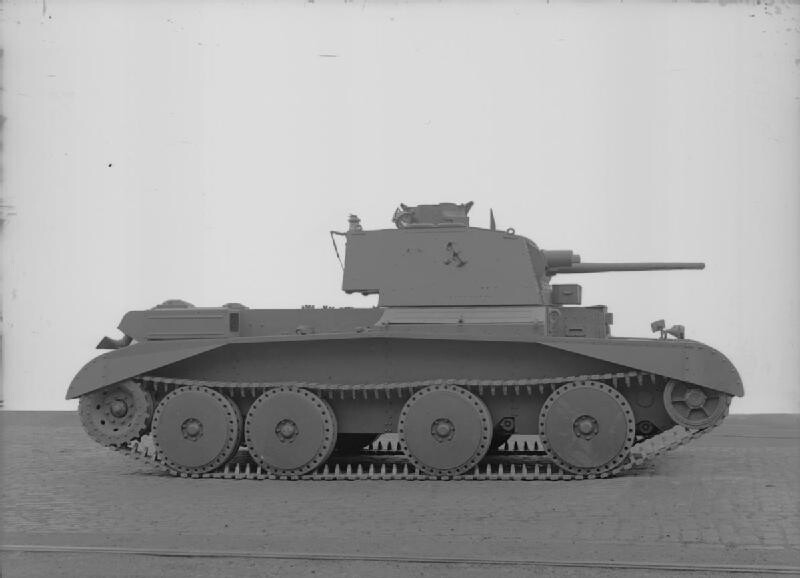
In 1937, Lord Nuffield created the Nuffield Mechanization and Aero Ltd specifically for the purpose of creating the new tank design. The General Staff requested that the tank be armed with the new 2-pounder cannon and be capable of reaching 30mph. Assisted by John Christie — inventor of the suspension system which took his name — the prototype A13E1 was ready by October 1937.
The hull bore little resemblance to Christies' original designs, other than the distinctive large road wheels. It was armed, as required, with the 2-pounder and utilised a larger turret ring than Christie’s designs, mounted on which was a boxy turret similar to that on the Mark I Cruiser Tank. The turret housed three crew members — the commander, gunner, and loader while the diver sat centrally in the front of the hull with his head in a protruding box. The radio was in the back of the turret which extended over the turret ring.
The commander sat to the left of the gun, with his head in a cupola. This cupola had four vision slots allowing a very limited field of vision. The gunner sat just in front of the commander while the loader was on the right of the main gun and could operate the coaxial Vickers machine gun. The turret had no additional vision slots, other than the gunner’s sight so situational awareness was very poor.
The tank was powered by a 340hp Nuffield Liberty V12 engine and had a range of around 90 miles depending on the terrain. Initial tests showed it was easily capable of reaching 30mph, and it would sometimes exceed 40mph though this was eventually limited down to 30mph to avoid excessive wear and tear on the drivetrain. The Christie suspension system, the most innovative feature of the tank, was made of four rubber-rimmed road wheels with a drive sprocket at the rear and an idler at the front. The helical springs were placed within the fighting compartment, limiting space for the crew but this was deemed acceptable due to the benefits offered by the arrangement during high-speed manoeuvres.
The armour was 14mm at its thickest on the front of the hull and turret and 12 mm on the sides. 5mm plates covered the engine deck and turret roof. There were three hatches, one on the commanders cupola and one to the right of it on top of the turret for the turret crew, and the front of the drivers compartment hinged upwards allowing him to enter and exit. These hatches were later to found to be thoroughly insufficient when the tanks came under fire.
65 A13 Mark Is were ordered from Nuffield in January 1938 but these weren’t all delivered until after the start of the Second World War, by which time improved designs had been introduced.
A13 Mark II / Tank, Cruiser, Mk IV
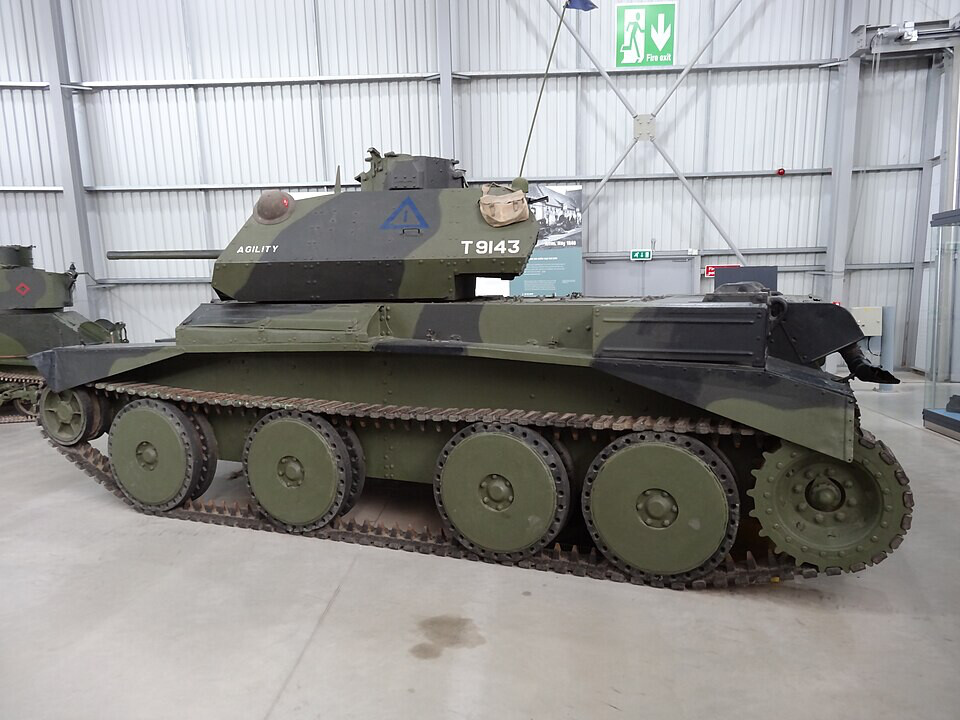
While production of the A13 Mark I was underway, the War Office decided that they needed an A13 with more armour, and so the Mark II was created. Initially these tanks were just Mark Is with additional armour attached but soon they were came built with thicker armour from the factories.
The A13 Mk.II had up to 30mm of armour at its thickest, with prominent angled plates on the turret sides and rear. Otherwise the design was effectively unchanged.
Many more Mk.IIs were built than Mk.Is, sources vary but the number is probably between 600 and 900 built.
A13 Mark III Covenanter / Tank, Cruiser, Mark V
By 1939, with war looking inevitable, Britain was rushing to expand its armoured vehicle production and so reached out to several companies to offer them contracts to build combat vehicles. One of these companies was the London, Midland, and Scottish Railway Company (LMS) which had no prior experience of building armoured fighting vehicles. Thus they took what was available at the time and tried to create a new design to meet the War Office’s new specification.
The War Office wanted a lighter and cheaper version of the A13 with 30mm of armour and a 2-pounder gun. The design that LMS drew up met these requirements and so 100 were ordered off the drawing board in 1939 before a prototype had even been built. This design, which became the A13 Mk.III, became the first cruiser tank to be given a name — Covenanter — starting a tradition of using names beginning with C which has persisted ever since for British tanks.
The design kept the A13's suspension system and borrowed the steering and gearbox units from other designs which the War Office had rejected. The engine was a 340hp Meadows D.A.V flat-12 engine which meant that the tank had a very low profile. Unfortunately this left nowhere for the radiator to go, so it was moved to the front of the tank, to the left to the driver who was offset to the right. This arrangement proved unreliable and inefficient, and was the main source of the type’s troubles.
During trials of the second Covenanter prototype in September 1940 it was found that the engine began to misfire after an hour of running due to overheating and that at one point, the temperatures in the side fuel tanks were hot enough to boil the petrol. Other defects including oil leaks and issues with the gear selector, transmission and brakes were mostly corrected on the third prototype vehicle.
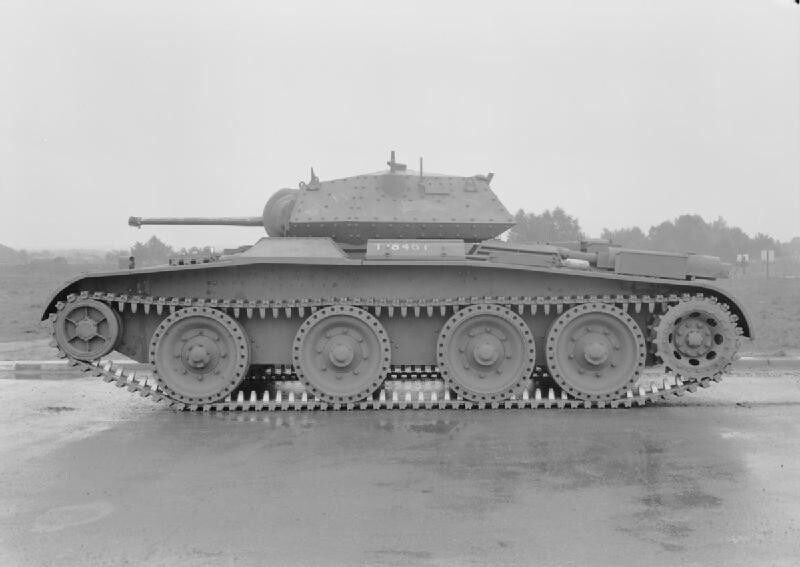
The final Covenanter design that entered service was very different to the A13s that had preceded it. The hull barely protruded above the tracks, leading to a very low, sleek profile. The thicker and highly sloped front plate prominently displayed the cooling louvres which indicated the presence of the radiator underneath. The polygonal turret could easily be confused with that of the Crusader tank.
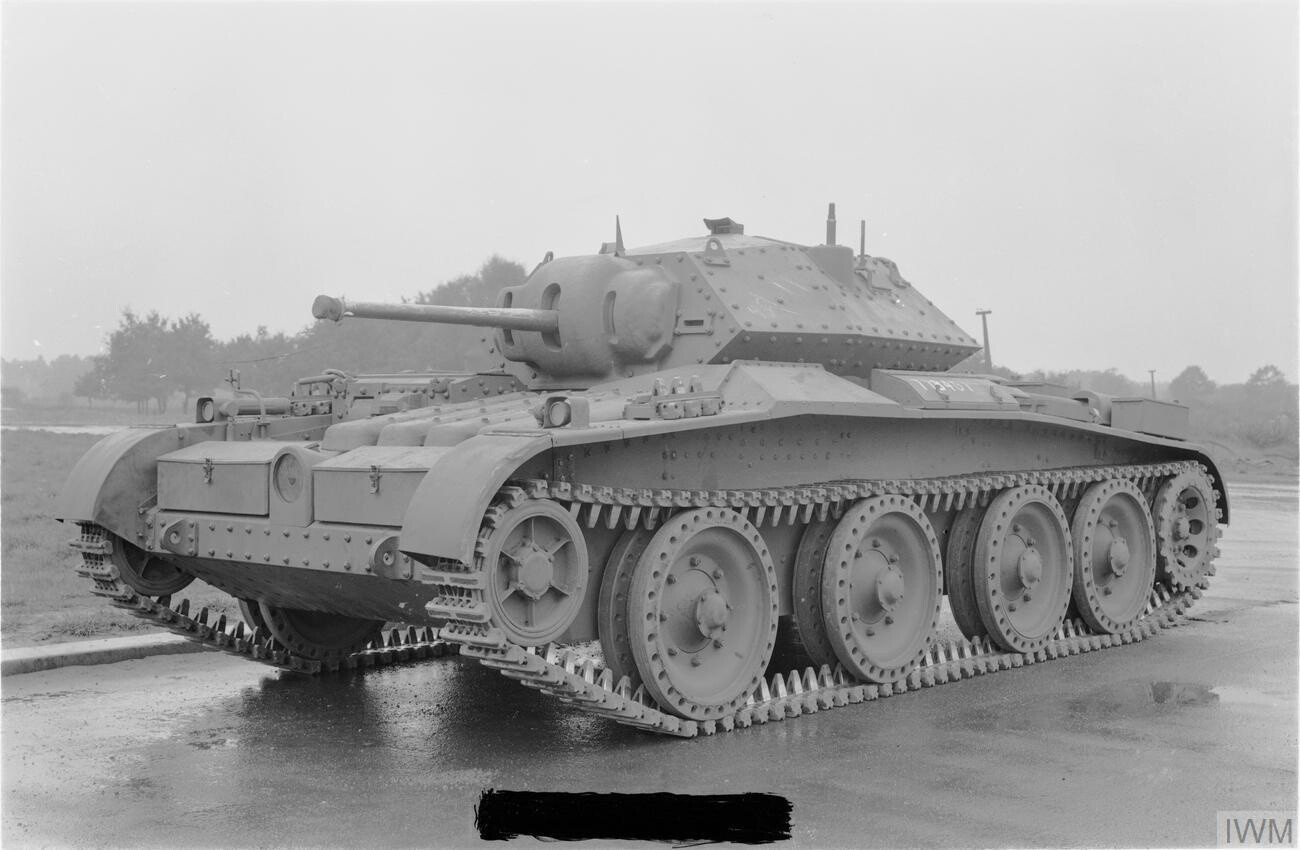
The Covenanter carried a similar armament to the early Crusaders, with a QF 2-pounder as the main armament and a Besa coaxial machine gun which both sat behind a bulbous mantlet.
In total, 1,771 Covenanters were built across four variants, each of which attempted to improve the atrocious cooling issues, though to little success.
Service History
With the outbreak of war in September 1939, the A13 Mk.Is and IIs along with the older Cruiser Tank Mk.Is were the only fast tanks available to the British Army so were almost all shipped over to France as part of the British Expeditionary Force or BEF.
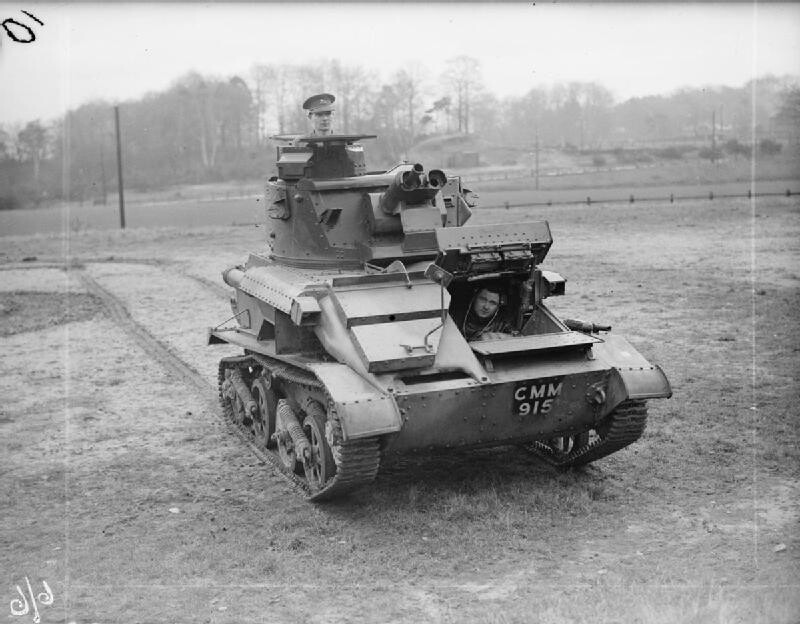
The 1st Armoured Division was one of the units equipped with the A13s — albeit not fully due to the limited supply of the tanks. They initially didn’t deploy to France, instead training in England, though this was hampered by issues with the supply of weapons, ammunition and spare parts. When the Division was deployed in May 1940, they still suffered severe shortages of equipment and a not insubstantial part of the unit’s strength was obsolete, machine gun-armed Light Tank Mark VIs. 3rd Royal Tank Regiment (RTR) while technically part of the Division, were shipped out separately to assist in the defence of Calais, complicating the Division’s organisation and supply plans.
A peculiar tale to come out of this early period is that of a squadron leader from the 9th Lancers using his own car to transport ammunition, sights and guns for his tanks unbeknownst to the commanders of the 1st Armoured Division due to the severity of the equipment shortages.
In late May 1940, the increasingly desperate Allied commanders attempted to attack the more exposed flank of the German advance near the Somme river. Elements of the 1st Armoured Division along with support from French armoured units made initial advances but were repelled, for the loss of many precious cruiser tanks. Attempts were made to evacuate surviving tanks from Cherbourg but due to the lightning advance, only 7 A13s and other cruiser tanks were evacuated, the rest being abandoned, some still in working order.
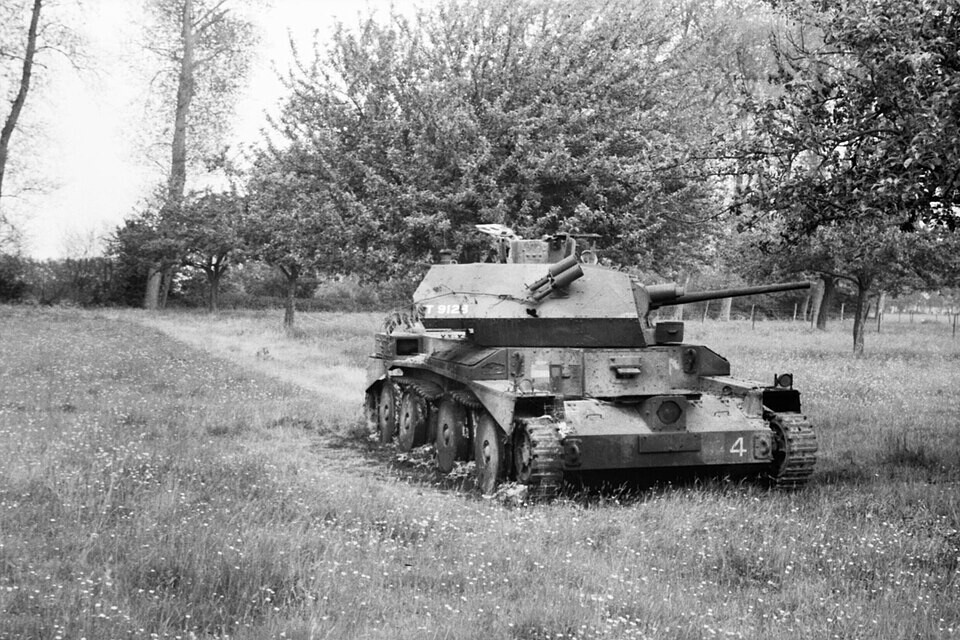
Other units, such as the 3rd Royal Tank Regiment which was deployed late in May 1940, faced similar fates; a major push followed by a costly retreat leading to the loss of most of their tanks.
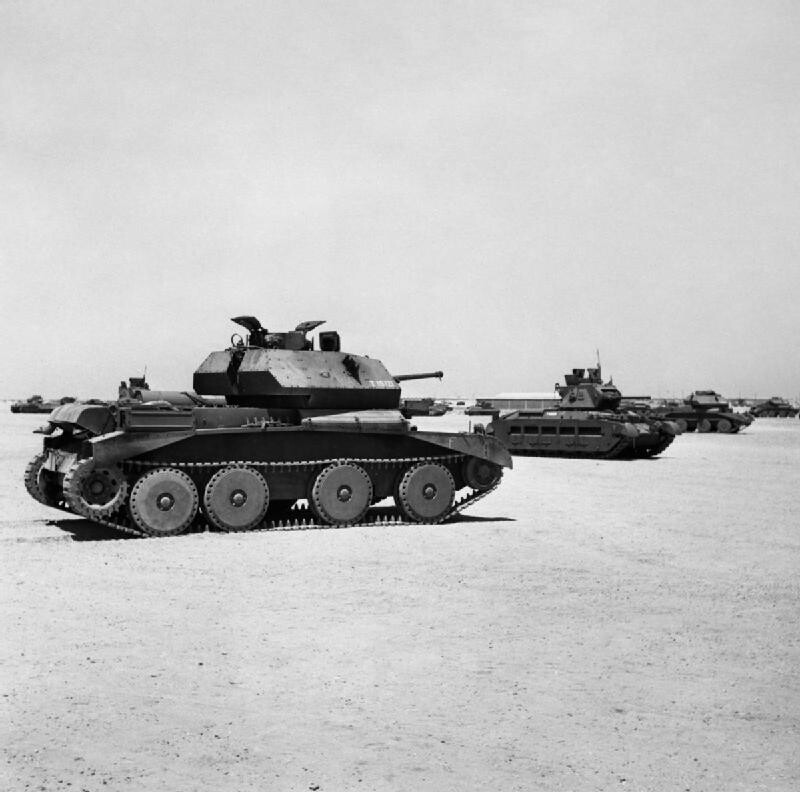
Soon after the defeat in France, however, the British Army was sent to North Africa to fight back against the Italian advance. Units such as the 5th Royal Tank Regiment which had been held in reserve for the fighting in France were some of the first to be deployed, using first A13 Mk.Is, though these were replaced by A13 Mk.IIs by 1941. These in turn were supplemented by new American-built light tanks such as the M3 Stuart — or Honey — and by the end of 1941, all of the A13 Mk.Is and IIs had been phased out in favour of Honeys and the new Crusaders.
The Covenanter had a slightly longer life in the Army, albeit a much quieter one. Despite the severe issues affecting the type, it was still produced in large quantities, as the War Office deemed that having some tanks, even if poorly designed and unreliable, was better than having none. The type was labelled as unsuitable for overseas use and was retained as a reserve in the UK. By late 1941, the Covenanter fleet was largely used for training purposes, and by 1943 it had been almost entirely phased out of service.
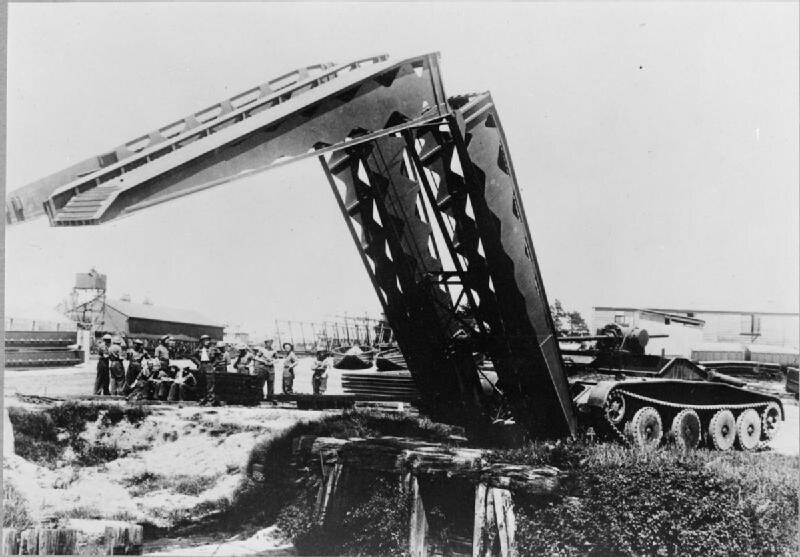
The final A13 variants in service were Covenanters fitted with 10m-long folding Scissor bridges. A handful of these saw some use in Europe following D-Day but were large eclipsed by more successful designs based on the Churchill chassis.
Crew’s View
When battle was joined in France in 1940, the crews of the various A13 variants quickly realised their mounts were not quite what they had expected. Their A13s were easily cut to shreds by enemy tanks and gun emplacements. In addition it was quickly found that the tanks were very difficult to escape from due to there only being two small hatches atop the turret. The commanders complained about being unable to see targets fast enough to react, drivers disliked the thinly armoured protruding box they had to put their head into, and the gunners and loaders didn’t have an easily accessible escape hatch.
During the early fighting against the Italians in North Africa, despite the continued complaints about ergonomics and visibility, the crews were more positive due to the opposition being very poorly equipped. When Rommel’s Afrika Korps landed in early 1941, with up-armoured and up-gunned tanks, the commanders of the armoured units at first refused to believe the reports coming in from their tankers about the presence of German forces — leading to many casualties before the situation was resolved.
Interestingly, and somewhat grimly, many crews from 5th RTR who were equipped with A13s in France and then M3 Stuarts in Africa found the A27 Cromwells that they were issued for D-Day to share many of the deficiencies of the A13s — in particular poor awareness for the commander and terrible escape hatches.
Final Thoughts
As with many elements of the British Armed Forces at the outbreak of war, the A13s were built to fight a war that never materialised, due to the lightning aggression and devastating firepower of enemy forces. Once British forces were on the back foot, the Cruiser tanks were unable to play to their strengths and suffered accordingly. The types were retired from front-line duties quickly, though the fact that the Covenanter was built in such quantities despite being so terribly flawed is testament to the desperation of the War Office at the time. Perhaps the most important contribution of the A13 series was training the next generations of tank crews who would go on to crew much more powerful Fireflies and Churchills in France and Italy.
Bibliography
Wikipedia (?) Cruiser Tank Mk III
Wikipedia (?) Cruiser Tank Mk IV
Wikipedia (?) Covenanter Tank
War History (2018) British Cruiser Mk III/IV A13 Series
Tank Encyclopaedia (2024) A.13 Mk.I, Cruiser Mk.III
www.tank-hunter.com (?) Surviving A13 Mk.II Cruiser Tanks
The BBC’s Tankies: Tank Heroes of WW2 — unfortunately unavailable on iPlayer as of 7/11/2025.