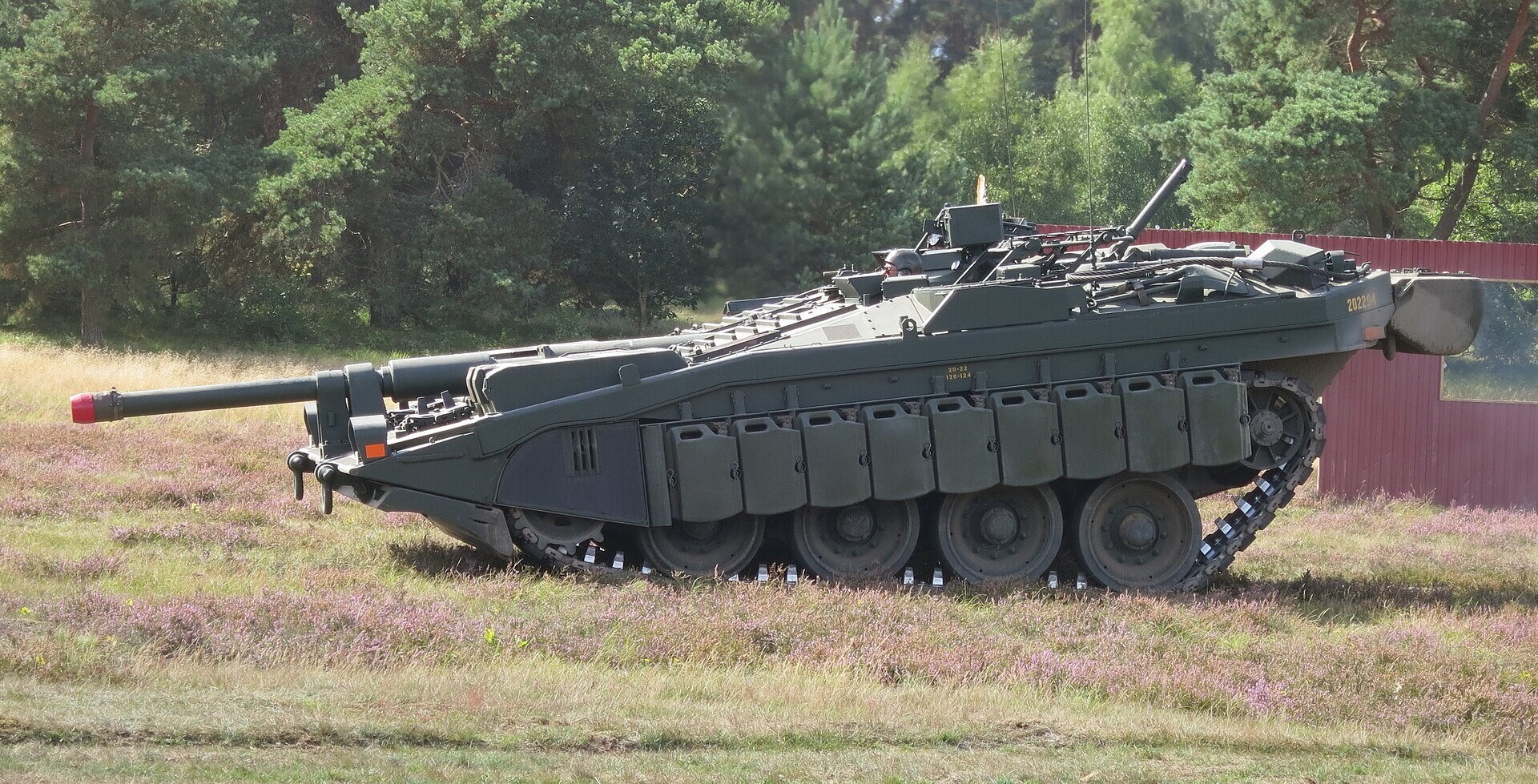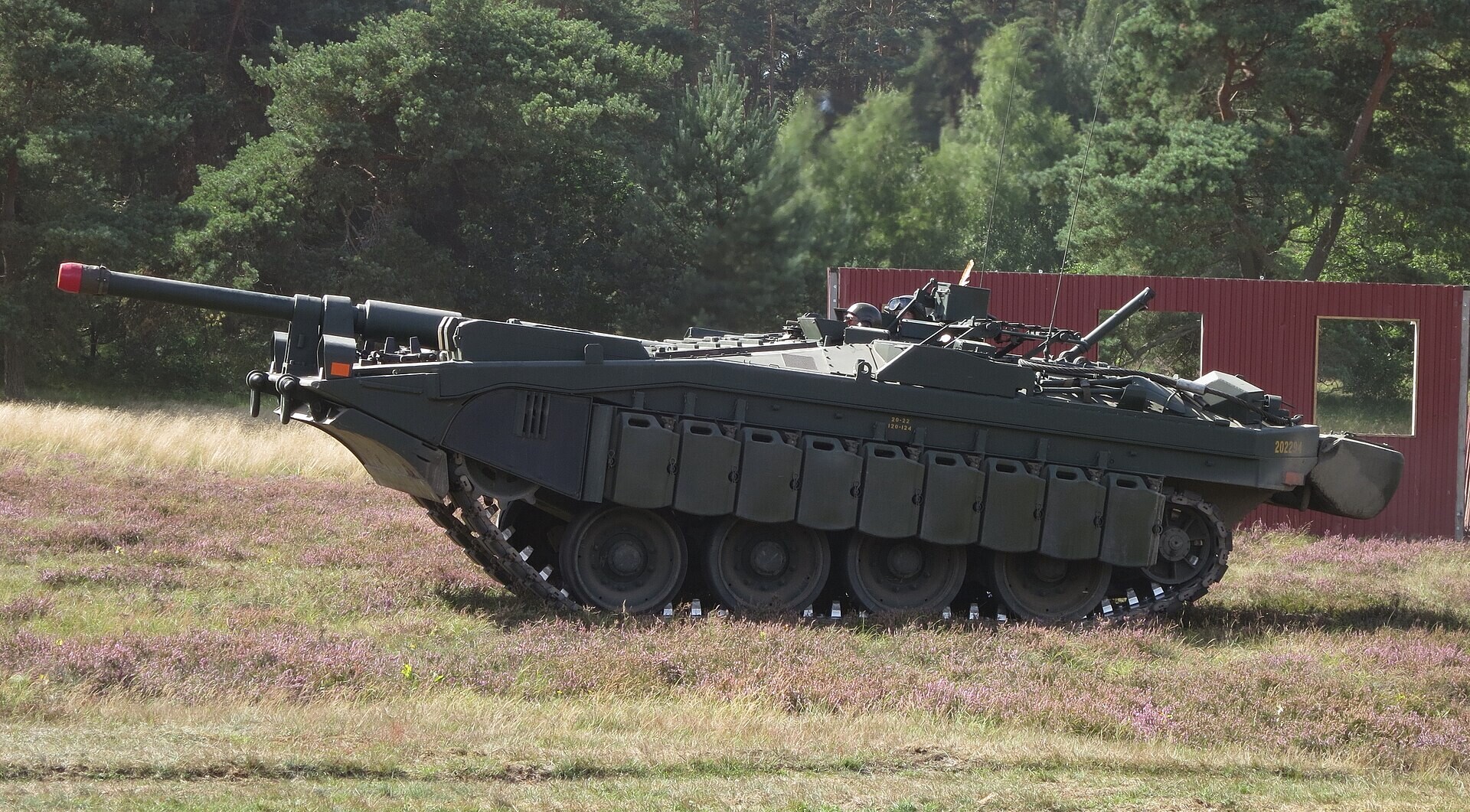
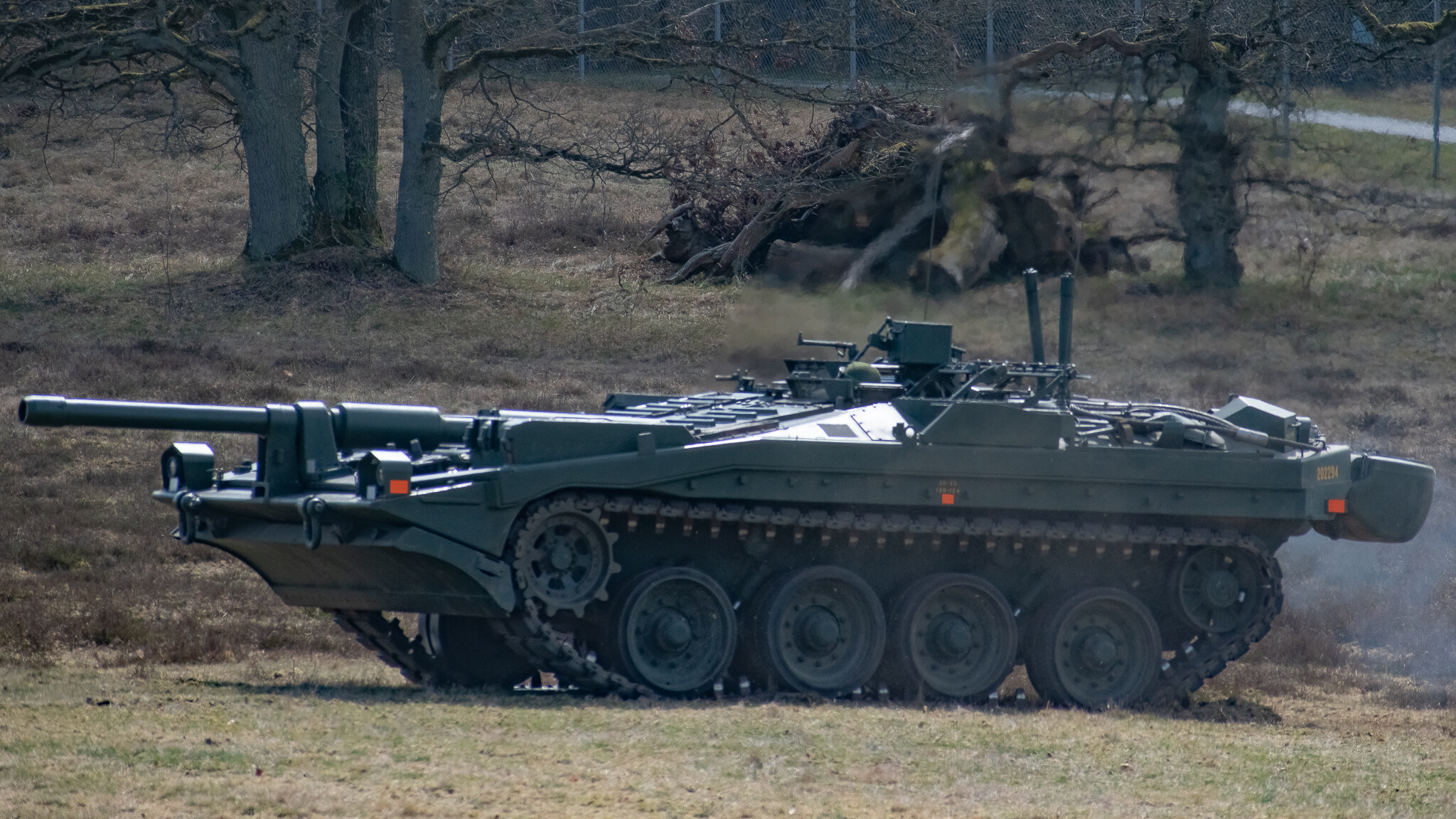
The Stridsvagn 103 (Strv 103), also referred to as the S-tank or Stridsvagn S, was a Swedish MBT manufactured by Bofors AB. It was in service during the Cold War, at a time where tank technology was rapidly advancing. The tank is instantly recognizable by its flat, turretless profile, and is frequently referred to as a cheese wedge or doorstop.
Kranvagn concept
In the early 1950s, Sweden was looking for modern tanks for use in their military while the Cold War was escalating, especially because their current tank fleet could not counter the increasingly worrisome IS tanks. The RSAMA's Ordnance Department was working on a new medium/heavy tank to be called the Emil. It went by the name of KRV to conserve secrecy. The design favored survivability, mobility, and good weapon performance. Many different autoloaded guns were considered, ranging from 105 to 155 mm. The design looked strikingly similar to the French AMX-50 heavy tank.
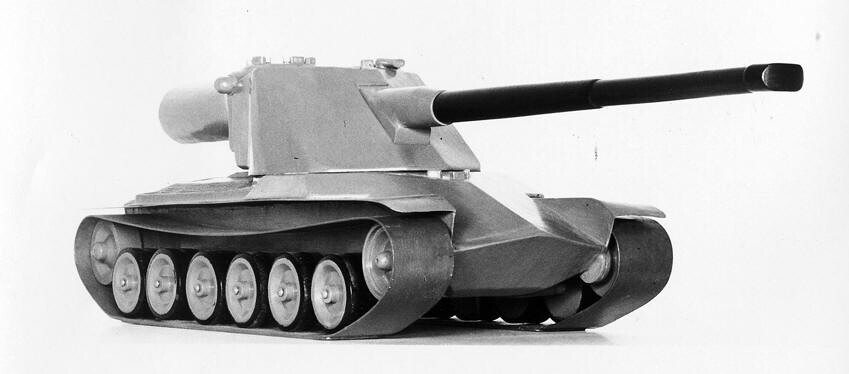
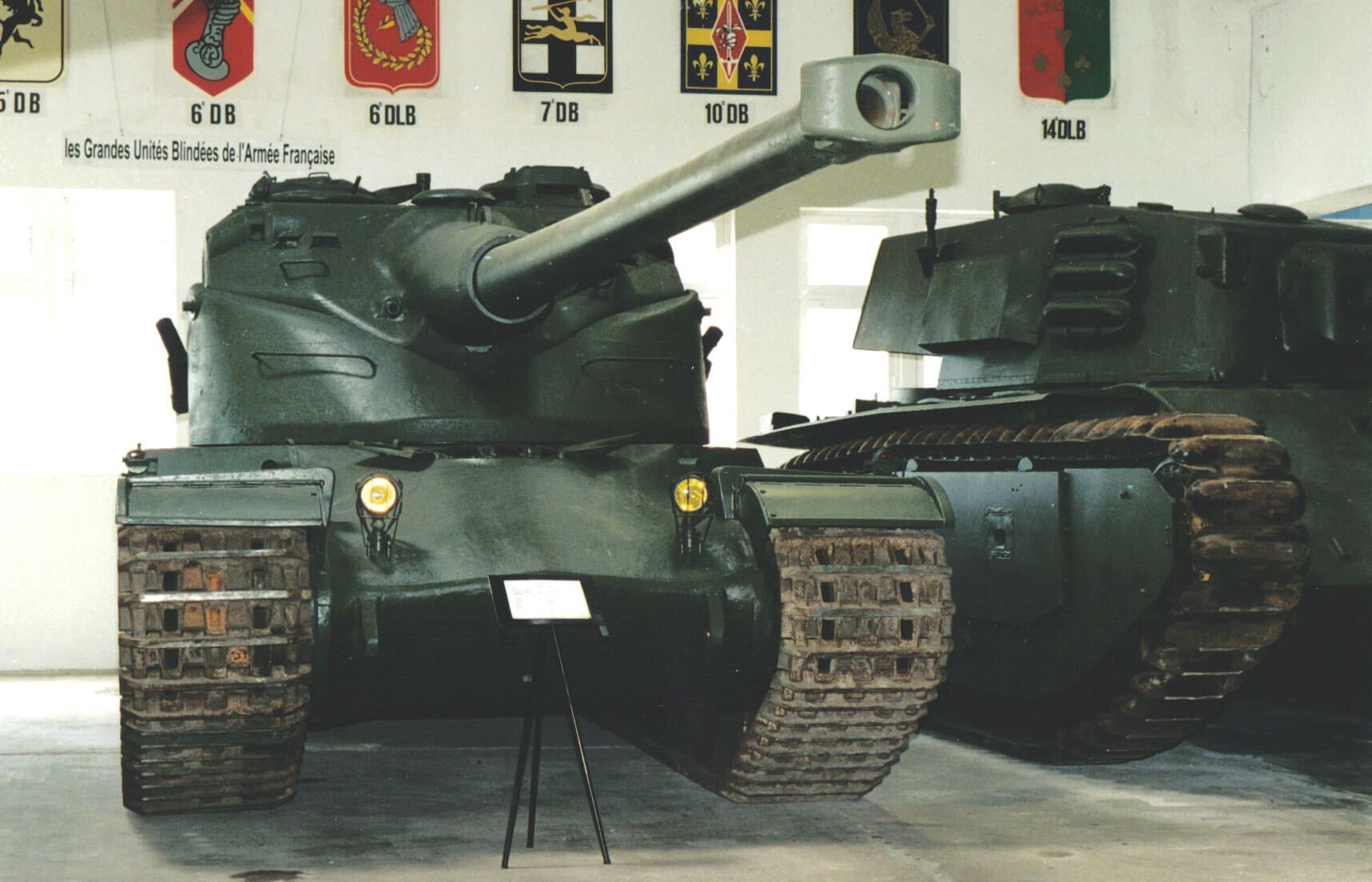
During this time period, the Swedish also purchased many Centurion Mk 3 MBTs from Great Britain, and the British design was much more favorable than the Kranvagn. It had a fully stabilized gun and superior mobility. The Centurions were delivered in 1953, and the Kranvagn, having two hulls completed, never reached production lines.
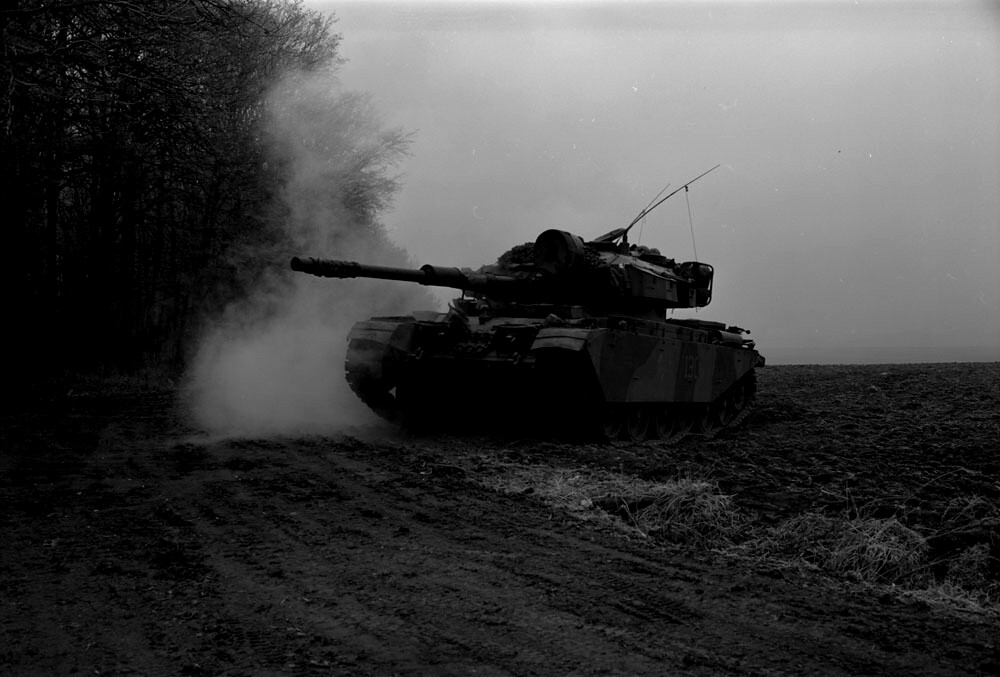
As great of an upgrade as the Centurion was from the KRV, the tank itself was still too heavy for the Swedish's liking, relative to armament. So, the RSAMA Ordnance Department sent out a contract requesting a different approach. Option one ("Alternative A") was to buy a heavier but better armed tank from the USA or UK, while option two ("Alternative T", Tysk-Fransk) was to design a lighter tank with better mobility but less armor, similar to German and French designs.
However, in 1956, designer Sven Berge proposed an extremely different third option, called "Alternative S."
"Alternative S" conception
With the Centurions came a surplus of data from WW2 and the Korean War that showed where the tank was most vulnerable. This data revealed that more than half of all Centurion losses were due to the turret or turret ring being penetrated.
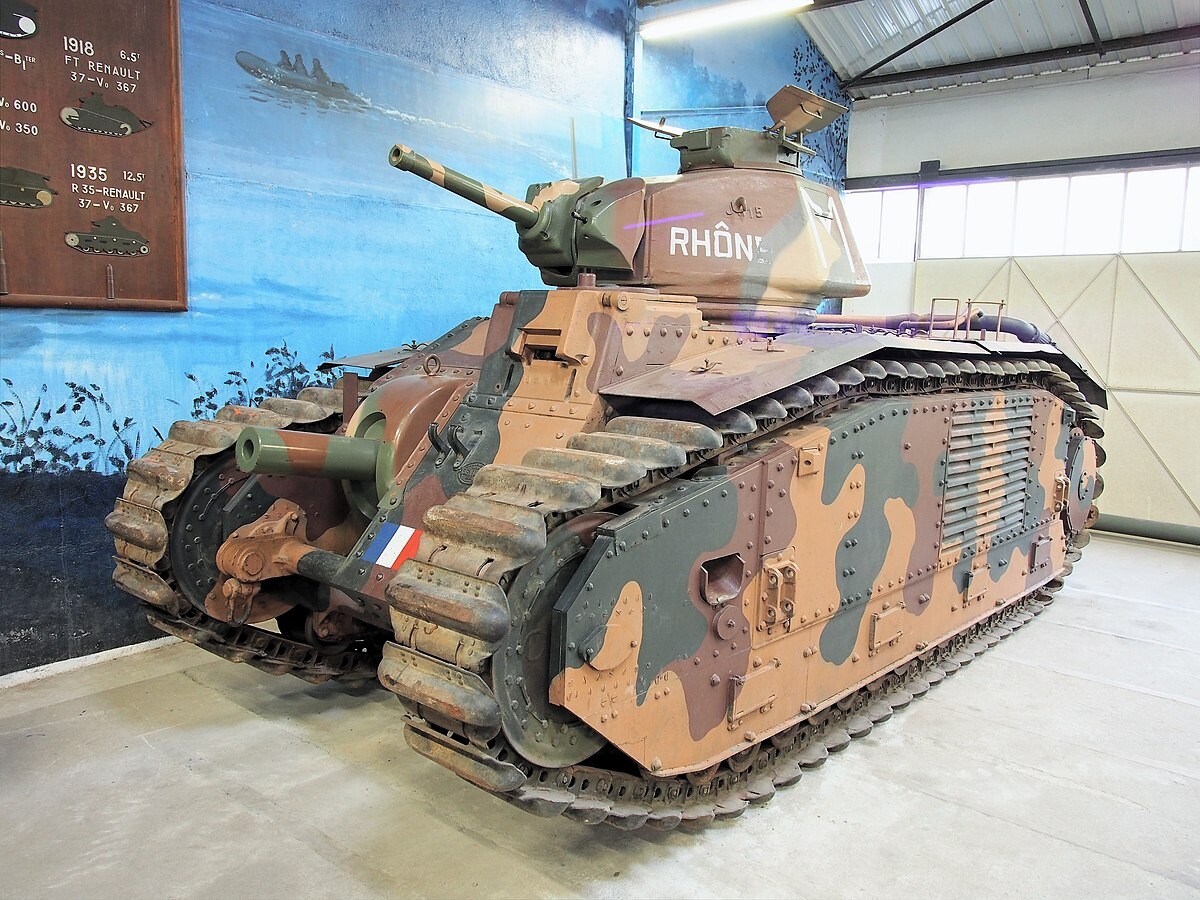
Towards the end of WW2, Berge had seen reports on the French Char B1 heavy tank, which had a hull mounted howitzer that required the whole tank to be turned in order to aim it. Berge had also studied German tank destroyers after the war, and learned that shorter vehicles tended to maneuver quicker than taller ones.
Sven Berge used both of these ideas to design the Alternative S. The tank's Bofors-designed suspension would stabilize the entire tank, rather than just the gun.
Berge felt that stabilizers at the time were not fit for firing on the move. While first shots were usually made while the tank was moving, they generally slowed or stopped for a more accurate second shot. He knew that his tank would benefit from being very protected while stopped, because an on-the-move shot would be very hard to make with it.
The design ended up being rather light and small, but with protection comparable to that of a heavy tank, as its ammunition was stored outside the crew stations, and its profile was very, very low.
Development and Prototyping
In early 1957, the Alternative S design attracted enough attention that a demonstration of its characteristics was needed. A contract was given to the designers to show how the suspension system was to be used. Using surplus M4 Shermans and Ikv 103s equipped with it, the suspension seemed promising. Further development was allowed by putting the system on the Kranvagn chassis, which required the removal of two road wheels to make it more like the S-tank design.
In 1958, the Swedish Parliament debated over which of the three alternatives would be the most favorable. In the end, the Alternative S was chosen, despite it being the most expensive. The tank had symbolic value as well, showing that Sweden, a neutral country, was very much industrially competent.
Two prototypes were built, being named S1 and S2. Landsverk built the tanks' drivetrains, while Volvo assembled the engines. S1's powerplant was an electric motor, while S2 had the unique Volvo turbine-hybrid engine.
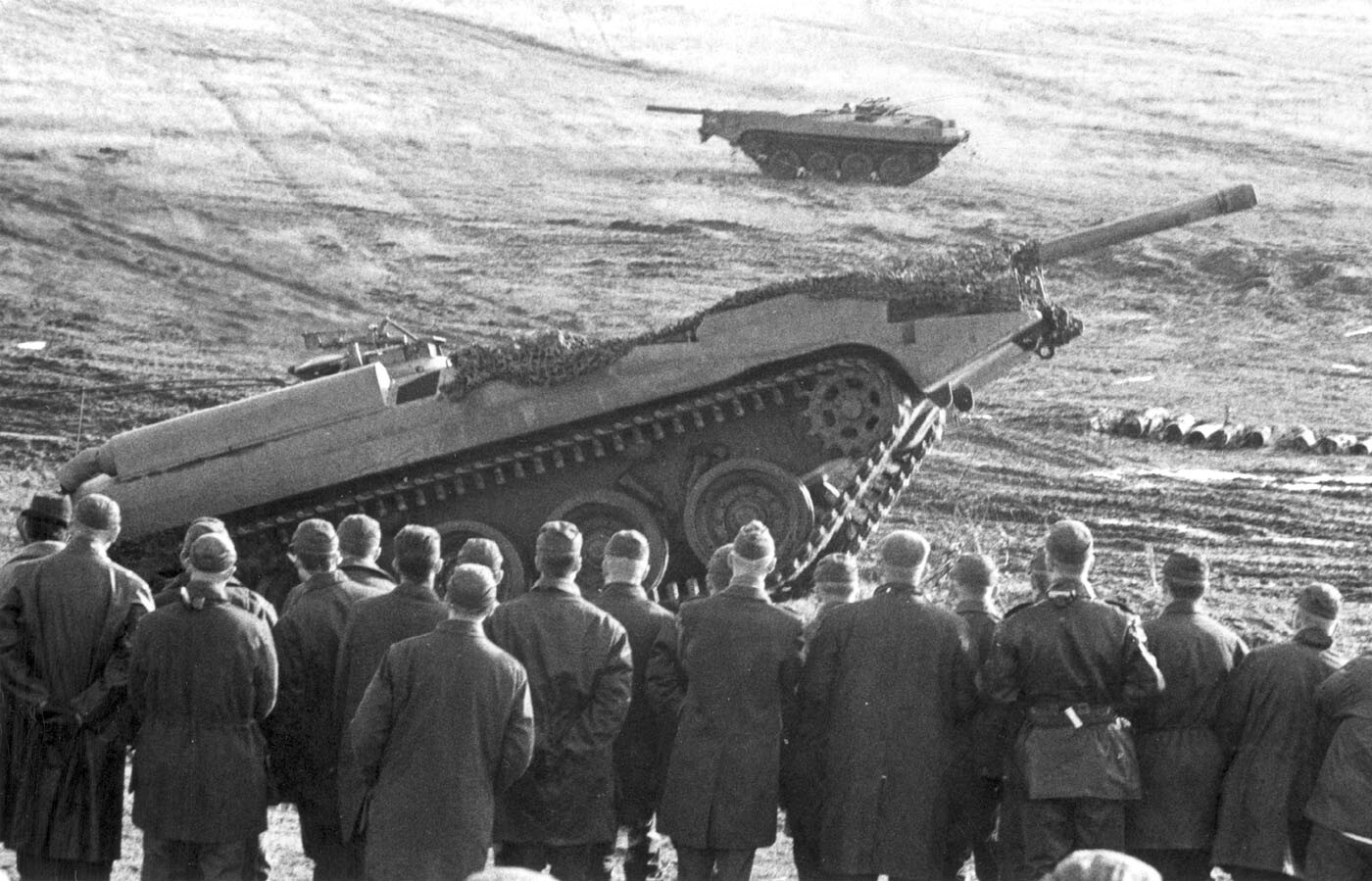
The gun chosen for the S-tank was the Royal Ordnance L7 105 mm gun. The weapon was used on the new Centurion Mk 10, and was licenced for production in Sweden at this time. It was much smaller than the intended weapons, but it fit in the military budget. The gun ran through the entire tank, and the shell's casing was ejected out the back. It had no recoil on the flat chassis, giving the autoloader an extremely low reload speed of around three seconds.
The engine hatches of the S-tank underwent fire trials in 1971, and it was revealed that armor piercing shells traveling around 1308 m/s had a 50% chance of penetrating the heavily sloped and ribbed armor.
The production tank was dubbed Strv 103, as it was the third tank to be fitted with the 10 cm gun.
Design and Features
The Strv 103 was a unique MBT, and was nothing like anything anyone had seen at this time.
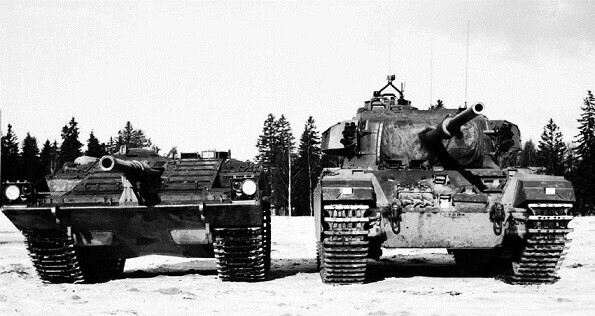
Its lack of a turret gave it a very low profile, and also made it very light. Although, its final form didn't offer much of an advantage over its biggest rival, the Soviet T-62, which was only a little taller. The height of the Strv 103 was a huge advantage over the Centurion, however, which was quite nearly ten feet tall. The cheese wedge did have a spaced out crew, which the T-62 lacked.
Since the tank's gun was fixed, a stabilizer could not be used. Instead, the whole tank hull would be stabilized. Sven Berge's unique suspension system was hydropneumatic, meaning the whole tank could be tilited up and down to aim the gun. It could also be lowered or raised depending on the size of the hill it was hiding behind. Berge had studied the German's Jagdpanzers and StuGs of World War Two, and noted their exceptional turning rates. He'd also looked at the Char B1 and its precise transmission that allowed it to aim its hull-mounted howitzer. He applied both of these ideologies into his design.
While the tank was designed to be able to use two crew members, things like repairs and communications would take a painstakingly long time without a third man. So, a third crew member was placed facing in the rear, and had a full set of driving controls for effective reversing. The Strv 103 had a two speed forward and reverse transmission, allowing it to go 31 mph on a road.
Another radical feature was that the cheese wedge had two engines. One was a Rolls-Royce diesel engine, while the other was a Boeing turbine engine (both of these were changed in later models).
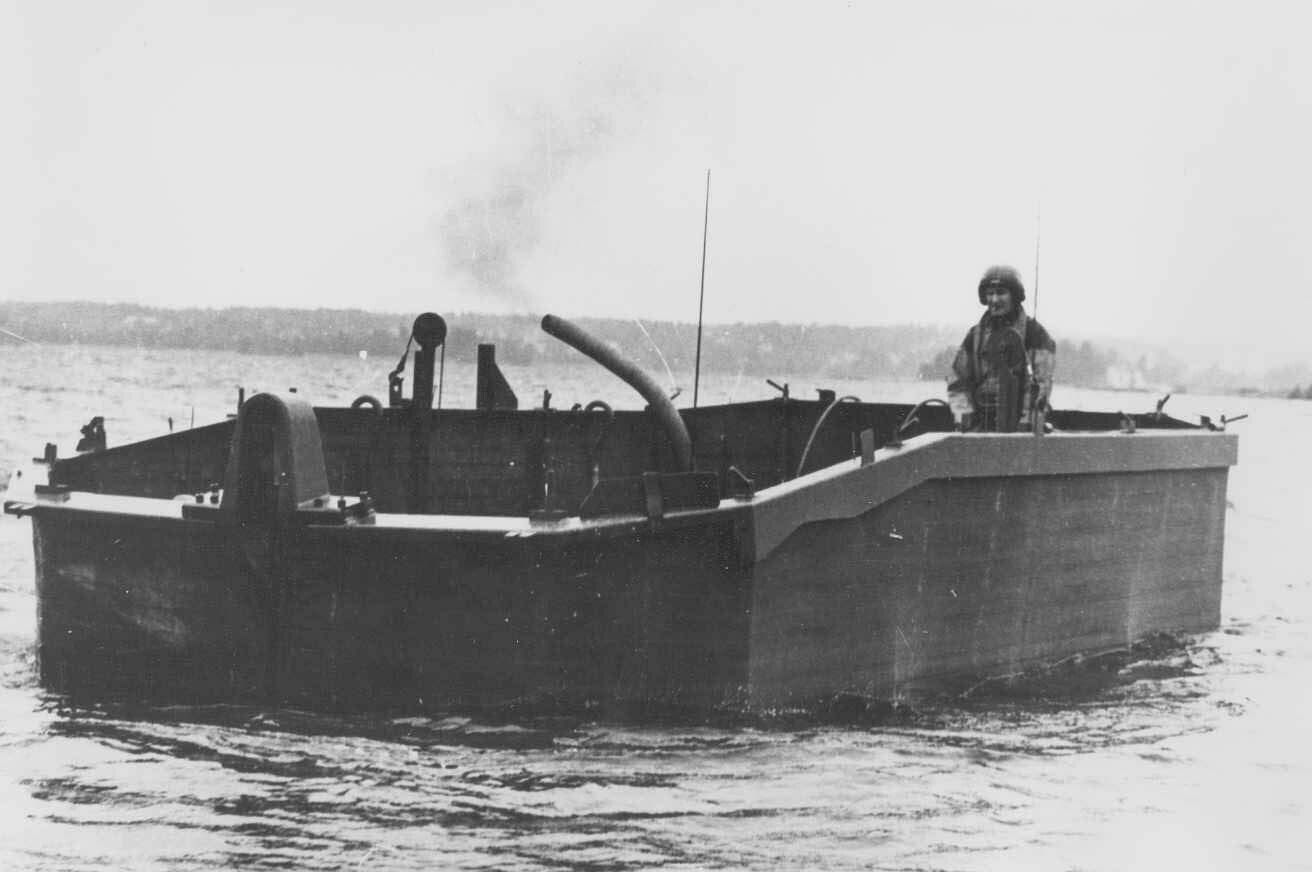
By putting a flotation screen around the hull, the Strv 103 could be made fully amphibious. This process took around 20 minutes, and the tank's treads could propel it to about 4 mph (6.4 km/h) in the water.
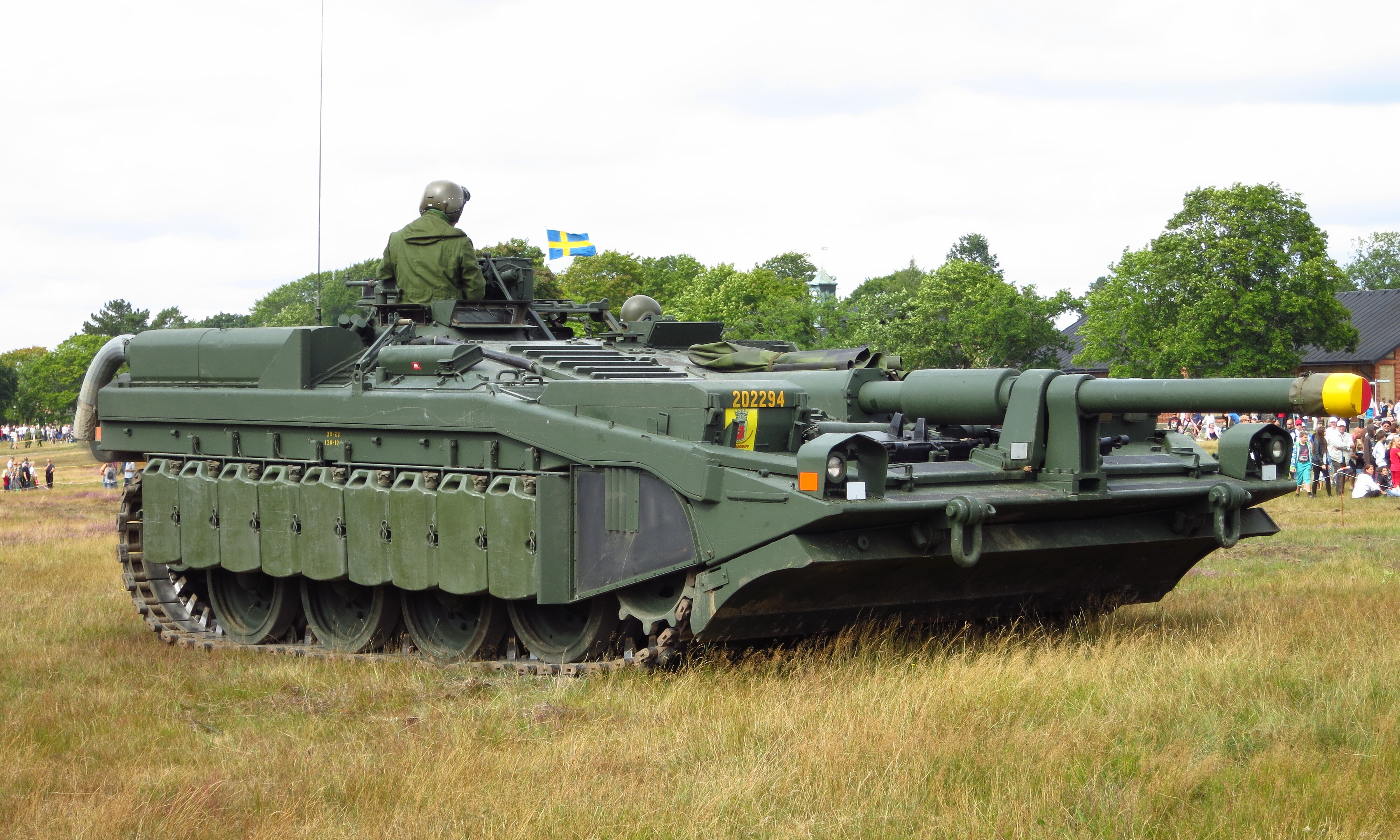
Later variants of the tank could be equipped with an anti-HEAT slat armor across the front of the hull. This armor was kept a secret from the public for a long time, and was only to be used during wartime.
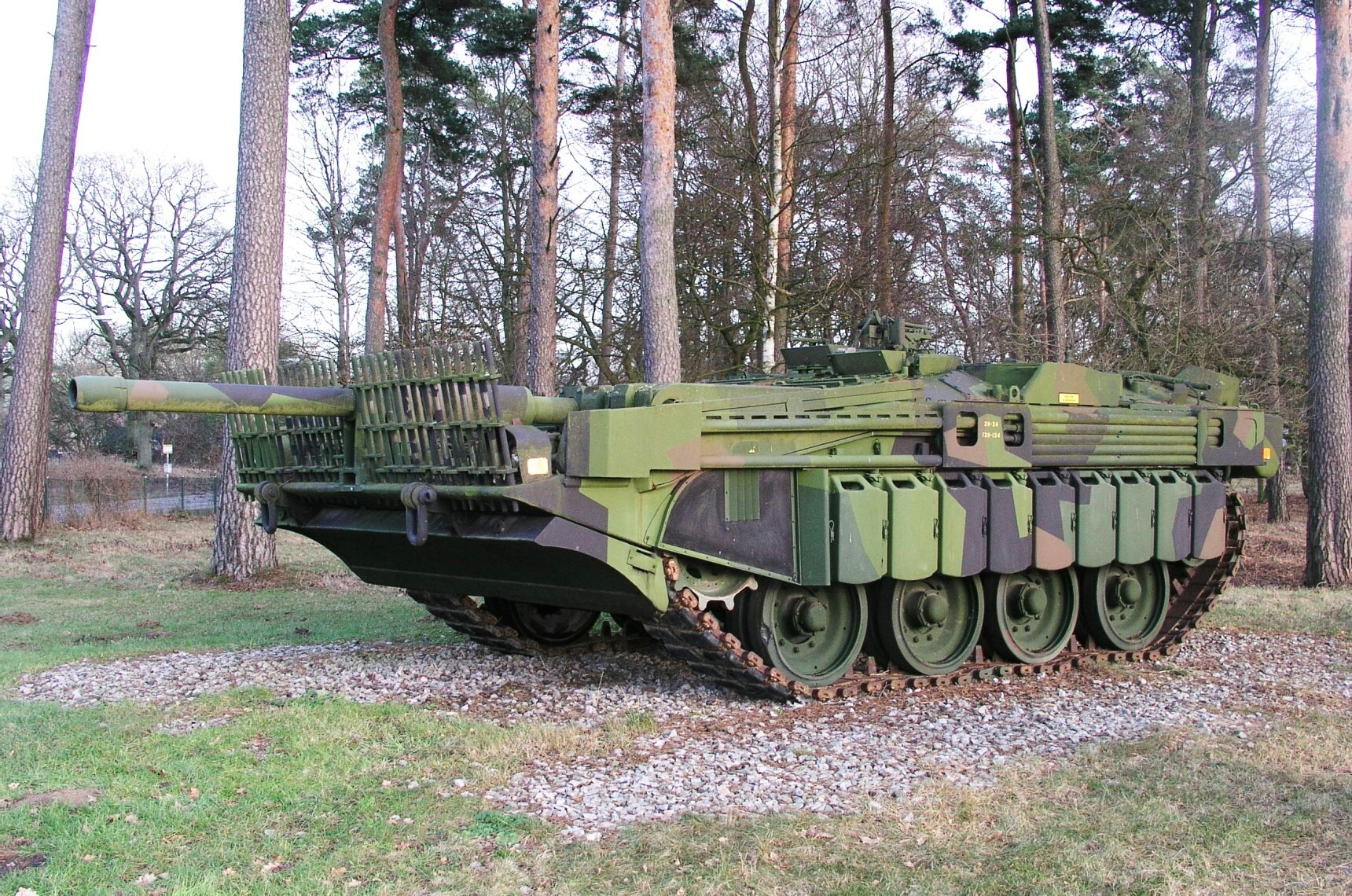
The Strv 103 was best used in a hull-down position, where the gun could simply peek over a small hill, making it nearly impossible to penetrate its sloped armor. At least one tank in each platoon was equipped with a bulldozer blade for digging hills for this purpose. The blade also doubled as extra protection for the lower front plate.
Production and Variants
In 1960, ten pre-production tanks were ordered. These were referred to as Strv 103-0 "zero series" vehicles. These were delivered a few years later in 1963, and were tested by active military crews. The tank crews discovered the vehicle could be operated with only two people, but it would be difficult. A crew of three was chosen for later production vehicles.
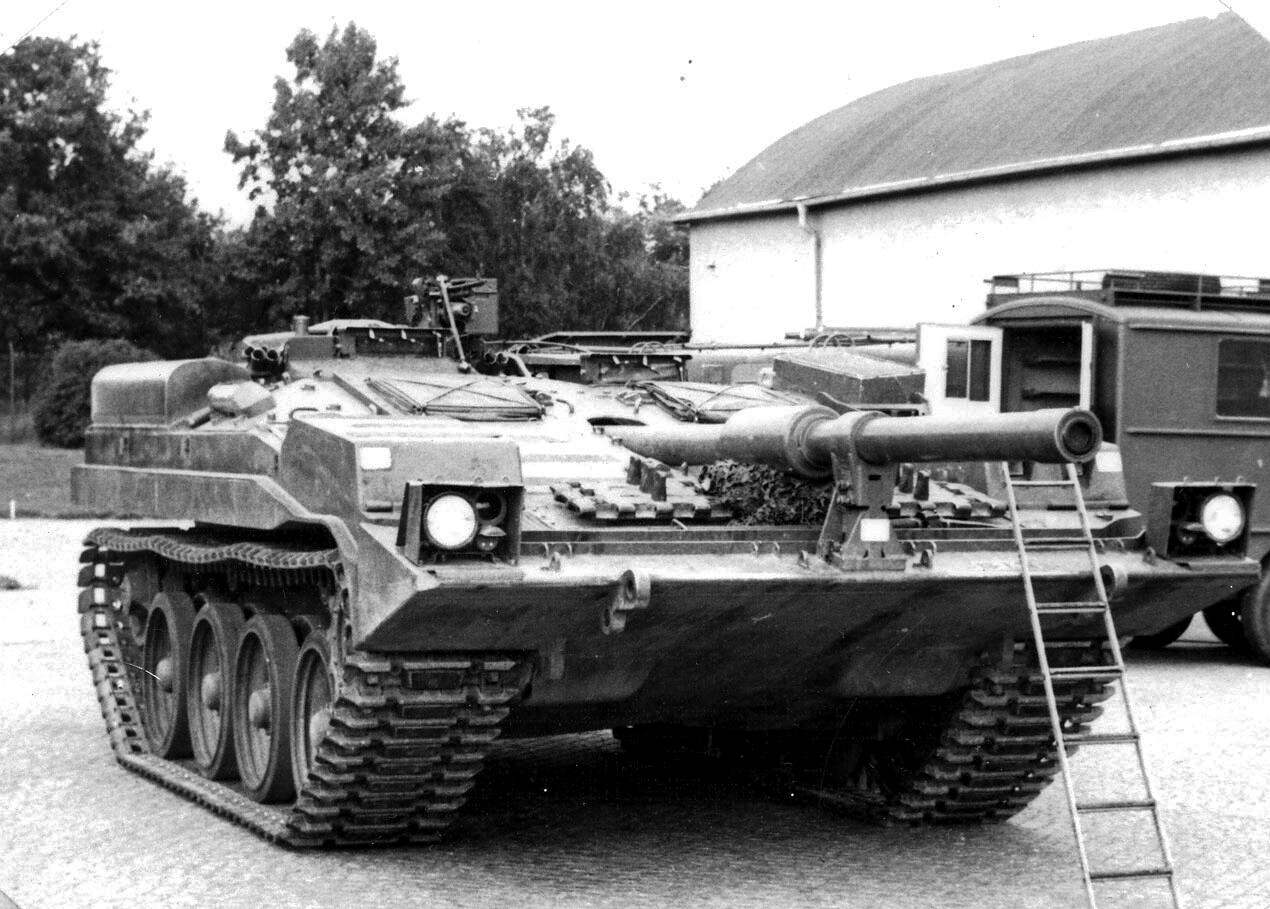
70 production vehicles were ordered in 1964, and they were delivered in 1967. It was becoming apparent that the 300 hp Boeing turbine engine being used was underpowered, so a new, more powerful engine designed by Caterpillar (490 hp) was fitted to the batch of 220 Strv 103Bs. 290 Strv 103Bs were finished by 1971.
In the early 1990s, the Strv 103C was introduced, boasting a better (290 hp) diesel engine (not to be confused with the better turbine engine the B variant received), new tracks, externally mounted fuel tanks, laser rangefinders, and dozer blades. These were converted from existing Strv 103Bs.
In the mid-1990s, an Strv 103D was experimented with, which had yet another new turbine engine, a nuclear chemical filter, thermals, an improved ballistic computer, an MRS, better suspension dampening, more frontal armor, and a stabilizer for the upper machine gun. However, at this time, the Strv 103 (and Centurion) was being replaced by the more modern Stridsvagn 121 and 122, which were the Swedish designations given to German Leopard 2 tanks.
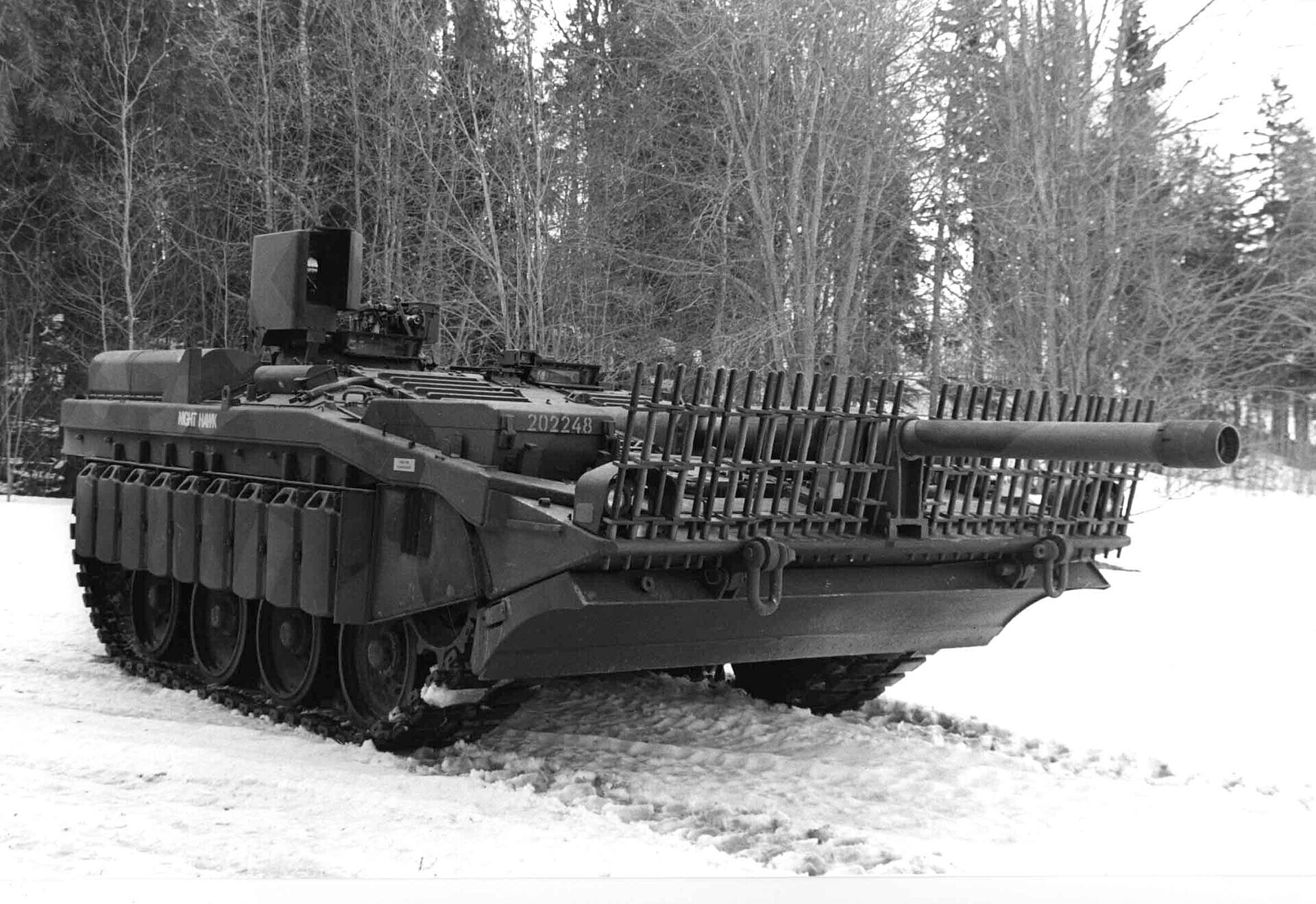
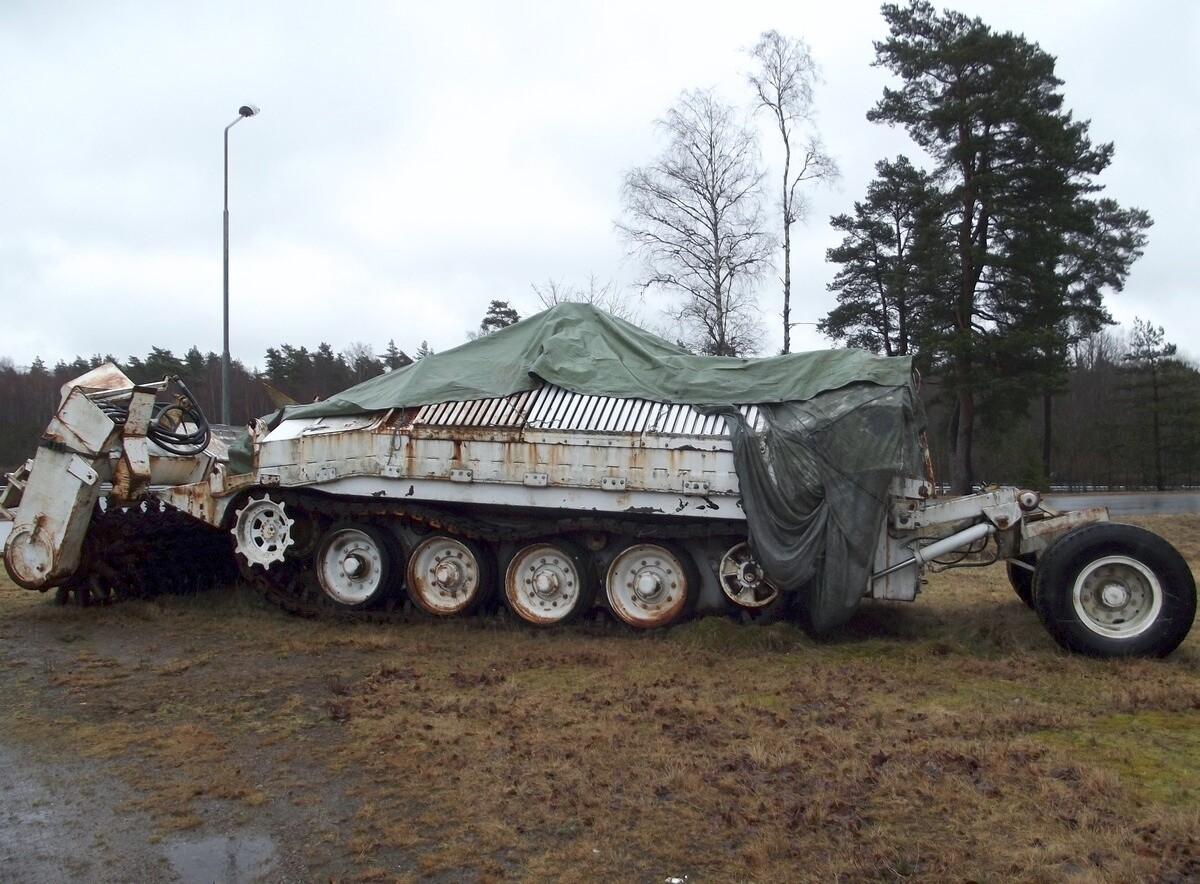
A minesweeper variant of the 103C, called the Minvält 103C, was tried out, but abandoned in 1997.
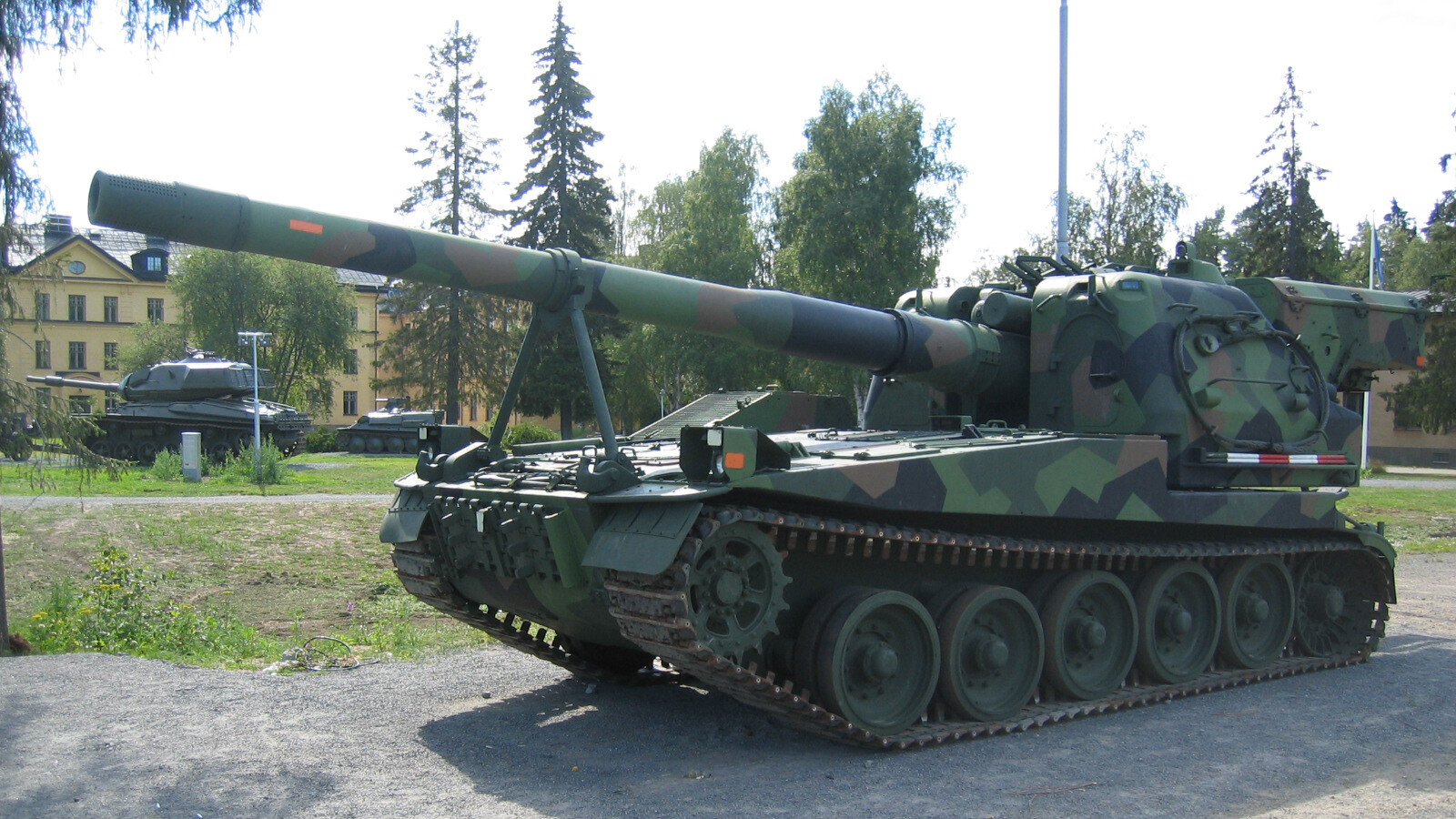
The variant of the Strv 103 that lasted in service the longest was the 15,5 cm bandkanon 1, abbreviated Bkan 1. It was a large self-propelled howitzer that had a very fast autoloader and devastating gun. Its chassis was that of an Strv 103, but was lengthened by one road wheel. It was introduced in 1967 with the base Strv 103, and was retired in 2003, marking an impressive 36 year service life.
Operational History
The Strv 103 was introduced in 1967, and was retired 30 years later in 1997. It never saw combat in any wars, so it's unknown how it would perform while under fire. However, it was well-liked with its crews and was very iconic in the tank world.
Despite its defensive tank destroyer-like silhouette, the Strv 103 was intended as an offensive main battle tank. After all, the Swedish doctrine at this time was to have an aggressive mindset in tank battles, offensive or defensive. Its design was focused on protection, rather than pure defense.
The cheese wedge was allocated to many Swedish armored brigade units, tasked with launching counter-offensives on enemy beaches or via airborne landings, further adding on to the "aggressive defence" mindset. It would back up the Swedish Centurions, which would spearhead the attacks.
The Strv 103 was to be replaced by the more advanced Strv 2000 in the 1980s, but the Riksdag requested that the Strv 103 be equipped with more modern technology, instead of being replaced entirely, due to the tight military budget. This move extended the doorstop's service life by another ten years, showing just how effective this design was in the long run.