
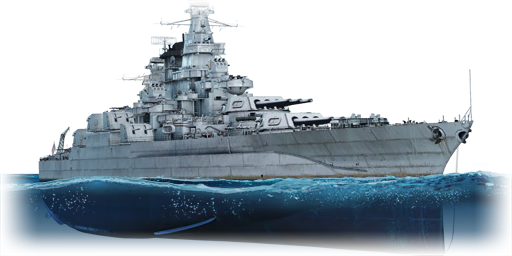
USS Tennessee



The USS Tennessee (BB-43) was the lead ship in a class of American battleships of the same name. Laid down at the New York Naval Shipyard on May 14, 1917, she was launched on April 30, 1919, and commissioned on June 3, 1920. This class of battleship was distinguished by its enhanced anti-torpedo defenses and advanced turret design, enabling it to engage targets at extended distances. After undergoing trials, the Tennessee moved to San Pedro, California, where it was based for nearly all of its pre-war service. Throughout the interwar period, the Tennessee actively participated in exercises and war games.
In 1940, following another series of exercises, the Tennessee was stationed at the Pearl Harbor base due to the growing military threat from Japan. On December 7, 1941, during the attack on Pearl Harbor, the Tennessee was moored at berth F-6 alongside the battleship West Virginia. After the attack began, the Tennessee received orders to leave the harbor but was almost immediately pinned against the wall by the West Virginia, which had run aground. The battleship Arizona exploded behind her and the battleship Oklahoma capsized in front of her, trapping the Tennessee. Despite this, the Tennessee sustained only minor damage. According to official data, her anti-aircraft fire shot down five enemy aircraft.
Following repairs in the fall of 1942, work began on a comprehensive modernization of the ship that lasted nearly ten months. New anti-torpedo protection and a superstructure were installed, and new fire control systems were added. The battleship's air defense was also strengthened, and the crew size more than doubled. In June 1943, the Tennessee joined Task Force 16 and participated in the Aleutian Islands campaign. It then actively participated in the Gilbert-Marshall Islands campaign, the capture of the Bismarck Archipelago, and the Mariana-Palau campaign. The Tennessee distinguished itself in the Philippines, Iwo Jima, and Okinawa campaigns. The battleship ended the war with ten battle stars.
After the war, the Tennessee was transferred to the reserve fleet. Assuming the ship was still combat-ready, the Navy decided to preserve it. However, due to the large number of ships awaiting a similar procedure, the battleship waited 12 years, lost its value, and was decomissioned on March 1, 1959. It was sold for scrap in July of that year.
The USS Tennessee was introduced in Update 2.39 "Dance of the Dragons" in its 1943 configuration. The battleship has powerful armor typical to American super-dreadnoughts and boasts numerous and excellent main-caliber guns, as well as a powerful anti-aircraft battery. However, it suffers from extremely mediocre speed and maneuverability.

| Ammunition | Type | Armor penetration (mm) at a distance: | |||||
|---|---|---|---|---|---|---|---|
| 1000 m | 2500 m | 5000 m | 7500 m | 10000 m | 15000 m | ||
| HE | 98 | 91 | 82 | 72 | 71 | 71 | |
| APCBC | 716 | 674 | 609 | 548 | 492 | 393 | |
| Ammunition | Type | Armor penetration (mm) at a distance: | |||||
|---|---|---|---|---|---|---|---|
| 1000 m | 2500 m | 5000 m | 7500 m | 10000 m | 15000 m | ||
| HE | 36 | 36 | 36 | 36 | 36 | 36 | |
| Common | 119 | 94 | 63 | 44 | 31 | 28 | |
| SP Common | 146 | 116 | 79 | 55 | 40 | 34 | |
| HE-VT | 36 | 36 | 36 | 36 | 36 | 36 | |
| Belt | Belt filling | Armor penetration (mm) at a distance: | |||||
|---|---|---|---|---|---|---|---|
| 10 m | 100 m | 500 m | 1000 m | 1500 m | 2000 m | ||
| HEFI-T | 6 | 6 | 5 | 5 | 4 | 4 | |
| Belt | Belt filling | Armor penetration (mm) at a distance: | |||||
|---|---|---|---|---|---|---|---|
| 10 m | 100 m | 500 m | 1000 m | 1500 m | 2000 m | ||
| HEF-T/AP-T | 34 | 32 | 26 | 21 | 18 | 16 | |


Seakeeping |
|---|
Unsinkability | |
|---|---|
Firepower | ||
|---|---|---|