
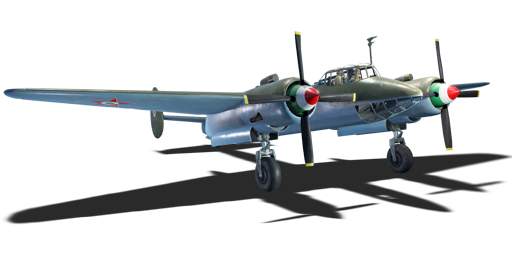
◔Tu-2S (8)




Following the conclusion of the Great Patriotic War, the USSR was tasked with replacing its outdated fleet of Pe-2 bombers with the more advanced Tu-2. In 1946, Irkutsk Plant No. 39 received an order to begin producing the Tu-2 instead of the Yer-2. However, the start of production was delayed by a fire that destroyed the plant’s main building and much of its equipment. Consequently, production could not begin until 1947. The aircraft’s design was based on a version produced at Omsk Plant No. 166 and was refined further in Irkutsk. One of the most notable differences is that the sixth series of aircraft features a new VEU-1 turret with a B-20E for the upper tail gunner. To power this turret, the eighth series was installed with a new GSN-3000 generator. Otherwise, the design was similar to the 50th series of aircraft produced at Plant No. 23. A total of 218 aircraft were produced at Plant No. 39 between 1947 and 1950.
The last series of aircraft were mainly exported to allied countries. For example, in 1953, 59 Tu-2S aircraft were transferred to Hungary, a country under the Soviet sphere of influence. There, the aircraft served in attack and frontline bomber aviation regiments. During the 1956 Hungarian uprising against the pro-Soviet regime, however, the bombers did not participate because their commanders kept their pilots in barracks to prevent them from interfering in the conflict. After the uprising was suppressed by Soviet troops, the Hungarian armed forces were temporarily disbanded. Reform began in 1957 when the Tu-2S was replaced by IL-28 jet bombers.
The Hungarian Tu-2S (8) was introduced in Update 2.35 "Alpha Strike", and can be found in the Italian aviation research tree. This bomber differs from the Soviet Tu-2S (8) due to its unique Hungarian Air Force camouflage. It has an impressive bomb load and excellent offensive and defensive weapons, enabling it to shoot down enemy bombers and fighters in flight. Additionally, thanks to its protected fuel tanks and crew armor, the Tu-2S-59 has decent survivability. However, the bomber has a few disadvantages: its maximum speed is not exceptional compared to its main opponents, and its climb rate is low.

flaps
flaps
flaps
brake
| Belt | Belt filling | Armor penetration (mm) at a distance: | |||||
|---|---|---|---|---|---|---|---|
| 10 m | 100 m | 500 m | 1000 m | 1500 m | 2000 m | ||
| FI-T/AP-I | 28 | 24 | 14 | 7 | 4 | 2 | |
| FI-T/HEF/AP-I/FI-T | 28 | 24 | 14 | 7 | 4 | 2 | |
| HEF/FI-T/AP-I | 28 | 24 | 14 | 7 | 4 | 2 | |
| FI-T | 4 | 4 | 4 | 4 | 4 | 4 | |
| AP-I/FI-T/AP-I/AP-I | 28 | 24 | 14 | 7 | 4 | 2 | |
| AP-I/HEF/HEF/FI | 28 | 24 | 14 | 7 | 4 | 2 | |
| Belt | Belt filling | Armor penetration (mm) at a distance: | |||||
|---|---|---|---|---|---|---|---|
| 10 m | 100 m | 500 m | 1000 m | 1500 m | 2000 m | ||
| FI-T/AP-I | 28 | 24 | 14 | 7 | 4 | 2 | |
| AP-I/FI-T/AP-I | 28 | 24 | 14 | 7 | 4 | 2 | |
| FI-T/HEF/HEF-I | 4 | 4 | 4 | 4 | 4 | 4 | |
| Belt | Belt filling | Armor penetration (mm) at a distance: | |||||
|---|---|---|---|---|---|---|---|
| 10 m | 100 m | 500 m | 1000 m | 1500 m | 2000 m | ||
| T/AP/AP/IAI | 32 | 30 | 22 | 15 | 11 | 7 | |
| API-T/AP/AP/AP-I(c) | 34 | 32 | 24 | 17 | 12 | 8 | |
| API-T/AP-I | 29 | 27 | 20 | 13 | 8 | 6 | |
| Name | Weight | Slot | ||||||
|---|---|---|---|---|---|---|---|---|
| 226 kg |  | | ||||||
| 255 kg |  | | ||||||
| 468.6 kg |  | | | |||||
| 510 kg |  | | | |||||
| 1,077 kg |  | | | |||||
| 1,012 kg |  | | | |||||
| 9 × | 931.5 kg |  | ||||||
| 2 × | 451.9 kg |  | ||||||
| 2 × | 510 kg |  | ||||||
| 4 × | 903.8 kg |  | ||||||
| 4 × | 1,020 kg |  | ||||||


Flight performance | |
|---|---|
Weaponry | |
|---|---|