
Self‑entrenching equipment is a built‑in or externally mounted device that helps a tank dig in for a firing position. Many armies worldwide equip their tanks with these systems. For example, in the Soviet Army, beginning with the T‑72, all main battle tanks and some armored vehicles were fitted with self‑entrenching devices, and their use became standard in tank‑crew training.
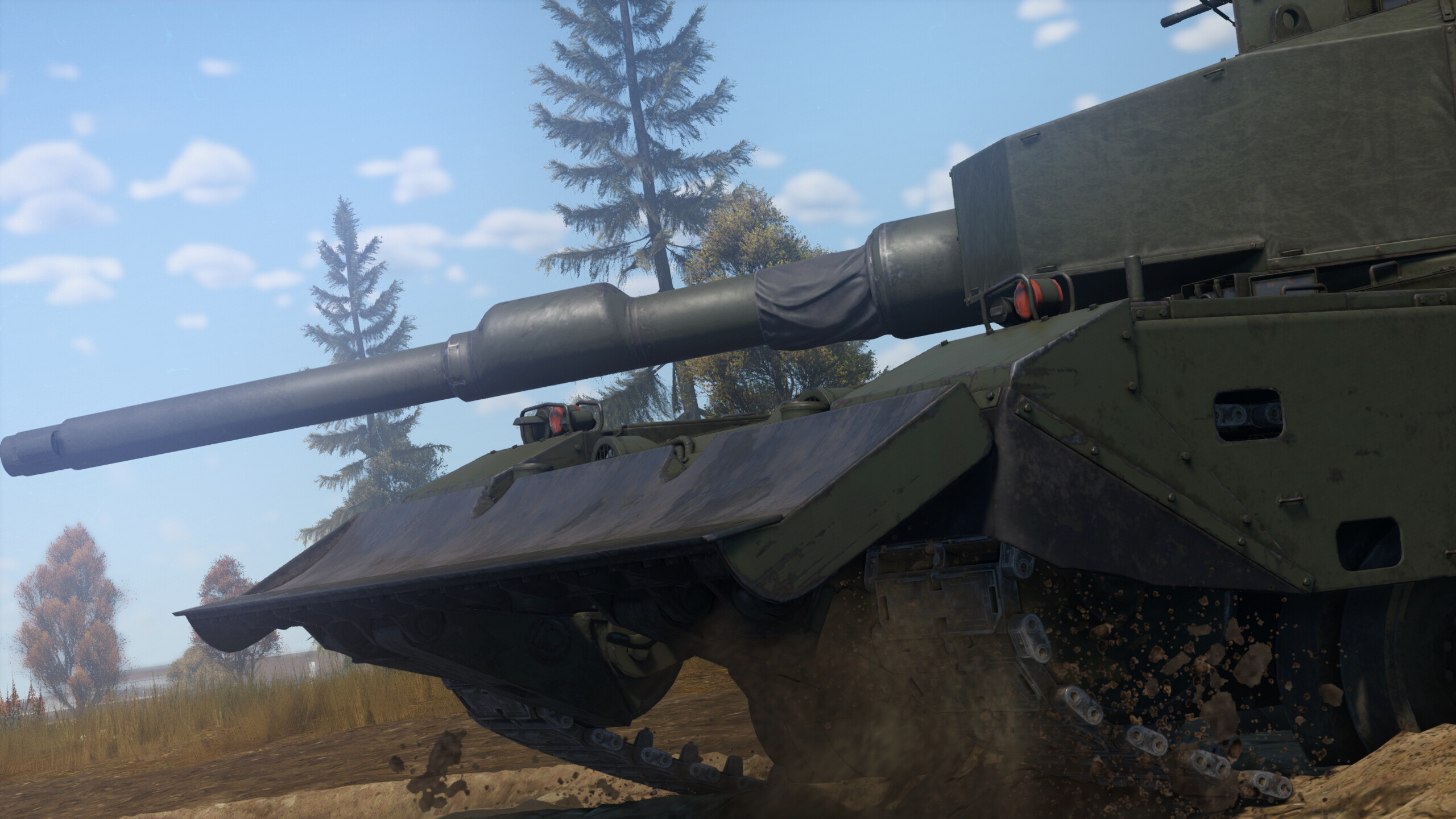
With the release of Update 2.11 “Ground Breaking” the game introduced a new mechanic: physically deformable terrain. Self‑entrenching tools were added alongside this mechanic. Using them you can quickly create tank trenches that conceal vulnerable areas of your vehicle and expose only the armored turret to the enemy.
Recommended use
To activate the self-trenching equipment, go to: Controls → Tank → Miscellaneous → Trenching: activate/deactivate and assign it to a convenient key, by default it is Left Ctrl + T.
Self‑entrenching equipment adds tactical variety to War Thunder battles. To use it you must first research the corresponding modification. Note that this equipment can increase the vehicle’s weight and can be removed if desired. Its primary purpose is to prepare a firing position: lower the blade and drive forward to displace soil. Repeating this two or three times will create cover. Digging reduces the tank’s speed, so avoid doing it in plain sight of the enemy. You can create long‑lasting firing positions in many environments — the steppes of Kursk, the beaches of Normandy, the fields of the Maginot Line, the sands of Sinai or the Aral Sea, or the snowy valleys of Finland and Volokolamsk. Bear in mind that the berm of soil is not guaranteed to stop every shell, but it can protect against some lighter rounds and autocannon fire.
Self‑entrenching will not work on asphalt or very hard ground, or where the blade is obstructed by buildings or rock.
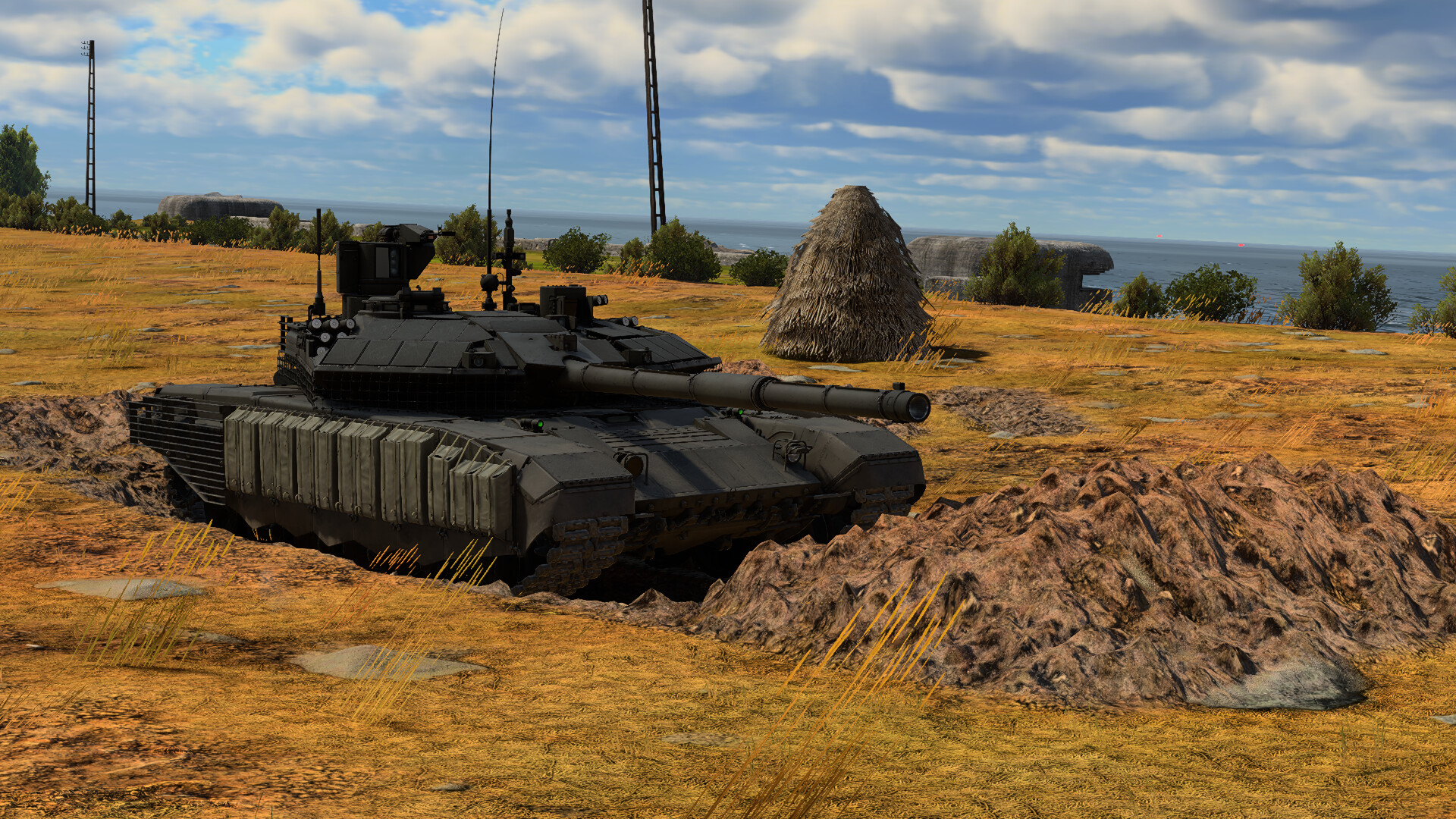
When deployed, self‑entrenching equipment provides a small amount of extra protection and can stop some incoming rounds. While turret armor on many main battle tanks is generally strong, hull armor is often weaker so cover can be lifesaving. Tanks such as the T‑72, T‑80, Chieftain, and Challenger have relatively weak hulls but strong turrets. Creating your own berm or using an ally’s can help conceal these weak points. These positions are also useful for ATGM vehicles (IT‑1, UDES 33, Wiesel 1A2): remain under cover and present only the ATGM launcher to the enemy. Soviet tanks are known for limited gun depression and you can partly mitigate this by briefly reversing and exposing the gun from cover.
Historical background
Self-entrenching devices have been used in a variety of national fleets and mounting/operation practices vary according to doctrine, intended role and engineering approach. Common features include a blade to cut and displace soil, supporting struts or arms, and clamps or brackets to secure the device in travel. Typical mounting arrangements place the device on the lower front plate (the lower glacis) or on specially reinforced brackets, some designs are intended as permanent or depot-fitted equipment while others are fully modular and intended for quick field installation or removal.
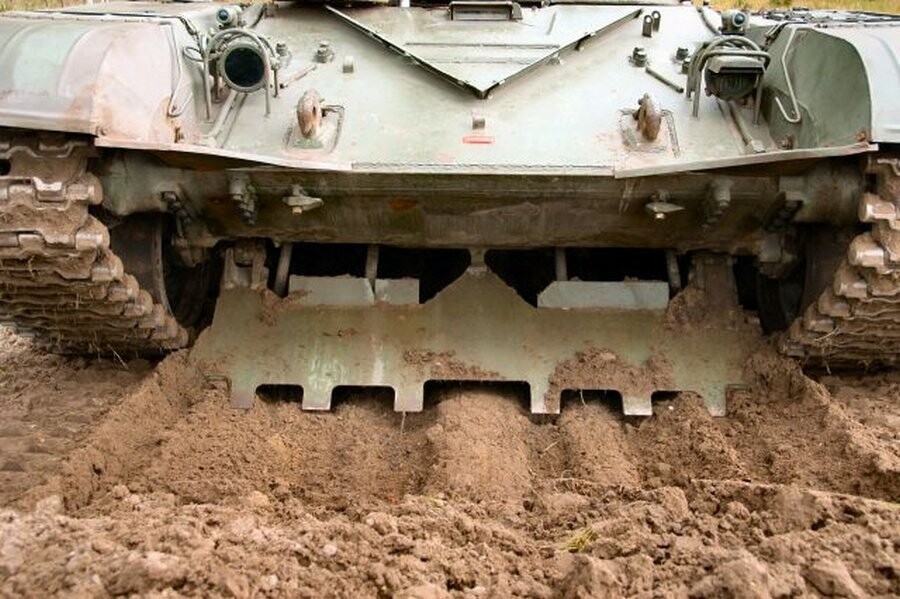
Mounting approaches differ: some systems are welded or bolted as semi-permanent fittings, while others use rails, clamps or quick-release brackets to allow rapid removal or replacement. Operationally, a few devices are purely passive (simply add a physical berm), some require hydraulic or mechanical actuation and crew controls (dozer blades, mine ploughs), and some are integrated into broader combat-engineering kits that include reinforced mounts and additional structural supports.
The device has two positions: travel and working. In travel position the blade is fastened to the lower front plate by two clamps. In the working position the blade is lowered and cuts into the ground as the tank moves forward, supported by the struts. When reversing, the blade rides along the ground on its rear edge.
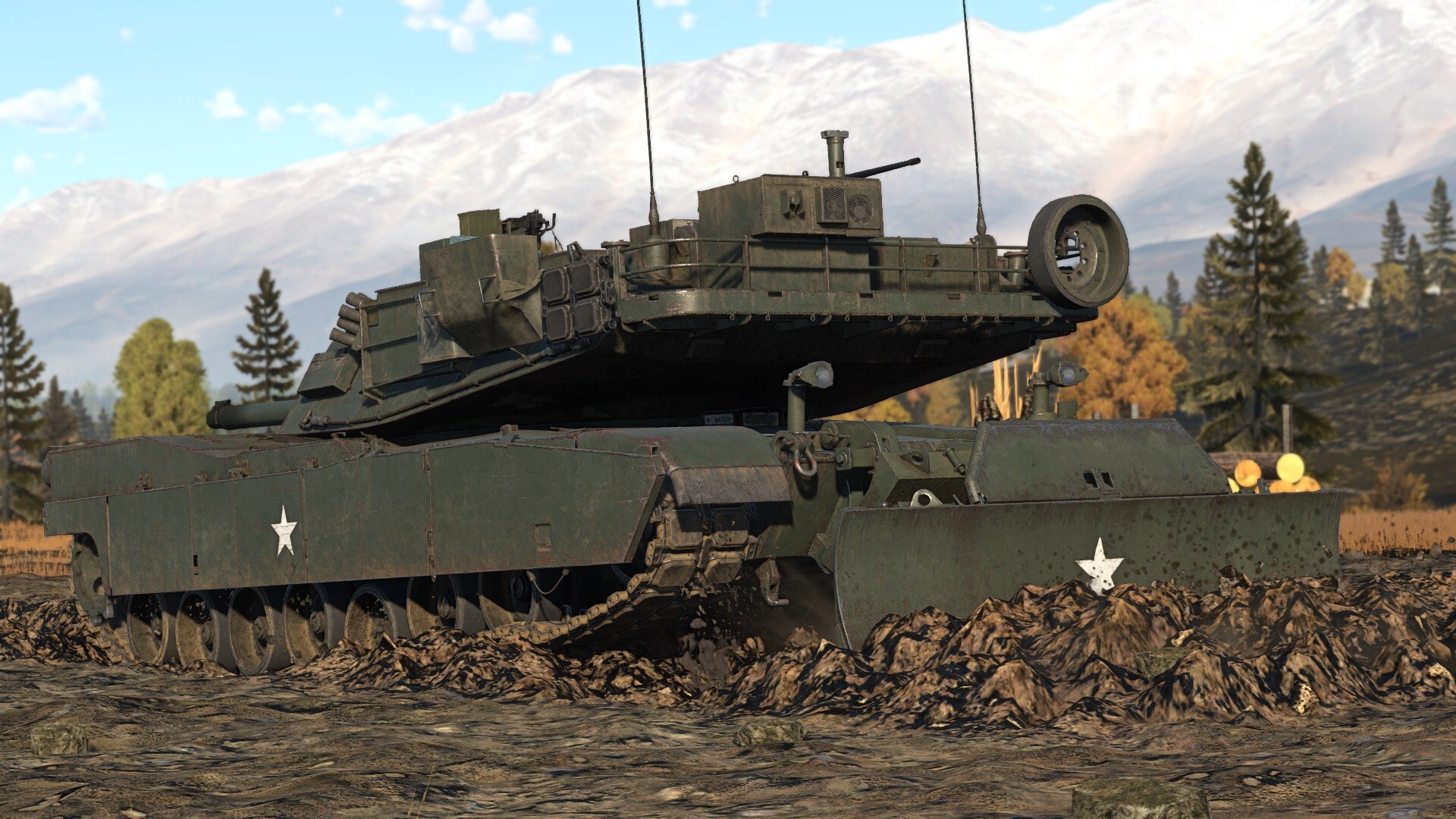
There are historical and regional differences. Cold War Soviet and Warsaw Pact practice often favored robust, heavy fittings suitable for long service life, while many Western designs from the 1980s onward emphasized modular, mission-adaptable bolt-on systems that simplify logistics and upgrades. Heavy engineering items (bridge sections, large dozer blades) typically require reinforced mountings and workshop support to fit, whereas lighter bolt-on panels and blade assemblies can be fitted in the field. Regardless of origin, the design trade-offs are the same: protection vs. weight, maintainability, and ease of installation.
Many Western tanks are fitted with blades either as standard equipment or as part of combat‑engineering or urban‑combat kits.