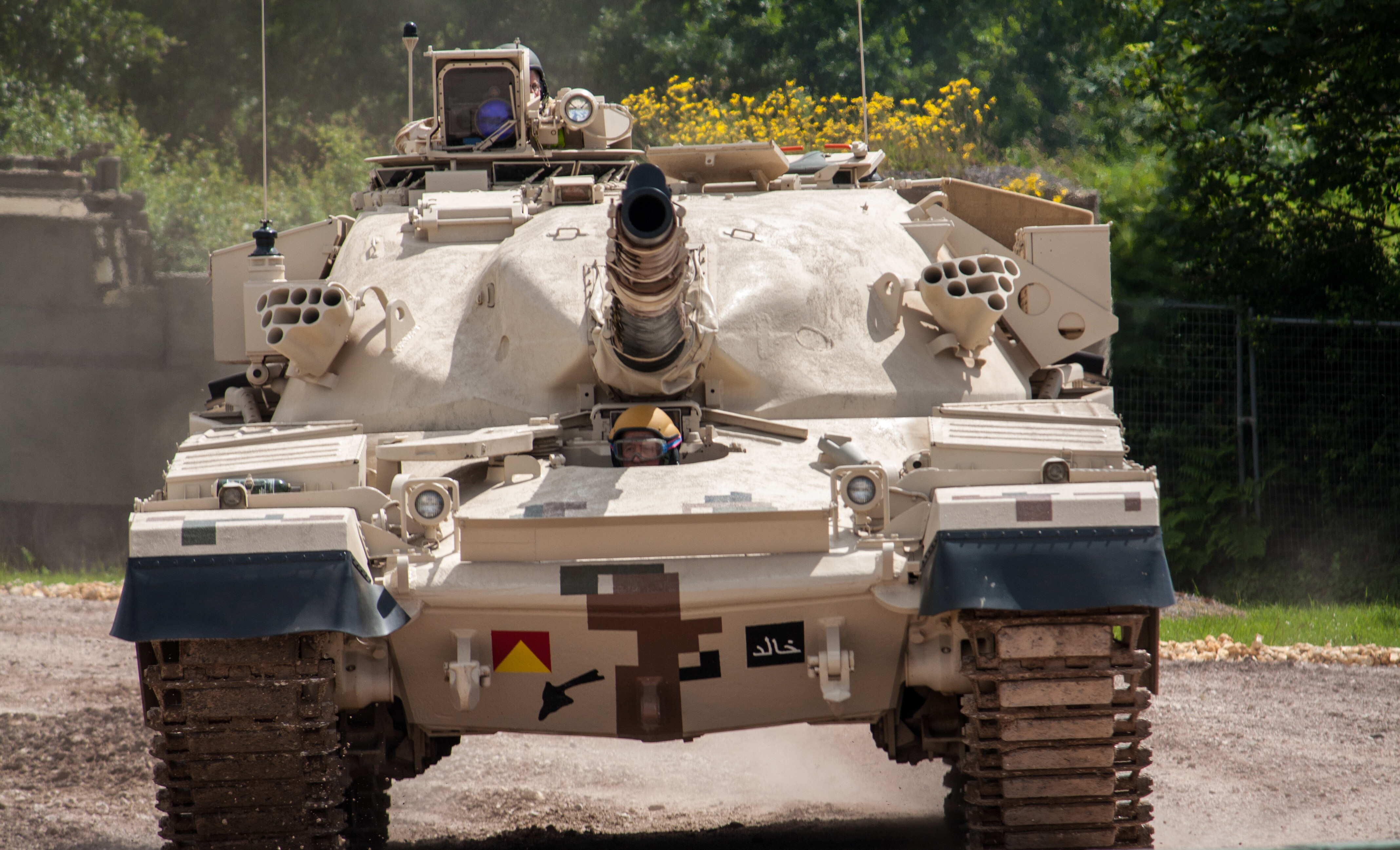
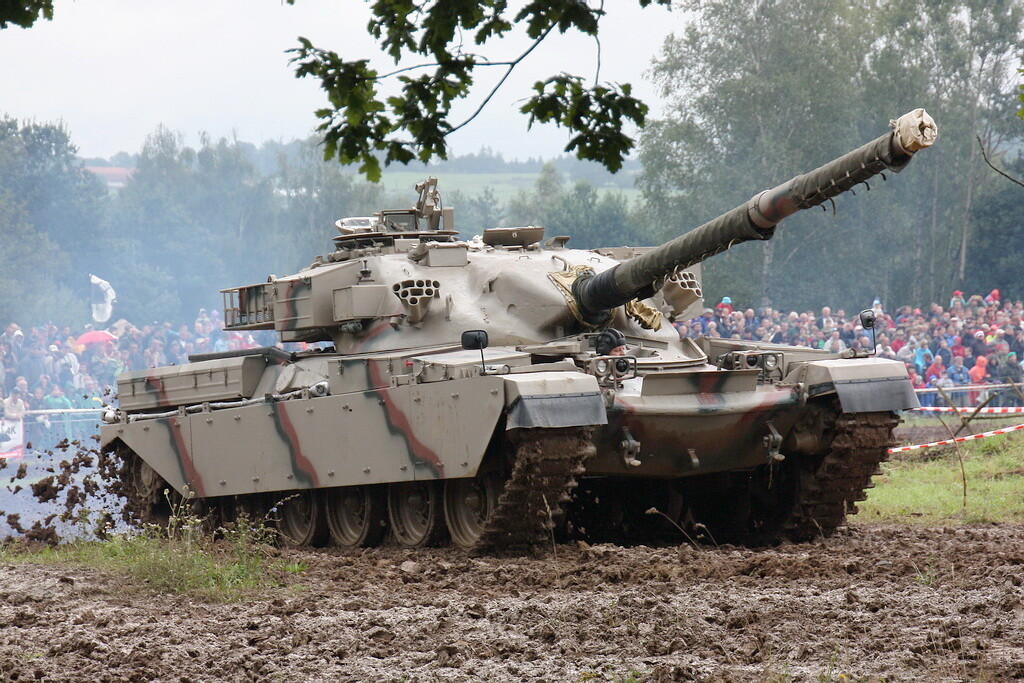
The history of armored warfare is filled with vehicles born from shifting geopolitical landscapes, and few exemplify this better than the Khalid (Arabic for “Eternal or Immortal”). Officially designated the FV4030/2, the Khalid represents a vital evolutionary link between the Chieftain and the Challenger 1. Originally designed to fulfill a massive Iranian defense contract under the Shah, the project was abruptly derailed by the 1979 Islamic Revolution, leading the British government to repurpose the tanks for the Royal Jordanian Army.
Background
In the early 1970s, Iran sought to modernize its armored forces to counter potential threats from its northern neighbors, the Soviet Union and Afghanistan. Having already operated over 700 Chieftain Mk. 3 and Mk. 5 tanks, the Iranian government placed an order in December 1974 for 125 Shir 1 (FV4030/2) and 1,225 Shir 2 (FV4030/3) main battle tanks. This contract, valued at £1,250 million, was essential for the British defense industry and kept the Royal Ordnance Factory (ROF) Leeds operational during a period of economic instability.
By 1977, the first three prototypes of the Shir 1 were completed and tested. However, the project was derailed by the Islamic Revolution of 1979. On February 6, 1979, the new Iranian government terminated all major defense contracts with Great Britain. This left ROF Leeds with partially completed hulls and no recipient. British authorities considered adopting the Shir 1 for the British Army, but the vehicle was deemed ill-suited for the European theater due to its weight, which posed risks for German bridges, and its dimensions, which exceeded British rail gauge limits. Rather than undergoing a costly £100 million conversion, the project was saved through last-minute negotiations with Jordan. In November 1979, Jordan signed a £266 million contract for 274 units of the modified Shir 1, officially designating the tank as the Khalid.
Design and Specifications
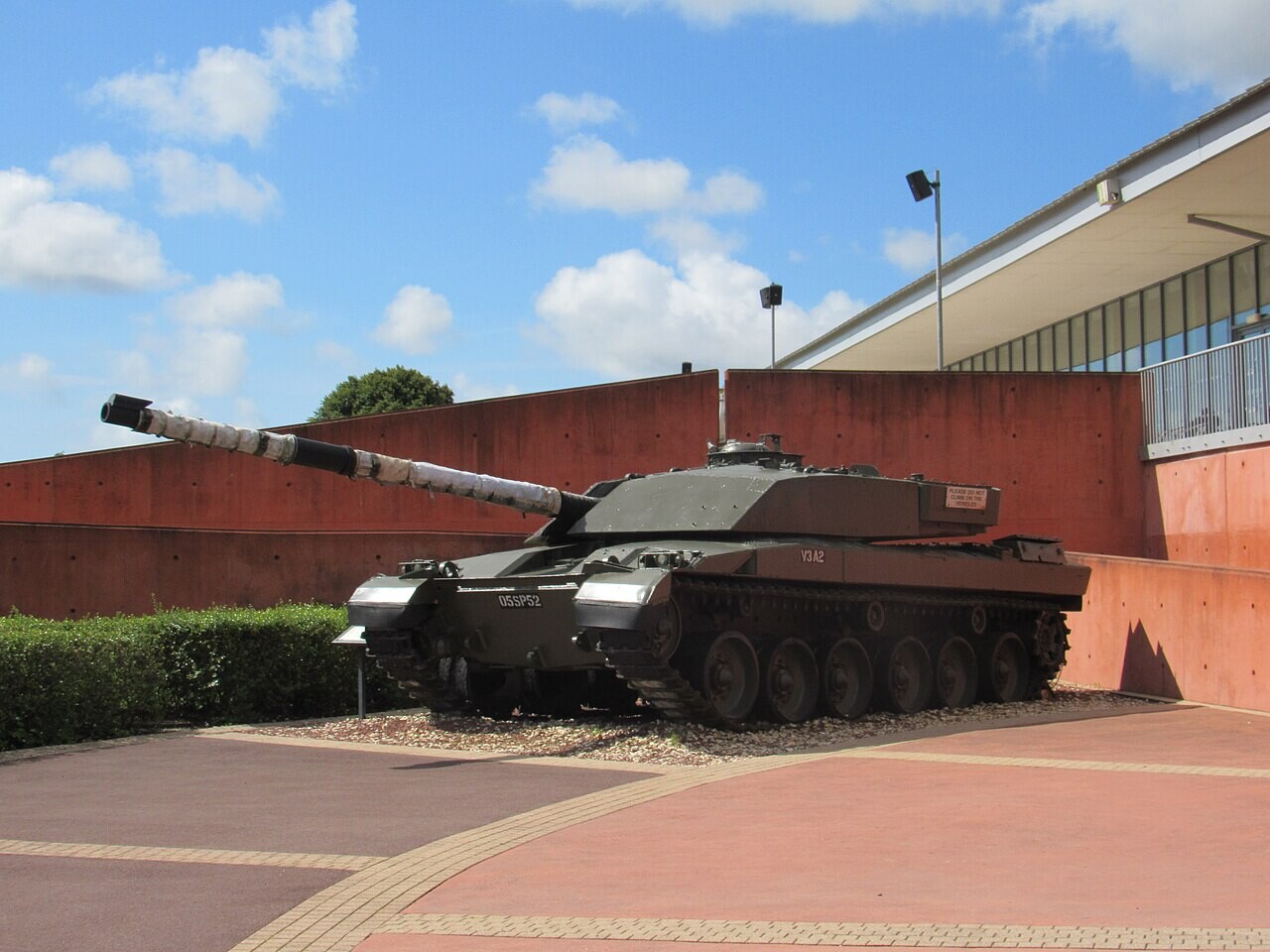
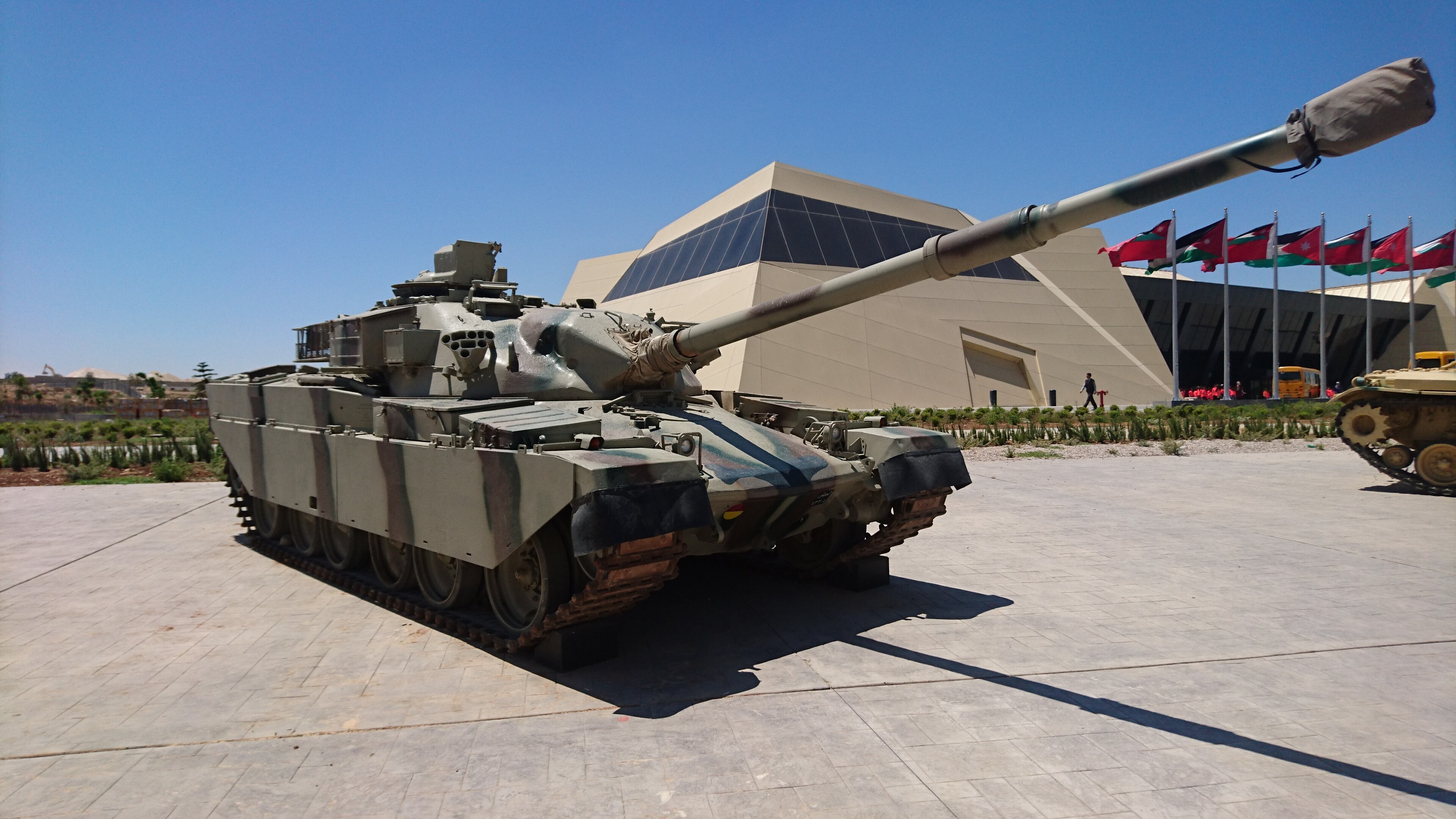
The Khalid is essentially a late-production Chieftain hull modified to accommodate a significantly more powerful engine and updated internal systems. Its most striking visual feature is the raised rear engine deck, which was required to house the massive Perkins Engines Condor V-12 1200 diesel engine. This 26 L, direct-injection powerplant produces 1,200 hp at 2,300 rpm, effectively doubling the hp of earlier Chieftain models. This engine was paired with the David Brown TN37 transmission, providing four forward and three reverse gears. This combination allowed the 58 t vehicle to achieve a top road speed of 56 km/h and a remarkable reverse speed of -37 km/h, giving it a power-to-weight ratio of 20.68 hp/t.
The armament remained centered on the 120 mm L11A5 rifled gun, supported by a 7.62 mm L8A2 coaxial machine gun and a 7.62 mm L37A2 anti-aircraft machine gun mounted on the commander’s cupola. Fire control was modernized through the Computer Sighting System (CSS) and the Pilkington Optronics Tank Laser Sight. The commander’s modified No. 15 cupola was outfitted with the No. 84 sight, a combined day/passive night sight developed by Pilkington Optronics. This system provided a 24-hour vision and firing capability, allowing the crew to engage targets accurately in all lighting conditions.
In terms of protection, the Khalid retained the Chieftain’s conventional armor profile rather than adopting the advanced 'Burlington' (also referred to as Pageant and Chobham) composite armor planned for the Shir 2. The Khalid’s defense relied on heavily sloped cast steel on the turret and Rolled Homogeneous Armor (RHA) on the hull. While this provided excellent protection against older kinetic rounds and shaped charges of the era, it lacked the multi-layered survivability that would define the next generation of Western main battle tanks.
General Specifications
| Feature | Specification |
| Weight | 58,000 kg (58 t, metric tonnes) |
| Dimensions | Length: 11.55 m / Width: 3.518 m / Height: 2.975 m |
| Crew | 4 |
| Engine | Perkins Condor V-12 1200 Diesel (1,200 hp) |
| Transmission | David Brown TN37 (4 Forward, 3 Reverse) |
| Top Speed | 56 km/h (Max road speed) |
| Power-to-Weight | 20.68 hp/t |
| Main Armament | 120 mm L11A5 Rifled Gun (64 rounds) |
Operational History
The Khalid officially entered service with the Royal Jordanian Army in 1981. It quickly established itself as a “heavy sniper” due to the combination of its high-velocity 120 mm gun and its newly found mobility, which allowed it to reposition far more effectively than its predecessors. Over 350 units eventually served within the Jordanian ranks. The Khalid’s existence also had long-term financial and legal repercussions; decades after the original Iranian contract was cancelled, an international trade court at The Hague ordered Great Britain in 2010 to pay Iran $650 million for the non-delivery of the tanks. Because of international sanctions, these funds were held in an independent trust account rather than being paid directly to Tehran.
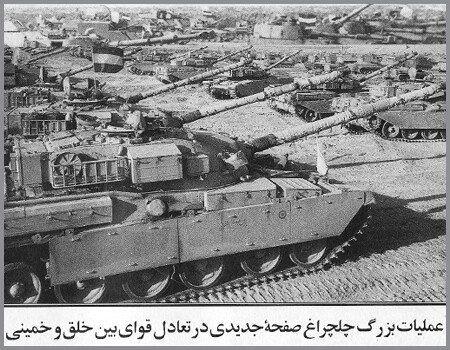
Jordan also came into possession of a variety of captured Iranian Chieftains. During the Iran-Iraq War, Jordan served as a vital logistical and political ally to Iraq by providing a safe conduit for Iraqi imports through the Port of Aqaba. As the conflict progressed, the Iraqi military captured hundreds of Iranian armored vehicles, including a significant portion of the original Chieftain Mk. 3(P) and Mk. 5(P) fleet delivered to Iran prior to the 1979 Revolution. Consequently, Jordan acquired a variety of these spoils of war when Iraq supplied them with 90 captured Chieftain tanks and 60 M47 tanks as a gesture of gratitude for their wartime support.
Beyond the tanks gifted to Jordan, a number of these captured Iranian tanks remained in service with the Iraqi Army through 1990. Most of these Iraqi units were modernized to the “Khalid-level” standard. These upgrades, facilitated by Jordanian technical expertise, included the installation of the Perkins Condor V12 engine, reinforced armor, and enhanced night vision capabilities. Notably, these Iraqi variants were also outfitted with specialized air conditioning systems for the crew, improving operational endurance in the extreme desert heat of the front lines.
Tactical Evaluations and Upgrades
Throughout the 1980s, the Khalid underwent several tactical evaluations to ensure it remained effective against evolving threats. One of the most significant upgrades occurred in 1987 when Jordan placed a multi-million £ order for the Kidde-Graviner Crew Bay fire and explosion suppression system. This was a critical addition to enhance crew survivability in the high-heat environments of the Middle East.
Further technical refinements included the upgrading of the David Brown TN37 Mk. 2 transmission to the TN37 Mk. 2A standard for better reliability. To maintain its lethality, Jordan also procured Royal Ordnance L23A1 APFSDS-T ammunition. While Jordanian authorities considered adding advanced armor protection packages and more sophisticated night vision equipment to the Khalid fleet, these plans were often tempered by national funding constraints. Despite this, the Khalid’s bogie-type suspension travel ensured that it remained a stable and capable firing platform in desert terrain.
As the turn of the century approached, the Khalid began to show its age. In a fitting historical loop, Jordan eventually procured hundreds of surplus British Challenger 1 tanks (renamed Al-Hussein), the very tanks that had evolved from the cancelled Shir 2 project. The arrival of the Al-Hussein relegated the Khalid fleet to secondary roles and reserve status, bringing the story of the Persian Lion and the Jordanian Sword full circle.
Sources
- Chieftain Main Battle Tank 1965–2003 by Simon Dunstan
- Jane’s Armour and Artillery (1985-1986 Edition)
- https://en.wikipedia.org/wiki/Chieftain_(tank)#Variants
- https://tank-afv.com/coldwar/UK/shir-1.php
- https://www.militaryfactory.com/armor/detail.php?armor_id=594
- https://www.globalsecurity.org/military/world/europe/khalid.htm