The NF-5A aircraft were acquired by the Netherlands in the late 1960s to replace the ageing F-84F Thunderstreaks that were still serving in the strike and close-support role within the Royal Netherlands Air Force (KLu). The Netherlands initially considered multiple fighter-bomber options, including the Mirage III, but ultimately selected the F-104G for interceptor duties. A second procurement program was then launched to find a more affordable tactical fighter to support ground forces, leading to the choice of a uniquely Dutch variant of the F-5 Freedom Fighter.
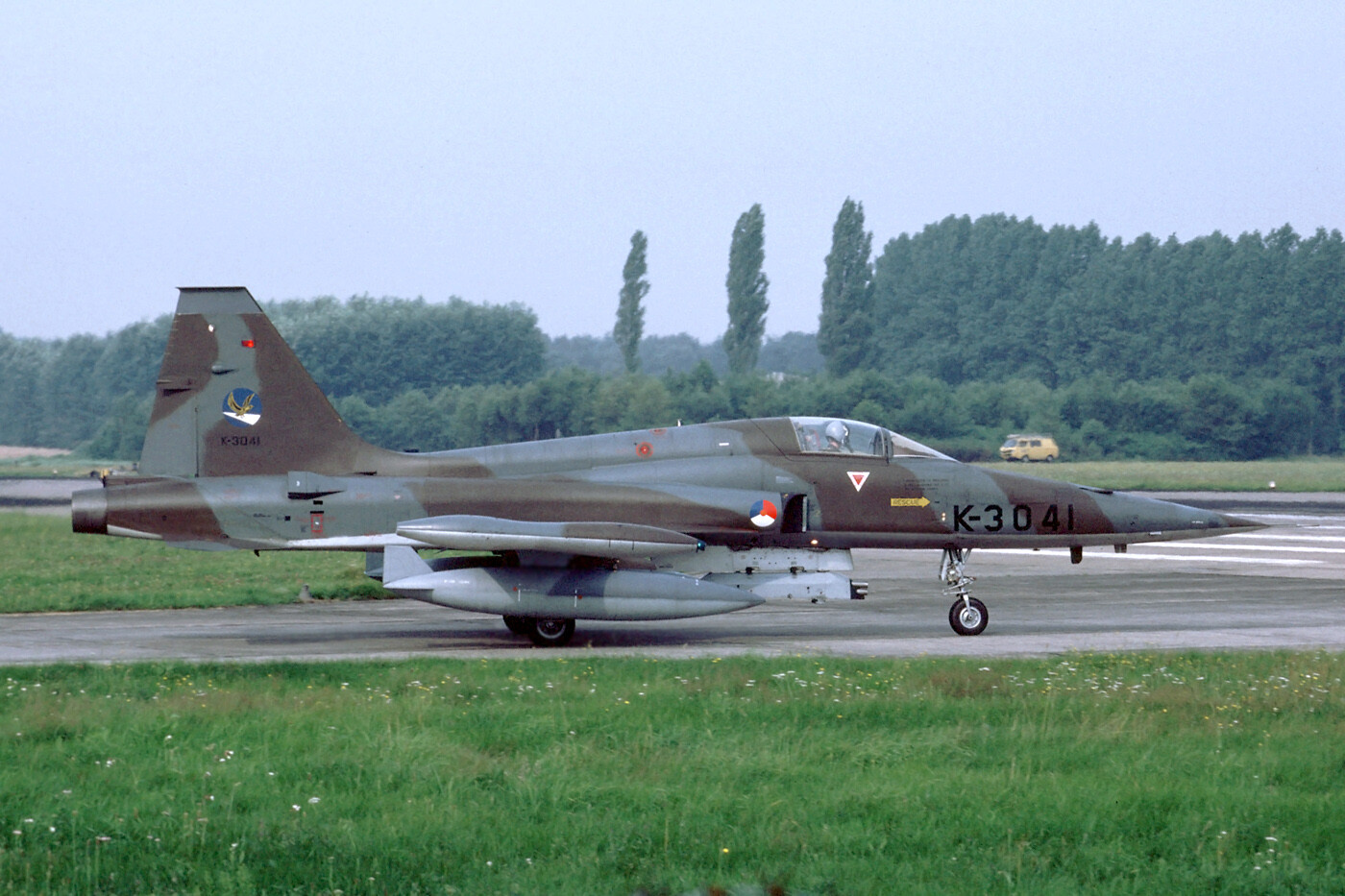
The NF-5 was based on the Canadian CF-5 design and featured significant modifications compared to the basic F-5A. Stronger J85-CAN-15 engines, maneuvering flaps, a Doppler navigation radar with a roller map, reinforced wings, and a bird-proof canopy suited the aircraft for NATO’s Central European operational environment. The distinctive extended landing gear, with a two-position nose “hike” system, improved its ability to operate from short and rough fields during winter conditions. These changes were so extensive that Northrop required a dedicated flight test and certification campaign before the aircraft could enter service.
As for armament, the NF-5A retained its standard internal fit of two M39A2 20 mm cannons, each fed by 280 rounds for a total of 560 rounds of ammunition. This fixed installation provided the aircraft with a reliable and accurate close-range strike and self-defense capability.
Where the NF-5A truly gained its flexibility was in its external stores. The aircraft featured seven hardpoints (including wingtip launch rails) that could accommodate a wide selection of NATO munitions. In Dutch service, this included Mk.82 500 lb bombs in both Low-Drag and High-Drag Snake-eye configurations, enabling either traditional dive deliveries or safe low-level releases. For area suppression and light vehicle targets, the NF-5A could equip LAU-3A or LAU-51 pods, each loaded with 19 FFAR rockets. Training versions of these pods also combined 4 FFARs with 4 × 14 kg practice bombs, used during weapons instruction flights.
To enhance battlefield lethality against dispersed formations and armored threats, the NF-5A also employed BL755 600 lb cluster munitions. Additionally, the aircraft could mount the DIAS strike camera for weapons evaluation or reconnaissance sorties, either alone or combined with practice-rocket pods. For extended-range missions or deployment flights, external fuel tanks could be carried on multiple pylons beneath the wings and fuselage.
Although provision existed for mounting AIM-9 Sidewinder missiles on the wingtips, the Royal Netherlands Air Force originally did not wire the aircraft for guided air-to-air ordnance. Only later, particularly when temporary air defense duties were assigned in the early 1980s, were the aircraft modified to support and operationally employ the AIM-9P, AIM-9J, and AIM-9N variants.
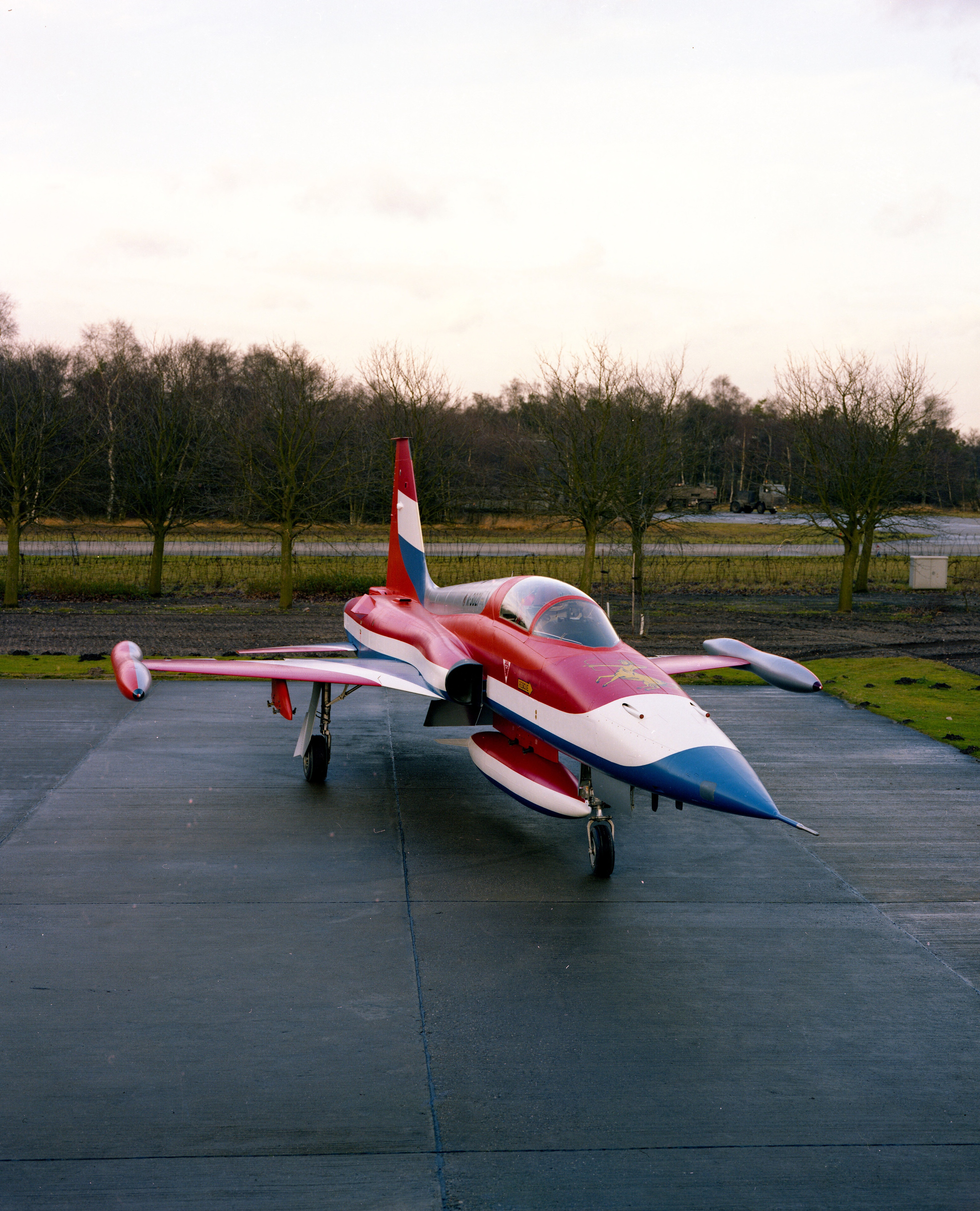
Despite closely resembling the baseline Northrop F-5A, the Dutch NF-5A stands apart through several visual and technical differences: a strengthened landing gear, a distinctive right-side Doppler radar housing beneath the nose, and a revised dorsal spine fairing with enlarged ventilation inlets to support its upgraded Orenda-built J85-15 engines.
Procurement
The KLu had become increasingly burdened by maintaining a diverse inventory of over 500 ageing jets. A more economical close-support aircraft was required, and the F-5, which was already being produced under license in Canada, emerged as the preferred solution. Canadair agreed to incorporate all Dutch-requested modifications into a customized variant.
On 1 February 1967, the Netherlands placed an order for 105 aircraft, consisting of 75 NF-5A single-seat fighters and 30 NF-5B trainers. All were assembled in Canada but flight-tested and accepted by Dutch crews.
Deliveries began in 1969, following ferry flights across Canada, Greenland, Iceland, and Scotland. Due to severe weather and limited range, each trip required extensive support from KLu C-130 “Duck Butt” escort aircraft. These journeys could take up to eight days, making the arrival of every NF-5 a logistical achievement.
Action
The NF-5A was assigned to 313, 314, 315, and 316 Squadrons. The aircraft operated from bases Eindhoven and Twenthe, where pilots quickly came to appreciate its superb handling at low altitude, the environment in which the jet was designed to excel. Dutch doctrine emphasized rapid, terrain-hugging ingress to deliver ordnance on Warsaw Pact formations advancing through Germany, a mission profile that made the NF-5’s twin-engine configuration especially valued for its safety margins over the North Sea and across Europe’s dense landscape.
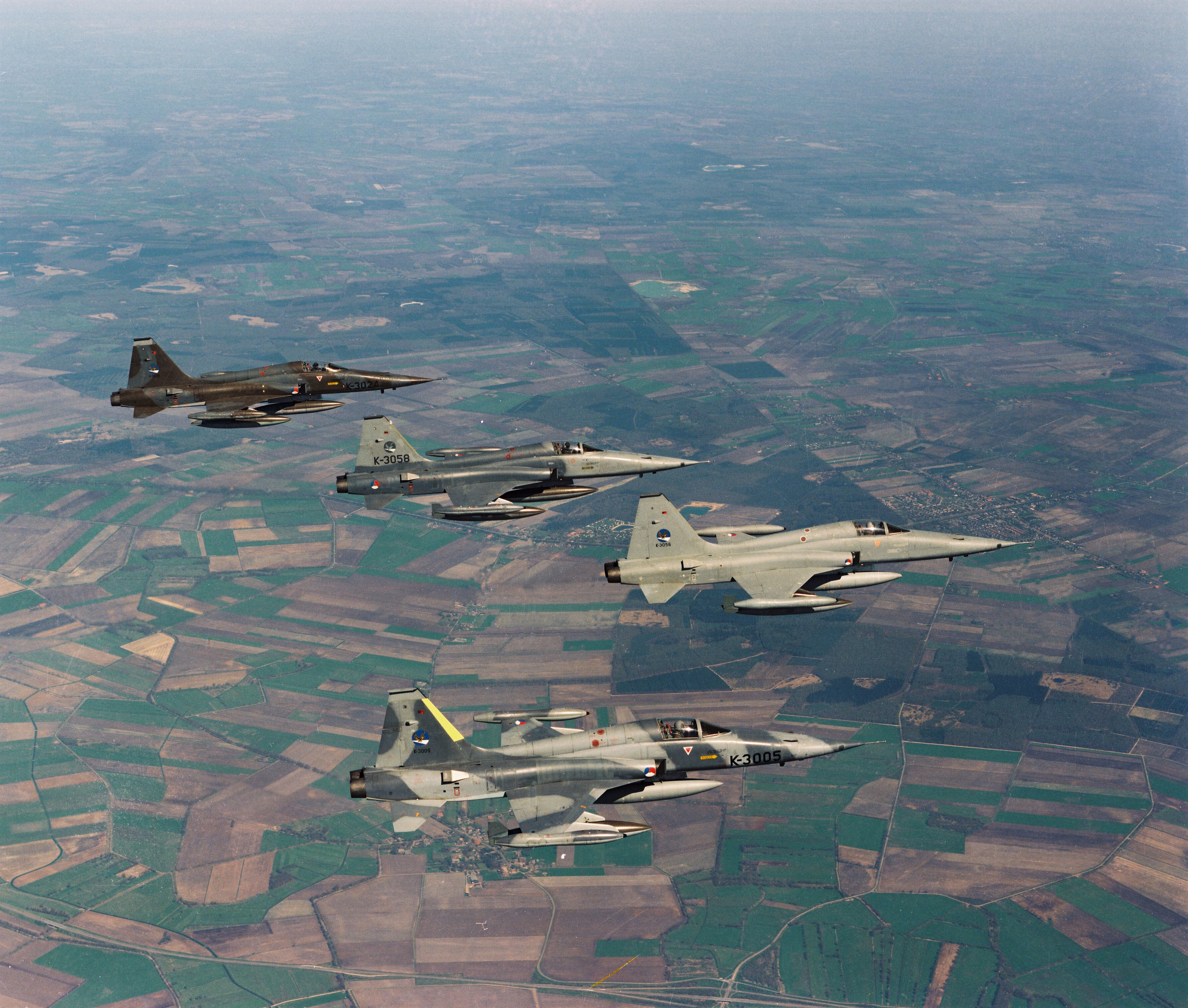
A four-ship formation of Northrop NF-5s from 313 Squadron, each displaying different camouflage schemes, is seen flying over the Zweelooërveld area between Wezup (beneath aircraft K-3005) and Schoonoord (ahead of the nose of K-3056). This formation showcased the main 4 varieties of liveries worn by the squadron’s aircraft during its operational career. Most of the liveries used were adapted to blend into the Dutch rural and urban landscapes.
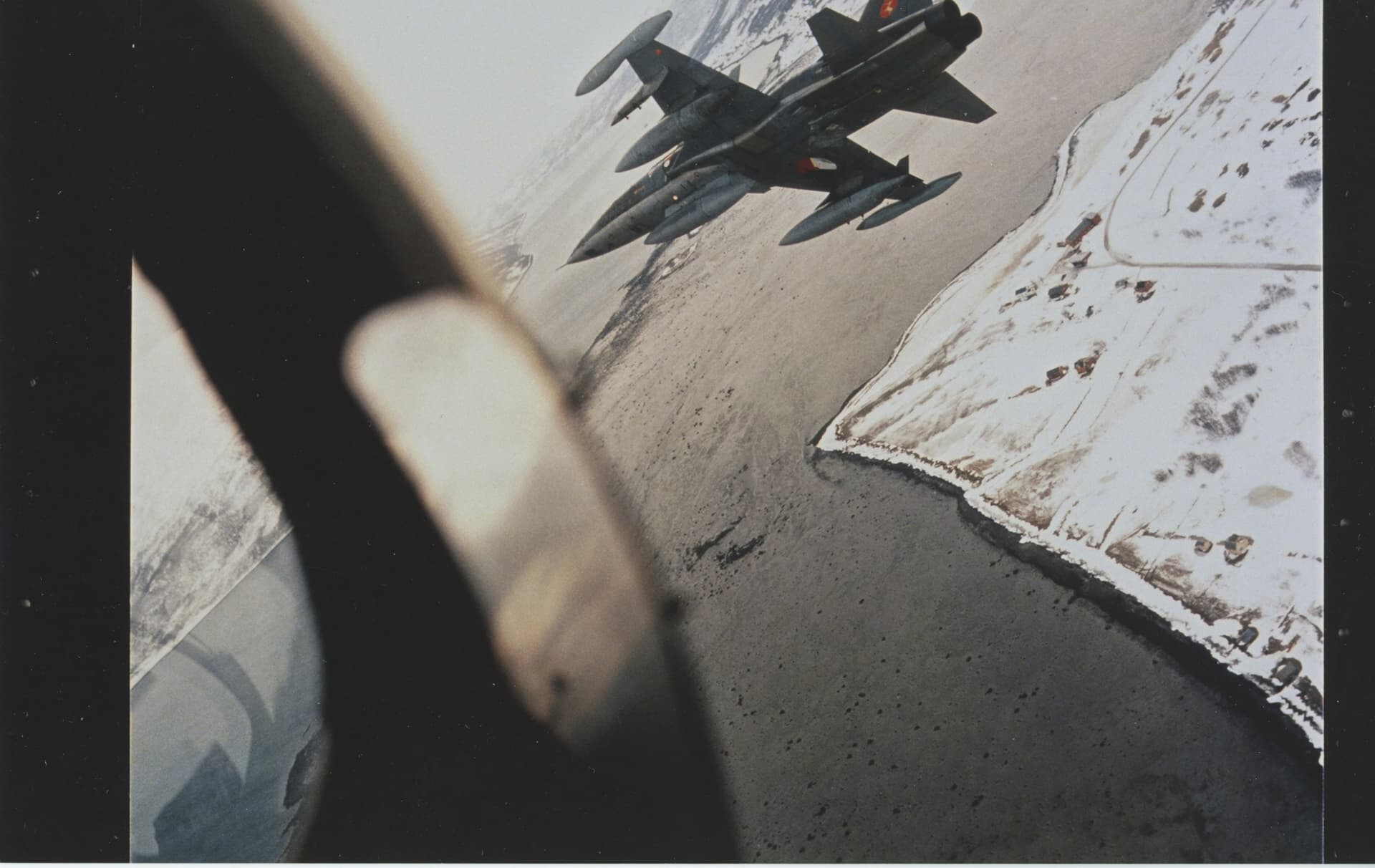
Daily training flights reinforced this role, with constant practice in close air support, tactical strike, and battlefield interdiction scenarios. The aircraft frequently deployed abroad to support NATO readiness, and these temporary force movements became a key expression of the Netherlands’ alliance commitments. One of the NF-5A’s most notable recurring tasks was participation in major multinational exercises such as “Alloy Express” in Norway, where the aircraft flew dramatic low-level attack profiles through fjords to support simulated amphibious landings. Supported by a Fokker F-27 for logistics and coordination, Dutch NF-5As operated alongside Norwegian, Canadian, and Royal Air Force units in realistic winter combat operations. Their performance in harsh northern climates further reinforced the Dutch confidence in the type’s robustness.
Though designed as a strike fighter and not as an interceptor, the NF-5A briefly stepped into a homeland air defense role. When the F-104G Starfighter was retired earlier than planned and the F-16 program had not yet fully ramped up, the NF-5A was tasked with QRA duties in the early 1980s, particularly from Leeuwarden Air Base. To fulfill this temporary responsibility, aircraft were wired to carry AIM-9N Sidewinder air-to-air missiles, allowing them to police Dutch airspace until dedicated interceptors were available again. While never ideal for high-altitude engagements, the NF-5 nevertheless proved capable of plugging the gap.
Note: Despite this short interception period, the NF-5A remained primarily a tactical ground-attack platform throughout its career, and it never saw live combat under the Dutch flag.
Pilot training was another crucial mission. Many aviators returned to the Netherlands after completing advanced jet instruction at Sheppard AFB in Texas under the ENJJPT program. The NF-5A was considered an ideal transitional platform for these freshly trained officers: responsive, rugged, forgiving and still demanding enough to teach combat-relevant skills. The type’s reliability and predictable performance contributed significantly to shaping a new generation of RNLAF fighter pilots.


As the years progressed, incremental upgrades began to contrast against accelerating changes in the broader NATO air posture. Though rugged and respected, the NF-5 increasingly lacked the payload, sensors, and survivability demanded by modern conflicts. By the time the F-16 took over front-line duties in the mid-1980s, the NF-5A had already cemented its legacy as an aircraft that, while never the centerpiece of Dutch air power, steadily delivered exactly what was asked of it: dependable day-in, day-out tactical strength at the sharp edge of the Cold War.
Special mention: Display teams
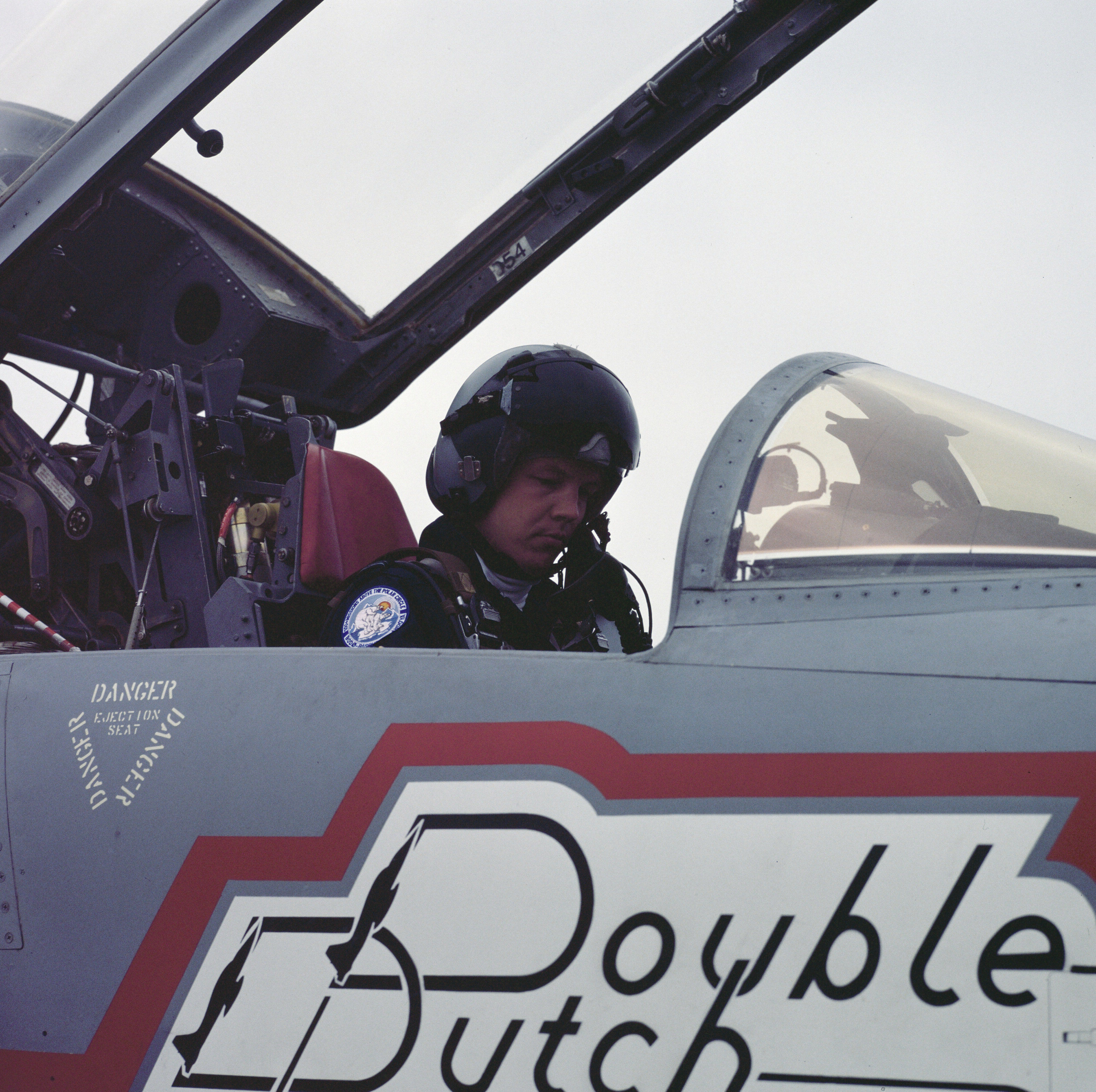
One of the most memorable public roles of the NF-5A came in 1988, when the Royal Netherlands Air Force celebrated its 75th anniversary. Within 314 Squadron, the idea emerged to form a dedicated two-ship aerobatic team that would highlight the aircraft’s agility and provide a KLu presence on the European airshow circuit. With approval from Air Force Command, the Netherlands Aerospace Centre (NLR) assisted in calculating the display parameters and safety margins for synchronized maneuvers.
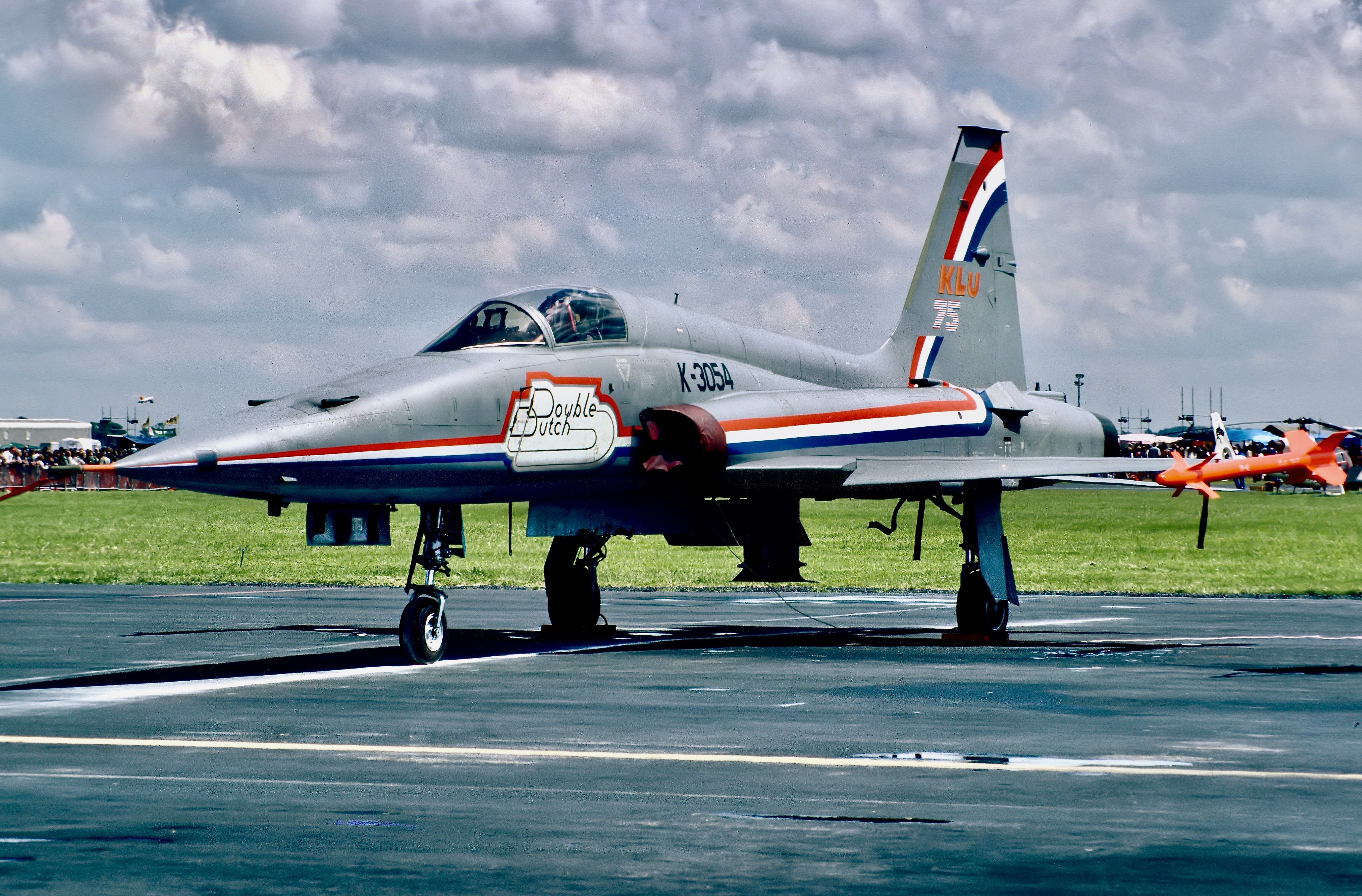

Display Team “Double Dutch”
Training began unofficially in September 1987, with Captain Sander Schnitger and Flying Officer Jaap van Keulen selected as the display pilots. Their coach was Ernst Taselaar, the chief of safety at Eindhoven Air Base. The pilots even visited the RAF Red Arrows to exchange knowledge and observe display-team organization and discipline. The display routine was intentionally kept relatively simple, comparable to the RNLAF’s F-16 solo demonstrations, to ensure safety while still showcasing the NF-5’s responsive handling.
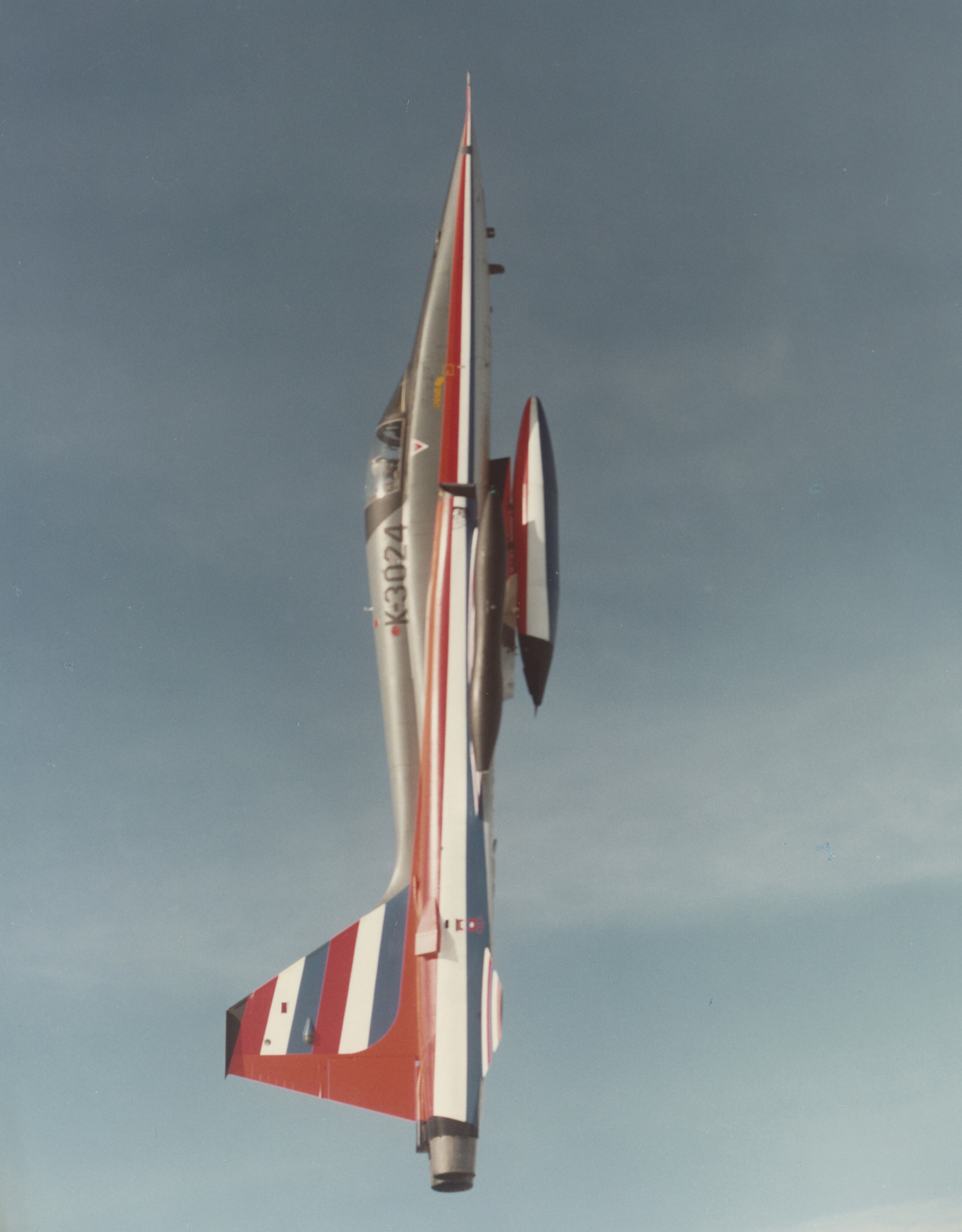
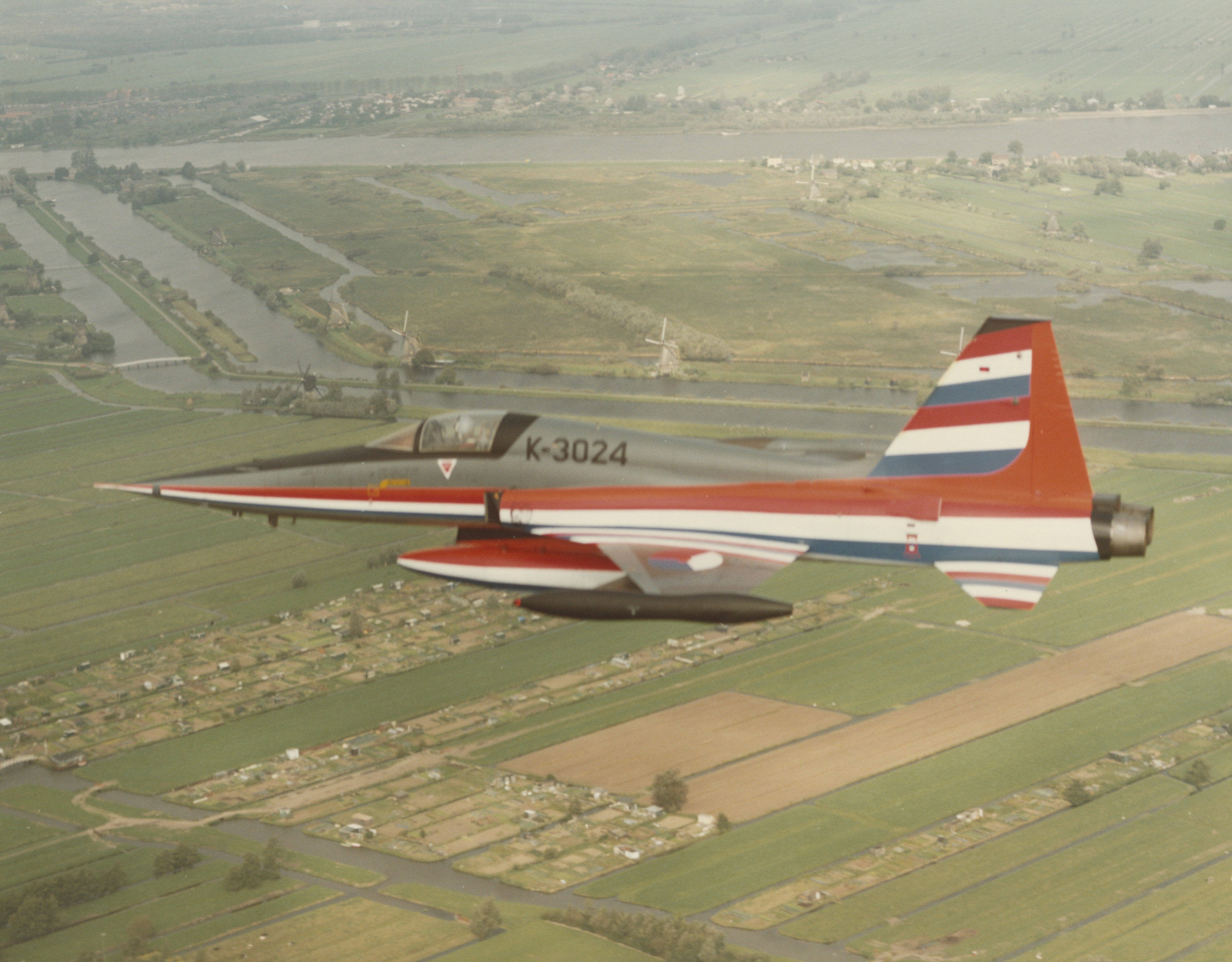
The first dedicated display aircraft, K-3012 and K-3014, were transferred from 316 Squadron due to their excellent technical condition and repainted at Gilze-Rijen. Their centerline fuel tanks featured a prominent red-white-blue ribbon, while their camouflage was adapted into a smart, high-visibility display scheme designed by Christiaan van Kooten. A photo mission with the Soesterberg photo flight followed on 18 March 1988, but technical issues grounded K-3012 soon afterward. It was replaced by K-3072, which was also repainted in the display colours.
On 27 April 1988, the team was formally named “Double Dutch”, and smokewinders were added to increase visibility and enhance the display aesthetic. However, reliability challenges persisted: K-3014 developed issues of its own and was swapped for K-3054, again repainted in the display scheme. When Double Dutch was introduced to the public at Deelen Air Base on 18 May 1988, only K-3072 was mission-ready, forcing the pilots to fly the debut routine alongside a standard NF-5.
Double Dutch performed internationally just ten days later at RAF Mildenhall (28 May 1988). Mid-display, the landing gear on K-3054 unexpectedly extended and could not be retracted, forcing the pilots to curtail the routine. A reserve aircraft stood in for the following day’s show. Because of these recurring technical setbacks, and the increasing age of the NF-5 fleet, an additional aircraft, K-3042, was added as a fifth reserve platform.
The team continued flying throughout the summer, including a major airshow at Deelen on 2 July 1988. Poor weather restricted the demonstration to a reduced “bad weather program,” flown at lower altitudes. Despite these challenges, Double Dutch left a vivid impression on spectators and served as a celebratory farewell to the NF-5A’s decades of dedicated service to the Koninklijke Luchtmacht.
Upgrades
Only a single major modernization program was implemented: the Electronic Warfare (EOV) upgrade in the early 1980s. It added a Radar Warning Receiver (RWR) and the ability to employ AL-40E chaff and flare dispensers, improving survivability against modern Soviet air defenses.
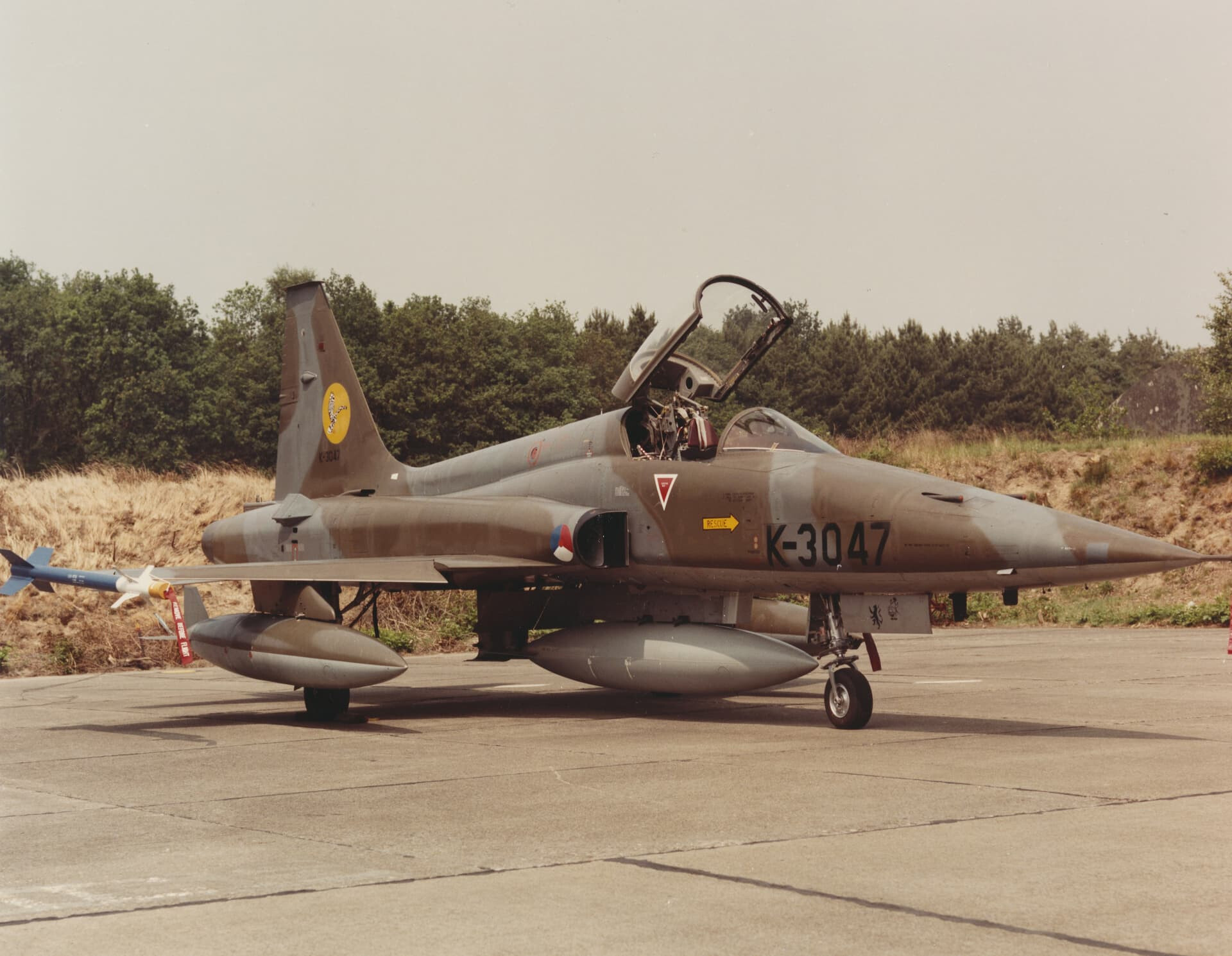
The navigation systems were also improved over time to correct reliability issues with the original Doppler equipment, particularly noticeable during low-level strike missions.
Retirement
By the mid-1980s, the limitations of the NF-5A were becoming increasingly clear. Although beloved by pilots for its handling and reliability, the aircraft lacked the avionics and strike capability needed for the modern battlefield. The introduction of the General Dynamics F-16 into Royal Netherlands Air Force squadrons effectively sealed the NF-5’s fate. From 1986 onward, the “Freedom Fighters” were progressively withdrawn from front-line duties and consolidated at Gilze-Rijen Air Base under the Vliegeropleiding en Uitfasering Detachement. Here, the aircraft were kept in flyable reserve condition: engines were run every 45 days and short air tests conducted every 90 days to preserve readiness. This routine ended in 1989, and aircraft were subsequently transferred to Woensdrecht Air Base for long-term storage.
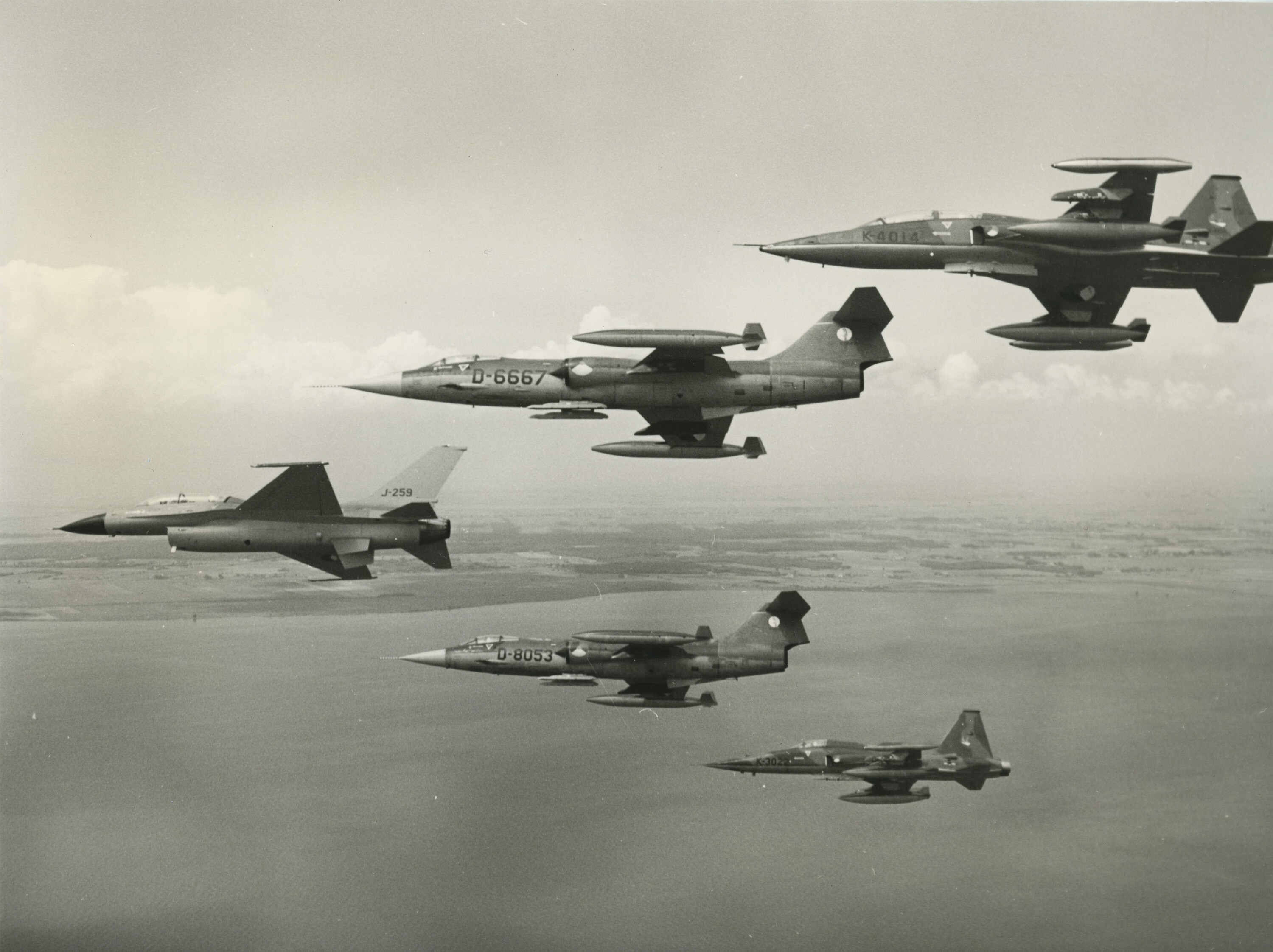
After more than 300,000 flight hours and 21 years of service, the NF-5A was officially retired from the Royal Netherlands Air Force in 1991 as the F-16 assumed full responsibility for tactical fighter operations. Despite their age, many airframes still had considerable flying hours remaining, which is considered by many as a testament to high manufacturing quality and careful maintenance.
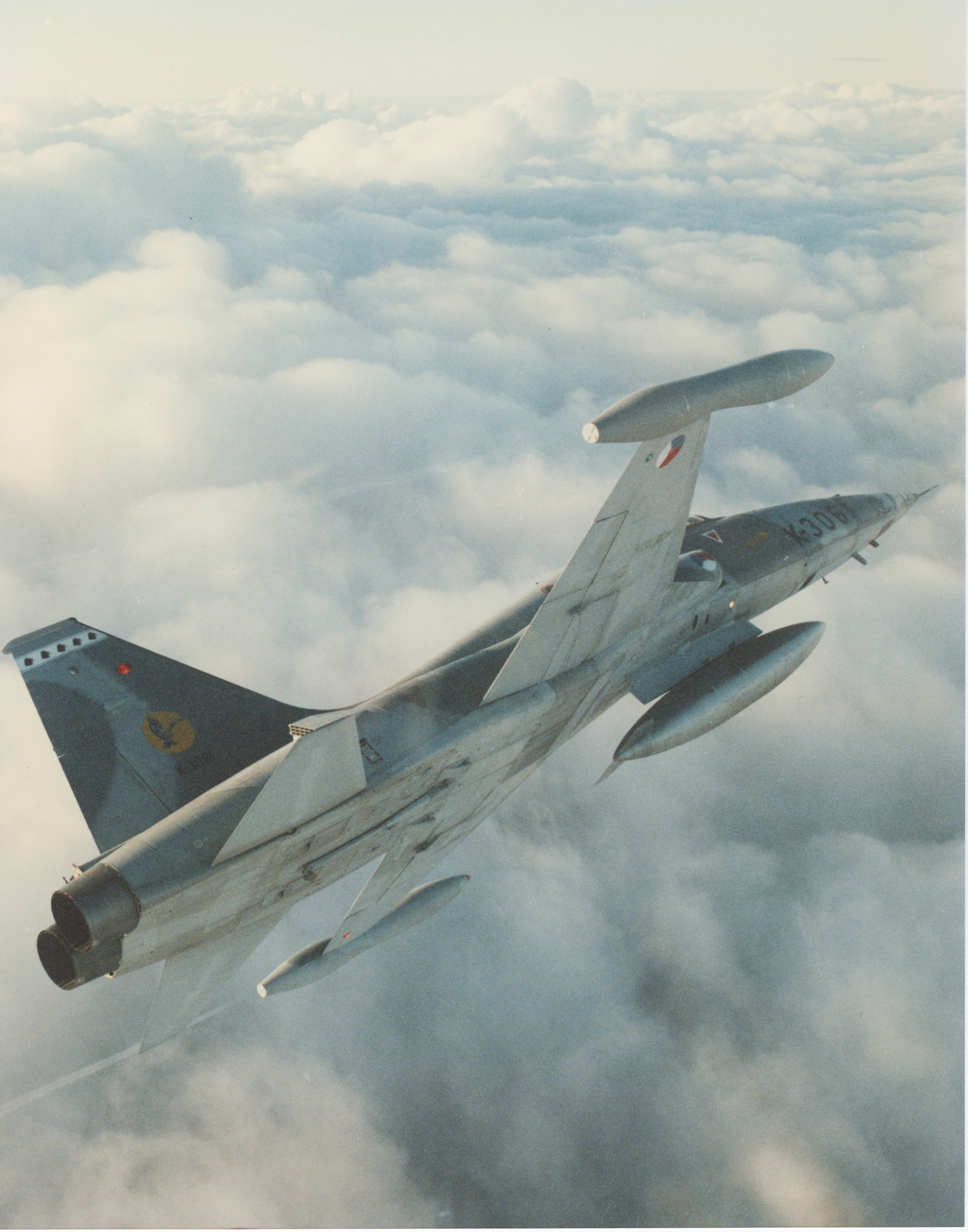
As NATO allies sought affordable advanced jet trainers to support their own modernization programs, the Netherlands shifted focus to exporting its remaining NF-5 fleet. Turkey was the principal recipient: in 1989, an agreement was reached to transfer 60 NF-5s, along with extensive ground support equipment and spare parts, without financial cost under a NATO cooperation framework. The first deliveries took place in June of that year, with 34 aircraft earmarked for operational conversion into the F-5A/B “2000T” standard, while others were cannibalized to sustain the Turkish fleet.
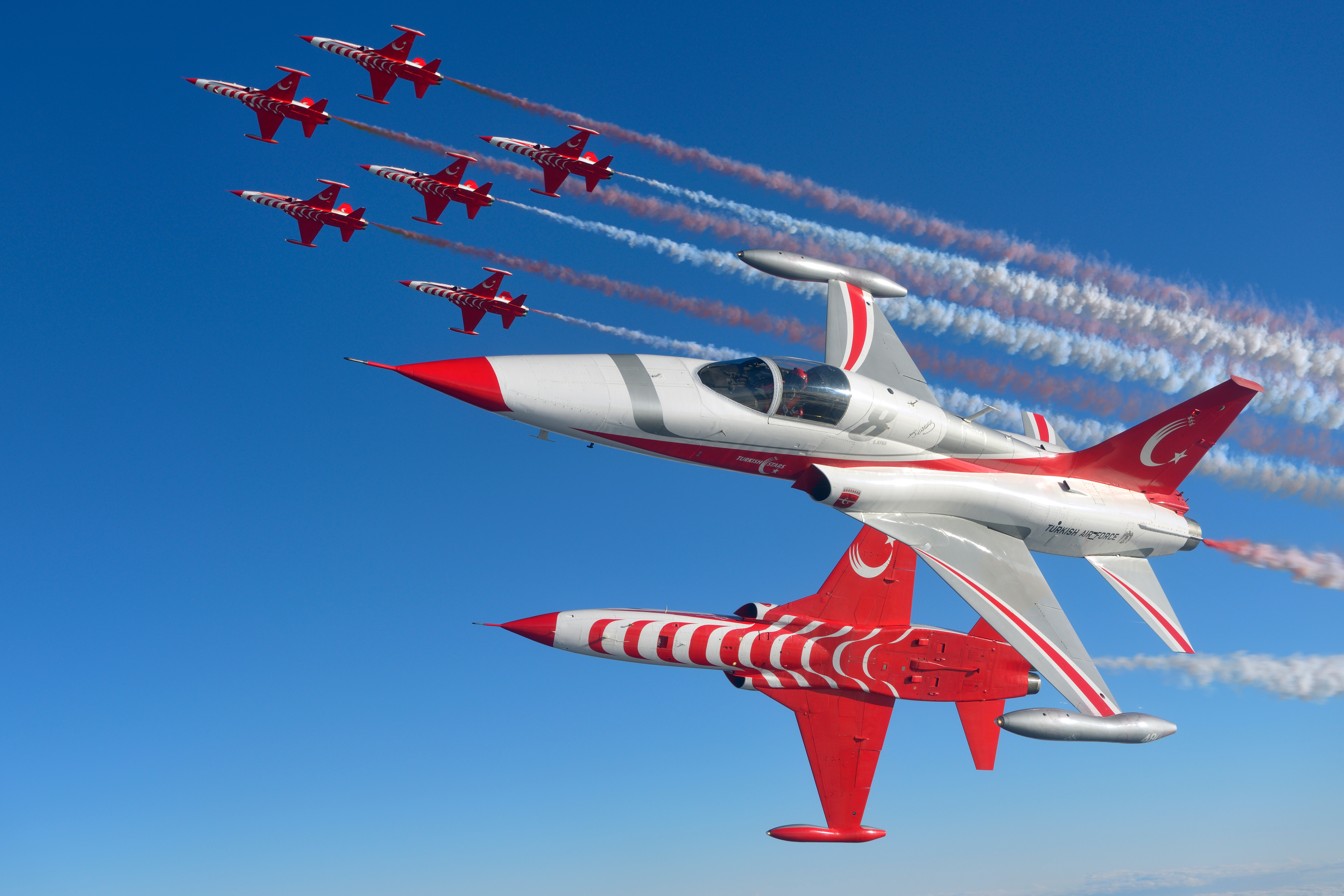
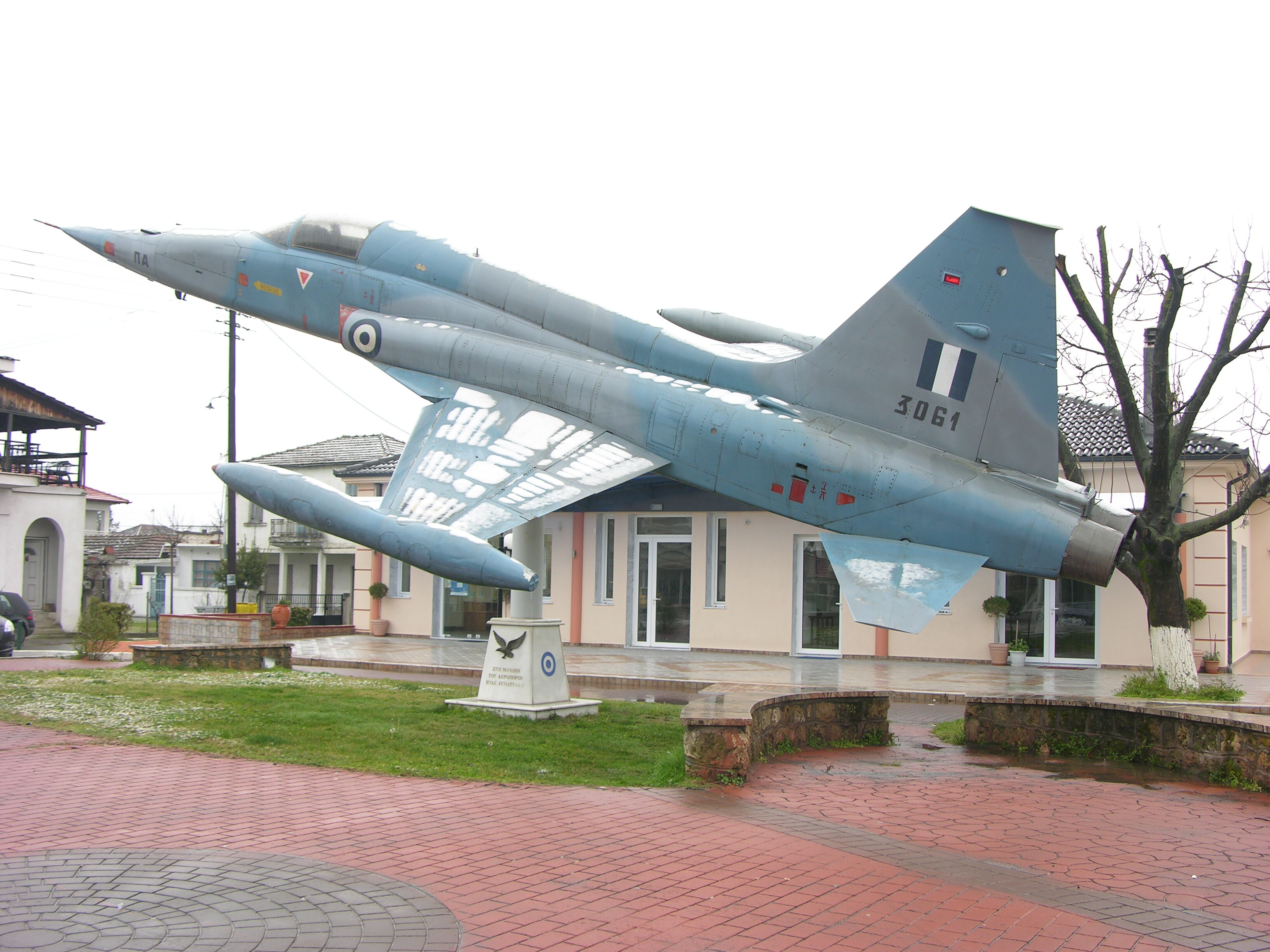
Greece also benefitted from the Dutch phase-out, receiving 11 NF-5As (one strictly for spare components) and a single NF-5B two-seater. Venezuelan deliveries brought the type to South America as well, one NF-5A and six NF-5Bs entered service there, supporting pilot transition and tactical training.
Museum pieces and guardians
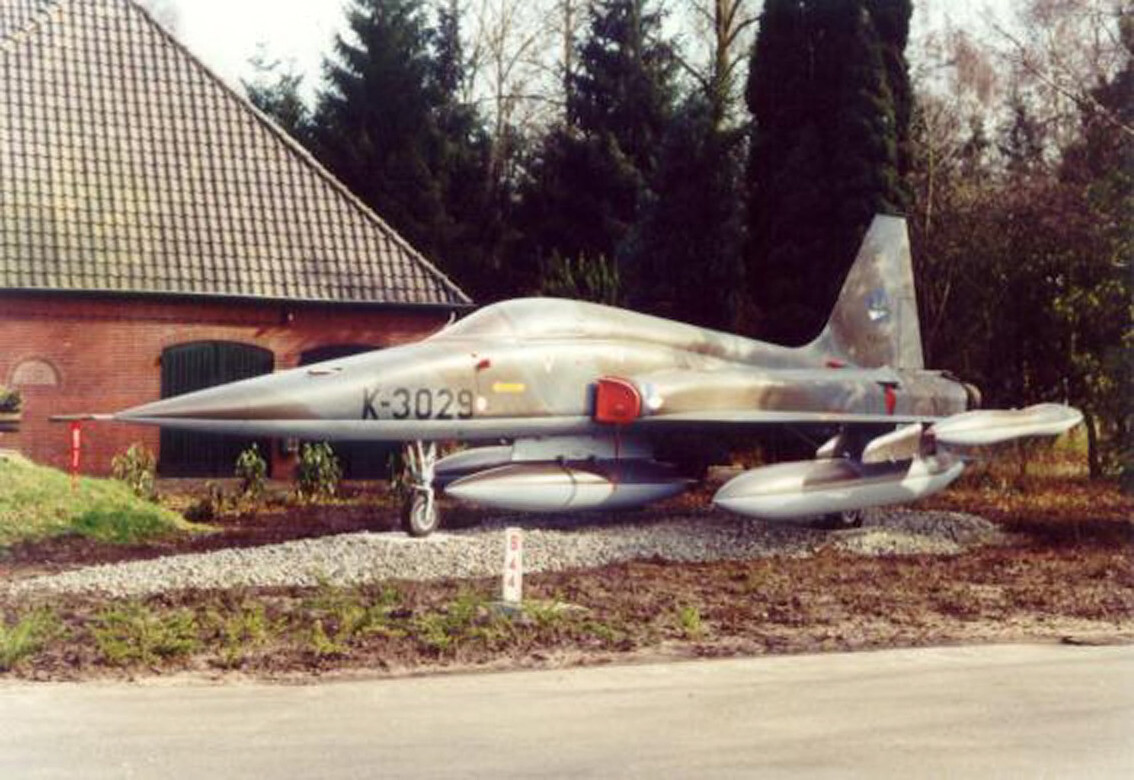
Not every airframe found a new home abroad. A number of late-service NF-5s were preserved as gate guardians at various Dutch bases, while others were passed to technical schools for maintenance training. Several were ultimately museum-bound, representing the aircraft’s distinctive role as the Netherlands’ first-line light fighter during the tense decades of the Cold War. Those not preserved were dismantled and scrapped, a modest end for a hardworking airframe that had loyally served its purpose.
- Cor van Gent. (2020). Northrop NF-5: de historie van de NF-5 bij de Koninklijke Luchtmacht. Violaero.
- De Schakel Albrandswaard. (2020, July 2). Eerbetoon aan de veilige Northrop NF-5. Al het nieuws uit Albrandswaard. https://www.deschakelalbrandswaard.nl/nieuws/algemeen/51776/eerbetoon-aan-de-veilige-northrop-nf-5
- Karo Aviation. (n.d.). NF-5 RNLAF service history. https://www.karo-aviation.nl/photo/RNLAF/pages/NF-5%20rnlaf.htm
- Koninklijke Luchtmacht. (n.d.). Bewapening SD 503. Staat der Nederlanden. (archiefdocument over wapensystemen)
- NMM — Nationaal Militair Museum. (n.d.). NF-5 Freedom Fighter. https://www.nmm.nl/nl/stories/nf-5-freedom-fighter/
- Starink, D. (1991). MS 160 — NF-5 onderhoud & luchtwaardige instandhouding. Militaire Stichting (PDF verslag). (Behandeling van structurele problemen en corrosiepreventie tijdens de NF-5-serviceperiode.)
- Van den Broek, L. (2022, January 9). Hoe de luchtmacht 105 straaljagers van Canada naar Nederland vloog — NF-5 operatie “High Flight.” Up in the Sky. https://www.upinthesky.nl/2022/01/09/terugblik-nf-5-operatie-high-flight-longread
- Van den Broek, L. (2020, January 26). Ons ultieme doel: een vliegende NF-5! Up in the Sky. https://www.upinthesky.nl/2020/01/26/ons-ultieme-doel-een-vliegende-nf-5/
- NF-5A KLu (17950258489).jpg — Wikimedia Commons. (2015, May 26). https://commons.wikimedia.org/wiki/File:NF-5A_KLu_(17950258489).jpg
- Beeldbank Nederlands Instituut voor Militaire Historie. (n.d.). 2157_125-010, Een NF-5A gefotografeerd boven een onherbergzaam kustgebied in Noorwegen. Opname vanuit een andere NF-5. Beeldbank Nederlands Instituut Voor Militaire Historie. https://beeldbank.nimh.nl/foto-s/detail/4ec05925-8c28-1392-23ce-108911cd8773/media/024b6fdc-263e-6c8f-0545-e0bc45286d19
- Beeldbank Nederlands Instituut voor Militaire Historie. (n.d.-b). 2157_125-013, Laatste vlucht van de Northrop NF-5A Freedom Fighter. Beeldbank Nederlands Instituut Voor Militaire Historie. https://beeldbank.nimh.nl/foto-s/detail/51fe7178-0866-593e-6602-9a48c678778e/media/83936444-d4bc-3ff7-b368-4b5b6153fe39
- Sullivan, R. (n.d.). Northrop NF-5A/B “Freedom Fighter.” Flickr. https://www.flickr.com/photos/my_public_domain_photos/44465390601/in/photolist-tmcLtk-DB7BHN-CgMMcb-2pQm6zY-2aKfKtx-db2LGj-2qszd1E-2pBmNXu-2qS2Du6-2mz4ThA-nxVuva-Q7xzsw-7Koysj-2nyLxuR-nxVuyX-nu6Wqo-nvRENc-kRtUux-bEp1Qo-qM4QWf-2ivegWS-2qjzdV1-2qkxdV7-2qkwz6o-fobrAP
- Gunner, J. (n.d.). NF-5A 3061 at Kariotisa (near Edessa) commemorates an F-4 pilot from the village who was killed in a flying accident. Flickr. https://flic.kr/p/7Koysj
- Beeldbank Nederlands Instituut voor Militaire Historie. (n.d.-c). 2193-004-002_0001, Eerste luitenant-vlieger J. van Keulen in een Northrop NF-5 van het demonstratie-team “Double Dutch”. Beeldbank Nederlands Instituut Voor Militaire Historie. https://beeldbank.nimh.nl/foto-s/detail/a9458e90-7a40-9671-549f-5b6e13f6596d/media/57e20eff-65c8-7c34-4282-e99c265c6353
- Beeldbank Nederlands Instituut voor Militaire Historie. (n.d.-a). 0744_011922, Vliegbasis Twenthe.Een NF-5A als monument voor het oude gebouw van de expeditie, nabij de hoofdingang (Plantonmagazijn). Beeldbank Nederlands Instituut Voor Militaire Historie. https://beeldbank.nimh.nl/foto-s/detail/5b705f86-9b9a-a546-9142-d1e4ff11a1df/media/609e4be2-7496-4351-f1a6-92b175be6dd9
Documentaries
- KETTING. (2021a, November 15). KLu in Koude Oorlog Northrop/Canadair NF-5A & NF-5B (Part 1) [Video]. YouTube. https://www.youtube.com/watch?v=L1msZJzG_ks
- KETTING. (2021b, November 15). KLU in Koude Oorlog Northrop/Canadair NF-5A & NF-5B (Part 2) [Video]. YouTube. https://www.youtube.com/watch?v=0f-HkdeCltY
- KETTING. (2021c, November 15). KLU in Koude Oorlog Northrop/Canadair NF-5A & NF-5B (Part 3) [Video]. YouTube. https://www.youtube.com/watch?v=KpVc_VtY5xM
Flight manual
- RNAF. (1987, September 3). Northrop NF-5 A Aircraft Description and Maintenance Instruction Manual EO 05-NF5A-2. Aircraft Reports. https://www.aircraft-reports.com/northrop-nf-5-a-aircraft-description-and-maintenance-instruction-manual-eo-05-nf5a-2/?srsltid=AfmBOoqSyRTea7wNd45lyJfdHdkR85MGyTuiLG3Qop5KK4o5Xt0VbVUb