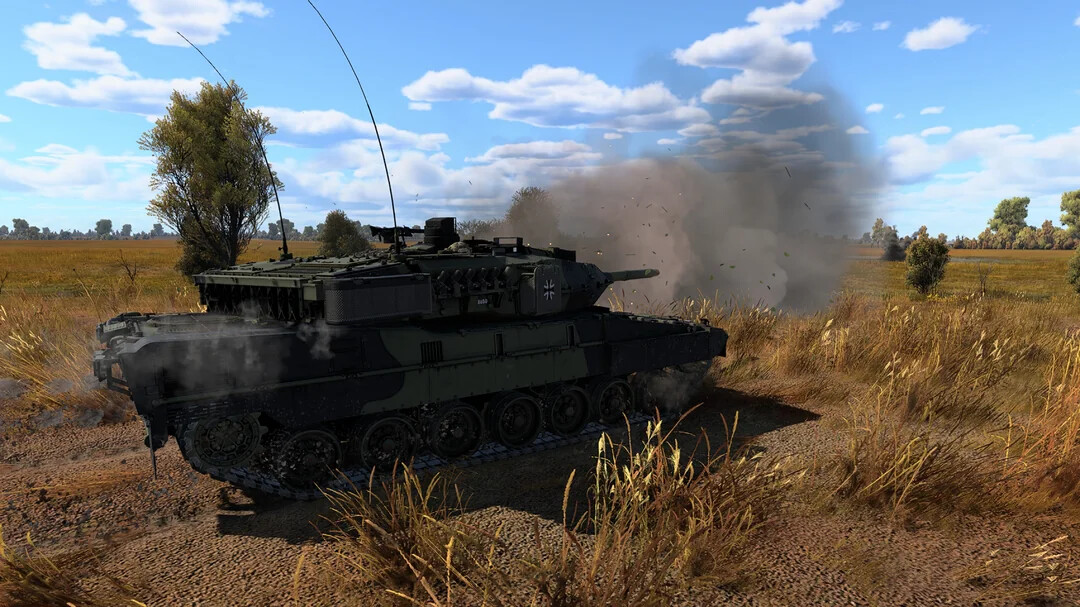
The Leopard 2A7V is a fast, punchy, and well-protected tank. It is equipped with many modern systems bolstering its protection as well as clean 3rd generation thermals, making this tank a modern nightmare for enemy tanks.
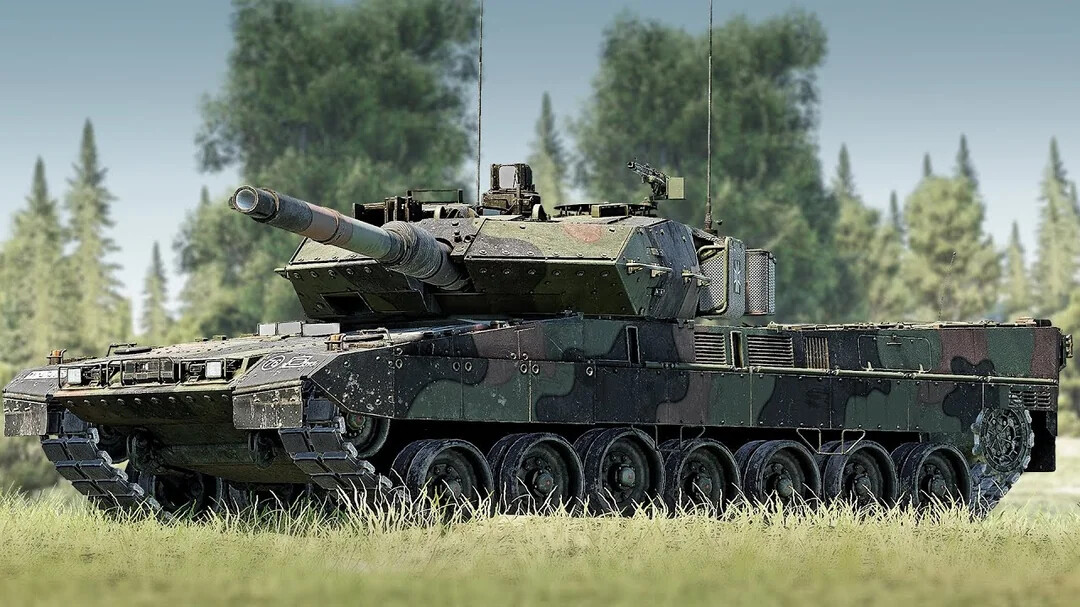
| Pros | Cons |
| Access to the very strong DM53 round, which easily penetrates most targets. | Mobility is reduced compared to the earlier Leopard 2A5 and 2A6 due to the weight of added armour. |
| Good protection (especially frontal hull with added modular armour) and 3rd-generation thermals. | Lower frontal plate (hull) remains a vulnerable area; hull ammo-rack is a notable weak spot. |
| Spall liners greatly reduce damage from penetrating rounds. | Like most other NATO tanks, the 2A7V suffers from a lack of depression when the turret is moved to point over the engine. |
Brief History
The Leopard 2A7V is a modern German MBT created to further improve the German armed forces by modernizing and improving the protection and lethality of the preceding Leopard 2A6. It entered service with the Bundeswehr in September 2021 and is still in use today, having been officially presented in October 2019. Currently, Germany and Denmark operate the Leopard 2A7V, with Germany owning over 104 that were delivered between October 2019 and 2023. Denmark is another major operator that ordered 44 Leopard 2A7Vs with deliveries beginning in 2019.
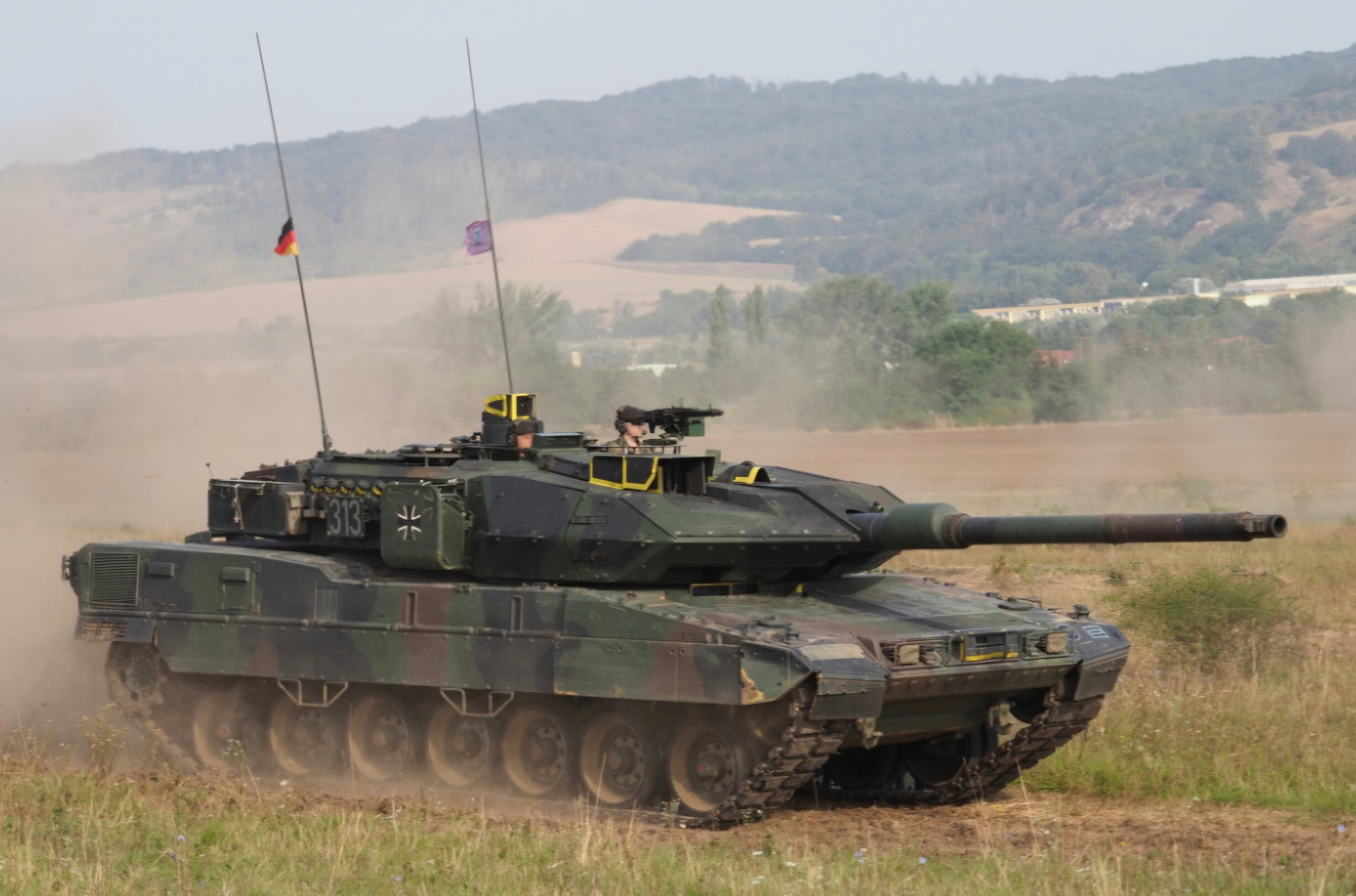
The Bundeswehr focused on boosting protection through the addition of modular add-on armour, more specifically the upper frontal glacis plate, as well as an underside mine protection kit. Other pieces of armour can also be added on the sides to protect from RPGs in urban and low-intensity combat. Better optics and thermal capabilities (specifically 3rd gen thermals) were also given to the tank. Unfortunately, this added weight slows the Leopard 2A7V down by 5 km/h forward compared to the Leo 2A6, according to the Bundeswehr.
Main Gun
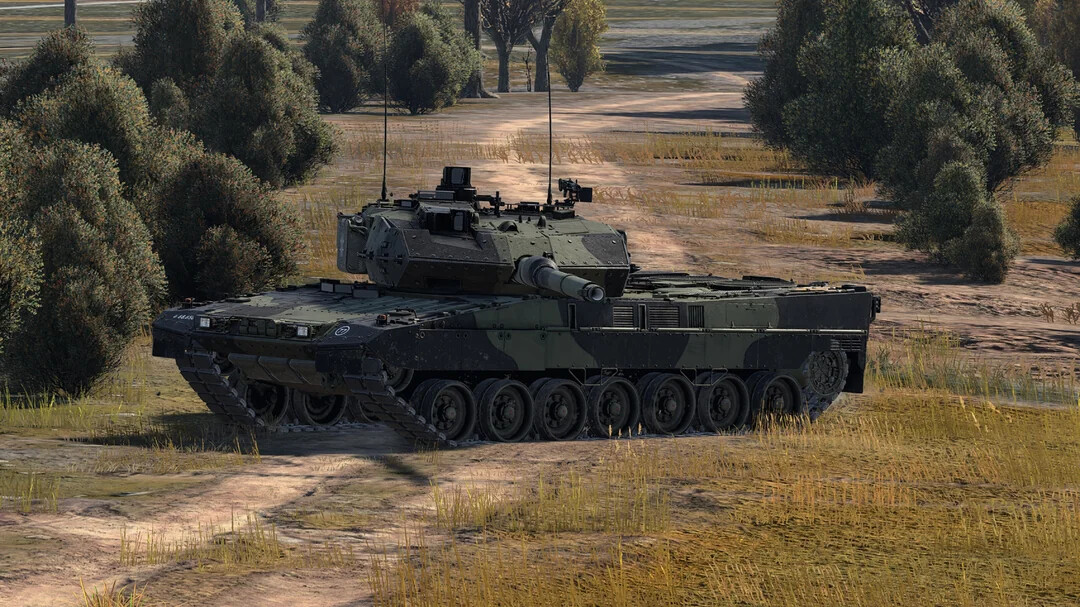
The Leopard 2A7V in War Thunder uses the 120 mm Rh120 L/55 A1 main gun, which is considered one of the best in the game. With a stock crew, the reload is longer than most autoloaders and American tanks at 7.8s, but once aced it drops to a speedy 6s. This is still slower than the reload on American MBTs, the Type 90s, and the Leclercs, but faster than Russian autoloaders like the T-72/80/90. Available rounds include…
- DM53 (APFSDS): This is the best round available to the Leopard 2A7V or any Leopard in general. It has exceptional penetration of up to 653 mm at its best, and even over distance, it maintains great penetration with 629 mm at 1000 m.
- DM33 (APFSDS): This is one of the two shells that come with the Leopard 2A7 when stock. It possesses decent penetration (496 mm) and only loses 1 mm of penetration at 100 m.
- DM12A1 (HEATFS): This is the second stock shell that comes with the Leopard 2A7V. Being a HEATFS round, it is best not to use this round, considering most top-tier MBTs (and practically all top-tier Russian MBTs) have ERA or composite armor, which completely negates the damage of the shell. This makes it pointless to use over DM33.
- DM11 (HE-TF): The DM11 is the Leopard 2A7V’s most versatile shell for taking out air targets or even light tanks. It can be set to airburst mode by using the laser rangefinder, or it can simply be shot at targets. The round has 3.9kg of TNT equivalent, which is amazing for overpressuring some light or even medium armored targets, although it is best to rely on the DM33 and DM53 rounds to destroy more armored targets.
Armour and Survivability
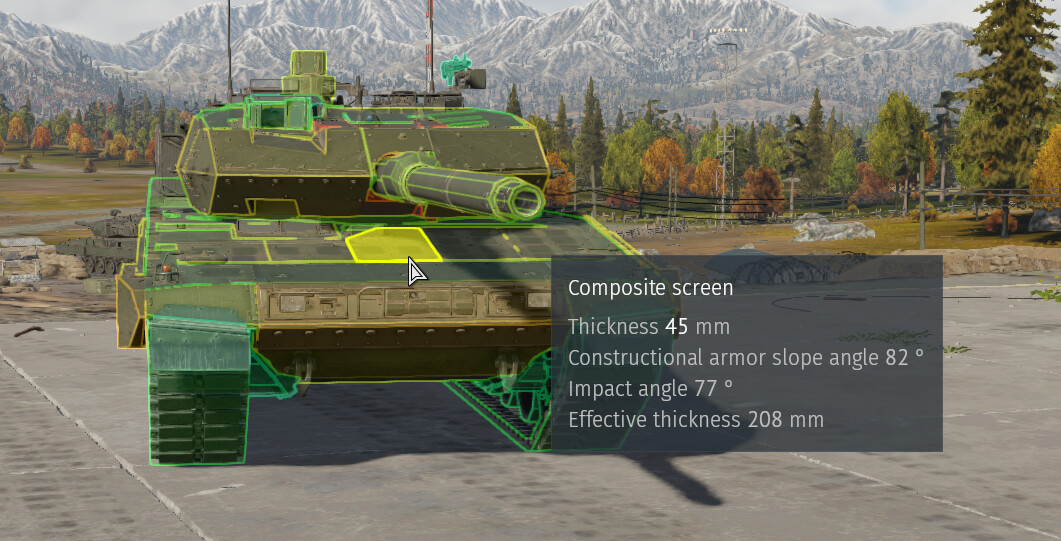
The improved frontal hull armour, as well as better modular add-on armor, gives the Leopard 2A7V much-improved protection compared to adversaries and its predecessors. Compared to the Leopard 2A6, the survivability of the vehicle is much better thanks to its improved spall liners, thermals, and composite armour.
These improvements in armour provide amazing protection against chemical rounds with a total effective thickness of around 1200mm on the upper frontal plate, but it is weaker against kinetic rounds with an effective thickness of around 580mm, though it can stop higher penetrating rounds if the shooter poorly aims their shot.
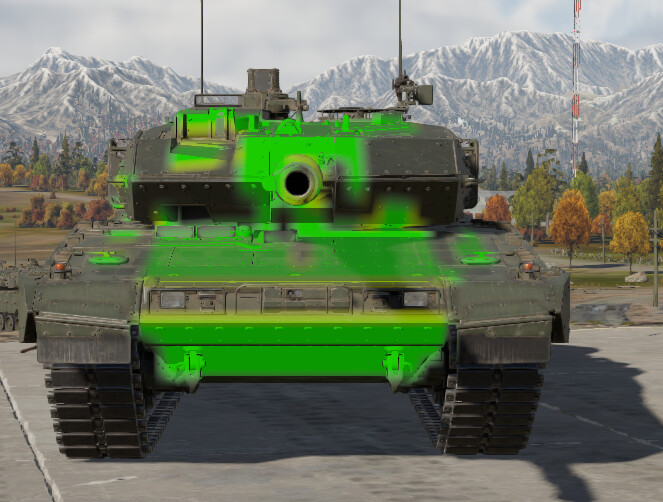
The Leopard 2A7V also possesses spall liners, which greatly enhance the survivability of the tank and allow it to take hits without major damage being done to the crew or modules. These liners are located to the left and right of the hull and turret, the front of the hull, the turret cheeks, and the roof.
There are also other weak spots to be aware of. For example, the lower frontal plate, like most modern MBTs, remains a weak spot. The hull ammo-rack can detonate if struck, as it doesn’t have blowout panels, so it is best to bring only 16 shells (one in the breech, 15 in safe stowage with blowout panels). This means a penetration to the lower plate won’t cause ammo detonation. In general, a hull-down position should be played to prevent the weak spot from ever being exploited. This is possible due to the guns' amazing -9 degrees of depression.
The turret ring and mantlet are also other possible weak points to be aware of. Overall, the tank has good survivability for its tier, but should never be treated as invincible. Hull-down positioning and awareness of weak spots remain important. It’s important to note that angling will not save you, as modern APFSDS rounds can cut straight through armour even while angled. Wiggling the turret will make it harder for the enemy to hit you or a specific target in the tank, like the breech.
Mobility
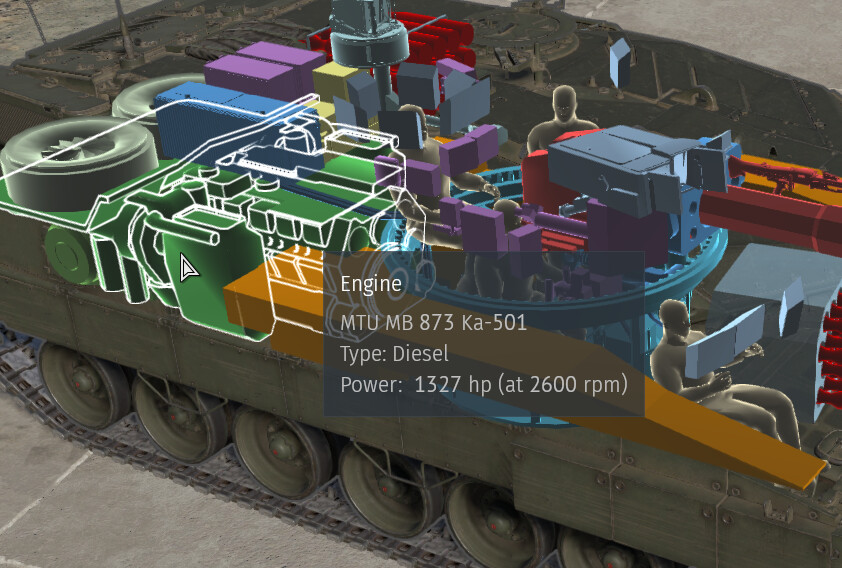
The Leopard 2A7V’s mobility is solid but not the best of its class due to the added armour and weight. The top speed is reduced by a good bit compared to earlier Leopard 2 variants, going from 68 km/h in 2A6 to 61 km/h in the 2A7V. This means the tank can still reposition and fight, but may be slower to exploit flank opportunities than earlier Leopards.
Playstyle
The Leopard 2A7V should be treated as a top‐tier medium MBT that combines high firepower with good protection, modern electronics, and average mobility. Knowing this, the ideal playstyle would be to:
- Use its strong gun to take out key targets early on (especially those with weaker frontal armour) and try to establish control of engagements.
- Try to fight from hull-down or turret-forward positions. Use your gun depression to minimize exposure to enemy fire.
- Use its good optics and thermal capability to spot enemies early and engage before they engage. The commander’s sight can come in handy at times.
Summary — Do’s and Don’ts
Do: Use the Leopard 2A7V’s gun and optics to control engagements, pick your targets, and aim for weak spots. Note that DM53 is good, but you still need to aim.
Do: Stay hull down where possible, make use of its good frontal armour, and make sure to wiggle your turret to make it harder for enemies to aim.
Don’t: Expose your lower frontal plate or side hull ammo-rack to enemy fire since it is an easy way to be ammo-racked if you brought more than 16 rounds.
Don’t: Ignore your flanks and surroundings. It’s an easy way to be flanked before you see them. Don’t rely purely on mobility, as you can still be flanked by light tanks and other speedier vehicles.