
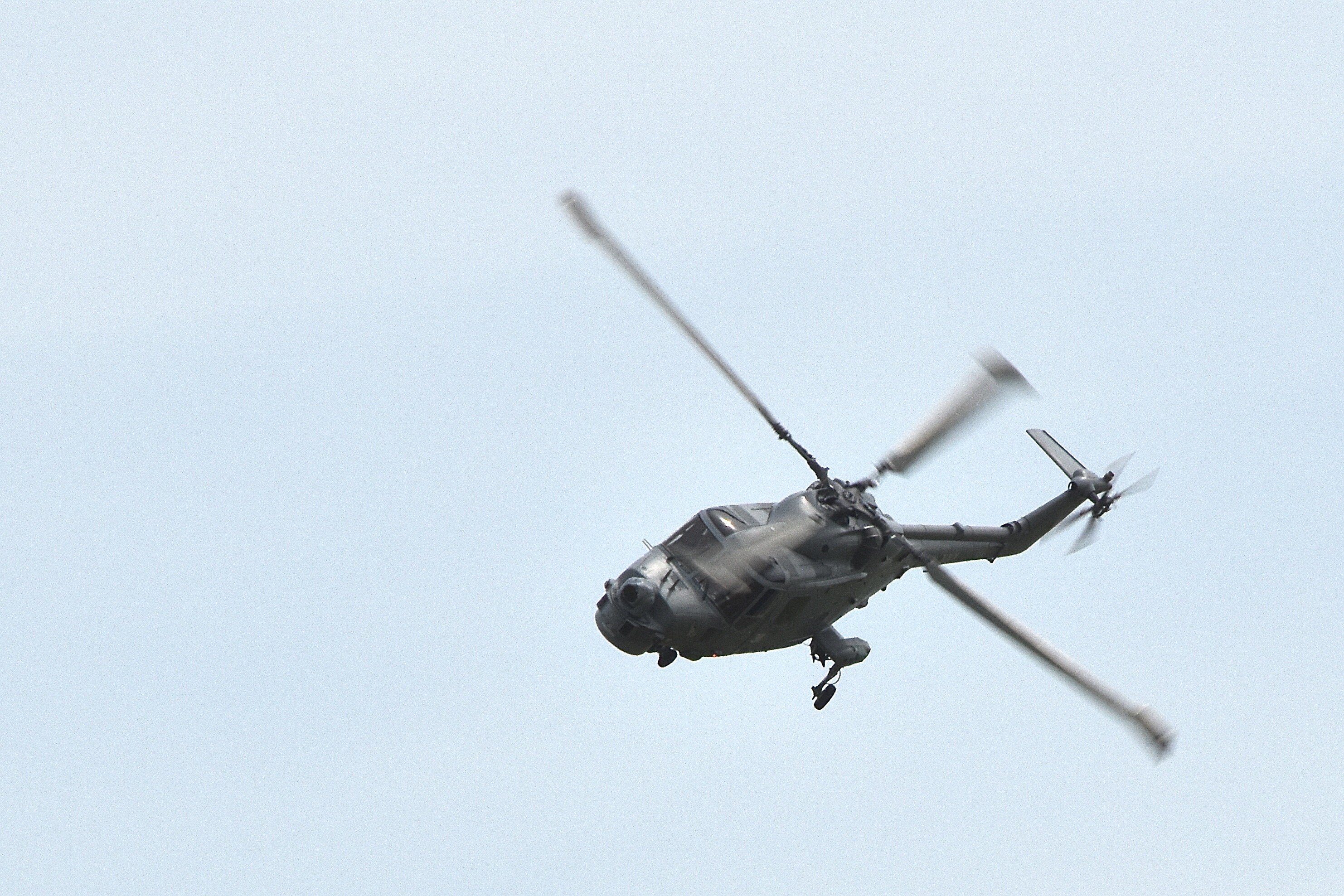
The Westland Lynx is a British multi-purpose twin-engine military helicopter. Designed and built by Westland Helicopters. As a multi-purpose helicopter, it served both military and civilian purposes, being put into service since 1977 and being still in use in many nations. It is a leading example of a utilitarian craft in both civilian, naval, and military scenarios.
Initial development
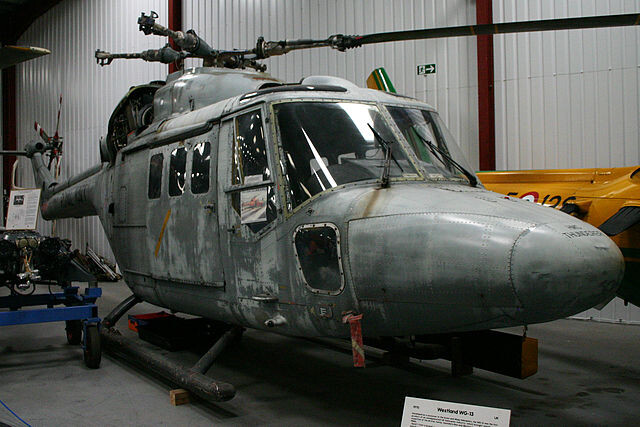
The Westland Lynx was developed between the 1960s and 1970s as an Anglo-French utility helicopter. It was designed to replace earlier helicopters that proved too light, small and underpowered like the Westland Scout and the Westland Wasp. A prototype designated WG.13 Lynx (serial XW835) first flew on 21 March 1971. Five prototype airframes were made and 13 test machines validated the design. In 1972 a standard version made it into production equipped with a new one-piece “monobloc” titanium rotor hub.
The first naval Lynx was developed later in 1976, (serial XZ227); it made its first test flight on 10 February 1976, and was delivered to the Royal Navy on 8 July 1976. Export and home orders came rapidly from the British Army Air Corps (AAC), Royal Navy (FAA), Royal Netherlands Navy (specifically the Mk.25) and Germany, which also saw some units deployed in its territory. Other nations joined later like Brazil and South Africa.
The AH series
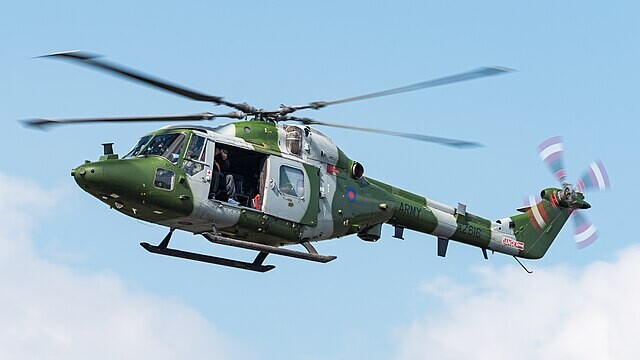
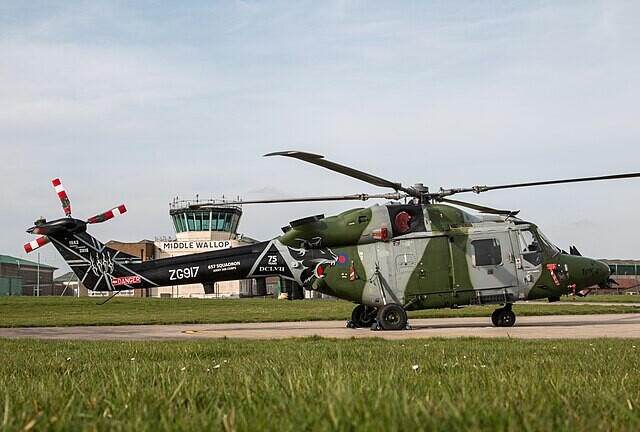
Over time, the Lynx saw many variants developed, but the most prominent variants were of the A.H. (army helicopter) series.
Lynx A.H Mk. 1: It entered service in 1979 with the British Air Corps. It was powered by two Rolls-Royce Gem turboshaft engines with a typical 4‑blade main rotor and 4‑blade tail rotor configuration. It served as a regular utility helicopter, battlefield support in logistics and troop transport with a secondary anti-armor role. It was equipped with up to eight wire-guided TOW ATGMs (Anti-Tank Guided Missile). However, in practice, the A.H. Mk. 1 flew armed scout or escorts missions, crewed with two pilots while also allowing door gunners and troops carried internally in the transport variant.
Lynx A.H Mk. 5: It is similar to the A.H. Mk. 1 but with upgraded Gem engines.
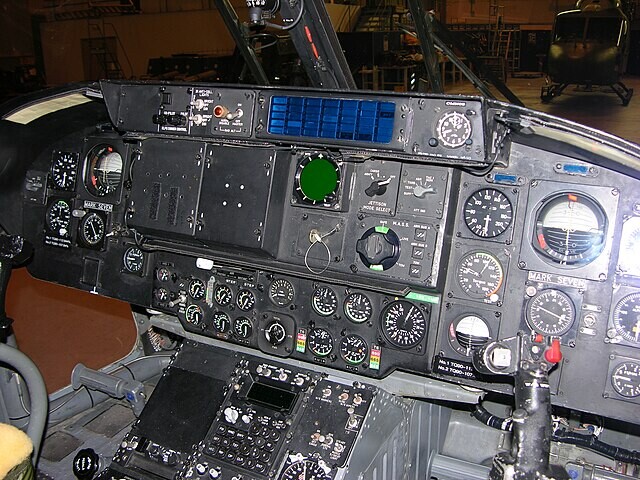
Lynx A.H Mk. 7: It featured more powerful engines (Gem 42) as well as new sensors and instruments, with composite materials on the rotors and tail.
Lynx A.H Mk. 9/Mk. 9A: It was the most powerful variant of the Army-oriented Westland Lynx. It introduced a wheeled undercarriage replacing the skids used in previous models, allowing for better operations on hard surfaces. A further upgrade, the Lynx A.H. Mk. 9A was re-engined, with new LHTEC CTS800-4N motors and modernized avionics. The new motors gave the aircraft better performance during “hot and high” — an operating environment with low air density due to temperature and altitude, which reduces an aircrafts performance, typically encountered when flying at very high altitude.
Naval / Maritime variants
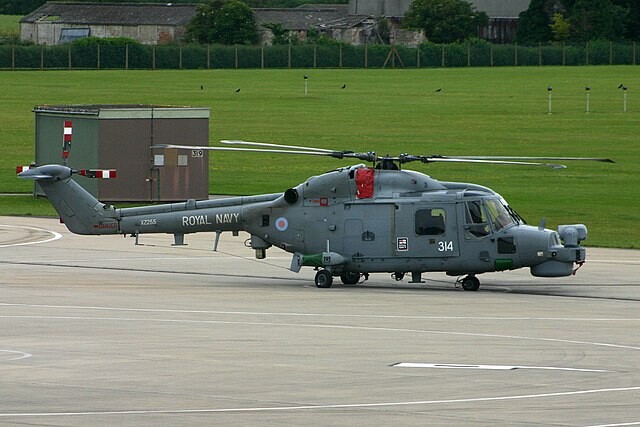
The first naval oriented versions of the Lynx were given the designation “H.A.S” meaning Helicopter Anti Submarine; they were very similar to the A.H series of helicopters used by the Army Air Corps. In terms of armament, these units were equipped for anti-submarine warfare, with weapons such as depth charges and self-homing torpedoes. Further upgrades allowed these helicopters to use modern anti-ship weapons like the Sea Skua ASM.
Lynx H.A.S. Mk. 2: It was developed particularly for anti-submarine warfare roles. It entered service in 1981. It was adapted to work on aircraft carriers and helipads onboard regular warships (destroyers, cruisers, etc.). For this, it included a tricycle landing gear and foldable tail rotor pylon.
Lynx H.A.S. Mk. 3: Compared to the previous Lynx H.A.S Mk. 2, this version featured more powerful Gem 42-1 engines, strengthened gearbox and transmission, improved flotation systems, upgraded electronic warfare/EMS suites, etc. The Royal Navy ordered 23 new H.A.S. Mk. 3 helicopters between 1982 and 1985 while a large number of existing H.A.S. Mk. 2 airframes were upgraded to the H.A.S. Mk. 3. There were other specific variants like the H.A.S. Mk. 3GM (Gulf War modification), H.A.S. Mk. 3ICE (Fitted for Antarctic or arctic regions) and the H.A.S. Mk. 3S (Improved communications suite).
Lynx H.M.A. Mk. 8: It was based on the Super Lynx 100, the name means Helicopter Maritime Attack, featuring Gem 42-200 engines. The radar was moved to a radome under the nose, and a FLIR turret was installed above the nose. It was designed as an attack maritime helicopter. To this day, the Lynx H.M.A. Mk. 8 is still undergoing modifications and upgrades, allowing it to stay on par with other modern helicopters.
The Super Lynx and Most relevant export variants
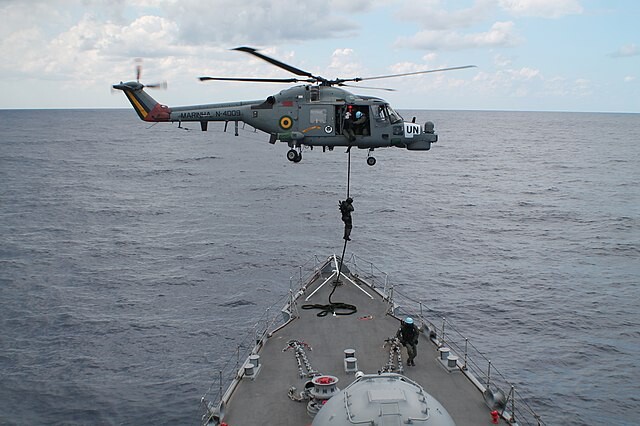
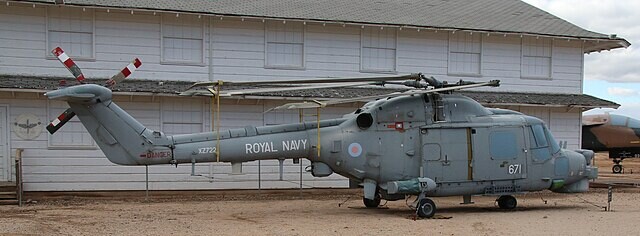
The Super Lynx was different from the A.H. and H.A.S. variants of the Lynx, as it was prepared to operate both on land and sea with minor modifications needed. It also saw major success in the international market as it was equipped differently according to the export destiny. The Super Lynx came with under-nose radars, mission computers, NVG compatible cockpits and the naval oriented variants came also equipped with anti-ship weapons like the Sea Skua and naval torpedoes. Modern Super Lynx variants can employ more modern ordnance.
Super Lynx 200/300: The Super Lynx 200 was an earlier upgrade version with limited use, the Super Lynx 300 however was the more modern export oriented variant, built with new CTS800 engines, modern avionics and cockpit suites. It is cited as the baseline that heavily influenced the AW159 Wildcat developments.
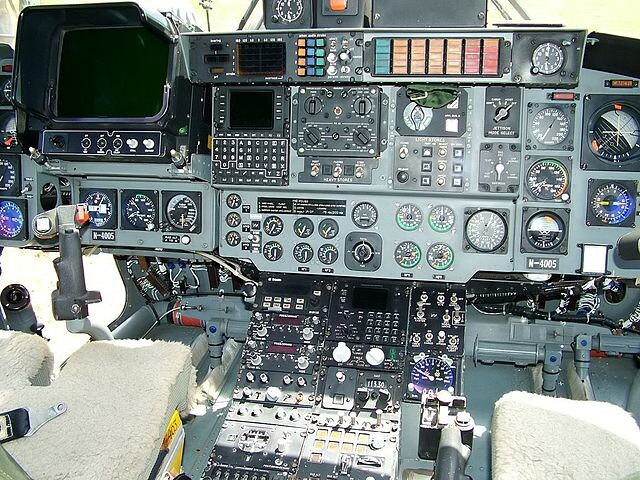
Super Lynx Mk. 21/21A/21B: Export variant for a new modernized Lynx made for Brazil, it replaced Brazil’s old helicopter fleet of Lynx helicopters with the Super Lynx, this included new engine, avionics, defensive systems and armaments. The programs were executed in the 2010s. Brazil was the first foreign operator of the Lynx helicopter in 1978, acquiring a batch of five that year. In the 1990s, a new batch of nine arrived in the country. In 2014 Brazil upgraded to the Super Lynx Mk. 21A, the local designation is AH-11A. Brazil is yet to upgrade 8 units to the Mk. 21B standard, local designation AH-11B.
Lynx Mk. 25/27/81/SH-14D: The first export variant for the Royal Netherlands Navy designated UH-14A locally was the Lynx Mk. 25, it was basically an export version of the H.A.S. 2, with 6 units built. Later the Mk. 27 known locally as SH-14B was designed with anti-submarine warfare in mind, it was equipped with upgraded Gem 4 engines, with 10 units built. The Mk. 81 was also an upgraded ASW version, powered by new Gem 41 engines, no sonar but with a towed magnetic anomaly detector, designated SH-14C, 8 built. The last version was an upgrade program that was to take all previous versions to the SH-14D standard, Gem 42 engines, dipping sonar and FLIR; 22 units upgraded. The Netherlands employed 24 Lynxes for a total of 36 years, from 1976 to 2012 in the Royal Netherlands Navy, these performed search and rescue, anti-submarine warfare and anti-surface warfare as well as support for special forces. It was replaced by the NH90.
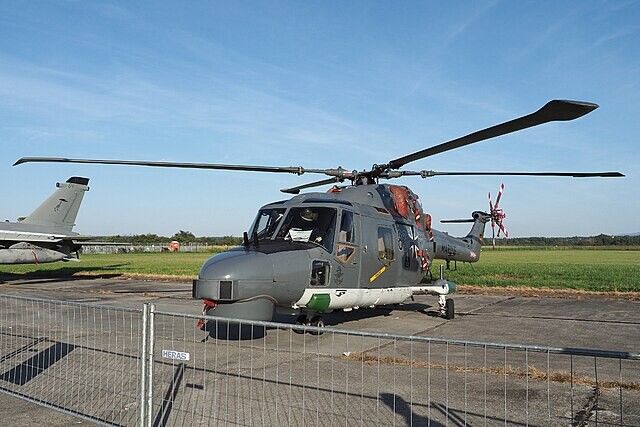
Lynx Mk. 88/Mk. 88A: German Lynxes were delivered as Sea Lynx Mk. 88, later upgraded to the Mk. 88A with new sensors and improved performance. The upgrade packages for the Mk. 88 was sent in the 1990s with the rest of the upgrades being received in the 2010s. The Sea Lynx Mk. 88 was manufactured in 1981 with a total of 19 built, with 7 additional Super Lynx Mk. 88As purchased in 1996. In 1998 the rest of the Lynx Mk. 88 fleet was upgraded to the Mk. 88A standard.
Super Lynx Mk. 95: Naval-oriented Super Lynx made for Portugal, used aboard Portuguese ships for ASW/ASuW and patrol duties, this variant had structural and avionics upgrades compared with the older Royal Navy Lynx. Portugal exclusively operates the Super Lynx Mk. 95, purchased in 1990. 5 units were made and delivered.
Super Lynx Mk. 99/Mk. 99A: Version made for the Republic of Korea Navy, the first batch consisted of 12 Mk. 99 Lynx helicopters, while a second batch of 13 Mk. 99A Super Lynx helicopters began delivery in 1999. The first batch was later upgraded to the standards of the second which featured a new radar, FLIR and ESM systems.
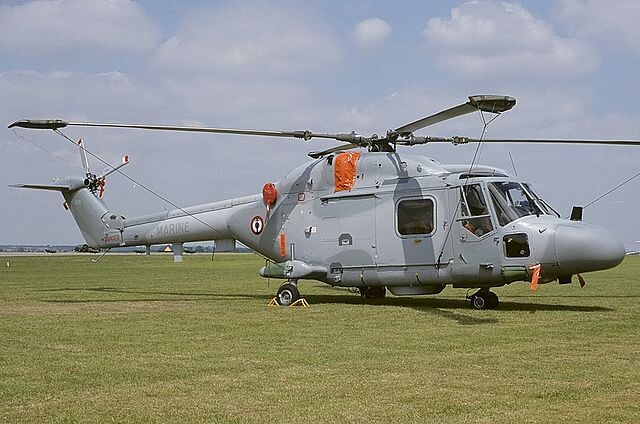
Lynx H.A.S. 2 (FN): In 1979 in France the Lynx H.A.S. Mk. 2 (FN) entered service with the French Naval Aviation, a total of 26 aircraft were procured. This was followed by 14 improved H.A.S. Mk. 4 (FN)s. This variant was more capable of handling independent ASW operations compared to its Royal Navy counterpart. It was formally retired in 2020.
Other notable variants include:
- Lynx Mk. 110 for the Thai Navy, basically a Super Lynx 300
- Lynx Mk. 120 for the Air Force of Oman, 16 units built
- Lynx Mk. 130 for the Algerian Navy, 4 units built
- Lynx Mk. 28 for the Qatari Police, 3 units built
- Lynx Mk. 64 for the South African Air Force
- Lynx Mk. 80 for the Royal Danish Navy, it was based on the Lynx HAS.3, 8 units built
- Super Lynx Mk. 100 for the Royal Malaysian Navy, 6 units built, it featured upgraded CTS-800-4N engines
- Lynx Mk. 23 and Lynx Mk. 87, embargoed export versions for the Argentine Navy, redirected in this case to the Danish Navy
Related Development
Westland 30: Medium sized civil helicopter designed and produced by Westland Helicopters, derived from the Westland Lynx series of military helicopters. It was developed between the late 1970s and early 1980s. Compared to the Westland Lynx helicopters, it shared its dynamic systems and other components but the Westland 30 featured an original airframe to accommodate a sizable passenger compartment. There was an expected civil and military market for this helicopter, however no military customers were secured, the most prominent user was an Indian company that acquired 21 for oil exploration purposes. It proved difficult to use in tropical climate leading to two fatal accidents and its early retirement in 1991. 41 units were produced.
Lynx ACH: Known as the Lynx Advanced Compound Helicopter, it was a technology demonstrator announced in May 1998. It was designed as a prototype, powered by RTM322 engines, with variable area exhaust nozzles, it was also meant to be equipped with wings on the sides, the gearbox from the Westland 30-200, BERP rotor blades and was supposedly 50% faster than a standard Lynx (up to 460 km/h at 6,100 m of altitude).
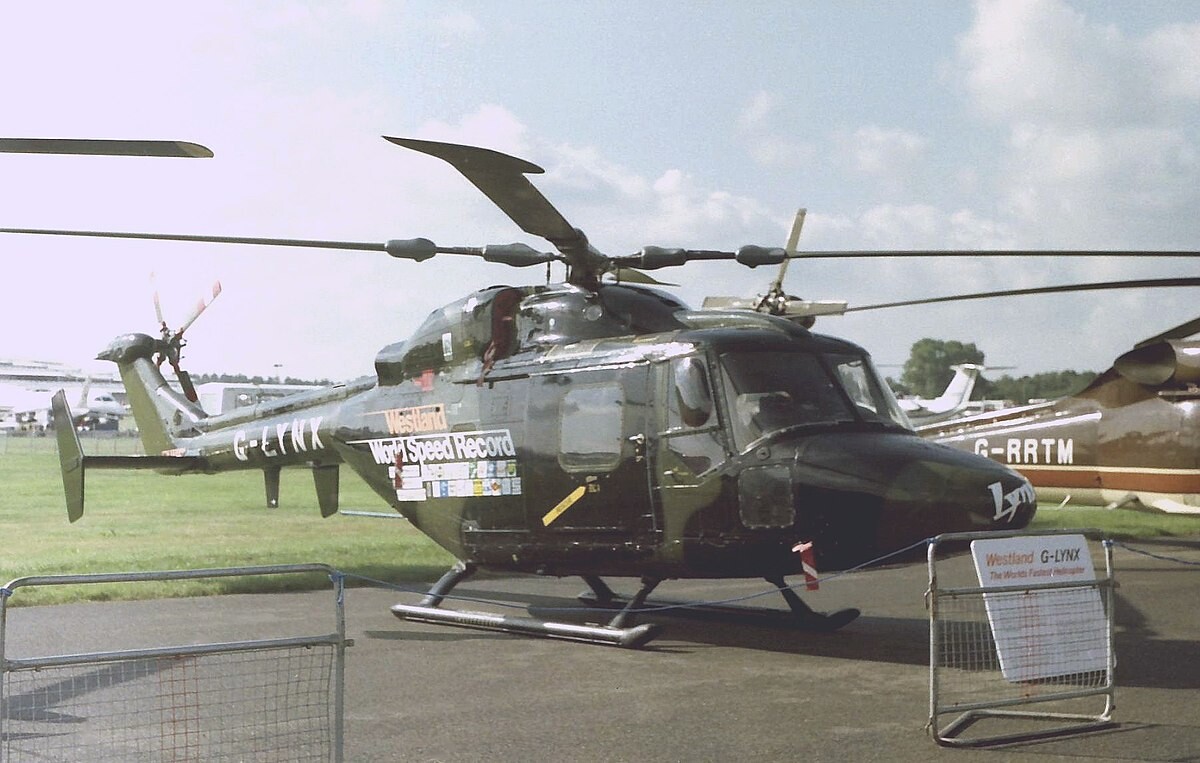
G-Lynx: Experimental version made as a technology demonstrator to attract clients and promote exports of the Lynx.
AW159 Wildcat: Previously called the Future Lynx or Lynx Wildcat, it was developed by a merger between Agusta and Westland leading to AgustaWestland. It is an improved version of the Westland Super Lynx designed as a utility helicopter. Introduced in 2014 with the first unit known as the A.H. Mk. 1. It was developed in the early 2000s as Future Lynx to replace existing Lynx helicopters then operated by the Royal Navy and British Army. It received production authorization by the European Aviation Safety Agency in 2008 but high costs put strains on the program. Further orders have been placed by export customers however, including the Republic of Korea Navy and the Philippine Navy
Operational Use
The Falklands War
The first large military use of the Westland Lynx occurred in the Falklands War (1982). The Navy Lynx’s operated under freezing temperatures 8,000 miles from their home islands.
On April 25, 1982 a diesel-electric submarine, ARA Santa Fe, a Balao-class submarine operated by the Argentine Navy was spotted by surface elements of the British Navy. A Lynx H.A.S. Mk. 2 launched from the Type 22 frigate HMS Brilliant was dispatched to deal with the threat. The helicopter deployed Mk. 46 homing torpedoes that missed the targets; however, the pilot, Commander John Clark, changed strategy, allowing the crew to strafe the submarine with 7.62mm machine gun fire, severely damaging the Santa Fe and rendering it non-operational. After the engagement it was discovered in the instructions given to the crew on how to deal with aerial attacks that the suddenness of the Lynx attack was a key factor in winning the engagement.
On May 3, 1982, a Lynx H.A.S. Mk. 2 conducted the first ever firing of the Sea Skua anti-ship missile against an enemy vessel, the Argentine patrol boat ARA Alférez Sobral, inflicting massive damage. Another operation involved a Lynx embarked on the HMS Penelope, when the crew engaged the Argentine patrol boat Río Iguazi, which destroyed many internal components on the vessel, rendering it non-operational for the rest of the conflict. Previous to these engagements, the efficacy of helicopter launched anti-ship missiles was largely theoretical.
No Lynx were lost directly while in combat, however, three were lost when the ships carrying them, HMS Coventry, HMS Ardent and SS Atlantic Conveyor were sunk by Argentine air attacks.
Gulf War
During the Gulf War (1991) the Royal Navy deployed multiple Lynx helicopters, specifically the Lynx H.A.S. Mk. 3 GM (Gulf Modification). In one naval engagement, the Iraqi navy tried to flee their ports in Kuwait and Iraq, trying to reach safe harbor in Iran. Operating from a screen of destroyers and frigates, the Royal Navy Lynx force using their Seaspray radars and FLIR, detected and engaged the Iraqi flotilla. Over the course of four days the Lynx used their Sea Skua missiles with great precision, however they were also aided by US Navy SH-60 Seahawks in detecting and identifying targets thanks to their superior sensors.
The results were 14 enemy vessels destroyed by British Lynx helicopters, this included three minesweepers, one minelayer, three fast attack crafts and several patrol boats.
Northern Ireland
The British Army Air Corps also employed the Lynx A.H. Mk. 1 and A.H. Mk. 7 during “The Troubles” in Northern Ireland, from the 1970s to the 1990s. This resulted in the phrase “The Lynx Effect”, a slogan coined by the BBH agency for a deodorant brand, it came from the dominant, physical impact of the helicopter’s loud presence.
The most notable incident in this conflict occurred on March 19, 1994. A Lynx hovering low at a British army base was hit by an improvised mortar, it hit the helicopter’s tail section, this resulted in an immediate uncontrollable spin and a crash landing inside the base perimeter. Three crew members managed to escape, but a member of the Royal Ulster Constabulary was still inside. He was evacuated with heavy injuries, but managed to survive.
Peacetime and Peacekeeping Operations
During the dissolution of Yugoslavia in the 1990s, the Lynx was used in peacekeeping missions. The British Army deployed several Lynx A.H. Mk. 9 transport helicopters and Lynx A.H. Mk. 7 attack helicopters. During later stages of the operation, including the Operation Allied Force in 1999, Lynx helicopters remained in high alert status for Search And Rescue missions.
This was also when the British Military introduced advanced simulation technologies, crews received better training with the Virtual Battlespace 2 System, which became crucial before deploying to zones like Afghanistan.
During the 2003 invasion of Iraq the Lynx was deployed deep inside Iraq, in urban enviroments and as a stabilizing force. The urban enviroments posed a deadly threat. In 2006, a Westland Lynx A.H. Mk. 7 was destroyed by a surface to air missile, exploding mid-air, with all occupants instantly killed.
Between the 2000s and 2010s the Lynx also conducted anti-piracy operations off the coast of Somalia, the Horn of Africa and in the Indian Ocean, operating from frigates for aerial support, intelligence gathering and transport. It was also used in the Caribbean Sea for counter-narcotics operations, while also providing critical disaster relief from the Gulf of Mexico to the Philipinnes during hurricanes and typhoons.
Bibliography
- Wikipedia contributors. (2026, February 9). Westland Lynx. Wikipedia. https://en.wikipedia.org/wiki/Westland_Lynx
- Colaboradores de Wikipedia. (2025, August 29). Westland Lynx. Wikipedia, La Enciclopedia Libre. https://es.wikipedia.org/wiki/Westland_Lynx
- Westland Lynx, los helicópteros militares más rápidos que hay en la Península Ibérica. (2023, October 17). Defensa Y Aviación. https://www.outono.net/elentir/2023/10/17/westland-lynx-los-helicopteros-militares-mas-rapidos-que-hay-en-la-peninsula-iberica/
- Westland Lynx AH-1. (n.d.). https://www.helimuseum.com/heli.php?ident=lynx
- Lynx. (n.d.). https://babriet.tripod.com/navy/stat/statlynx.htm
- Aviator Database (n.d) Westland Lynx. https://www.aviatorsdatabase.com/wp-content/uploads/2013/07/Westland-Lynx.pdf
- British Army & Royal Marine Aviation — Lynx. (n.d.). https://sites.google.com/site/barmavn/aircraft/lynx
- Swopes, B. (2025, August 11). Westland Helicopters | This day in aviation. https://www.thisdayinaviation.com/tag/westland-helicopters/
- Jonker, K. (2017, August 30). Westland Lynx. https://kw.jonkerweb.net/index.php?option=com_content&view=article&id=539:westland-lynx-uk&catid=79&lang=en&showall=1&limitstart=&Itemid=561
- The Helicopter Museum | Falklands War. (n.d.). https://www.helimuseum.com/falklands.html
- Wikipedia contributors. (2025, December 10). ARA Santa Fe (S-21) — Wikipedia. https://en.wikipedia.org/wiki/ARA_Santa_Fe_(S-21)
- Kwiatkowski, M. (2026, January 26). Royal Navy Lynx Retirement — AeroResource. AeroResource. https://www.aeroresource.co.uk/historic-reports/royal-navy-lynx-retirement/
- Leiker, D. (2026, January 6). A Look at NATO Air Assets Employed during Operation Allied Force. The Aviationist. https://theaviationist.com/2026/01/06/operation-allied-force/
- Wikipedia contributors. (2026a, February 9). Battle of Bubiyan. Wikipedia. https://en.wikipedia.org/wiki/Battle_of_Bubiyan
- Jwh. (2020, July 18). Last voyage of ARA Santa Fe 1982. Wwiiafterwwii. https://wwiiafterwwii.wordpress.com/2020/07/18/last-voyage-of-ara-santa-fe-1982/
- Wikipedia contributors. (2026, February 10). Falklands war. Wikipedia. https://en.wikipedia.org/wiki/Falklands_War