Did you know that the F-14A, the original variant of the legendary naval fighters, served with the U.S. Navy until 2004? Throughout its long and distinguished service, the F-14A underwent a series of significant upgrades that transformed it from a dedicated fleet air defense interceptor into a versatile multi-role fighter. This topic explores the key enhancements made to the A-model since 1977, tracing its evolution into a formidable platform with both potent air-to-air and precision air-to-ground capabilities.
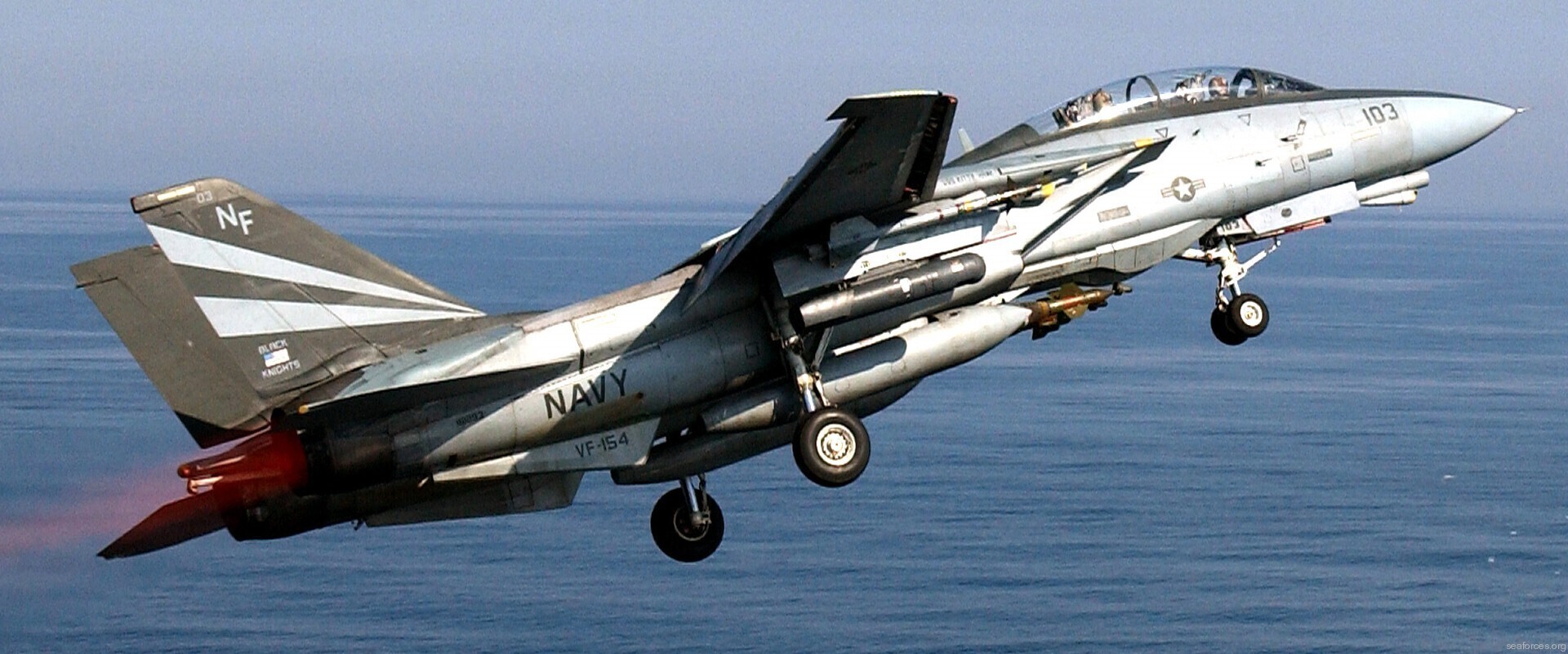
AN/AXX-1 Television Camera Set (TCS)
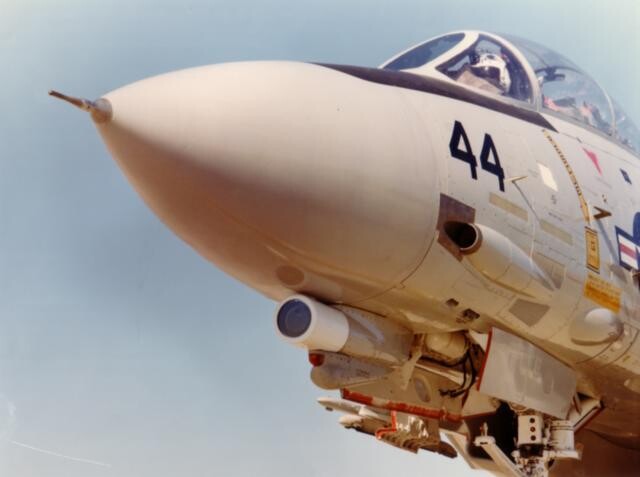
One of the F-14's key features was its advanced AN/AWG-9 radar and its overwhelming long-range interception capability, thanks to the AIM-54 Phoenix missile with a range of over 100 nautical miles (approximately 185 km). However, how could pilots distinguish between enemy aircraft, civilian aircraft, and friendly aircraft based on the blips appearing on the radar screen? The AN/AXX-1 Television Camera Set (TCS) resolved this fundamental dilemma in beyond-visual-range (BVR) combat.
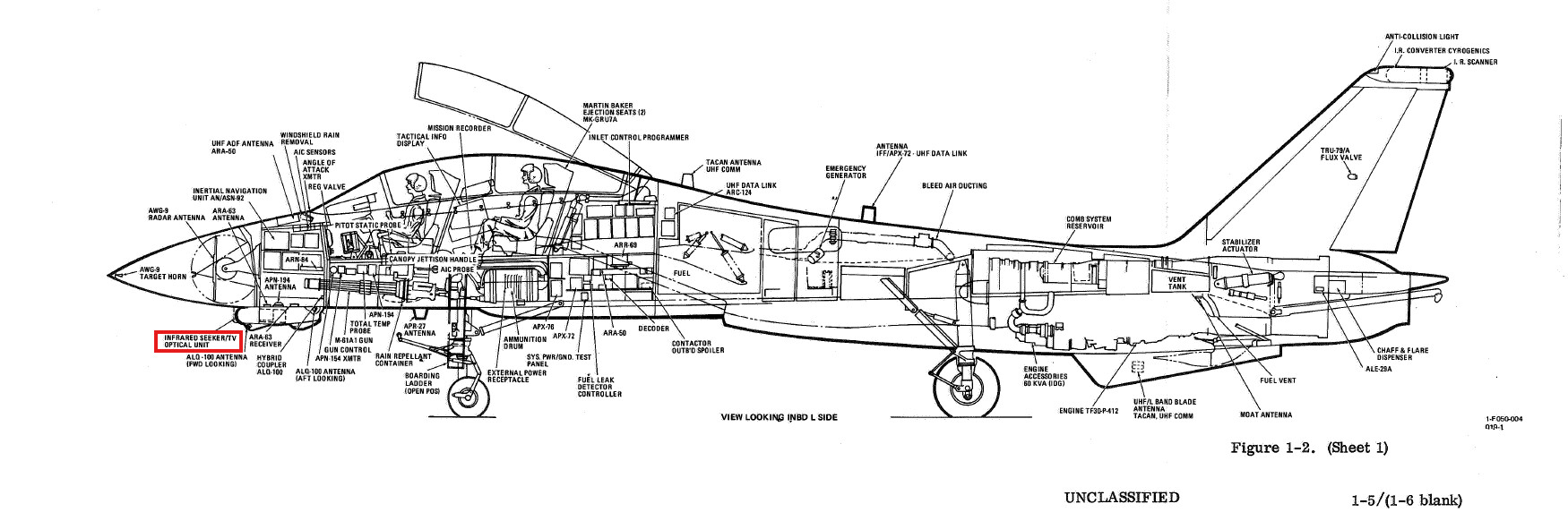
The idea for the TCS seems to date back to around 1972, during the F-14A prototype’s extensive testing phase. Evidence is found in the very first F-14A manual, the NAVAIR-01-F14A-1 Preliminary Flight Manual, which mentions a “TV Seeker” located in the chin pod along with the IR seeker (IRST).
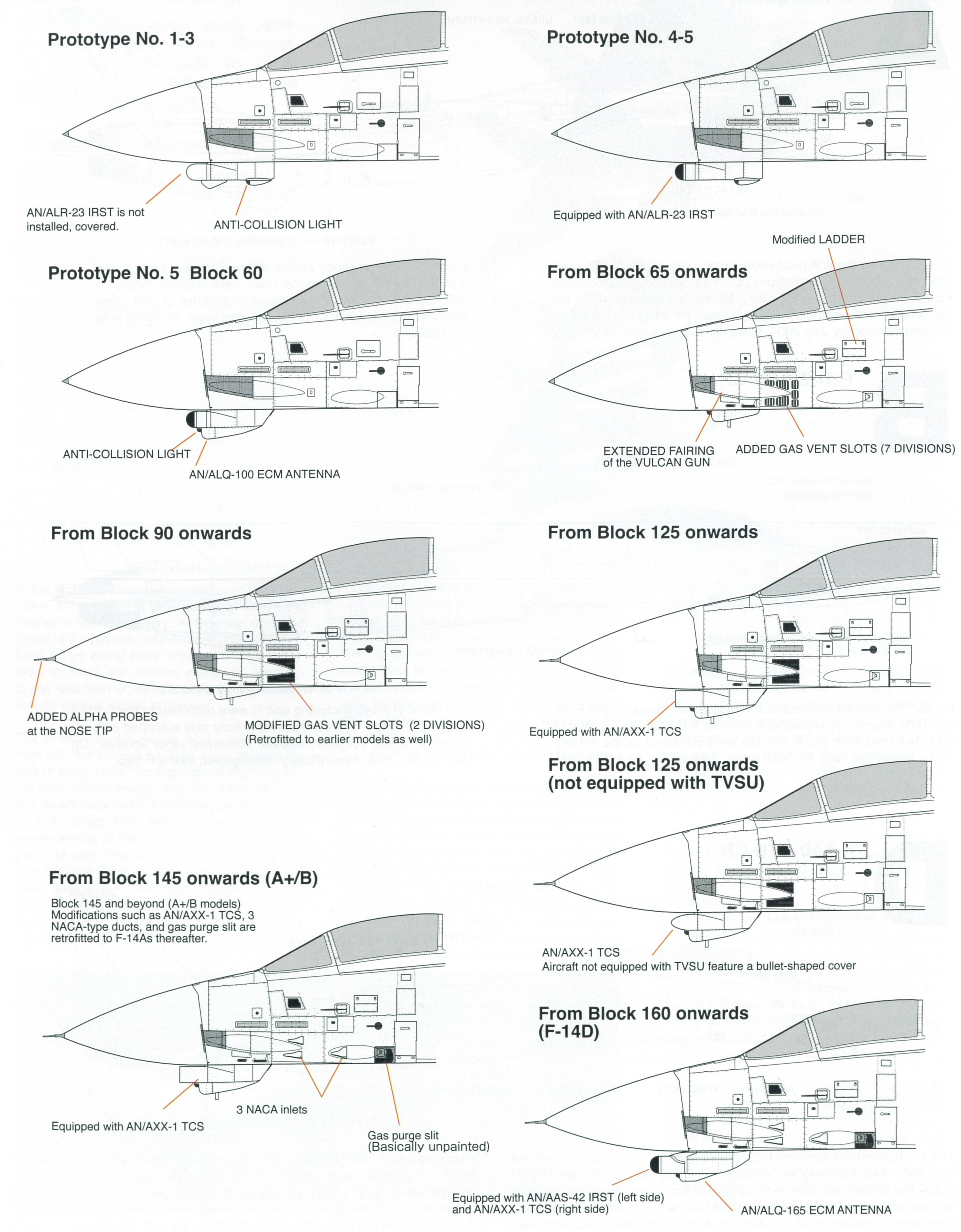
Nevertheless, when the mass-produced F-14As were handed over to the fleet, they were not fitted with the TCS. In its place, the AN/ALR-23 IR seeker was installed. Proving to be a constant source of trouble for maintainers and already outdated for the era, this IR seeker was slated for rapid removal from service. Even as late as 1975, an IR seeker was installed on a production aircraft destined for the Imperial Iranian Air Force, BuNo 160229, but it had been removed by the time it was delivered. In the end, the F-14A fleet went through its entire service life without receiving an operational IR seeker. The arrival of an advanced IRST would have to wait for the F-14D.
The integration of the TCS onto the F-14 marked a major leap forward in target identification capabilities, even though the system itself was virtually identical to the TISEO used on late-model F-4Es. This advanced capability was put to the test during the ACEVAL/AIMVAL program of 1974-1978, where it proved instrumental in long-range visual identification. The successful validation of the system in these trials paved the way for its fleet-wide deployment, which began on 1 September 1982 with the AFC 670 program. From that point on, F-14As featuring the TCS started to appear gradually, but the rollout was not universal; due to limited numbers, airframes that did not receive the system were fitted with a simple fairing in its place.
The TCS proved its critical value in combat on January 4, 1989, during the Gulf of Sidra incident. Over the southern Mediterranean, F-14A crews used the system to identify two hostile Libyan Air Force MiG-23s, confirming they were armed. This positive identification led to the engagement, where they ultimately downed both 'Floggers' using AIM-7 and AIM-9.
Detailed technical specifications for the TCS are provided in MIL-C-85437B, “CAMERA SET, TELEVISION, AN/AXX-1,” issued in 1989. Notably, this document has been cleared for public release under Distribution Statement A, making it freely available without access or export restrictions.
Tactical Airborne Reconnaissance Pod System (TARPS)
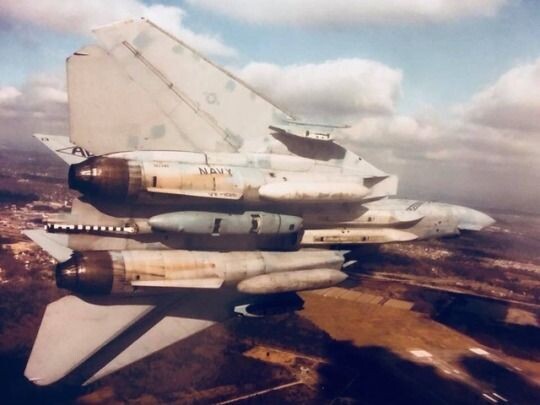
During the 1970s and 1980s, the U.S. Navy’s carrier air wings were on the verge of losing their 'eyes' due to the successive retirements of specialized platforms like the RF-8G Crusader and RA-5C Vigilante.
Adapting the F-14 for the TARPS role entailed several modifications. Notably, as I understand it, the ability to launch an AIM-7 from weapon station 5 was eliminated. However, the aircraft retained its full air-to-air capability on the wing pylons, allowing it to carry a mix of AIM-7, AIM-9, and AIM-54 missiles. This unique ability to perform reconnaissance without sacrificing its potency as a fighter was a key reason why the F-14 was selected as the TARPS platform.
The TARPS pod itself was eventually upgraded as well. A significant step came in September 1995, when plans were announced to test a digital camera system for the F-14. In a remarkably short timeframe, VF-32 had modified an F-14, integrated the new pod, and completed all testing by June 1996, just seven months later. This new system, designated TARPS DI (Digital Imagery), replaced the old KS-87 film camera with a digital one featuring both vertical and forward-looking viewfinders. When an image was captured and stored on a solid-state device, the RIO could choose to transmit it near-instantly to commanders for immediate analysis and potential action, store it for later review, or simply download the entire mission’s data upon returning to the carrier. Immediate transmission occurred over UHF radio, taking 30 to 180 seconds per image at ranges up to 175 nautical miles.
Transferring reconnaissance imagery was a considerable challenge before the introduction of the new digital system. During the 1991 Gulf War, for instance, a TARPS mission flown by an F-14 was far from over upon landing on the carrier. To provide ground commanders with the most up-to-date intelligence, the developed TARPS film was then flown by an S-3 Viking and physically dropped over their positions.
As a result of this reconnaissance role, Tomcats adapted to carry the TARPS pod earned the moniker 'Peeping Tom'.
Expanded Chaff Adapter (ECA)
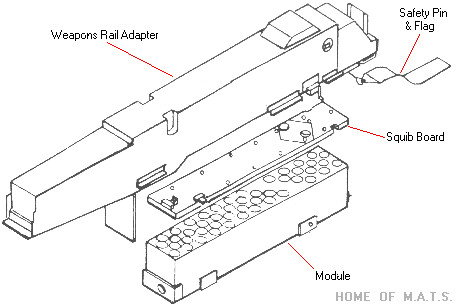
The Expanded Chaff Adapter (ECA), more commonly known in the fleet as the ECA Rail, was an adapter with an integrated chaff and flare dispenser, developed to augment the F-14's self-defense systems. It was introduced in the 1980s to address concerns that the aircraft’s standard countermeasure payload was inadequate for high-threat missions.
The ECA Rail housed a single unit of the AN/ALE-37 dispenser (identical to the one on the in-game AV-8A Harrier), providing an additional 120 rounds. A typical loadout consisted of 90 chaff cartridges forward and 30 flare cartridges aft.
Despite its advantages, the ECA Rail saw limited use. Its critical drawback was that it took up a valuable Phoenix pylon on the fuselage. This created a problem with the coolant lines for the AIM-54 missile, rendering the Phoenix unusable and ultimately leading to the system being infrequently employed.
LGB + LANTERN, PTID, BOL, RWR upgrades
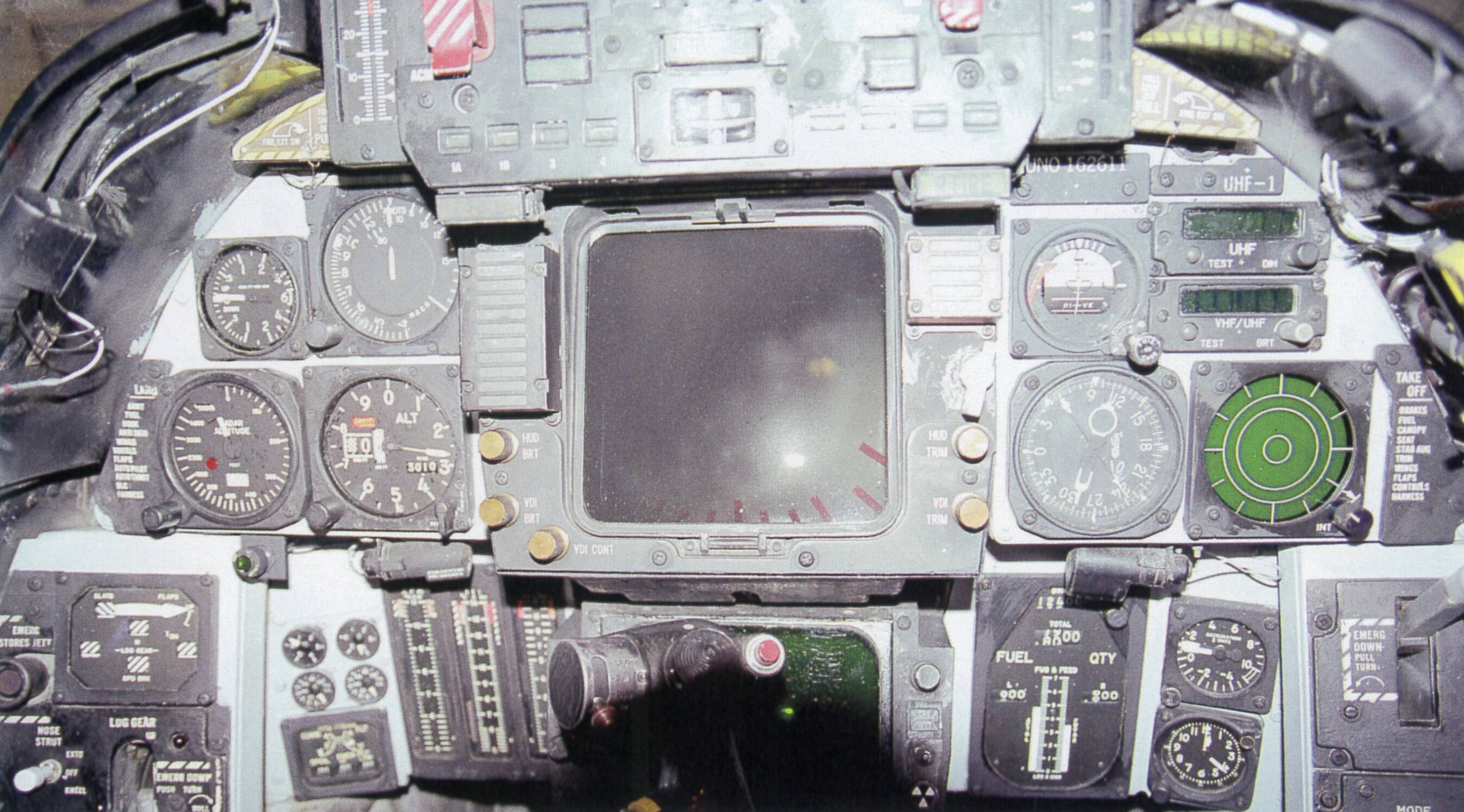
In the game, the F-14B is positioned as a direct upgrade to the F-14A (Early), featuring a superior RWR (Radar Warning Receiver) and more capable air-to-ground loadouts. It is worth noting, however, that in reality, late service F-14As also received the majority of these upgrades, with the exception of JDAM (Joint Direct Attack Munition) capability.
Following the Gulf War, the 1970s to 1980s-era F-14A fleet faced a dual challenge. It was aging and lacked the multi-role flexibility of the newer F/A-18 Hornets. Compounding this, a new directive from the Navy and Congress slated all non-TARPS (Tactical Airborne Reconnaissance Pod System) capable squadrons for dissolution. This policy accelerated the fleet’s consolidation, forcing the remaining squadrons to either upgrade to the F-14B/D, transition to the F/A-18E/F Super Hornet, or be disestablished.
However, the handful of F-14A squadrons that remained were subsequently slated for a series of upgrades. Central to this effort was the integration of the LANTIRN targeting pod.
This modernization represented a comprehensive upgrade of the F-14's combat systems, enhancing both its offensive and defensive capabilities. For precision strike missions, the new Programmable Tactical Information Display (PTID) was installed in the cockpit, providing crystal-clear visualization of data from the LANTIRN targeting pod. Simultaneously, the aircraft’s survivability was revolutionized. The legacy AN/ALR-45 RWR gave way to the modern AN/ALR-67 for superior threat warning. To defeat those detected threats, the F-14s were retrofitted with the Saab BOL system, a sophisticated countermeasures dispenser integrated directly into the missile rails that drastically increased its defensive payload.
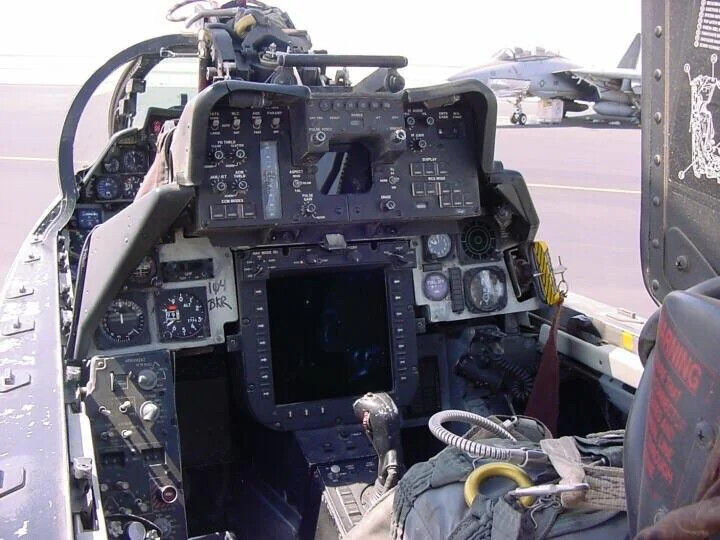
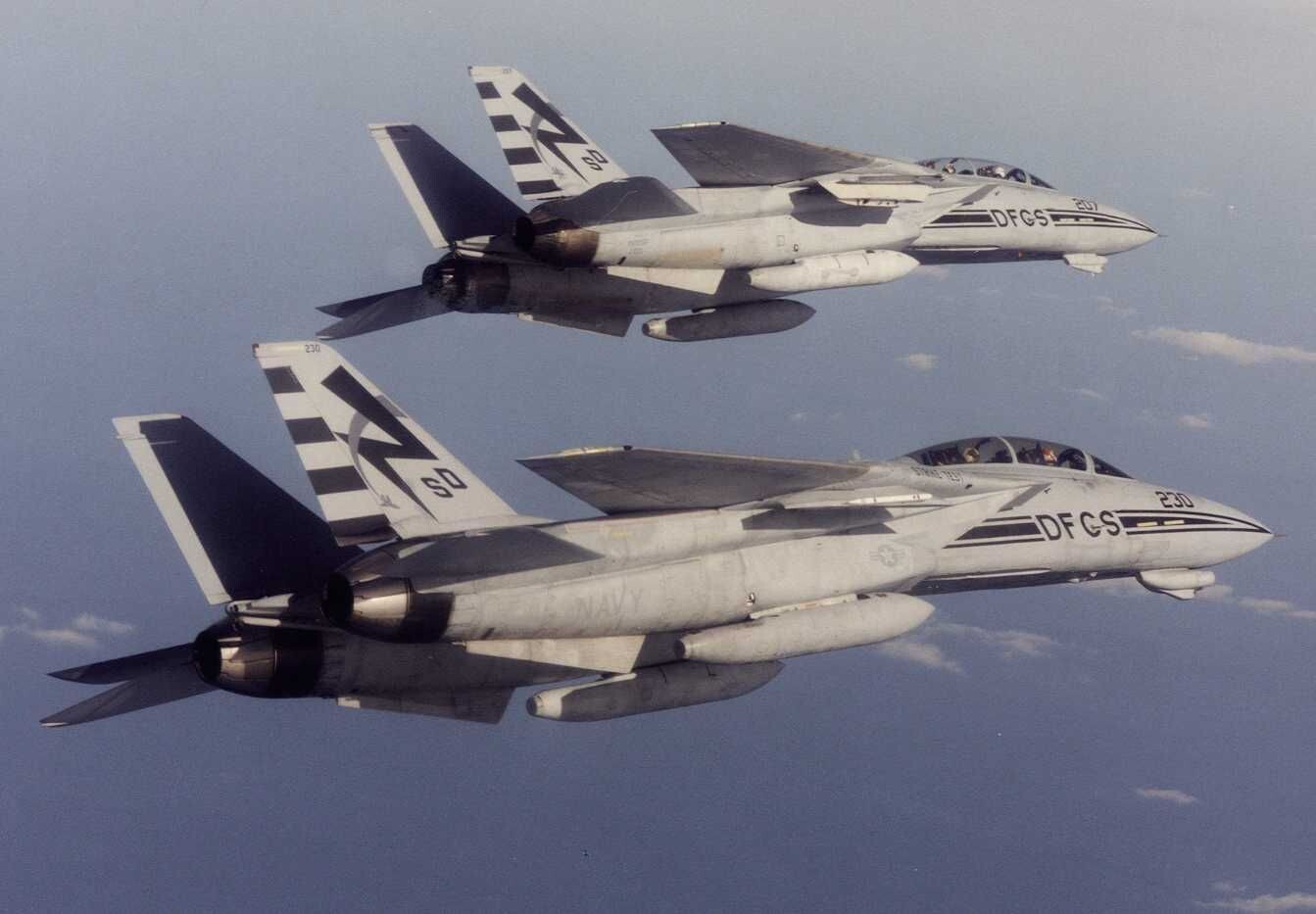
The 60 F-14As received these upgrades and were assigned to squadrons stationed at NAS Oceana and NAF Atsugi.
- VF-14 Tophatters (1973-2001)
- VF-41 Black Aces (1976-2001)
- VF-154 Black Knights (1984-2003)
- VF-211 Fighting Checkmates (1975-2004)
The VF-14 'Tophatters' were the first squadron to receive these upgrades, a fact that is documented in their command history from 1998.

This upgrade was eventually rolled out to remaining F-14A squadrons, excluding the Fleet Replacement Squadron, VF-101 'Grim Reapers'. This suite of modifications would mark the final and most significant modernization for the F-14A variant.
Digital Flight Control System (DFCS)
Since its introduction in the early 1970s, the F-14 Tomcat suffered numerous, well-documented losses from departures from controlled flight, particularly during high-AOA maneuvering and carrier landing mishaps. The aircraft had a tendency to rapidly develop excessive yaw rates during high-energy launches, while its handling qualities in the landing configuration complicated carrier approaches. DFCS was developed to replace the legacy AFCS and autopilot across the F-14A/B/D fleet, leveraging the existing hydro-mechanical flight controls. A key feature of the DFCS was its aileron-rudder interconnect logic, which greatly dampened Dutch roll tendencies and gave pilots finer nose-azimuth control during the critical landing phase.
This upgrade also dramatically expanded the F-14A’s safety margins. It helped prevent departures into the dangerous flat spins and mitigated the high AoA conditions that frequently led to compressor stalls, a well-known vulnerability of the A-model. The direct result was a significant reduction in related accidents.
References
- NAVAIR 01-F14A-1 — F-14 Preliminary Flight Manual (1972)
- NAVAIR 00-110AF14-1 Standard Aircraft Characteristics NAVY MODEL F-14A AIRCRAFT (1977)
- NAVAIR 01-F14AAA-1 - NATOPS Flight Manual NAVY MODEL F-14A AIRCRAFT(1975)
- MIL-C-85437B — CAMERA SET, TELEVISION, AN/AXX-1 (1989)
- N88-NTSP-A-50-8511B/A — APPROVED NAVY TRAINING SYSTEM PLAN FOR THE F-14A, F-14B, AND F-14D AIRCRAFT (2000)
- ADA294267 — F-14 Flight Control Law Design, Verification, and Validation Using Computer Aided Engineering Tools (1995)
- ADA309772 — F-14 LANTIRN FLIGHT TESTING — THE CAT IS BACK!! (1996)
- VF-14 Tophatter’s command history (1998-1999)
- F-14 Tomcat Pilot’s Flight Operating Manual Vol. 1
- F-14 Tomcat Pilot’s Flight Operating Manual Vol. 2
- Uncovering the Grumman F-14 A/B/D Tomcat
- HOME OF M.A.T.S.