
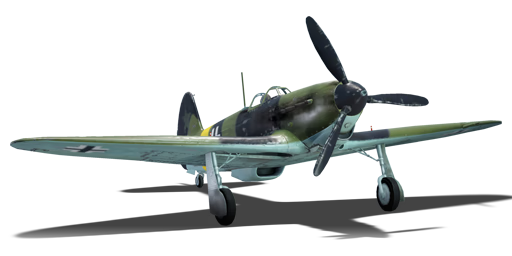
▀Yak-1B



The Yakovlev Yak-1B is a Soviet single-engine fighter aircraft used during World War II. Numerous aerodynamic and structural improvements were made to this aircraft to increase its speed and reliability. The new Yak also had reinforced armor and improved armament, as well as a lowered nose and a canopy with increased rearward visibility. Production of the new model began in September 1942, and soon the Yak-1B eventually replaced the original Yak-1 entirely.
The 3rd Fighter Air Wing, commanded by E. Savitsky, was re-equipped with the new fighter and, in 1943, transferred to participate in the battles for the Kuban. However, on April 17, 1943, the navigator of the leading Pe-2 lost orientation, leading the Yak-1B squadron to Taganrog, a city captured by the Germans, instead of Rostov. The mistake was discovered when the first three planes landed at the airfield and were met with anti-aircraft fire. Due to a lack of ammunition, the remaining fighters were unable to cover the planes that had already landed and could only make their own escape. Meanwhile, the landed aircraft were captured. One of the planes burned down during the shootout on the ground. Later, the Germans used the captured Yaks for disorientation, reconnaissance, and surprise attacks, which eventually caused the soviets to hunt them down.
The German Yak-1B was introduced in Update 1.43. It is an average all-rounder at low altitudes. But thanks to its average characteristics, the Yak can adapt to any opponent and their specific weaknesses, which is an important advantage in the hands of experienced pilots. This fighter also has commendable responsiveness across the entire speed range. Its disadvantages include a low maximum speed, average armament, and a small ammunition load.

flaps
flaps
flaps
brake
| Belt | Belt filling | Armor penetration (mm) at a distance: | |||||
|---|---|---|---|---|---|---|---|
| 10 m | 100 m | 500 m | 1000 m | 1500 m | 2000 m | ||
| FI-T/AP-I | 28 | 24 | 14 | 7 | 4 | 2 | |
| FI-T/HEF/AP-I/FI-T | 28 | 24 | 14 | 7 | 4 | 2 | |
| HEF/FI-T/AP-I | 28 | 24 | 14 | 7 | 4 | 2 | |
| FI-T | 4 | 4 | 4 | 4 | 4 | 4 | |
| AP-I/FI-T/AP-I/AP-I | 28 | 24 | 14 | 7 | 4 | 2 | |
| AP-I/HEF/HEF/FI | 28 | 24 | 14 | 7 | 4 | 2 | |
| Belt | Belt filling | Armor penetration (mm) at a distance: | |||||
|---|---|---|---|---|---|---|---|
| 10 m | 100 m | 500 m | 1000 m | 1500 m | 2000 m | ||
| T/AP/AP/IAI | 32 | 30 | 22 | 15 | 11 | 7 | |
| AP-I/API-T/IAI/IAI | 29 | 27 | 20 | 13 | 8 | 6 | |
| API-T/AP-I/AP-I/IAI | 29 | 27 | 20 | 13 | 8 | 6 | |
| AP-I(c)/AP-I/AP-I/API-T/IAI | 34 | 32 | 24 | 17 | 12 | 8 | |
| API-T | 29 | 27 | 20 | 13 | 8 | 6 | |
| AP-I/AP-I/IAI | 29 | 27 | 20 | 14 | 9 | 6 | |

 2 x (55 / 125 / 235) %
2 x 130 %
2 x (55 / 125 / 235) %
2 x 130 %
Flight performance | |
|---|---|
Survivability |
|---|
Weaponry |
|---|