
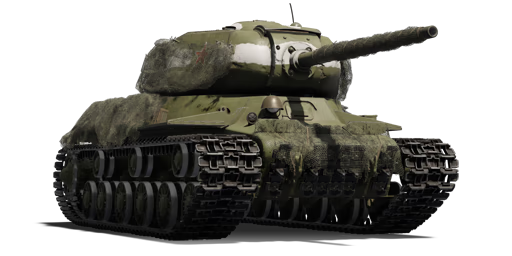
IS-1 ('45)


The IS-1 is a Soviet heavy tank developed in 1943. It was based on the KV-13 experimental tank. From October 1943 to January 1944, the IS with an 85 mm gun was mass-produced, with a total of 107 vehicles produced. The IS-1 was an important, albeit short-lived, stage in the development of Soviet heavy tanks. It was later replaced in production by the IS-2, which had a 122 mm gun and improved armor. While in service with the Red Army, IS tanks were used as breakthrough tanks during the Great Patriotic War. They played an important role in the 1944–1945 battles, especially during the assault on cities.
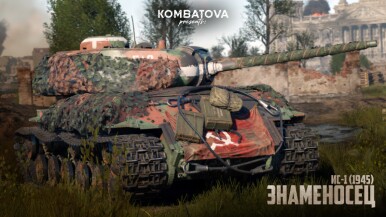
The IS-1 ('45) was introduced in Update 2.47 "Leviathans". It is a composite image of Soviet tanks from the end of the war. During the Berlin operation, all Red Army tanks were marked with quick-recognition stripes. The barrel of this tank is decorated with marks indicating the destruction of five enemy vehicles. There is a camouflage net in some places, as well as boxes and soldiers' personal belongings on the hull.
The tank's decent mobility allows it to actively participate in offense, supporting allies with fire from its rapid-firing 85 mm gun. The IS-1's hull armor can withstand many enemy shells, and the vehicle is further reinforced with tracks. However, the tank's turret is much less well protected. Combined with the tight layout of the crew, this increases the risk of losing the vehicle after the first hit.

| Ammunition | Type | Armor penetration (mm) at a distance: | |||||
|---|---|---|---|---|---|---|---|
| 10 m | 100 m | 500 m | 1000 m | 1500 m | 2000 m | ||
| APHE | 148 | 143 | 126 | 106 | 90 | 77 | |
| HE | 19 | 18 | 17 | 16 | 15 | 14 | |
| APHEBC | 135 | 133 | 124 | 114 | 104 | 95 | |
| APCR | 195 | 187 | 154 | 122 | 96 | 76 | |
| Belt | Belt filling | Armor penetration (mm) at a distance: | |||||
|---|---|---|---|---|---|---|---|
| 10 m | 100 m | 500 m | 1000 m | 1500 m | 2000 m | ||
| AP-I/API-T | 13 | 12 | 7 | 3 | 2 | 0 | |


 2 x (95 / 145 / 160) %
2 x 154 %
2 x (95 / 145 / 160) %
2 x 154 %
Mobility | |
|---|---|
Protection |
|---|
Firepower | |
|---|---|