
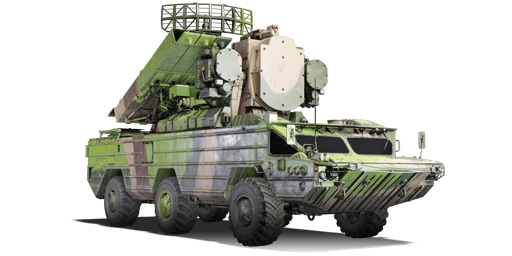
▄Osa-AK




The Osa-AK (9K33M2) is a Soviet mobile surface-to-air missile system, developed by NII-20 in 1973 as an improvement over the base Osa (9K33), and later accepted for service in 1975. This variant would later be followed by the Osa-AKM (9K33M2), which entered service in 1980.
As a military ally of India, the USSR delivered approximately 80 Osa-AK systems in the late 1980s. The system served with the 436th Anti-Aircraft Missile Regiment of the Indian Army. As of 2025, at least 50 Osa-AK systems are still in service with the Indian Army, with plans to gradually replace them with the domestically developed Anant Shastra SAM system.
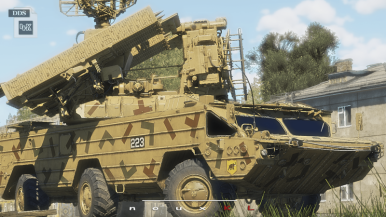
The Indian Osa-AK was introduced in Update 2.41 "Firebirds" as part of the British tech tree. Aside from visual differences, it is functionally identical to its Soviet counterpart. The Osa-AK can reliably engage manoeuvring aerial targets at ranges of up to 10 km and is capable of guiding two missiles onto a single target simultaneously. Thanks to its wheeled chassis, the Osa-AK enjoys excellent mobility, allowing it to take up unexpected positions against enemy aircraft. However, the vehicle has a large silhouette, no meaningful armour protection, and its missiles are mounted at an upward angle, leaving it virtually incapable of engaging ground targets.

| Ammunition | Type | Armor penetration (mm) at a distance: | |||||
|---|---|---|---|---|---|---|---|
| 10 m | 100 m | 500 m | 1000 m | 1500 m | 2000 m | ||
| SAM | 60 | 60 | 60 | 60 | 60 | 60 | |


 ▄Osa-AK
Mobility | |
|---|---|
Protection |
|---|
Firepower | |
|---|---|