NASAMS 3 (TADS)
Basic unit

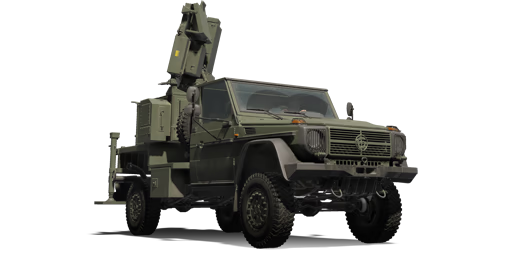




In the 1980s, Norway began developing a new anti-aircraft missile system to replace its outdated Improved Hawk systems. Kongsberg Defence & Aerospace, a Norwegian company, collaborated with Raytheon Missiles & Defense, an American company, on the project.
The concept of the Norwegian Advanced Surface-to-Air Missile System (NASAMS) is based on extensive standardization. This has reduced costs and accelerated the development of the system. The AIM-120 AMRAAM air-to-air missile with active radar homing was chosen, and a towed launcher that can hold six containers was developed for use from the ground. The upgraded AN/MPQ-64 Sentinel radar provided target detection and guidance.
Live-fire tests of the system were conducted in June 1993. The first production version, NASAMS 1, reached initial operational capability in late 1994 or early 1995. It was delivered to the Norwegian Air Force, and full deployment was completed by 1998. The system was later upgraded to NASAMS 2, featuring improved control systems and Link 16 capability. The next development in this line was NASAMS 3, introduced in 2019. It is capable of using AIM-9X Sidewinder Block II missiles with infrared homing heads, as well as AMRAAM-ER missiles with an extended range.
The Norwegian NASAMS 3 (TADS) was introduced in Update 2.53 "Line of Contact", as a part of the Swedish ground research tree. The NASAMS system consists of three components: The Target Acquisition and Designation Sight (TADS) and two Transporter Erector Launchers (TEL) with missiles. The Sentinel radar can detect targets up to 20 km away. However, the TADS vehicle has weak protection against shrapnel and carries no weapons. Therefore, special attention should be paid to camouflaging it before use, as the whole system is considered disabled if the radar is destroyed.


 NASAMS 3 (TADS)
Mobility | |
|---|---|
Protection |
|---|
Firepower | |
|---|---|