
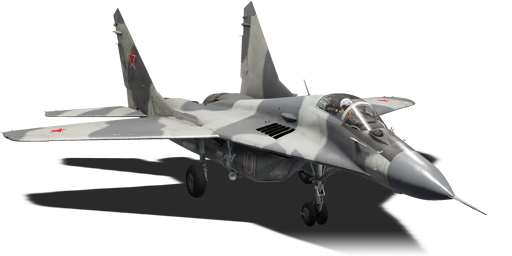



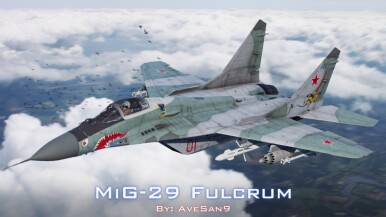
By the late 1960s, the Soviet Air Force had concluded that it needed to develop a new fighter aircraft in order to establish air superiority and not fall behind the United States. While they were developing the F-15, TsAGI and the Sukhoi Design Bureau were busy creating a similar aircraft: the Su-27. However, in 1971, doing what the US would do with the future F-16, they decided to create a lightweight fighter to complement it. The Su-27 was intended for long-range missions, while the "Light Frontline Fighter" was meant to replace the MiG-23 and comprise two-thirds of the fighter fleet. The MiG Design Bureau began developing the new aircraft in 1974 and designated it the MiG-29. It made its first flight on October 6, 1977. The Mikoyan Design Bureau created a fighter capable of operating from unprepared frontline airfields. It possessed high maneuverability and speed and was easy to maintain. Due to its intended role, however, it had a short range and had to be guided directly to the enemy from ground control stations.
By 1982, six prototypes and eight aircraft from the initial production batch had been built. In July 1983, the first MiG-29 (Product 9-12) deliveries to combat units began. Production continued until 1986, when it was replaced by the MiG-29 9-13. By early 1992, approximately 300 early production aircraft remained in service with the Russian Air Force, as with the USSR dissolution some countries recieved former soviet aircraft; however, production of more modern variants continued. All 9-12 and 9-13 models were withdrawn from service with the Russian Air Force by 2016.
The MiG-29 (9-12) was introduced in Update 2.55, "Ninth Wave". As an early model, the 9-12 lacks the more advanced air-to-air missiles found on later versions. Nevertheless, it retains its high top speed, excellent dynamics, and good maneuverability. It also has a good radar and HMS that allow it to effectively guide short- and medium-range air-to-air missiles. Conversely, the aircraft lacks effective armament for engaging ground targets, and R-60M missiles can be easily evaded by flares.

flaps
flaps
flaps
brake
| Belt | Belt filling | Armor penetration (mm) at a distance: | |||||
|---|---|---|---|---|---|---|---|
| 10 m | 100 m | 500 m | 1000 m | 1500 m | 2000 m | ||
| AP-T/HEF-I | 55 | 53 | 45 | 37 | 31 | 25 | |
| AP-T/HEF-I/APHE/HEF-I | 55 | 53 | 45 | 37 | 31 | 25 | |
| AP-T/APHE | 55 | 53 | 45 | 37 | 31 | 25 | |
| AP-T/HEF-I/HEF-I | 55 | 53 | 45 | 37 | 31 | 25 | |
| APHE/HEF-I/HEF-I | 42 | 40 | 34 | 28 | 23 | 19 | |
| Name | Weight | Slot | ||||||
|---|---|---|---|---|---|---|---|---|
| 43.5 kg |  | | | | | | ||
| 44 kg |  | | | | | | ||
| 20 × | 376 kg |  | | | | |||
| 235 kg |  | | | | ||||
| 4 × | 456 kg |  | | | | |||
| 227 kg |  | | | | ||||
| 2 × | 454 kg |  | | | | |||
| 236 kg |  | | | | ||||
| 2 × | 472 kg |  | | | | |||
| 275 kg |  | | | | ||||
| 2 × | 550 kg |  | | | | |||
| 515 kg |  | | | | ||||
| 508.3 kg |  | | | | ||||
| 478 kg |  | | | | ||||
| 374 kg |  | | | | ||||
| 253 kg |  | | ||||||
| 350 kg | | | ||||||
| 245.5 kg |  | | ||||||
| 2 × | 1,030 kg |  | | |||||
| 2 × | 1,016.6 kg |  | | |||||
| 2 × | 956 kg |  | | |||||
| Drop tank (1520 liters) | 116 kg |  | ||||||


Flight performance | |
|---|---|
Survivability |
|---|
Weaponry | |||
|---|---|---|---|