
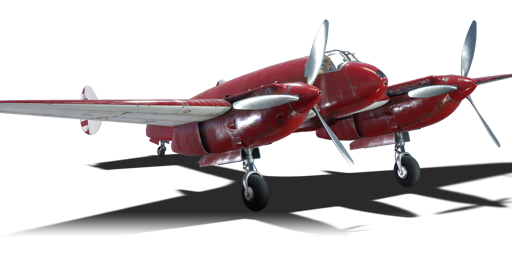
I-29


The I-29 was a Soviet heavy fighter aircraft developed in the early 1940s. In 1938, the Yakovlev Design Bureau began developing a twin-engine aircraft that could be produced in three variants: fighter, bomber, and reconnaissance. The fighter variant was the priority for the Bureau and was equipped with powerful armaments, including two ShVAK cannons under the fuselage and three ShKAS machine guns. As early as January 1939, an unarmed prototype, "Aircraft 22", demonstrated excellent speed and altitude performance in its first flight. However, since bomber aircraft were a higher priority for the Soviet Air Force, "Aircraft 22" was redesigned into the Yak-2 and Yak-4 bombers. The fighter variant did not receive support from the Air Force and was developed solely by the Design Bureau. Designated the I-29, it made its maiden flight in December 1940. At that time, the unreliability of the M-105 engines and other minor shortcomings became apparent. However, there were no funds for further development of the I-29. Yakovlev was busy developing the more promising Yak-1. The testing program stagnated until 1942, when it was canceled with the introduction of the Pe-3 heavy fighter.
The I-29 was introduced as a reward during 2017 War Thunder's 5th anniversary event. It is a fast, heavy fighter with a good climb rate, powerful armament, and good maneuverability relative to other twin-engine aircraft. Dogfights against single-engine aircraft, can be difficult for this plane. Its survivability is low due to the lack of a pilot’s armor glass, its large size, and its wooden construction.

flaps
flaps
flaps
brake
| Belt | Belt filling | Armor penetration (mm) at a distance: | |||||
|---|---|---|---|---|---|---|---|
| 10 m | 100 m | 500 m | 1000 m | 1500 m | 2000 m | ||
| FI-T/AP-I | 28 | 24 | 14 | 7 | 4 | 2 | |
| FI-T/HEF/AP-I/FI-T | 28 | 24 | 14 | 7 | 4 | 2 | |
| HEF/FI-T/AP-I | 28 | 24 | 14 | 7 | 4 | 2 | |
| FI-T | 4 | 4 | 4 | 4 | 4 | 4 | |
| AP-I/FI-T/AP-I/AP-I | 28 | 24 | 14 | 7 | 4 | 2 | |
| AP-I/HEF/HEF/FI | 28 | 24 | 14 | 7 | 4 | 2 | |
| Belt | Belt filling | Armor penetration (mm) at a distance: | |||||
|---|---|---|---|---|---|---|---|
| 10 m | 100 m | 500 m | 1000 m | 1500 m | 2000 m | ||
| T/Ball/Ball/AP-I/AI | 13 | 12 | 7 | 3 | 2 | 0 | |
| AP-I/AI/API-T | 13 | 12 | 7 | 3 | 2 | 0 | |
| AP-I/API-T | 13 | 12 | 7 | 3 | 2 | 0 | |
| AP-I/AP-I/AP-I/AI | 13 | 12 | 7 | 3 | 2 | 0 | |


 2 x (30 / 60 / 120) %
2 x 112 %
Flight performance | |
|---|---|
Survivability |
|---|
Weaponry |
|---|