
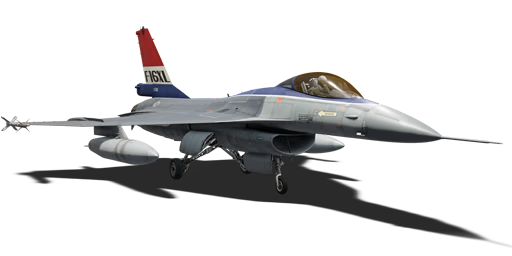
F-16XL

Following the success of the F-16, General Dynamics began exploring ways to increase the fighter jet's range and payload capacity without compromising its core strengths. In 1977, the company started working on the SCAMP (Supersonic Cruise and Maneuver Prototype) project under Harry Hillaker's leadership. One of the project's key objectives was to improve the aircraft's performance at supersonic speeds. During development, General Dynamics drew on NASA research and moved away from the original wing design of the F-16. They replaced it with a cranked-arrow wing similar to the Swedish J35's, which had a larger surface area and greater internal volume. This design allowed for larger internal fuel tanks and additional weapon hardpoints.
Subsequently, the project was designated the F-16XL, and two F-16 aircraft—an F-16A and an F-16B—were converted for testing. The first prototype made its maiden flight on July 3, 1982, followed by the two-seat prototype on October 29 of the same year. In 1981, General Dynamics proposed the F-16XL for the Enhanced Tactical Fighter program, through which the U.S. Air Force sought a replacement for the F-111. However, the McDonnell Douglas F-15E Strike Eagle was selected. Following the competition, both prototypes were placed in storage before being transferred to NASA in the late 1980s for research into supersonic flight, wing aerodynamics, and shockwave propagation.
The F-16XL was introduced as a reward for the 2026 "Space Program" event. The aircraft stands out for its large selection of suspended weapons and extended flight range. It retains the high speed, maneuverability, and other advantages of the original F-16A.

flaps
flaps
flaps
brake
| Belt | Belt filling | Armor penetration (mm) at a distance: | |||||
|---|---|---|---|---|---|---|---|
| 10 m | 100 m | 500 m | 1000 m | 1500 m | 2000 m | ||
| HEF-I/API-T/AP-I/SAPHEI | 40 | 36 | 21 | 11 | 6 | 3 | |
| HEF-I/HEF-I/API-T/HEF-I/HEF-I/AP-I | 40 | 36 | 21 | 11 | 6 | 3 | |
| HEF-I/AP-I/AP-I/SAPHEI | 40 | 36 | 21 | 11 | 6 | 3 | |
| SAPHEI | 37 | 33 | 20 | 11 | 6 | 4 | |
| Name | Weight | Slot | ||||||||||||
|---|---|---|---|---|---|---|---|---|---|---|---|---|---|---|
| 84.5 kg |  | | ||||||||||||
| 240.9 kg |  | | | | | | | | ||||||
| 210.5 kg |  | | | | | | ||||||||
| 893.6 kg |  | | | | ||||||||||
| Drop tank (370 gal.) | 100 kg |  | | |||||||||||
| 4 × | 963.6 kg | 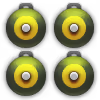 | | |||||||||||
| 2 × | 313 kg | 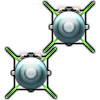 | ||||||||||||
| 4 × | 626 kg | 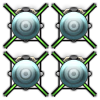 | ||||||||||||


Flight performance | |
|---|---|
Survivability |
|---|
Weaponry | |
|---|---|
