
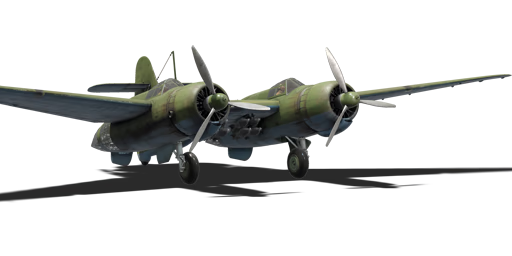
DB-LK



The Belyayev DB-LK was an experimental bomber aircraft developed by Viktor Nikolayevich Belyayev for the Soviet Air Force in 1939. The DB-LK's unusual design, featuring a twin-boom fuselage on a large "bat wing", was a result of Belyayev's research to create an aircraft that maximised payload capacity and range. Due to its promising design, the DB-LK caught the attention of the Soviet Air Force, and various changes, often conflicting, were made. These ranged from dive-bombing capabilities and an internal bomb bay to a complex remote-controlled turret at the front and a conical swivel turret at the rear.
The sole prototype of the DB-LK made its first flight in early 1940, and it was chosen as one of the aircraft to be flown over the Red Square during the May Day parade on 1 May. Following further testing later that year, many design flaws became apparent. Chief among these were a rear-heavy centre of gravity that resulted in long take-off runs and hampered the aircraft's flight characteristics, as well as poor cockpit visibility for both pilots. Because of this, and the fact that the DB-LK was inferior to the conventional DB-3 and Pe-2 bombers in terms of range and efficiency, the DB-LK programme was cancelled, and the prototype was destroyed in October 1941 to avoid capture by the Germans.
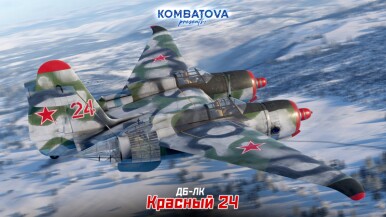
Introduced in Update 2.53 "Line of Contact", the DB-LK is one of the most unusual aircraft in terms of appearance. Designed to maximise payload capacity, the DB-LK features bombs of varying size, ranging from numerous smaller bombs for base and carpet bombings to a pair of 1,000 kg bombs for close air support. However, due to a combination of underpowered engines and an awkward centre of gravity, the DB-LK struggles to take off, especially with a heavy payload, in addition to being quite slow and sluggish overall. Despite the seemingly impressive defensive armaments, the DB-LK has numerous blind spots that can be easily exploited, especially directly behind the tail.

flaps
flaps
flaps
brake
| Belt | Belt filling | Armor penetration (mm) at a distance: | |||||
|---|---|---|---|---|---|---|---|
| 10 m | 100 m | 500 m | 1000 m | 1500 m | 2000 m | ||
| T/Ball/Ball/AP-I/AI | 13 | 12 | 7 | 3 | 2 | 0 | |
| AP-I/AP-I/AP-I/API-T | 13 | 12 | 7 | 3 | 2 | 0 | |
| API-T/API-T/API-T/AI | 9 | 8 | 6 | 3 | 0 | 0 | |
| Belt | Belt filling | Armor penetration (mm) at a distance: | |||||
|---|---|---|---|---|---|---|---|
| 10 m | 100 m | 500 m | 1000 m | 1500 m | 2000 m | ||
| T/Ball/Ball/AP-I/AI | 13 | 12 | 7 | 3 | 2 | 0 | |
| AP-I/AP-I/AP-I/API-T | 13 | 12 | 7 | 3 | 2 | 0 | |
| API-T/API-T/API-T/AI | 9 | 8 | 6 | 3 | 0 | 0 | |
| Name | Weight | Slot | ||||
|---|---|---|---|---|---|---|
| 8 × | 398.1 kg |  | | |||
| 8 × | 828 kg |  | | |||
| 5 × | 517.5 kg | 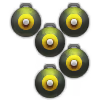 | | |||
| 2 × | 504.4 kg | 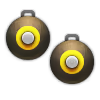 | | | | |
| 2 × | 480 kg |  | | | | |
| 4 × | 199 kg | 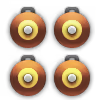 | | |||
| 4 × | 414 kg | 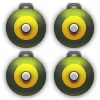 | | |||
| 2 × | 207 kg |  | | |||
| 508.3 kg |  | | ||||
| 531.3 kg |  | | ||||
| 1,080 kg |  | | ||||
| 1,046 kg |  | | ||||

 2 x (30 / 60 / 115) %
2 x 10⁶ %
2 x (30 / 60 / 115) %
2 x 10⁶ %
Flight performance | |
|---|---|
Survivability |
|---|
Weaponry | |
|---|---|