
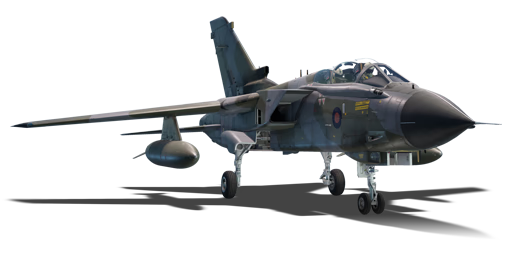



In the 1960s, aircraft designers worldwide were absorbed in creating aircraft with variable-sweep wings, which would allow for maneuverability and speed across a wide range of speeds. The British military was particularly interested in this technology as a potential replacement for the Avro Vulcan and Buccaneer bombers. Initially, they planned to collaborate with the French to form the Anglo-French Variable Geometry (AFVG) program, but France withdrew in 1967 without achieving any significant results. Then, in 1968, the United Kingdom partnered with Germany, Canada, and several other European countries on the Multi-Role Aircraft (MRA) program. However, by the end of the year, all participants except the United Kingdom and Germany had left. Progress only resumed on March 26, 1969, with the formation of Panavia Aircraft GmbH. By 1970, only three countries remained in the project, each holding different shares: Germany and the United Kingdom held 42.5%, and Italy held the remaining 15%. To develop the future RB199 engines, the company Turbo-Union was formed. By May, two designs had been presented: the single-seat Panavia 100 and the two-seat Panavia 200. The latter was deemed most suitable for the British. The second design was chosen for further development, and its first prototype flew on August 14, 1974. The first "Tonka" prototype for the Royal Air Force flew on October 30.
During testing, the aircraft experienced several software and engine issues, especially during deceleration at high altitudes. The thrust reverser system was also problematic; together with a poorly performing damper, it created landing difficulties. Once these issues were resolved, the United Kingdom ordered the new aircraft, the Tornado GR.1. Initial deliveries began in 1980. The GR.1 is the British designation for the Tornado IDS (Interdiction and Strike). In 2018, the United Kingdom retired the last Tornado GR.4, becoming the first country to do so.
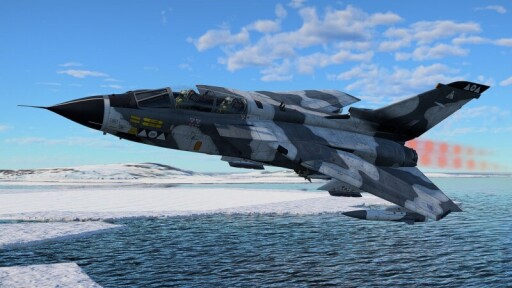
The Tornado GR.1 was introduced in Update 2.23 "Apex Predators". This strike aircraft stands out from its counterparts due to its ability to employ TV-guided precision-guided munitions (PGM) bombs. Like many other Tornados, it is mainly distinguished by its large bomb payload. However, the aircraft consumes fuel quickly and is weak in air combat.

flaps
flaps
flaps
brake
| Belt | Belt filling | Armor penetration (mm) at a distance: | |||||
|---|---|---|---|---|---|---|---|
| 10 m | 100 m | 500 m | 1000 m | 1500 m | 2000 m | ||
| PT/APHE/APHE/APHE | 57 | 53 | 41 | 29 | 21 | 15 | |
| PT/SAPHEI/AP/APHE | 58 | 54 | 41 | 29 | 21 | 15 | |
| PT/AP/AP/AP | 64 | 60 | 46 | 33 | 23 | 17 | |
| PT/SAPHEI/HEF/APHE | 48 | 45 | 34 | 25 | 18 | 12 | |
| SAPHEI/SAPHEI/APHE/APHE | 57 | 53 | 41 | 29 | 21 | 15 | |
| Name | Weight | Slot | ||||||||||
|---|---|---|---|---|---|---|---|---|---|---|---|---|
| 28 × Large caliber countermeasures 600 × Large caliber chaff countermeasures | 859.2 kg |  | | |||||||||
| 84.5 kg |  | | ||||||||||
| 486 kg |  | | | | | | | |||||
| 446.8 kg | | | | | | | | |||||
| 2 × | 972 kg |  | | | | | | |||||
| 2 × | 893.6 kg | | | | | | | |||||
| 486 kg |  | | | | | | | |||||
| 2 × | 972 kg |  | | | | | | |||||
| 546.5 kg |  | | | | ||||||||
| 404 kg |  | | | | ||||||||
| 1,060 kg |  | | | | ||||||||
| Drop tank (330 gal.) | 174 kg |  | | |||||||||
| 588 kg |  | | | | ||||||||
| TIALD targeting pod | 120 kg |  | ||||||||||
| 486 kg | | | | | ||||||||
| 1,079.6 kg |  | |||||||||||


 Tornado GR.1
Flight performance | |
|---|---|
Survivability |
|---|
Weaponry | ||
|---|---|---|