
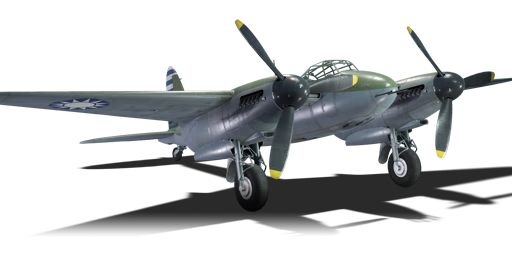




The de Havilland Mosquito was a British, twin-engine, multipurpose aircraft from the early 1940s. Its history began in May 1937 when Handley Page's chief designer created several designs for a fast unarmed bomber made of non-strategic materials, such as wood. The Royal Air Force (RAF) supported his work, and a year later, issued the B.9/38 requirements, which led to the creation of the Albemarle aircraft. This caught the attention of Geoffrey de Havilland, the owner and chief designer of de Havilland. De Havilland was dissatisfied with the project's implementation and decided to design his own aircraft, which would be much more aerodynamic and faster. Several years of attempts to build the aircraft followed, along with lengthy negotiations with the RAF regarding their nearly impossible requirements. When World War II broke out, the RAF reconsidered its position on the aircraft and requested a reconnaissance aircraft and a heavy fighter from de Havilland. The prototype's first flight did not take place until November 25, 1940. Series production began the following year with the reconnaissance version, expanding to include fighters, bombers, torpedo bombers, and several other variants. Production of the Mosquito continued until 1950, by which time 7,780 aircraft had been produced. It was in service with 22 countries, and the last aircraft was decommissioned in the 1960s.
One of these countries was Taiwan, which purchased 205 Mosquitoes, including Mosquito FB Mk.26s, from Canada in 1948. This was a Canadian upgrade of the Mk. VI with Packard Merlin 225 engines. The Mosquitos remained in service until 1950 when Taiwan decided to dismantle them due to the difficulty of maintaining them in a humid climate. In total, Taiwan lost five aircraft in battles with Communist China.
The Chinese Mosquito FB Mk 26 was introduced in Update 1.91 "Night Vision". It is a fast, multi-role aircraft with excellent fixed and drop weapons. However, it has poor survivability and would lose in a dogfight against a single-engined fighter.

flaps
flaps
flaps
brake
| Belt | Belt filling | Armor penetration (mm) at a distance: | |||||
|---|---|---|---|---|---|---|---|
| 10 m | 100 m | 500 m | 1000 m | 1500 m | 2000 m | ||
| HEI/SAP-I/T | 22 | 20 | 14 | 9 | 6 | 4 | |
| AP-T/HEI/SAP-I | 37 | 35 | 25 | 16 | 10 | 7 | |
| T/HEI/SAP-I/HEI/SAP-I | 22 | 20 | 14 | 9 | 6 | 4 | |
| AP-T/T/HEI | 37 | 35 | 25 | 16 | 10 | 7 | |
| AP-T/SAP-I/HEI/AP-T | 37 | 35 | 25 | 16 | 10 | 7 | |
| HEI/HEI/SAP-I | 22 | 20 | 14 | 9 | 6 | 4 | |
| Belt | Belt filling | Armor penetration (mm) at a distance: | |||||
|---|---|---|---|---|---|---|---|
| 10 m | 100 m | 500 m | 1000 m | 1500 m | 2000 m | ||
| T/AP/AP-I/Ball/Ball/I | 13 | 12 | 7 | 3 | 2 | 0 | |
| T/AP/AP-I/AP-I/I | 13 | 12 | 7 | 3 | 2 | 0 | |
| IT/AP-I | 13 | 12 | 7 | 3 | 2 | 0 | |
| AP-I/AP-I/I | 13 | 12 | 7 | 3 | 2 | 0 | |


Flight performance | |
|---|---|
Survivability |
|---|
Weaponry | ||
|---|---|---|