
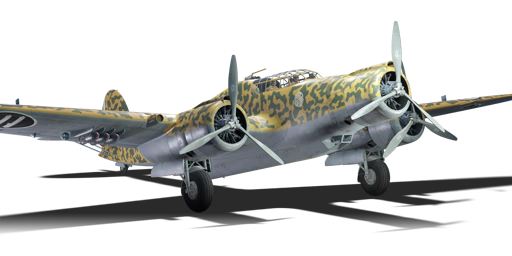
Z.1007 bis serie 3




The Z.1007 bis Serie 3 "Alcione" ("Kingfisher") is an Italian medium bomber with a wooden structure. It was developed by CANT designers under the leadership of Filippo Zappata. The three-engine version of the aircraft first flew on March 16, 1937. After modifications were made, the aircraft was accepted into service in May 1939. However, by the start of the war, only two squadrons had been equipped with it.
The development of the new bomber began in 1935 with a team of designers from three companies: CRDA, IMAM, and CANT. They were all competing for a contract to build a medium-range bomber that could be upgraded to a strategic bomber. The prototype made its first flight in March 1937. Initially, the aircraft had a completely new design, but as requirements for suspended weapons increased, it began to resemble a typical Italian bomber with a three-engine layout and separate nacelles. It also had a wooden fuselage with a cruciform tail that was later replaced by a twin-tail and a navigator's gondola under the cockpit instead of in the nose. The prototypes were equipped with Isotta Fraschini radial engines, each with an output of 825 hp. However, the production aircraft, the Z.1007bis Serie III, had Piaggio P.XI RC.40 engines with higher power. The armament consisted of two turrets (one above and one below the fuselage) with large-caliber Scotti or Breda-SAFAT machine guns.
The Z.1007 bis Serie 3 was introduced in Update 1.69 "Regio Aeronautica". It is a medium bomber with good defensive armament and a decent payload, but it has a rather low maximum speed and mediocre survivability.

flaps
flaps
flaps
brake
| Belt | Belt filling | Armor penetration (mm) at a distance: | |||||
|---|---|---|---|---|---|---|---|
| 10 m | 100 m | 500 m | 1000 m | 1500 m | 2000 m | ||
| T/Ball/AP/AP/HEF | 21 | 19 | 12 | 7 | 4 | 2 | |
| AP/AP/AP/API-T | 21 | 19 | 12 | 7 | 4 | 3 | |
| API-T/AP-I | 21 | 19 | 12 | 7 | 4 | 3 | |
| Belt | Belt filling | Armor penetration (mm) at a distance: | |||||
|---|---|---|---|---|---|---|---|
| 10 m | 100 m | 500 m | 1000 m | 1500 m | 2000 m | ||
| T/Ball/AP/AP/HEF | 21 | 19 | 12 | 7 | 4 | 2 | |
| AP/AP/AP/API-T | 21 | 19 | 12 | 7 | 4 | 3 | |
| API-T/AP-I | 21 | 19 | 12 | 7 | 4 | 3 | |
| Belt | Belt filling | Armor penetration (mm) at a distance: | |||||
|---|---|---|---|---|---|---|---|
| 10 m | 100 m | 500 m | 1000 m | 1500 m | 2000 m | ||
| T/Ball/Ball/AP-I/AP | 13 | 12 | 7 | 3 | 2 | 0 | |
| T/AP/AP/AP | 13 | 12 | 7 | 3 | 2 | 0 | |
| T/AP-I/AP-I/AP-I | 13 | 12 | 7 | 3 | 2 | 0 | |
| Name | Weight | Slot | ||||
|---|---|---|---|---|---|---|
| 3 × | 174 kg |  | | | ||
| 3 × | 300 kg |  | | | ||
| 2 × | 518 kg |  | | | ||
| 6 × | 348 kg |  | | |||
| 6 × | 600 kg |  | | |||
| 508 kg |  | | ||||
| 821.6 kg |  | |||||
| 4 × | 604.4 kg |  | ||||
| 905 kg |  | |||||


Flight performance | |
|---|---|
Survivability |
|---|
Weaponry | |
|---|---|