
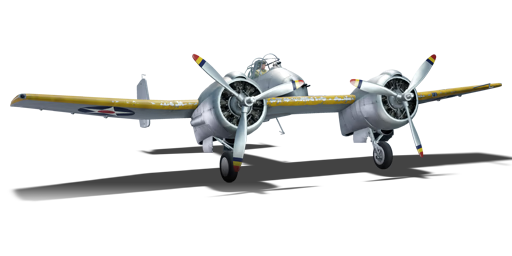
XF5F


The Grumman XF5F Skyrocket was a unique twin-engine interceptor prototype built by Grumman during the interwar period. This aircraft was Grumman's response to a US Navy requirement for a light twin-engine carrier-based fighter, issued in 1938. It was intended to intercept bombers, as the fighters in service at the time were not well suited to this role. One prototype was built by Grumman, making its maiden flight on 1 April 1940. The aircraft had a distinctive appearance because the fuselage did not extend forward of the wing edge. It was powered by two Wright R-1820 engines. After testing, further modifications were made to the engine cooling system, cockpit layout, and fuselage length. In addition, the originally planned 20 mm Madsen cannons were replaced with machine guns.
This prototype continued to be tested and improved, and was used to support the development of the later XF7F-1 prototype, which eventually became the F7F Tigercat. This continued until 1944, when the single prototype made a forced belly landing and was subsequently removed from the list of active aircraft. In addition, the XF5F also contributed to the development of the XP-50, but that project also remained a prototype.
The XF5F was introduced in Update 1.37 as a reward for the 2013 "Winter Magic" event. It is quite manoeuvrable and agile, with a decent maximum speed. The pilot is also protected by steel armour plates, but the engines are more exposed. Its combination of two heavy and two light machine guns provide decent firepower.

flaps
flaps
flaps
brake
| Belt | Belt filling | Armor penetration (mm) at a distance: | |||||
|---|---|---|---|---|---|---|---|
| 10 m | 100 m | 500 m | 1000 m | 1500 m | 2000 m | ||
| T/Ball/Ball/I/AP-I | 28 | 26 | 18 | 11 | 7 | 4 | |
| AP-I/AP-I/AP-I/T/I | 28 | 26 | 18 | 11 | 7 | 4 | |
| T/AP/AP/AP/AP-I/I | 30 | 27 | 20 | 13 | 9 | 6 | |
| T/T/T/T/T/AP-I | 28 | 26 | 18 | 11 | 7 | 4 | |
| AP/AP-I/AP-I/I/I | 30 | 27 | 20 | 13 | 9 | 6 | |
| Belt | Belt filling | Armor penetration (mm) at a distance: | |||||
|---|---|---|---|---|---|---|---|
| 10 m | 100 m | 500 m | 1000 m | 1500 m | 2000 m | ||
| T/Ball/Ball/Ball/AP/I | 13 | 12 | 7 | 3 | 2 | 0 | |
| T/AP/I | 13 | 12 | 7 | 3 | 2 | 0 | |
| AP/T/T/T/T | 13 | 12 | 7 | 3 | 2 | 0 | |
| AP/AP/AP/I/I | 13 | 12 | 7 | 3 | 2 | 0 | |


 2 x (80 / 225 / 390) %
2 x 154 %
2 x (80 / 225 / 390) %
2 x 154 %
Flight performance | |
|---|---|
Survivability |
|---|
Weaponry |
|---|