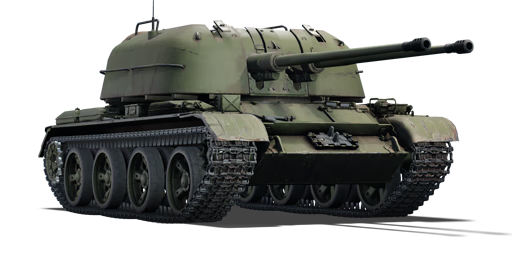
ZSU-57-2



The ZSU-57-2 is a Soviet self-propelled anti-aircraft gun developed after World War II by engineers at NII-58 between 1947 and 1950. Following the Great Patriotic War, the Soviet Army required new anti-aircraft artillery models. Of particular interest were the 57 mm anti-aircraft gun complexes developed by Grabin’s design bureau: the S-60 and its twin-gun variant, the S-68. However, the towed version lacked mobility and did not meet the army’s requirements. Therefore, it was decided that a new self-propelled system would be created using a lightened T-54 tank chassis and the S-68. After successfully passing trials in 1950, the ZSU-57-2 entered serial production following several improvements. Between 1955 and 1960, 857 units were manufactured. The ZSU-57-2 was widely exported and saw combat in numerous conflicts, including the Vietnam War, the Six-Day War, the Iraq War, and the Yugoslav Wars.
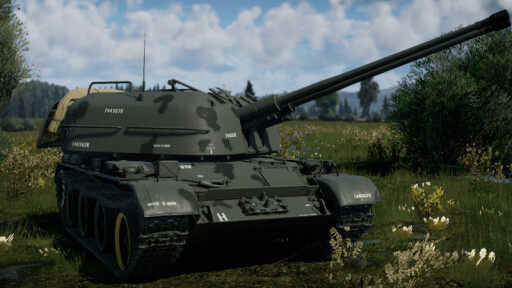
The ZSU-57-2 was introduced in the Update 1.43. Although it was designed to engage enemy aircraft, it is not particularly effective in this role. The low rate of fire of its twin 57 mm guns makes it difficult to counter early jet aircraft, which have much higher top speeds than piston fighters and attack aircraft. It performs better against helicopters, though it is still at a disadvantage at long ranges. Thanks to the good ballistics of its 57 mm automatic cannons, decent mobility, and powerful armor-piercing shells, the ZSU-57-2 performs well as an improvised light tank or "tank hunter". It is capable of taking on some medium tanks and early main battle tanks head-on, not to mention various light tanks and armored cars.

| Belt | Belt filling | Armor penetration (mm) at a distance: | |||||
|---|---|---|---|---|---|---|---|
| 10 m | 100 m | 500 m | 1000 m | 1500 m | 2000 m | ||
| APCBC/HE | 151 | 147 | 130 | 112 | 96 | 83 | |
| APCBC | 151 | 147 | 130 | 112 | 96 | 83 | |
| HE | 17 | 17 | 15 | 13 | 11 | 9 | |
| APCBC | 151 | 147 | 130 | 112 | 96 | 83 | |


Mobility | |
|---|---|
Protection |
|---|
Firepower | |
|---|---|