KV-8


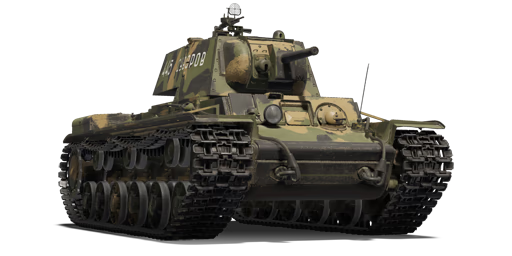
The KV-8 was a Soviet flamethrower tank developed during the Second World War. The Red Army had already developed and used many flamethrower tanks, such as the OT-26 or OT-130, which were based on the T-26 chassis. However, the T-26’s armour was very weak, so there was a need for a replacement. Work on this tank began at the Chelyabinsk Tractor Plant in 1941. The usual position of the coaxial DT machine gun was replaced by an ATO-41 flamethrower. However, due to its considerable size, the standard 76.2 mm gun had to be replaced by a 45 mm gun. Some of the KV flamethrower tanks were built on the standard KV chassis, but shortly afterwards production switched to the more modern KV-1S, resulting in the KV-8S, which received an improved flamethrower system. Across all variants, these flamethrower tanks were produced between 1942 and 1943. Around 102 KV-8 tanks were produced.
These tanks were used against fortified positions where conventional tanks could not effectively reach, but where fire could cause significant damage and psychological impact. In particular, they were used during the Battle of Stalingrad. For example, a KV-8, together with two medium tanks, was used in the autumn of 1942 during the Battle of Stalingrad, in a sector where German forces had advanced close to the Volga riverbank. The Soviet counterattack, although not fully successful in regaining all positions, still inflicted significant losses on the enemy, with the flamethrower-equipped KV tank playing an important role.
The KV-8 was introduced as a reward for the 2026 “Legend of Victory” event. This variant is based on the early KV chassis. For armament, it features a 45 mm gun, two DT machine guns, and the ATO-41 flamethrower mounted next to the main gun, providing decent firepower, though less than the KV-1, which has a more powerful main armament. Nevertheless, the flamethrower can be lethal to open-topped vehicles. This tank also has good armour and fairly decent mobility for a heavy tank.

| Ammunition | Type | Armor penetration (mm) at a distance: | |||||
|---|---|---|---|---|---|---|---|
| 10 m | 100 m | 500 m | 1000 m | 1500 m | 2000 m | ||
| APHEBC | 70 | 67 | 58 | 47 | 39 | 32 | |
| HE | 5 | 5 | 5 | 5 | 5 | 5 | |
| APBC | 73 | 70 | 60 | 50 | 41 | 34 | |
| APCR | 94 | 87 | 64 | 43 | 29 | 20 | |
| Belt | Belt filling | Armor penetration (mm) at a distance: | |||||
|---|---|---|---|---|---|---|---|
| 10 m | 100 m | 500 m | 1000 m | 1500 m | 2000 m | ||
| AP-I/API-T | 13 | 12 | 7 | 3 | 2 | 0 | |
| Belt | Belt filling | Armor penetration (mm) at a distance: | |||||
|---|---|---|---|---|---|---|---|
| 10 m | 100 m | 500 m | 1000 m | 1500 m | 2000 m | ||
| AP-I/API-T | 13 | 12 | 7 | 3 | 2 | 0 | |


 2 x (55 / 75 / 85) %
2 x 124 %
2 x (55 / 75 / 85) %
2 x 124 %
Mobility | |
|---|---|
Protection |
|---|
Firepower | |
|---|---|