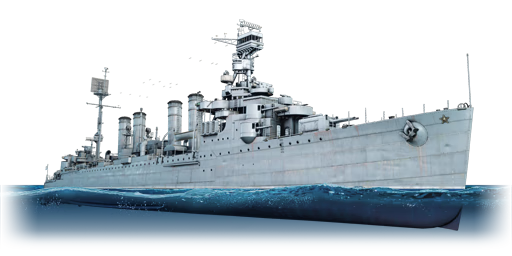
Murmansk (formerly the USS Milwaukee until April 20, 1944) was an Omaha-class light cruiser originally built for the U.S. Navy. It was transferred to the Soviet Navy instead of some of the Italian ships that were to be handed over to the USSR as reparations. The cruiser was laid down on December 13, 1918; launched on March 24, 1921; and entered service on June 20, 1923.
After construction, the cruiser embarked on a lengthy voyage to Sydney, during which it conducted seabed research in the Pacific using sonar equipment. From 1928 to 1933, the cruiser was assigned to the Asian Fleet. From 1933 onward, it was part of the Combat Fleet, which later became the Pacific Fleet. The cruiser was at the Brooklyn Navy Yard for repairs when World War II began. During the war, the USS Milwaukee mainly escorted convoys from Brazil to the coast of Africa. In February 1944, preparations were made to transfer the cruiser to the USSR. It was moved to Ireland and, as part of convoy JW 58, traveled to Murmansk. As part of the Soviet Northern Fleet, the cruiser primarily escorted Arctic convoys. After the war ended, the cruiser was reclassified as a training ship. In March 1949, it was returned to the United States and to the Philadelphia shipyard. However, it was no longer included in the US Navy. In December of that year, it was sold for scrap.
Murmansk was introduced as one of the rewards for the Battle Pass Season XVII, "Guided Fury". The cruiser is distinguished by its numerous, although inconveniently-placed main-caliber artillery, radar, and decent anti-aircraft battery. In combat, the ship would usually struggle against more modern light cruisers and sometimes destroyers.