
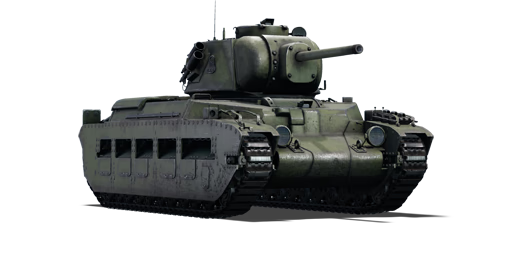
▂MK-II "Matilda"


As a result of Germany’s Operation Barbarossa, the Soviet Union lost a considerable number of vehicles. Their factories were only just at the start of mass production, so Great Britain, along with the United States, initiated a Lend-Lease programme in order to help the USSR fill its gaps. Along with many other models, the British shipped 1,084 Matilda II tanks to the USSR from 1941 to 1943, which the Soviets designated MK-II Matilda. However, some of them were lost during the voyage due to German attacks.
The Matilda, while still useful, was not a game changer on the front. It was considered inferior to the T-34, but still better than the old and troublesome T-60 and T-70 tanks. Due to a severe shortage of ammunition for the British gun and the lack of high-explosive rounds essential for attacking enemy positions, replacing the gun with the Soviet 76 mm ZiS-5 (F-96) was considered. Only one tank was rearmed with this gun and tested. The modification required significant changes to the turret and caused additional problems. By that time, the ammunition supply for the tank had improved, making the conversion impractical. It is unknown whether this prototype was ever used in combat. In addition to these issues, the tank was not well suited to extreme cold, having been designed primarily for desert conditions, and its tracks often became stuck in deep snow or mud. Most notably, the Matilda participated in the defence of Moscow. However, after mass production of the T-34 and KV-1 began, the Matilda II tanks were removed from the main front, though they still fought against the Japanese on the Manchurian front.
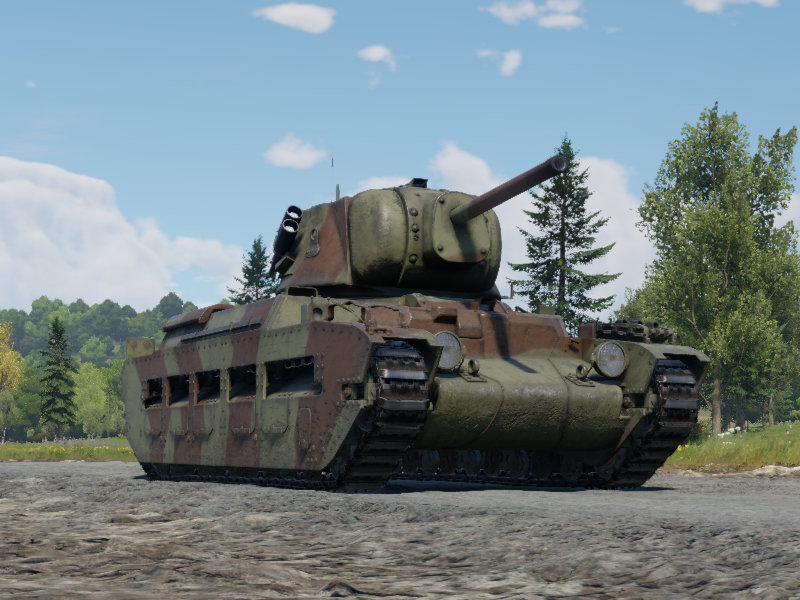
The MK-II Matilda was introduced in Update 1.67 “Assault”. This variant is equipped with the F-96 gun, featuring Soviet ammunition for the tank, making it significantly more powerful in combat compared to the original British version. Additionally, the British machine gun is replaced by a DT. This vehicle is very well armoured, resisting many shots of its rank due to sloped and thick armour placed all around. The mobility of this vehicle, although not exceptional, reaches a maximum of 24 km/h.

| Ammunition | Type | Armor penetration (mm) at a distance: | |||||
|---|---|---|---|---|---|---|---|
| 10 m | 100 m | 500 m | 1000 m | 1500 m | 2000 m | ||
| APHEBC | 87 | 85 | 77 | 69 | 62 | 55 | |
| HE | 13 | 12 | 11 | 10 | 10 | 10 | |
| Shrapnel | 35 | 34 | 30 | 26 | 22 | 19 | |
| APBC | 99 | 96 | 87 | 76 | 66 | 58 | |
| APHEBC | 96 | 94 | 84 | 74 | 64 | 56 | |
| Smoke | 3 | 3 | 3 | 3 | 3 | 3 | |
| Belt | Belt filling | Armor penetration (mm) at a distance: | |||||
|---|---|---|---|---|---|---|---|
| 10 m | 100 m | 500 m | 1000 m | 1500 m | 2000 m | ||
| AP-I/API-T | 13 | 12 | 7 | 3 | 2 | 0 | |


 2 x (65 / 100 / 115) %
2 x 130 %
2 x (65 / 100 / 115) %
2 x 130 %
Mobility | |
|---|---|
Protection |
|---|
Firepower | |
|---|---|