
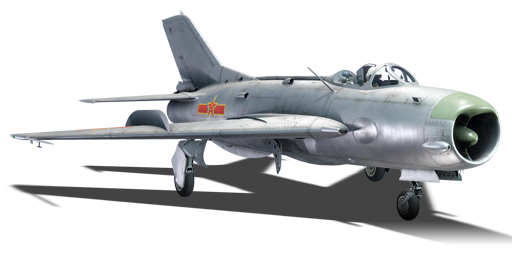
J-6A



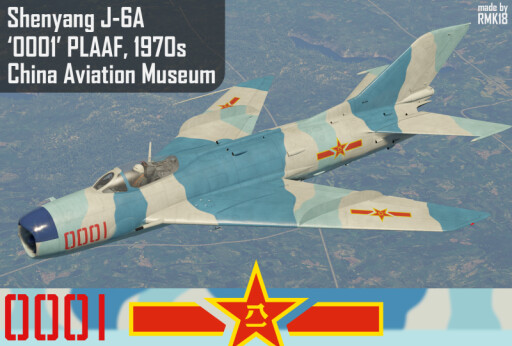
The J-6A (Chinese: 歼-6A型飞机; also known as the Type 59 Interceptor (59式甲歼击机), Dōngfēng 103 (东风103), and J-6 Jiǎ Interceptor (歼-6甲型歼击机) at various points before the 1964 and 1969 naming scheme revisions), codenamed "Farmer" by NATO alongside its progenitor, the MiG-19, was the main fighter jet of the PLAAF from the early 1960s.
The J-6 was designed around the idea of a "disposable fighter" – an aircraft that could be mass-produced and was expendable, with a quantity-over-quality production philosophy. The J-6 originally began production in 1958 as the J-6 Jiǎ, a copy of the MiG-19P, and was the first supersonic fighter in East and Southeast Asia, but due to production quality that was too poor even for the aircraft's production philosophy, it was cut after 83 vehicles were produced. Several other J-6 variants would be produced, and a J-6 even scored the first-ever kill against an F-104 over Hǎinán in 1965. In late 1975, the J-6A would enter production again to fill the gap created by delays in development of the upgraded J-6IV. These new-production J-6As were renamed the J-6 Xīn A (歼6新A), meaning "New A". This aircraft was very similar, but featured PL-2 (霹雳-2) missiles, as well as a slew of other domestic upgrades. 173 of these would be produced until production ceased in 1983. The J-6 served for over four decades, saw a successful export career across many countries, and had derivatives like the Nanchang Q-5, with which it shared 60% parts commonality.
Introduced to the game alongside the initial Chinese tech tree in Update 1.91 "Night Vision", the J-6A plays identically to the MiG-19PT. The immense acceleration paired with its firepower provides a definitive edge against subsonic jets that cannot chase it, but beware of its sub-par manoeuvrability at transonic speeds, where it heavily compresses and will have a hard time pulling out of dives. Although it can face more advanced jets such as MiG-21s and Phantoms, if players are able to lure them into a dogfight, the 30 mm cannons will never disappoint, as they can tear down enemy targets with ease. Alternatively, the PL-2 missiles can also prove effective if they have used up all their energy/flares, or as a method of forcing a turn into the line of 30 mm cannon fire.

flaps
flaps
flaps
brake
| Belt | Belt filling | Armor penetration (mm) at a distance: | |||||
|---|---|---|---|---|---|---|---|
| 10 m | 100 m | 500 m | 1000 m | 1500 m | 2000 m | ||
| HEF-I/HEFI-T/APHE | 40 | 39 | 34 | 28 | 23 | 19 | |
| HEFI-T/APHE/APHE/APHE | 40 | 39 | 34 | 28 | 23 | 19 | |
| HEF-I/HEFI-T/HEFI-T | 6 | 6 | 5 | 4 | 4 | 3 | |
| Name | Weight | Slot | ||||||
|---|---|---|---|---|---|---|---|---|
| 75.3 kg |  | | ||||||
| 8 × | 95.1 kg |  | | | | |||
| 140 kg |  | | ||||||
| 236 kg |  | | ||||||


Flight performance | |
|---|---|
Survivability |
|---|
Weaponry | ||
|---|---|---|