Tan-SAM Kai (TADS)
Basic unit

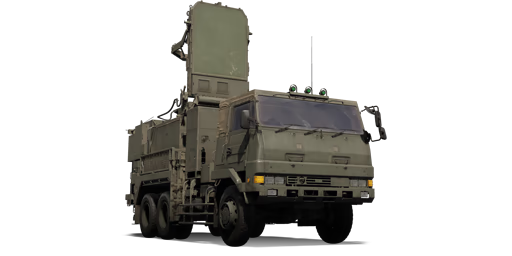



The Type 81, also known as the Tan-SAM, is a Japanese short-range surface-to-air missile system. In 1966, Toshiba began developing the system as a replacement for the 75 mm M51 Skysweeper gun and the M15A1 SPAA with a 37 mm cannon. The first trials of the system did not occur until 1978. By that time, it had become clear that the SAM system would occupy the niche between the under-development FIM-92 Stinger MANPADS and the MIM-23 Hawk. The Japan Self-Defense Forces placed the first contract in 1980, and the system was adopted into service the following year. In 1987, minor changes were made to the system's design, and the modification was designated the SAM-1B.
In 1989, work began on an improved version of the system. Two versions were planned: one with an infrared and visible light imaging seeker and one with radar guidance. Both versions were adopted into service in 1995 as the SAM-1C or Tan-SAM Kai. The modernization of existing vehicles began in 1996, and the production of new vehicles continued until 2005. Currently, the Tan-SAM system remains in service with the Japan Self-Defense Forces.
The Tan-SAM Kai (TADS) was introduced in Update 2.47 "Leviathans" as part of a three-vehicle system consisting of one TADS and two TELs, which do not require additional research. Unlike the IR variant, this version is equipped with a large radar. Without considering terrain masking, it allows for the detection of enemy aircraft long before they can launch. Additionally, the loss of the radar does not result in the complete loss of system functionality. However, this comes at the cost of very large dimensions.


Mobility | |
|---|---|
Protection |
|---|
Firepower | ||
|---|---|---|