
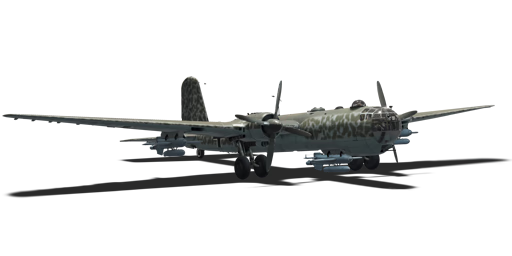
He 177 A-3


The history of the Heinkel He 177 began in 1936 when the German Ministry of Aviation (RLM) announced the start of the Bomber A program. This program was an extension of the unsuccessful Ural Bomber project, which resulted in failed designs such as the Do 19 and Ju 89. The aircraft had to have a large range, relatively high speed, high maximum ceiling, and a bomb load of at least one ton. After studying these requirements, Heinkel engineers began constructing Projekt 1041 Bomber A, in June 1937. It was later named the He 177 Greif. The first prototype, the He 177 V1, made its maiden flight on November 9, 1939. However, mass production of the aircraft did not begin until 1942 with the He 177 A-2 modification. In total, 1,135 aircraft were built by the time production ended in August 1944, including pre-production models.
The A-3 modification was a further advance in design, featuring an elongated fuselage and a more reliable engine design that was less prone to spontaneous combustion. The position of the oil tanks and other engine components was also changed. Additionally, some A-3 aircraft were modified to carry Henschel Hs 293 bombs. A total of 612 A-3 bombers were produced, 148 of which could carry guided bombs.
The He 177 A-3 was introduced as a reward for the Battle Pass Season 17, "Guided Fury". It is a fast bomber equipped with powerful suspended and defensive weapons, as well as Fritz X and Hs 293 guided bombs. In fact, the biggest difference from the A-5 is its ability to use the Hs 293. The disadvantages remain the same: the bomber is large, its engines overheat quickly, and it cannot fly far with only one engine operational.

flaps
flaps
flaps
brake
| Belt | Belt filling | Armor penetration (mm) at a distance: | |||||
|---|---|---|---|---|---|---|---|
| 10 m | 100 m | 500 m | 1000 m | 1500 m | 2000 m | ||
| IT/HEI/APHE/AP-I | 27 | 24 | 14 | 7 | 3 | 2 | |
| AP-I/AP-I/APHE/IT/AP-I | 27 | 24 | 14 | 7 | 3 | 2 | |
| AP-I/FI-T/HEI/HEI | 27 | 24 | 14 | 7 | 3 | 2 | |
| Belt | Belt filling | Armor penetration (mm) at a distance: | |||||
|---|---|---|---|---|---|---|---|
| 10 m | 100 m | 500 m | 1000 m | 1500 m | 2000 m | ||
| IT/AP-I/IAI/AP-I | 19 | 16 | 8 | 4 | 2 | 1 | |
| AP-T/AP-T/AP-T/IAI | 19 | 16 | 8 | 4 | 2 | 1 | |
| Belt | Belt filling | Armor penetration (mm) at a distance: | |||||
|---|---|---|---|---|---|---|---|
| 10 m | 100 m | 500 m | 1000 m | 1500 m | 2000 m | ||
| IT/AP-I/IAI/AP-I | 19 | 16 | 8 | 4 | 2 | 1 | |
| AP-T/AP-T/AP-T/IAI | 19 | 16 | 8 | 4 | 2 | 1 | |
| Belt | Belt filling | Armor penetration (mm) at a distance: | |||||
|---|---|---|---|---|---|---|---|
| 10 m | 100 m | 500 m | 1000 m | 1500 m | 2000 m | ||
| AP-T/Ball/Ball/AP-I/AI | 9 | 8 | 6 | 3 | 0 | 0 | |
| AP/AP/AP/AP-T | 13 | 12 | 7 | 3 | 2 | 0 | |
| AP-I/AP-T/AP-I/AP-T | 9 | 8 | 6 | 3 | 0 | 0 | |
| Name | Weight | Slot | ||||
|---|---|---|---|---|---|---|
| 1,570 kg |  | | | |||
| 1,045 kg |  | | | |||
| 1,000 kg |  | | ||||
| 1,832 kg |  | | | | ||
| 988 kg |  | | ||||
| 1,600 kg |  | | | | ||
| 24 × | 1,200 kg | 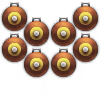 | | |||
| 6 × | 1,500 kg | 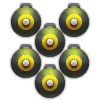 | | |||
| 3 × | 1,500 kg | 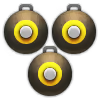 | | |||
| 2 × | 2,000 kg | 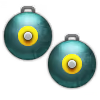 | | |||
| 3 × | 1,500 kg |  | | |||
| 2 × | 1,976 kg |  | | |||
| 6 × | 660 kg |  | | |||
| 3 × | 675 kg |  | | |||


 2 x (105 / 210 / 570) %
2 x 178 %
2 x (105 / 210 / 570) %
2 x 178 %
Flight performance | |
|---|---|
Survivability |
|---|
Weaponry | |||
|---|---|---|---|