
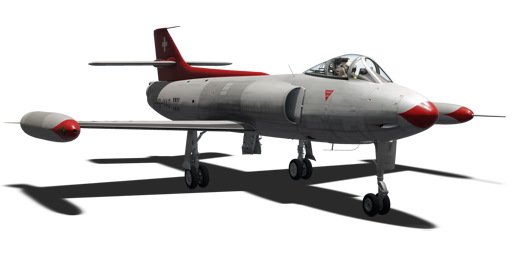
◌FFA P-16




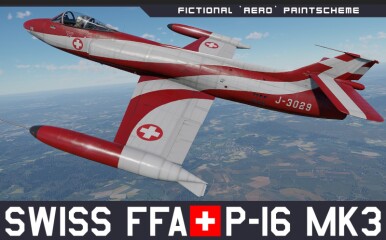
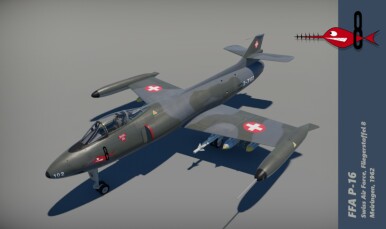
Following World War II, Switzerland began to significantly increase its arms production, including aircraft. As early as 1947, for example, FFA began developing a new supersonic fighter-bomber that could operate from Switzerland's short airfields. The first prototype, the FFA P-16, made its maiden flight on April 25, 1955, and crashed shortly thereafter. However, the second prototype completed a full cycle of tests and broke the sound barrier in 1956.
Impressed, the military ordered the production of four pre-production aircraft with minor improvements and a more powerful Armstrong Siddeley Sapphire 7 engine. The first pre-production aircraft, however, crashed on its 102nd flight. This prompted the Swiss government to refuse to purchase the aircraft and instead order more British Hunter aircraft. This was not the end of the P-16's story, though. The company created a Mk. III modification and tried to sell it to foreign buyers, but was unsuccessful. Some elements of its design were incorporated into the Learjet 23, a civilian business jet. The only remaining aircraft is on display in a museum at the Dübendorf airbase.
The Swiss FFA P-16 was introduced in Update 2.39 "Dance of Dragons", as part of the German aviation research tree. The aircraft has average characteristics across the board. It is neither fast nor accelerates well, nor is it highly maneuverable or good at maintaining energy. Its only obvious advantages are its powerful cannons and its AIM-9B air-to-air missiles.

flaps
flaps
flaps
brake
| Belt | Belt filling | Armor penetration (mm) at a distance: | |||||
|---|---|---|---|---|---|---|---|
| 10 m | 100 m | 500 m | 1000 m | 1500 m | 2000 m | ||
| HEI-T/APHE | 39 | 35 | 23 | 13 | 8 | 5 | |
| APHE | 39 | 35 | 23 | 13 | 8 | 5 | |
| HEI-T | 6 | 6 | 4 | 4 | 4 | 4 | |
| Name | Weight | Slot | ||||||||||||
|---|---|---|---|---|---|---|---|---|---|---|---|---|---|---|
| 200 kg |  | | | | ||||||||||
| 2 × | 413 kg |  | | | | |||||||||
| 400 kg |  | | | | ||||||||||
| 400 kg |  | | | | ||||||||||
| 4 × | 67.6 kg |  | | | | | | | | |||||
| 4 × | 67.6 kg |  | | | | | | | | |||||
| 996.3 kg |  | | ||||||||||||
| 8 × | 135.2 kg |  | | |||||||||||
| 8 × | 135.2 kg |  | | |||||||||||
| 74.4 kg |  | | ||||||||||||
| 44 × | 222.2 kg |  | ||||||||||||

 2 x (130 / 380 / 600) %
2 x 226 %
2 x (130 / 380 / 600) %
2 x 226 %
Flight performance | |
|---|---|
Survivability |
|---|
Weaponry | ||
|---|---|---|