
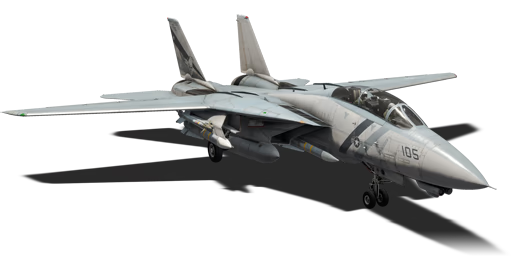
F-14D


The F-14D Super Tomcat was the final and most advanced production variant of the Grumman F-14 carrier-based interceptor. Development of the variant featuring new General Electric F110-GE-400 engines began in the mid-1980s due to chronic reliability issues with the standard TF30 engines. Four F-14A aircraft were converted into prototypes, and the F-14B with the new engines participated in powerplant testing. The maiden flight of the first F-14B with F110-GE-400 engines occurred on September 29, 1986. The first D variant prototype, PA-1/161865, took to the air on November 23, 1987. The first production fighter was delivered to the U.S. Navy in June 1990. In addition to the new engines, the aircraft received digital avionics, a full glass cockpit, and the new AN/APG-71 pulse-Doppler radar, which had an increased detection range and improved resistance to jamming. Its armament remained unchanged compared to earlier F-14 models. Due to post-Cold War military budget cuts, only 37 F-14D aircraft were built, and 18 F-14A aircraft were upgraded to this standard. Additionally, the AIM-120 integration program was canceled. The Super Tomcats remained on the front line until the retirement of the F-14 in 2006, seeing combat in operations over Iraq and Afghanistan.
The F-14D was introduced in Update 2.57 "Heavy Cavalry". It retains the variable-sweep wing mechanics of earlier models and combines them with powerful F110 engines, giving it excellent acceleration and reliable target tracking at long ranges. The new radar also has an all-aspect mode. Its main weapons are the AIM-54C+ missile for long-range combat and the AIM-9M for close-range engagements. However, the aircraft has a large size and thermal signature, so the pilot must keep a close eye on enemy threats.

flaps
flaps
flaps
brake
| Belt | Belt filling | Armor penetration (mm) at a distance: | |||||
|---|---|---|---|---|---|---|---|
| 10 m | 100 m | 500 m | 1000 m | 1500 m | 2000 m | ||
| HEF-I/API-T/AP-I | 40 | 36 | 21 | 11 | 6 | 3 | |
| HEF-I/HEF-I/API-T/HEF-I/HEF-I/AP-I | 40 | 36 | 21 | 11 | 6 | 3 | |
| API-T/AP-I/AP-I/AP-I/HEF-I | 40 | 36 | 21 | 11 | 6 | 3 | |
| HEF-I/AP-I/AP-I | 40 | 36 | 21 | 11 | 6 | 3 | |
| Name | Weight | Slot | ||||||||
|---|---|---|---|---|---|---|---|---|---|---|
| 84.5 kg |  | | | | ||||||
| 84.5 kg |  | | | | ||||||
| 160 × Countermeasures (BOL) | 39.4 kg |  | | | | |||||
| 160 × Countermeasures (BOL) | 123.9 kg |  | | | | |||||
| 160 × Countermeasures (BOL) | 123.9 kg |  | | | | |||||
| 231.3 kg |  | | | |||||||
| 446.6 kg |  | | ||||||||
| 446.8 kg |  | | ||||||||
| 8 × | 560.6 kg |  | | |||||||
| Drop tank (280 gal.) | 90.7 kg |  | | |||||||
| 2 × | 462.7 kg |  | | |||||||
| 2 × | 893.1 kg |  | | |||||||
| 2 × | 893.6 kg |  | | |||||||
| 6 × | 1,445.4 kg |  | ||||||||
| 2 × | 893.6 kg |  | | |||||||
| 2 × | 1,787.2 kg |  | | |||||||
| 2 × | 506.2 kg |  | | |||||||
| 2 × | 1,787.2 kg |  | | |||||||
| 2 × | 1,787.2 kg |  | | |||||||
| 2 × | 554.3 kg |  | | |||||||
| 2 × | 990.6 kg |  | | |||||||
| 6 × | 1,445.4 kg |  | ||||||||
| 2 × | 893.6 kg | | | |||||||
| 1,079.6 kg |  | | ||||||||
| 8 × | 1,927.2 kg |  | ||||||||
| 2 × | 1,887.9 kg |  | ||||||||
| 8 × | 1,927.2 kg |  | ||||||||
| LANTIRN targeting pod | 211.5 kg |  | ||||||||


 2 x (95 / 320 / 505) %
2 x 262 %
2 x (95 / 320 / 505) %
2 x 262 %
Flight performance |
|---|
Survivability |
|---|
Weaponry | |||
|---|---|---|---|