
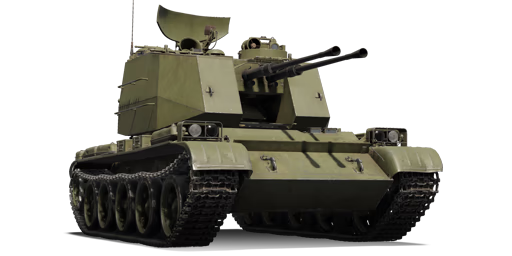
PGZ88



The successful use of the ZSU-23-4 during the Yom Kippur War led Chinese military leaders to recognize the need to protect armored vehicles from aircraft during combat and while on the march. The earlier WZ305 lacked the necessary effectiveness due to the absence of a radar, which was critical in the era of jet aviation. The new SPAAG was planned as a combination of the Type 59 chassis, a turret with two 37 mm Type 65 guns (licensed versions of the Soviet 61-K), and a fire control system based on the ZSU-23-4 brought from Egypt. However, insufficient engine power led to the replacement of the original chassis with that of the Type 79 tank. Additionally, the prolonged development of the FCS meant that the first prototype, built in 1983, had no radar. The vehicle was not completed in its full configuration until 1986, when four prototypes were built for testing. After the trials were completed, the army ordered only 24 vehicles due to unresolved design issues. Production PGZ88s remain in service with the PLA as training vehicles to this day. They have not seen combat.
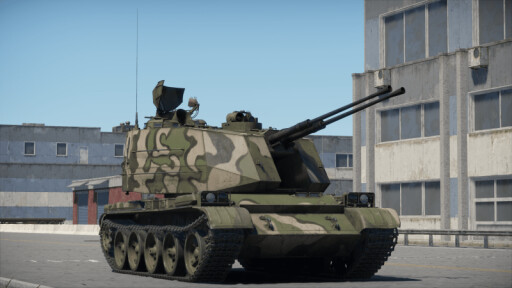
The PGZ88 was introduced in Update 2.57 "Heavy Cavalry". Thanks to high rate of fire and the large explosive filler of the 37mm HE shells, the guns are effective against aircraft. The good penetration of the AP rounds also allows to destroy tanks. However, the armor is insufficient to protect the vehicle from autocannons, and its mobility is inferior to that of most comparable vehicles.

| Belt | Belt filling | Armor penetration (mm) at a distance: | |||||
|---|---|---|---|---|---|---|---|
| 10 m | 100 m | 500 m | 1000 m | 1500 m | 2000 m | ||
| HEFI-T/AP-T | 86 | 83 | 69 | 55 | 44 | 35 | |
| HEFI-T | 10 | 10 | 8 | 7 | 5 | 4 | |
| AP-T | 86 | 83 | 69 | 55 | 44 | 35 | |


Mobility | |
|---|---|
Protection |
|---|
Firepower | |
|---|---|