
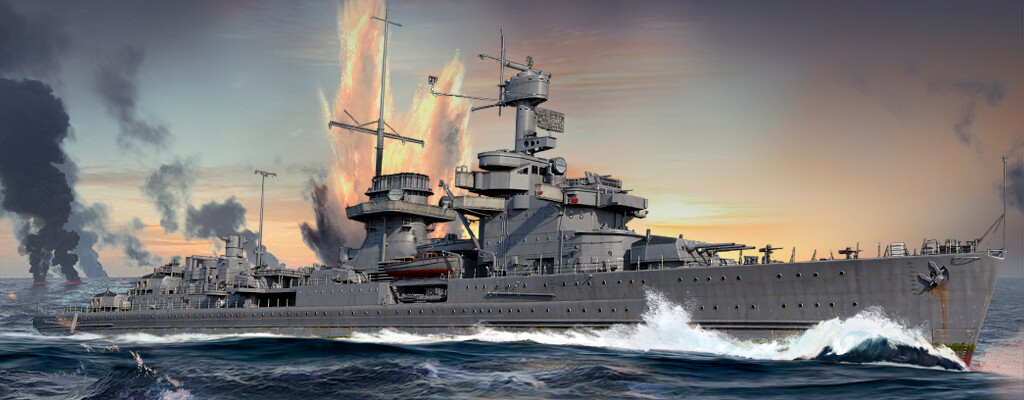
Naval ships vary greatly in size, from the smallest boats to heavy multi-ton cruisers. The greater the displacement of a ship, the more difficult it will be to sink it. But sinking is not the only way to deal with the enemy, which is why it is important to know what parts make up their equipment and where their weakest points are.
Contents:
Modules affecting driving performance
Captain's bridge
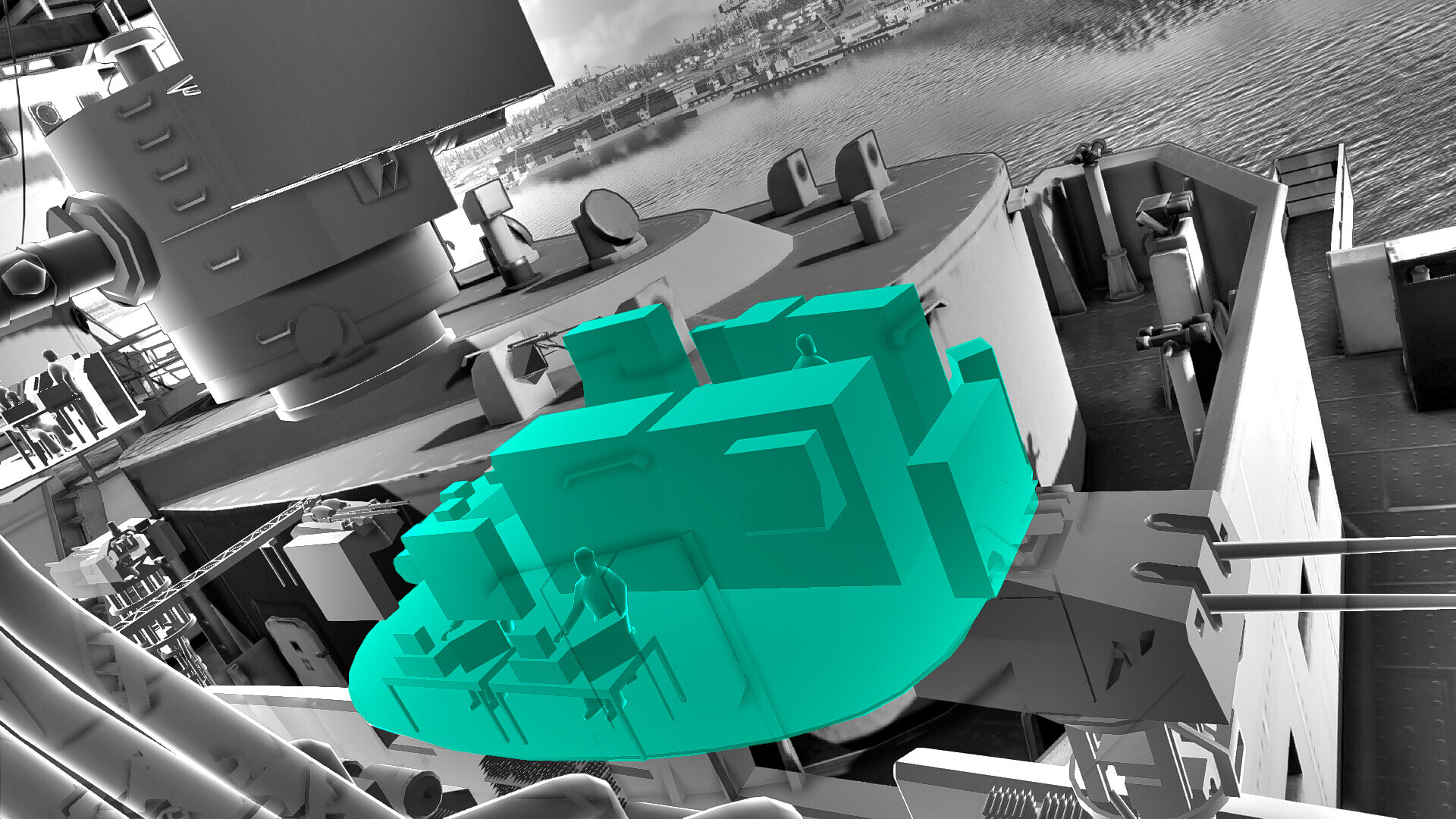
The bridge houses the captain and key command personnel during combat and is usually located in the ship’s superstructure (the citadel on larger warships). This area may be heavily armored. If the bridge is disabled, control of the ship’s movement is lost until another crew member from the compartments can take over. Replacing the captain is a low‑priority repair task and will generally occur only after fires are extinguished and urgent battle damage is addressed.
On larger ships multiple officers and crew may serve on the bridge, and the bridge is usually considered lost only when the module reaches the “black” (destroyed) state.
stopping the engines is not treated as a separate movement mode. If the bridge becomes disabled while the ship is stopping, the ship will retain the last commanded movement state and may continue moving until control is restored.
Steering gear
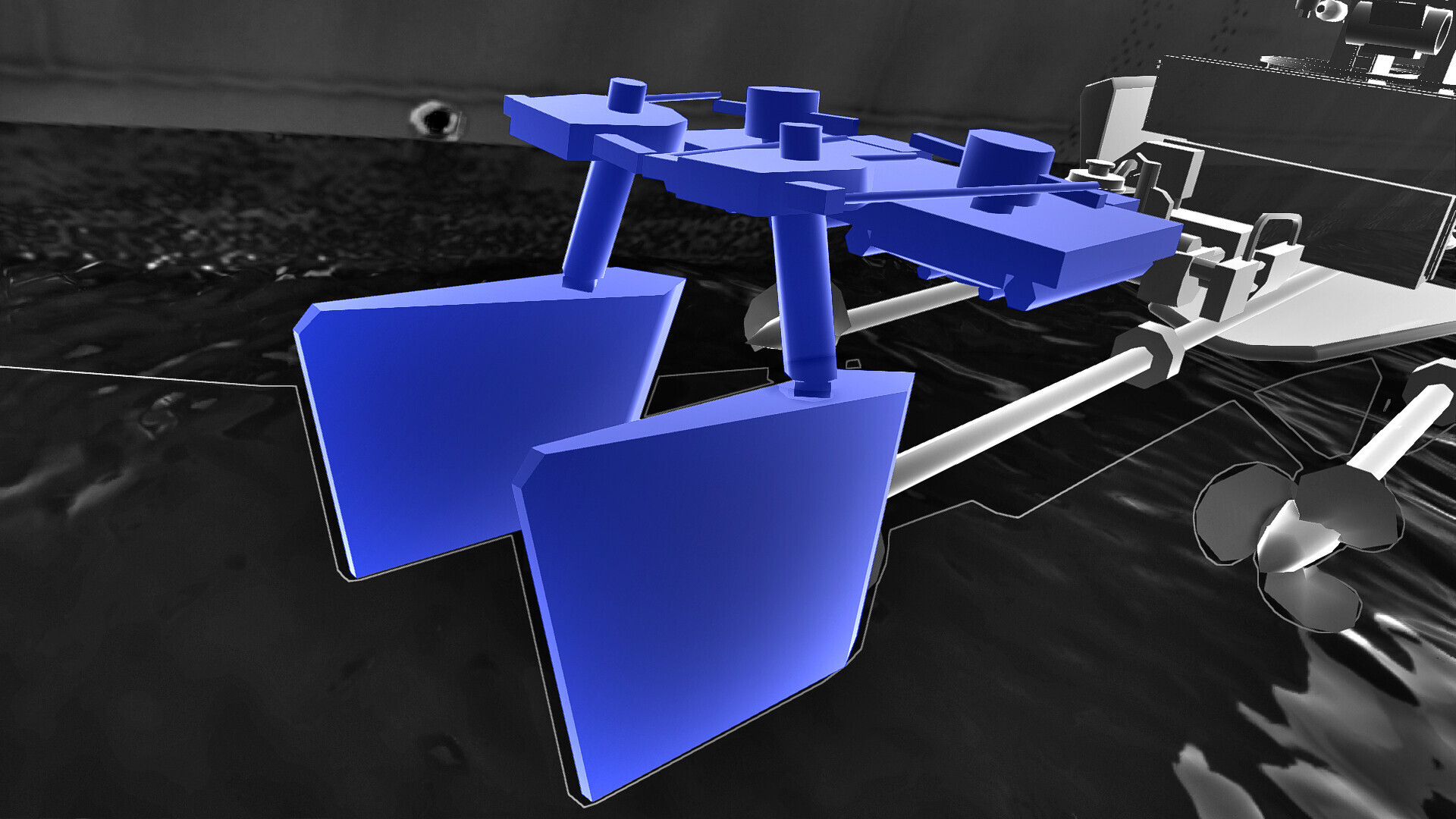
Damage to the steering gear (rudder) can also cause loss of heading even if the bridge remains functional. The steering gear is repaired automatically; when damaged a red steering icon appears in the status panel.
This model is repaired automatically, without the need to fix it. If the steering mechanism is damaged, a red steering wheel icon lights up at the bottom of the status bar.
Engine
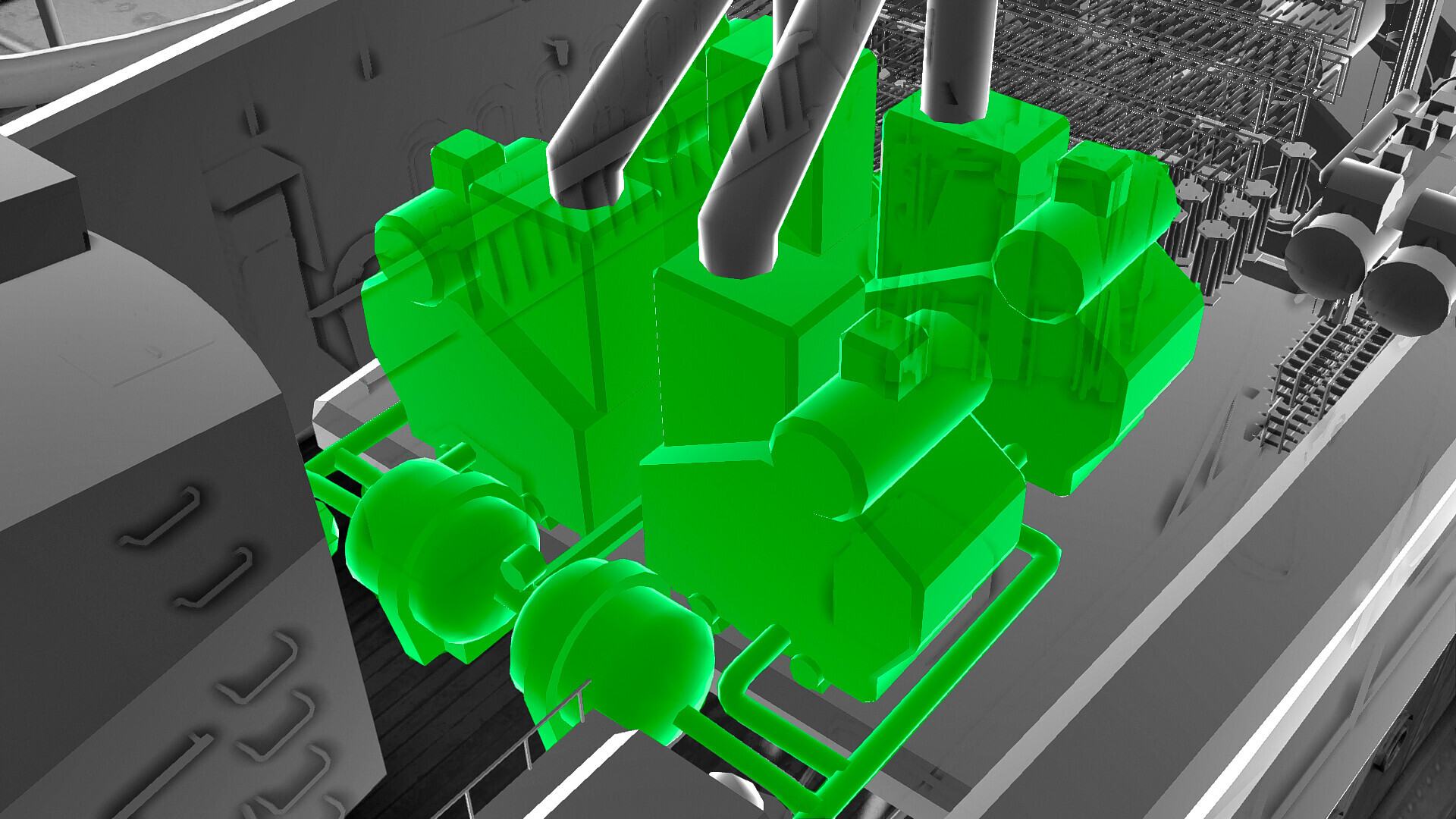
Engines provide propulsion. Remaining stationary makes you vulnerable to torpedoes and air attacks, but stopping a ship is not instant — many vessels have multiple engines (even small boats often have two). Engines are combustible: the chance of fire depends on engine type and the incoming projectile.
Engines are linearly damaged: any damage reduces efficiency progressively:
- Orange: At least one engine remains serviceable.
- Red: All engines are inoperative but temporary repairs by crew restore minimal movement.
- Black: Engines and engine crew are destroyed; movement is impossible.
Transmission
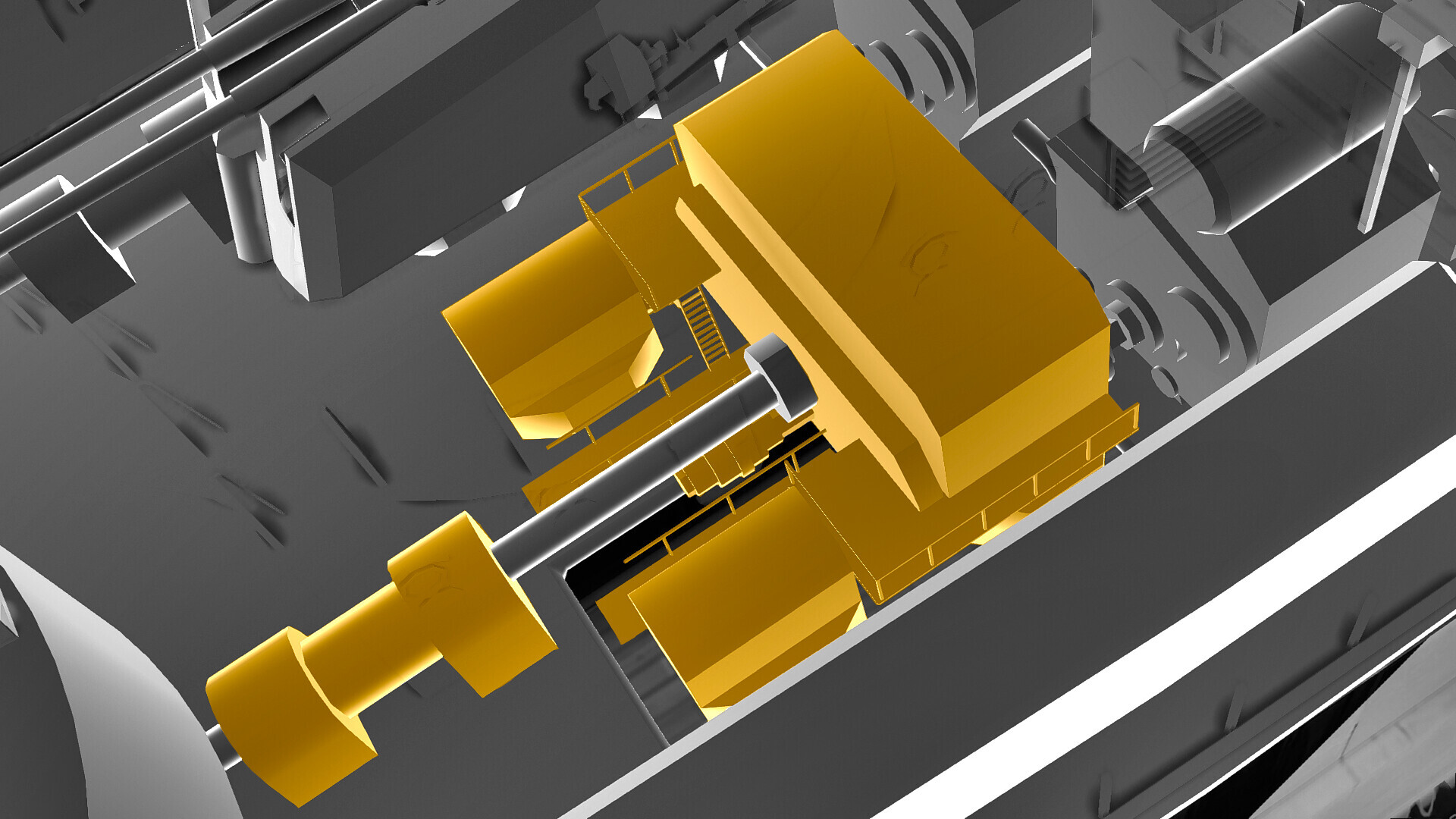
The transmission is a mechanism that transfers power from the engine to the propellers. Losing the transmission is no better than losing the engine. The only good thing is that it cannot catch fire and is usually difficult to access.
This is a linearly damaged module. It reacts to any damage, and the more serious the damage, the lower the module's efficiency. In the status panel, the transmission icon (propeller image) changes color depending on the number of damaged modules:
- Orange — at least one propeller is relatively serviceable
- Red — all propellers are inoperable, but the crew has already performed preliminary repairs; speed has been reduced to a minimum
- Black — all propellers are destroyed; movement is temporarily impossible
Smoke stack (funnels)
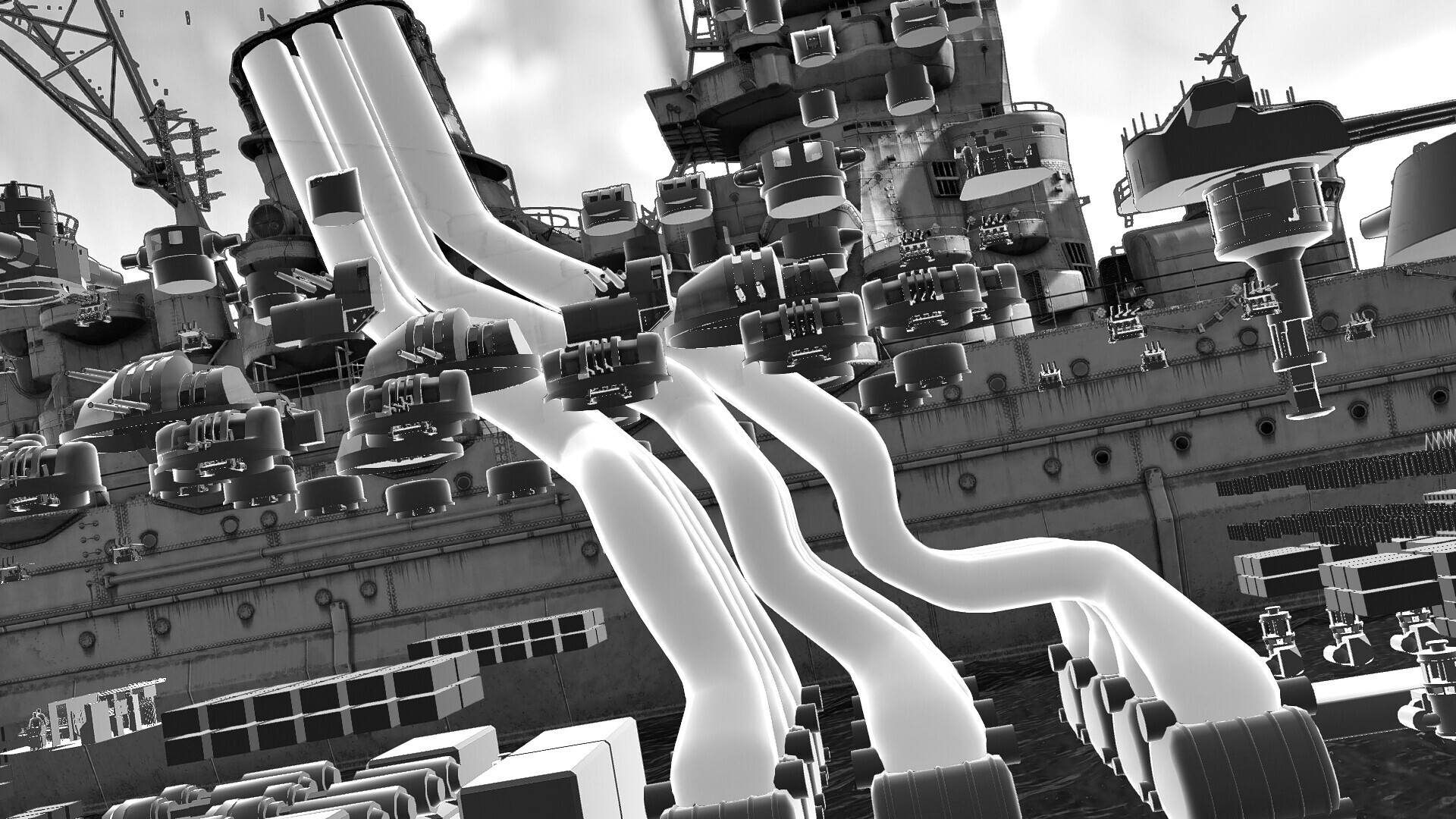
Smoke stacks (funnels) are part of the exhaust system on many ships. A vessel can usually still move if smoke funnels are damaged or lost, but maximum speed may be reduced by up to ~15%.
Modules affecting combat capabilities
Gun turrets and mountings
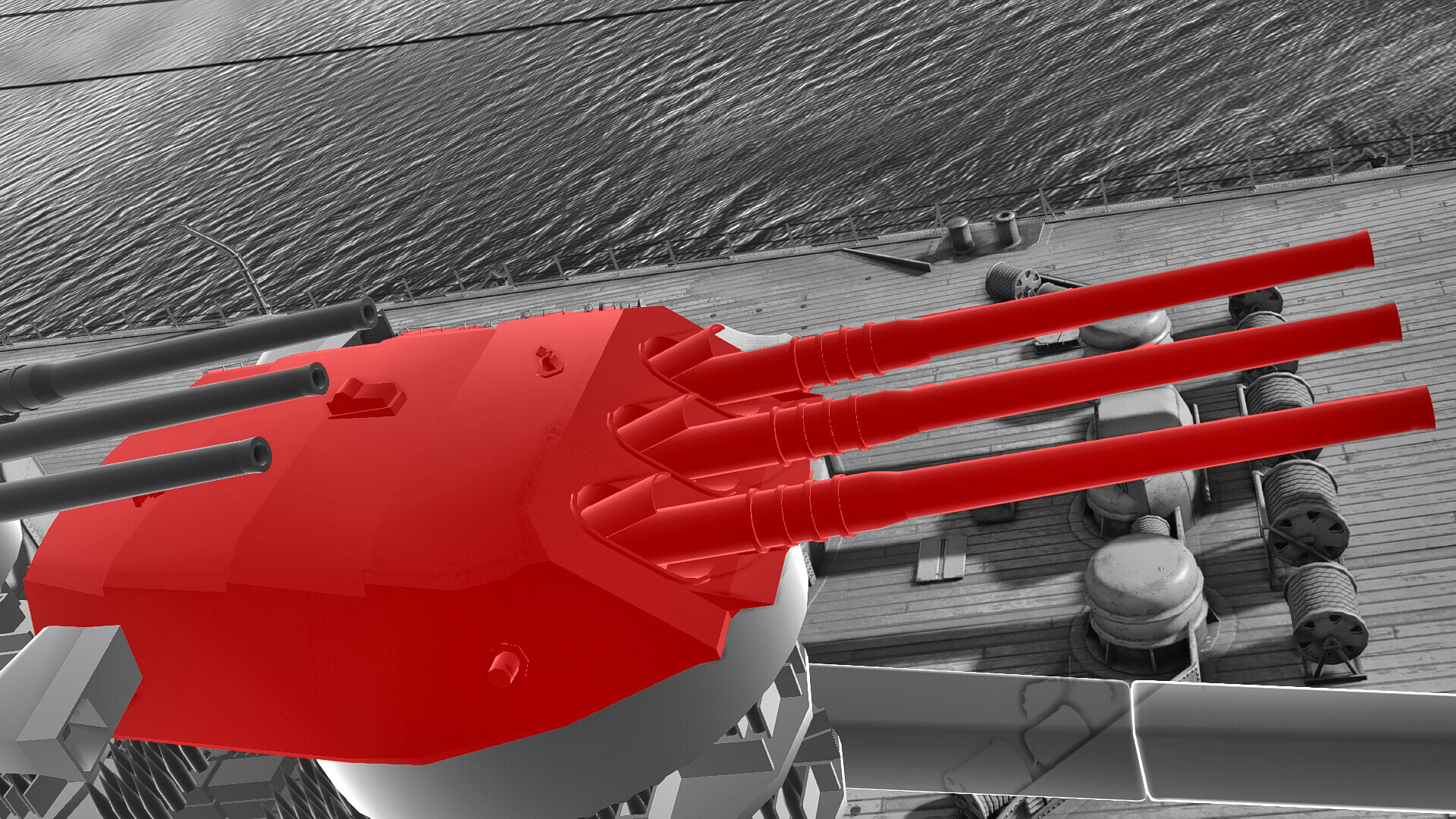
Gun turrets are the primary armament on many warships and often include multiple turrets on larger vessels reducing the impact of losing a single mount. Barrel damage produces effects similar to tanks: reduced rate of fire and increased dispersion (even in realistic modes). Severe turret damage can jam horizontal rotation, and total destruction prevents firing.
Turret crews are drawn from compartments and are replenished according to available personnel:
- Orange: at least one turret is capable of firing.
- Red: No operational turrets remain.
Ammunition elevators
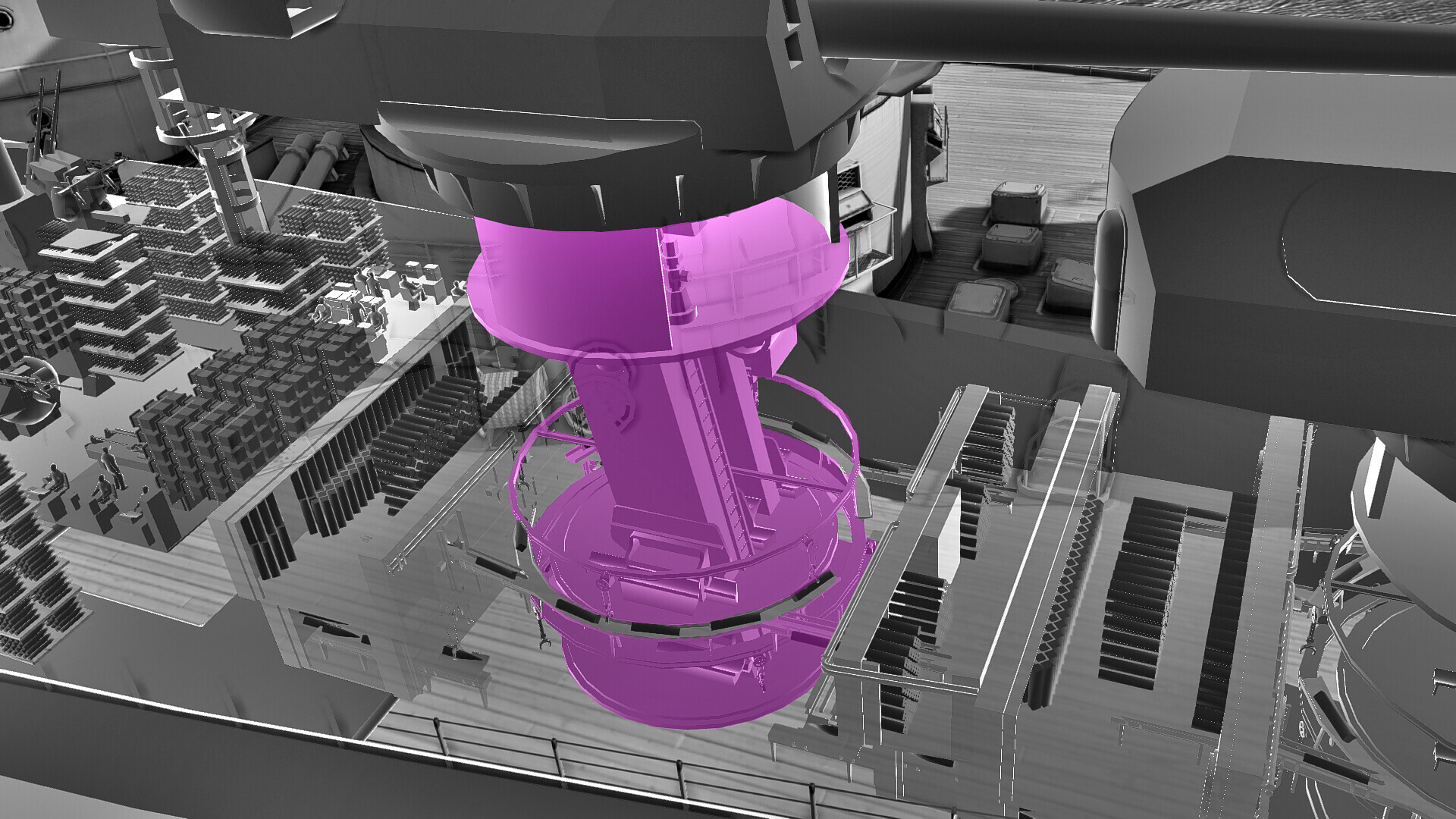
Shells are stored in magazines (ammunition cellars) and are delivered to turrets via hoists or handling systems. If such a mechanism is broken, reloading slows down by 10-20% depending on the extent of the damage.
Torpedo tubes
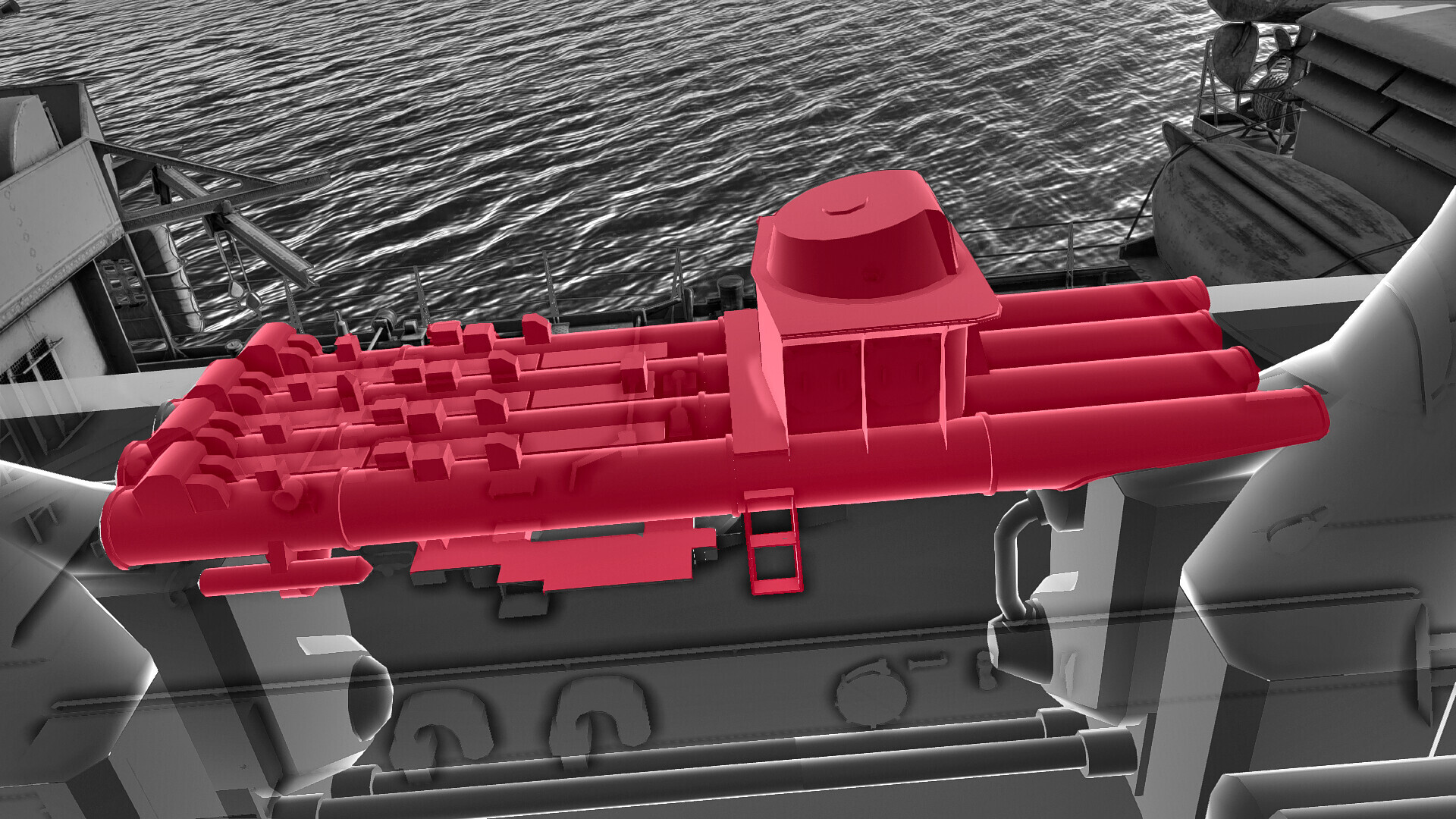
Some ships carry torpedoes. Damaged torpedo tubes or torpedoes are unusable; there is only a small chance a hit will cause an explosion.
It is not a linearly damaged module. In the status panel, the torpedo launcher icon changes color depending on the number of damaged modules:
- Orange: there is at least one tube that allows torpedo discharge.
- Red: there are no operational tubes.
Depth Charges
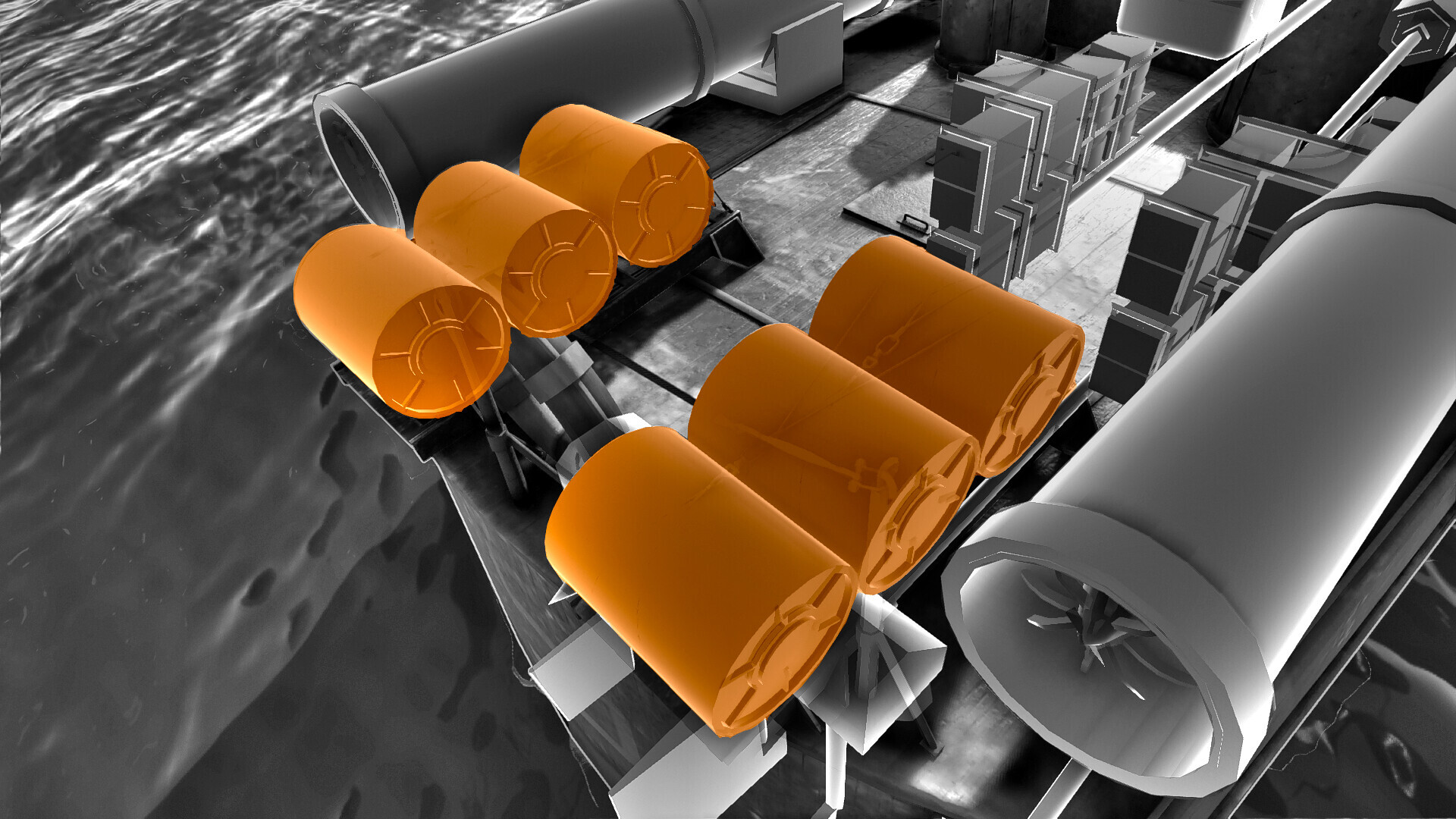
Depth charges and other carried ASW ordnance are hazardous: if their storage is destroyed they may detonate. These modules are not linearly damaged, an explosion check occurs only when the module reaches the destroyed (black) state. Partial damage generally has no effect.
Modules affecting survivability
Hull / plating
A ship’s buoyancy comes from displacement, the volume of water it displaces. Hull breaches admit water and reduce buoyancy. The hull is divided into watertight compartments by bulkheads.
When compartments flood, buoyancy is reduced proportionally; larger or multiple breaches speed up flooding. Because combined buoyancy loss can exceed 100% in the damage accounting, prompt damage control is essential.
Hull repairs are available for all ships without researching modules. Flood control involves two stages: patching holes and pumping out water.
Compartments
Compartments contain crew who perform essential tasks: fight fires, patch breaches, pump out water, operate weapons and more. Compartments are highly flammable; the chance of fire does not depend on damage severity.
Compartments are linearly damaged: increasing damage reduces the effective crew present; a black compartment indicates all crew in that compartment are killed. Unlike individual crew modules, compartments are not replenished during the battle. Crew counts per compartment vary by ship.
Ammunition storage
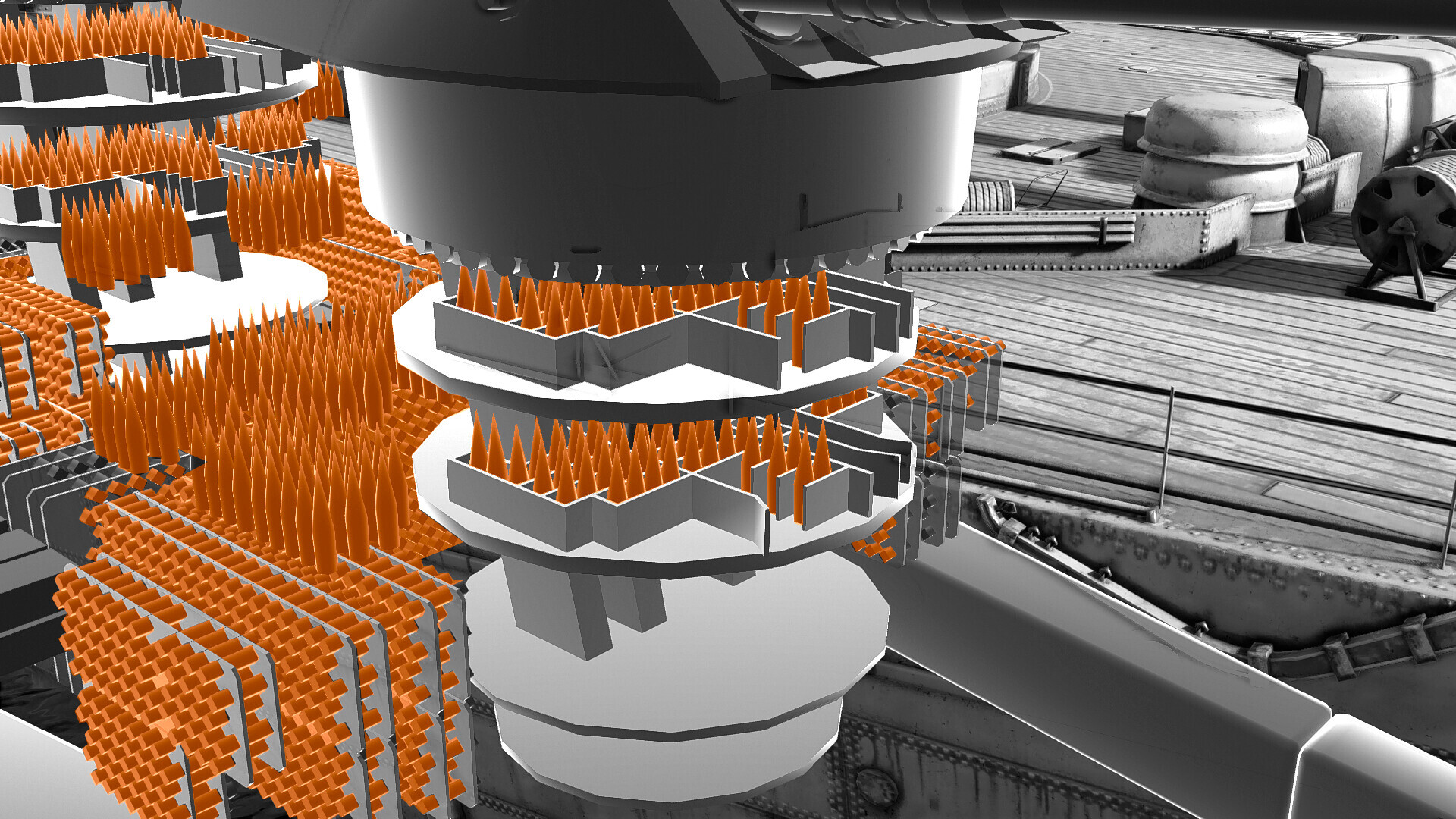
Ammunition is kept in magazines (and in ready-use lockers for turrets). Magazines are not linearly damaged: when a magazine is destroyed it will normally detonate, causing catastrophic damage that often renders the ship inoperable.
Fuel tanks
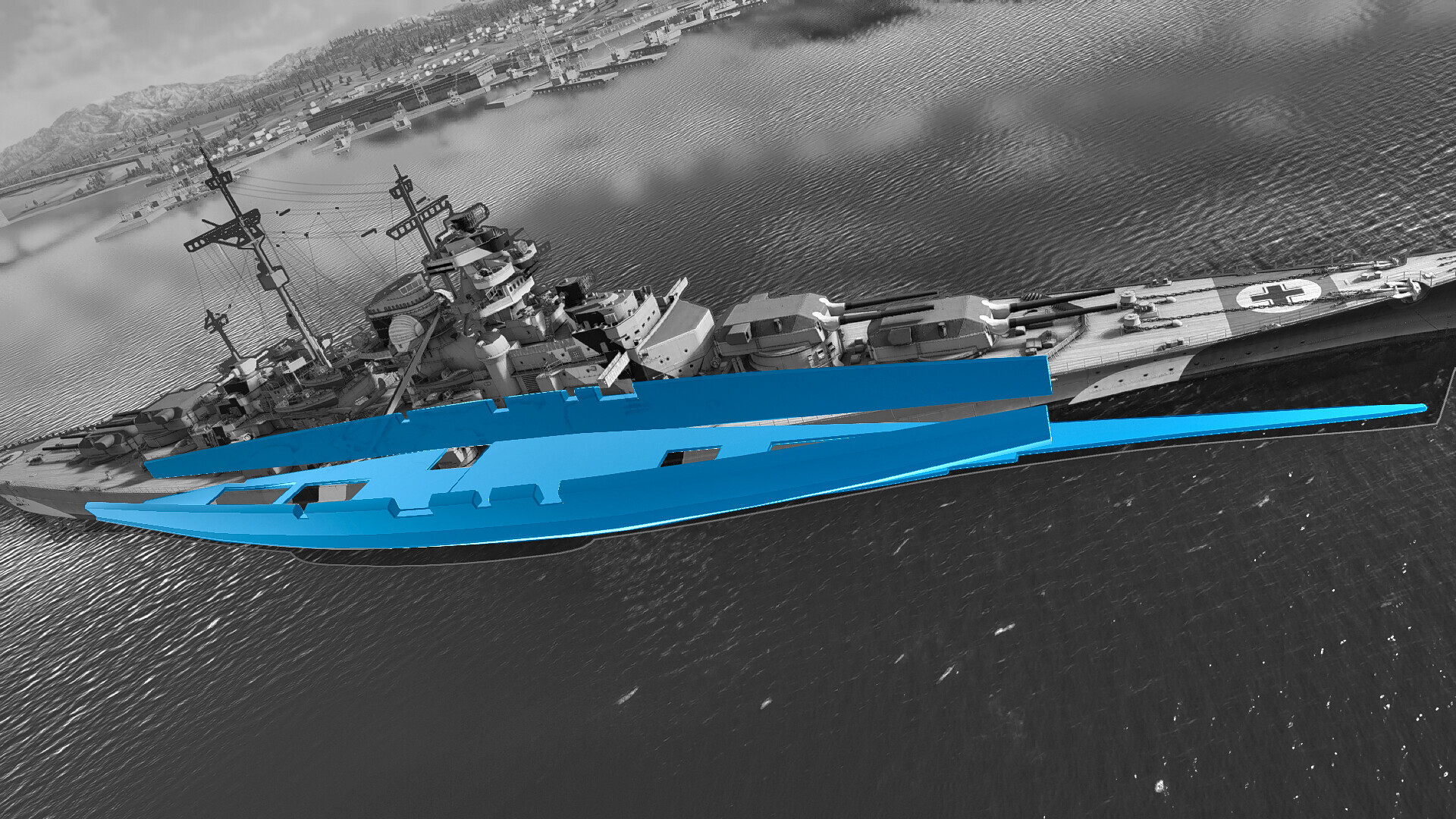
Fuel tanks (coal bunkers or liquid fuel) differ in vulnerability. Large internal bunkers rarely detonate catastrophically; smaller or external tanks are more likely to ignite or explode depending on the projectile. Fuel tanks are not linearly damaged: the risk of fire or explosion depends primarily on the round that strikes them and can increase if the tank is destroyed.
It is not a linearly damaged module. The chance of fire and explosion depends largely on the type of shell that hits it and, in rare cases, increases when the module is completely destroyed (to a black state).
Pumps
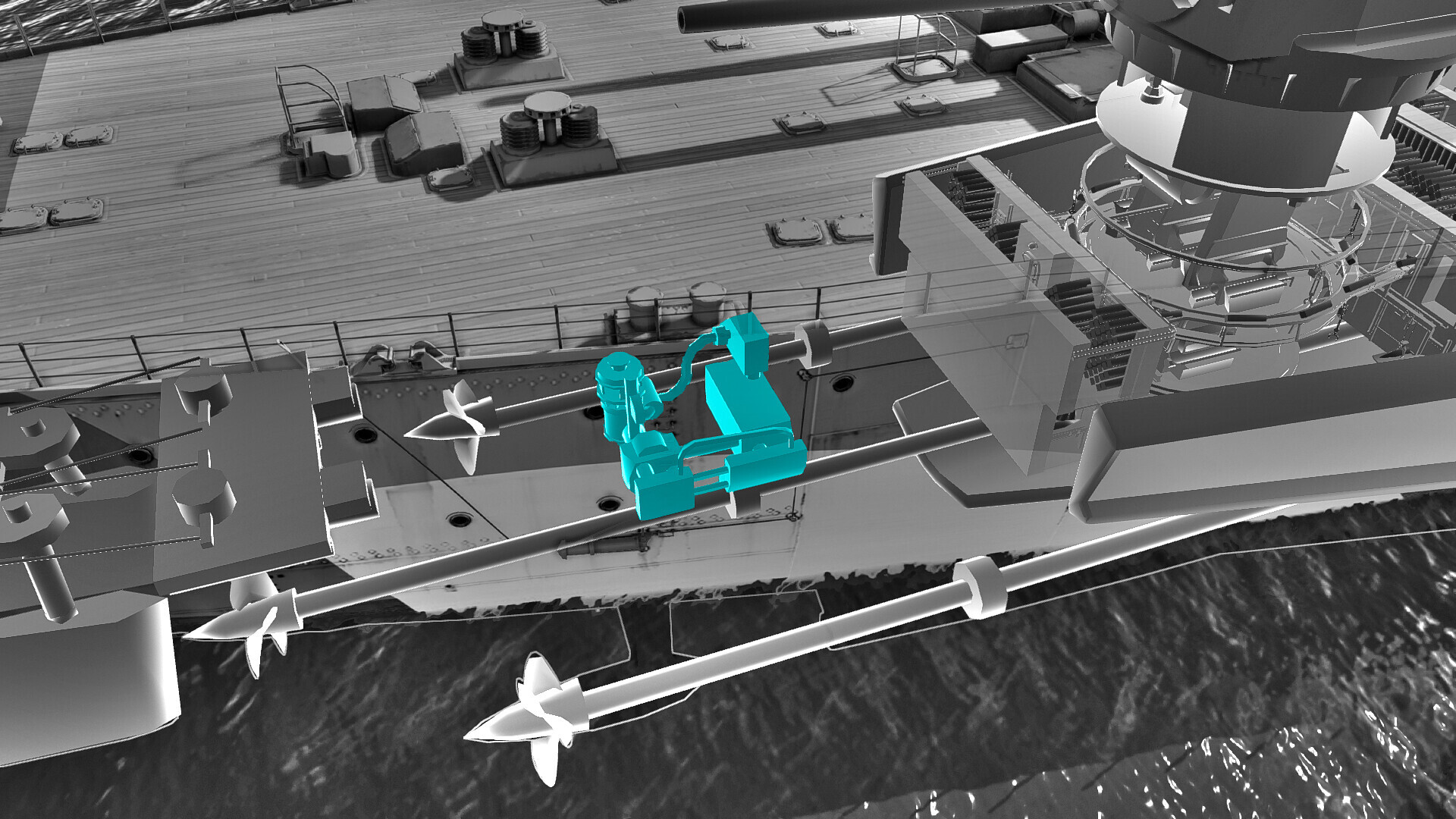
Pumps remove water from flooded compartments. Damaged pumps reduce dewatering rates but do not affect hull repair speed.
Radio station (communications)
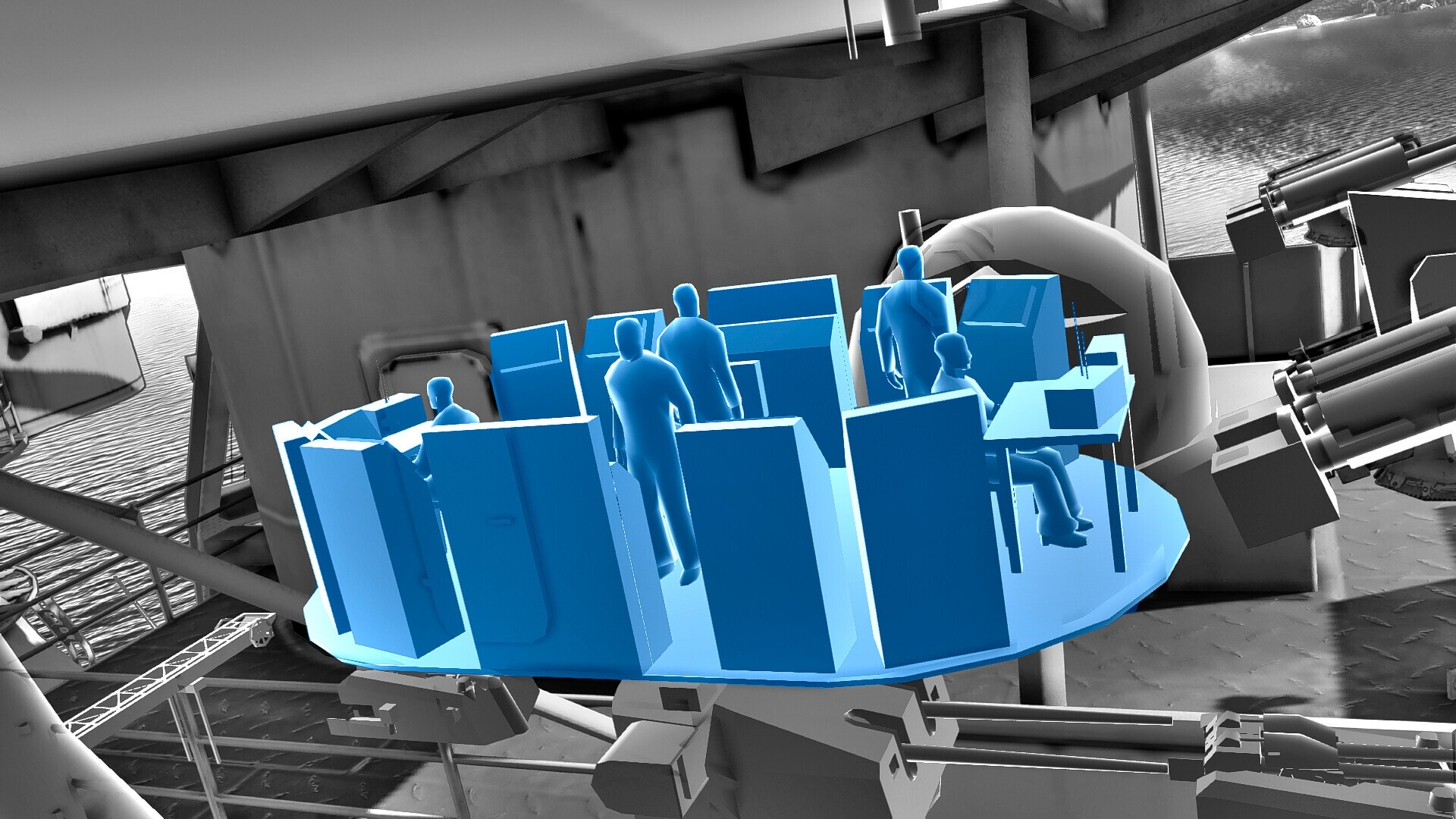
The radio station contains communications equipment and personnel responsible for external communications, spotting coordination, and in some ships relaying fire-control data.
Damage to the radio station can reduce or disable long-range spotting, radio-guided links, and other comms-dependent functions. In some ships radar or radio direction-finding components are linked to this module; their loss further degrades situational awareness.
In-game effects (typical): reduced ability to receive/send spotting reports, degraded FCR-linked features (spotting corrections, remote director feeds), and reduced coordination with aircraft/spotters.
Fire control rooms / fire directors
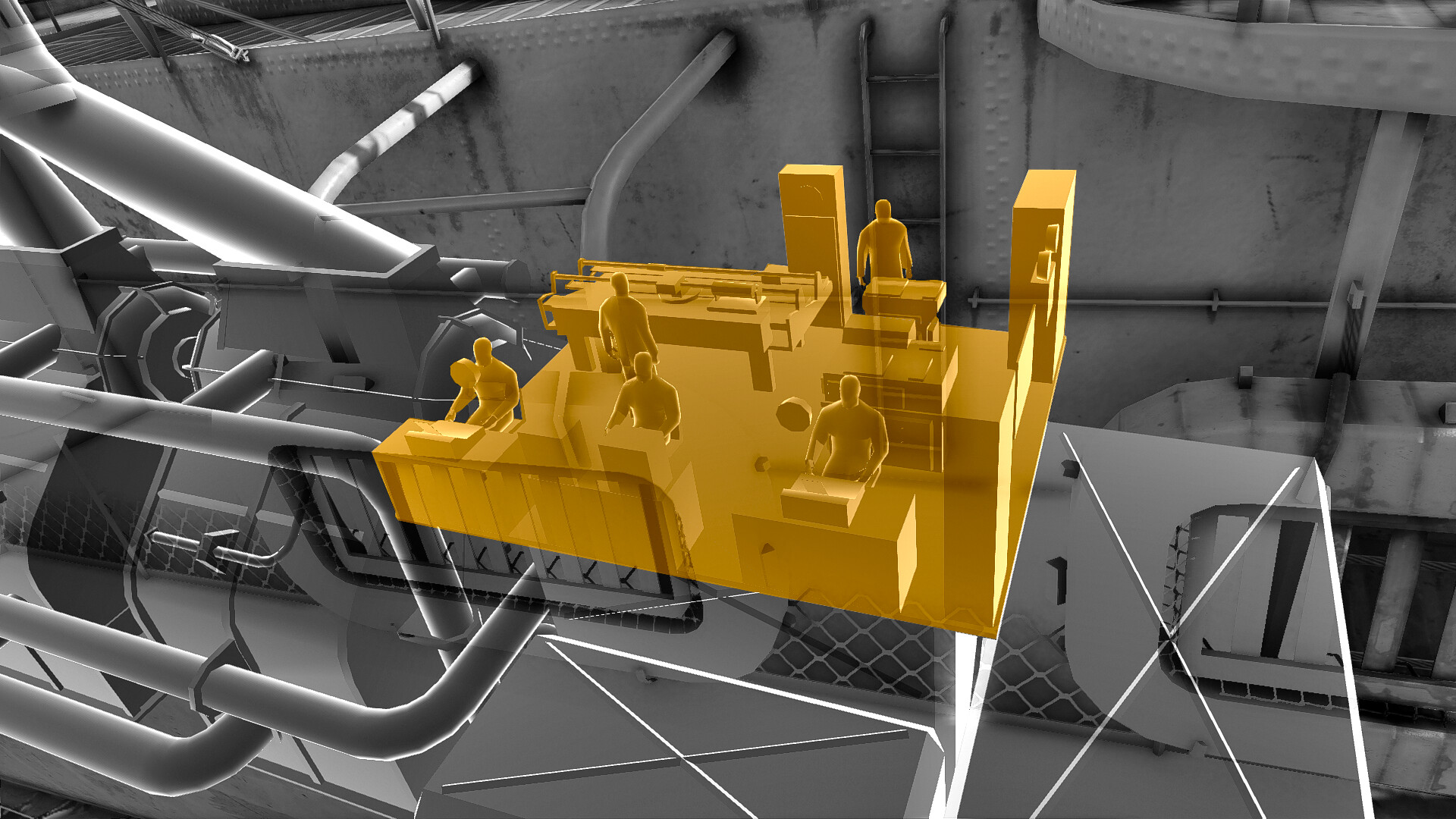
Fire control rooms and fire directors are central to a warship’s ability to aim and coordinate its guns. A fire control room (FCR) typically houses rangefinders, plotting tables, ballistic computers and personnel who compute firing solutions and relay commands to turrets via fire directors. A fire director is an aiming station or mechanical/electronic director that transmits elevation and bearing to the turrets or stabilizes the guns for accurate fire.
In‑game effect: damage to the fire control room or a fire director can degrade targeting accuracy, slow target acquisition, and disable centralized fire control for multiple turrets. Depending on the ship and its systems, FCR damage may increase dispersion, remove ballistic corrections (range/lead), or force turrets to operate in local (independent) mode.