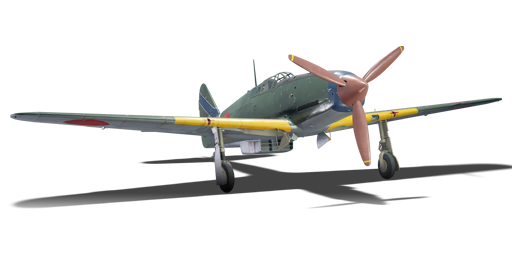
Ki-61-II Otsu Kai



The Ki-61-II Kai, designated Type 3 Fighter, Model 2 Improved (三式戦闘機二型改), was intended to be the ultimate evolution of the Kawasaki Ki-61 series, replacing the troubled DB 601-based Ha-40 with the (even more problematic) DB 605-based Ha-140. Early Model 2 development included redesigned wings capable of mounting 20 mm Ho-5 cannons, theoretically allowing an all-20 mm armament configuration. However, the Model 2 Kai reverted to a layout similar to the Model 1D (Ki-61-I tei), retaining 12.7 mm Ho-103 machine guns in the wings. Although the Ha-140 delivered increased power, it proved extremely unreliable due to tight manufacturing tolerances that stretched Japan’s industrial capabilities. Continued attempts to refine the engine while airframes were already in production resulted in many completed fuselages lacking engines, a problem later addressed by re-engining them as the Ki-100. A similar situation occurred in the Navy with the Yokosuka D4Y Suisei.
With the Ki-61-II Kai undergoing changes later in its limited production run, some historians retrospectively distinguish early aircraft as kō and later ones as otsu. This differentiation is based on a canopy modification introduced at the request of the Army Aviation Headquarters, which sought improved pilot visibility through adoption of a teardrop-style canopy, reportedly influenced by Nakajima’s Ki-84. However, unlike Nakajima, Kawasaki lacked comparable technical familiarity. As a result, difficulties in properly bonding and sealing the new canopy led to noise disturbances for pilots.
The Ki-61-II Otsu Kai was introduced in Update 1.59 “Flaming Arrows”. In gameplay, engine reliability is naturally not a concern, yet the additional horsepower translates into only a modest performance improvement. While total output increases, so does overall weight, leaving it only marginally superior to the Ki-61-I tei in most flight characteristics. The most meaningful upgrade is not the engine itself, but the Ho-5 cannons, which now carry 200 rounds per gun instead of the previous 120, extending combat endurance and sustained fire capability.

flaps
flaps
flaps
brake
| Belt | Belt filling | Armor penetration (mm) at a distance: | |||||
|---|---|---|---|---|---|---|---|
| 10 m | 100 m | 500 m | 1000 m | 1500 m | 2000 m | ||
| HEF-I/P/AP-T | 27 | 25 | 17 | 10 | 6 | 4 | |
| HEF-I/HEF-I/AP-T | 27 | 25 | 17 | 10 | 6 | 4 | |
| AP-T/AP-T/HEF-I | 27 | 25 | 17 | 10 | 6 | 4 | |
| AP-T | 27 | 25 | 17 | 10 | 6 | 4 | |
| HEF-I/HEF-I/HEF-I/P | 16 | 13 | 8 | 6 | 0 | 0 | |
| Belt | Belt filling | Armor penetration (mm) at a distance: | |||||
|---|---|---|---|---|---|---|---|
| 10 m | 100 m | 500 m | 1000 m | 1500 m | 2000 m | ||
| AP-T/AP/HEF-I | 21 | 19 | 13 | 7 | 4 | 3 | |
| AP-T/HEF-I/AP/HEF-I | 21 | 19 | 13 | 7 | 4 | 3 | |
| AP-T/HEF-I/HEF-I/HEF-I | 21 | 19 | 13 | 7 | 4 | 3 | |
| AP-T/AP/AP-T | 21 | 19 | 13 | 7 | 4 | 3 | |
| AP/HEF-I/HEF-I/HEF-I | 21 | 19 | 13 | 7 | 4 | 3 | |


 Ki-61-II Otsu Kai
Flight performance | |
|---|---|
Survivability |
|---|
Weaponry | ||
|---|---|---|