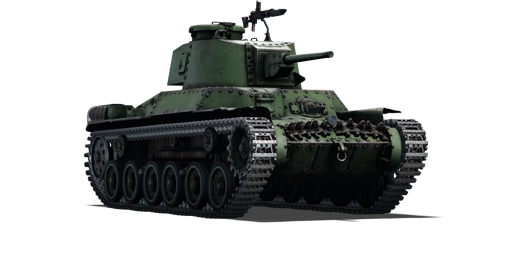
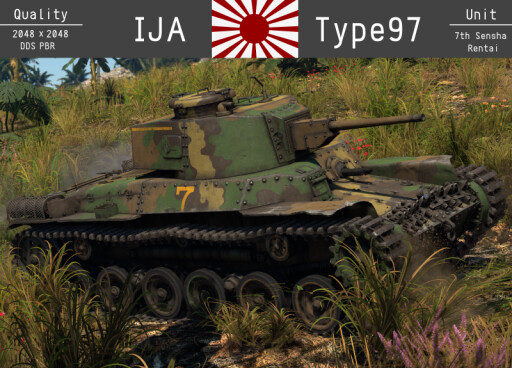
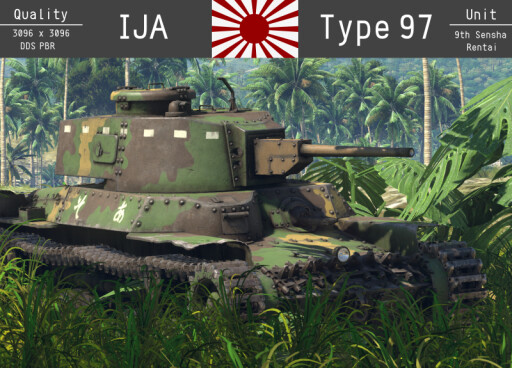
The Type 97 Chi-Ha Kai was developed after Japan’s 1939 defeat at Khalkhin Gol, which exposed the shortcomings of the infantry-support Type 97 Chi-Ha and its low-velocity 57 mm gun. To improve anti-tank performance, the higher-velocity Type 1 47 mm gun—ready by 1941—was mounted in the Shinhōtō (新砲塔, “new turret”), creating the improved Chi-Ha Kai. Designed to counter late-1930s armor, it performed effectively in early Pacific campaigns such as Malaya and Corregidor against lightly armored Allied vehicles. However, its inter-war design standards left it outmatched by newer 1940s tanks like the M4 Sherman, a generational gap that greatly contributed to the negative reputation of Japanese armour.
The Chi-Ha Kai was introduced along with the initial Japanese Ground Forces tree in Update 1.65 "Way of the Samurai". It serves as the true introduction to Japanese combat tanks, being equipped with higher-velocity cannons and relatively dangerous post-penetration damage. Built on the Chi-Ha, the only main difference is the turret; mobility remains the same, but it comes with a more capable cannon and an additional crew member.





 Chi-Ha Kai