
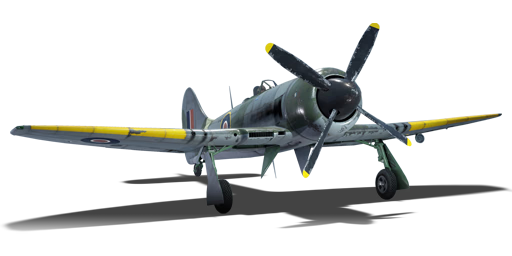
Tempest Mk II



The Tempest Mk II was a British fighter developed alongside the Tempest Mk V during WWII after the cancellation of the Hawker Tornado. Unlike the Tempest Mk V, the Mk II was powered by a Bristol Centaurus 18-cylinder radial engine. The engine installation, cowling, and exhausts were inspired by a captured Fw 190. The first Centaurus-powered Tempest Mk II flew on 28th June 1943, with the first prototype using the rudder and tail fin of a Typhoon. The second prototype flew on 18th September 1943 and featured the enlarged rudder and tail later used on the Tempest. The prototypes experienced issues with engine vibrations, which were resolved by fitting different engine mountings. The aircraft also suffered from overheating and other minor issues. Due to this, as well as the decision to tropicalise all aircraft for service in South-East Asia, production was delayed.
In September 1942, an order was placed for 500 Tempest Mk IIs to be built by Gloster, but in 1943 priority was given to the Typhoon and the contract was transferred to Bristol instead, while Hawker was to build another 1,800. The first production Tempest Mk II rolled off the line on 4th October 1944. As the war was nearing its end, only 50 Tempests were built by Bristol, with 402 built by Hawker. A total of 100 were built as fighters and 302 as fighter-bomber versions with reinforced wings and wing bomb racks capable of carrying up to 1,000 kg. The Tempest Mk II was intended for combat against Japan; however, the war ended before they were deployed.
Introduced in Update 1.37, the Tempest Mk II is faster than the Mk V; however, engine performance drops significantly above 4,000 m. The Mk II is best utilised for Boom and Zoom tactics, as the aircraft itself is not very manoeuvrable horizontally. However, the superior acceleration and dive speed can be used to either escape or regain energy.
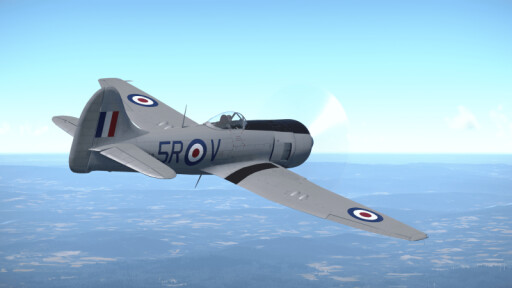
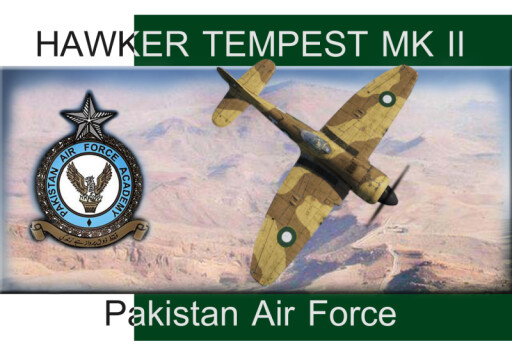
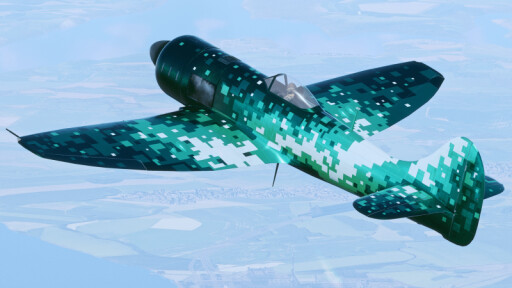

flaps
flaps
flaps
brake
| Belt | Belt filling | Armor penetration (mm) at a distance: | |||||
|---|---|---|---|---|---|---|---|
| 10 m | 100 m | 500 m | 1000 m | 1500 m | 2000 m | ||
| HEI/SAP-I/T | 21 | 19 | 14 | 9 | 5 | 4 | |
| AP-T/HEI/SAP-I | 36 | 33 | 24 | 15 | 10 | 7 | |
| SAP-I/HEI/AP-T/HEI/SAP-I | 36 | 33 | 24 | 15 | 10 | 7 | |
| AP-T/HEI/AP-T | 36 | 33 | 24 | 15 | 10 | 7 | |
| AP-T/SAP-I/HEI/AP-T | 36 | 33 | 24 | 15 | 10 | 7 | |
| HEI/SAP-I | 22 | 20 | 14 | 9 | 6 | 4 | |


Flight performance | |
|---|---|
Survivability |
|---|
Weaponry | |
|---|---|