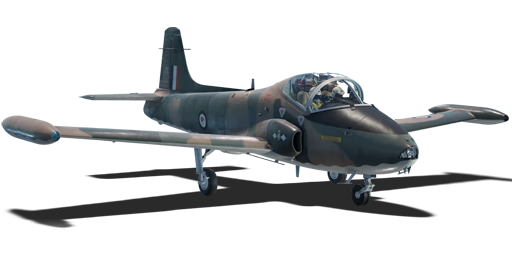
Strikemaster Mk.88


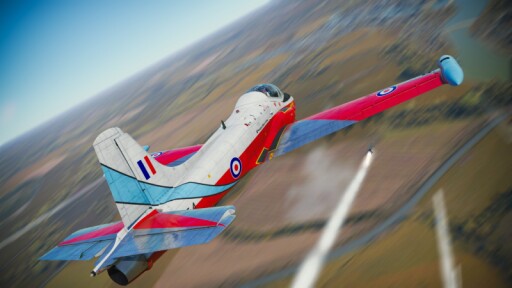
The BAC 167 Strikemaster is a jet training and light-attack aircraft designed and produced by the British Aircraft Corporation (BAC). The Strikemaster’s origin can be traced back to when BAC acquired the Hunting Aircraft company in 1960 as part of the British government's effort to consolidate various aircraft companies into a single entity. In the process, BAC gained the design patent of the Hunting Jet Provost, the first purpose-built jet trainer aircraft in the world, and started developing a counter-insurgency and ground attack aircraft based on it. The Strikemaster made its first flight on 26 October 1967. Although it was not accepted by the Royal Air Force, its potential was already acknowledged by various air forces around the world: A year before it even made its first flight, the Royal Saudi Air Force ordered 25 aircraft from BAC in May 1966, and became its first operator. In total, 146 Strikemasters were produced from 1967 to 1983.
The Strikemaster Mk.88 was the designation given to the batch of 16 BAC Strikemasters ordered by the Royal New Zealand Air Force in 1972. They were assigned to No. 14 Squadron RNZAF, where they were given the nickname “Blunties” due to their flat nose compared to the A-4 Skyhawks that the squadron also operated. Due to the lack of spare parts after BAC was merged with Hawker Siddeley to form British Aerospace (BAe) in 1977, the RNZAF replaced the remaining Strikemasters with 18 Aermacchi MB 339CBs in 1991.
The Strikemaster Mk.88 was introduced during Update "Sons of Attila" as a reward for Battle Pass: Season XIII, "Tropical Storm". Although it is a design from the late 1960s, the Strikemaster is pitted against late WW2 piston aircraft due to the lack of top speed required to compete with its contemporaries or even early jets. However, also owing to its more modern design, the Strikemaster features a more efficient engine that allows it to accelerate faster than early jets and offers decent energy retention. As the name “Strikemaster” suggests, the aircraft’s main feature is the decent array of payloads for a variety of targets, ranging from rockets, conventional and drag bombs, and napalm. In terms of firepower, the Strikemaster only has two 7.62 mm machine guns at its disposal, though this comically weak firepower can be somewhat remedied by mounting up to four gun pods with eight 7.62 mm machine guns, although at the cost of the ability to carry bombs.

flaps
flaps
flaps
brake
| Belt | Belt filling | Armor penetration (mm) at a distance: | |||||
|---|---|---|---|---|---|---|---|
| 10 m | 100 m | 500 m | 1000 m | 1500 m | 2000 m | ||
| T/AP/AP | 13 | 12 | 7 | 3 | 2 | 0 | |
| Name | Weight | Slot | ||||||||
|---|---|---|---|---|---|---|---|---|---|---|
| 4 × | 67.6 kg | 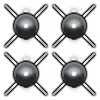 | | | | | | | | |
| 4 × | 67.6 kg | 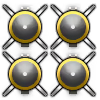 | | | | | | | | |
| 7 × | 93.3 kg | 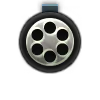 | | | | |||||
| 18 × | 183.9 kg | 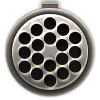 | | | | |||||
| 36 × | 163.3 kg |  | | | | |||||
| 240.9 kg |  | | | | ||||||
| 254 kg |  | | | | ||||||
| 254.9 kg |  | | | | ||||||
| 344.7 kg |  | | | | ||||||
| 2 × | 202.3 kg |  | | | | |||||


 2 x (110 / 190 / 600) %
2 x 172 %
2 x (110 / 190 / 600) %
2 x 172 %
Flight performance | |
|---|---|
Survivability |
|---|
Weaponry | ||
|---|---|---|