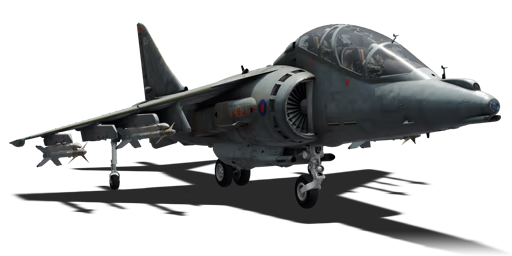
Harrier T.10



With the arrival of the new Harrier GR.7, the RAF deemed the previous generation's two-seater Harrier T.Mk.4 and T.Mk.6 training aircraft sufficient for pilot training. The old aircraft were upgraded by installing GR.7 equipment in the nose, despite other balancing and engine power issues. However, they soon had to follow the lead of the United States Marine Corps (USMC). Initially, the USMC thought the same, but after numerous pilot training failures and inadequate preparation, they created the two-seater TAV-8B. The same problems were faced by the British, so the Air Force ordered the creation of a modification similar to the American one, but without cutting combat capabilities, with avionics and components from the GR.7. On February 28, 1990, the contract for the construction of 13 aircraft was signed.
The first two-seater Harrier T.10 took to the skies on April 7, 1994. Delivery to units began on March 1, 1995. Due to various changes, the T.10 ended up being about 90 cm longer. Only one switch was changed in the front cockpit; the second cockpit was filled with various MFDs and equipment for the pilot instructor. Despite its trainer status, the T.10 served in combat units. Like other Harriers, the T.10 was removed from RAF service by 2011.
The Harrier T.10 was introduced in Update 2.45 "Hornet's Sting". The aircraft resembles the Harrier GR.7 in many ways, differing only in the absence of the AIM-9M air-to-air missile and its inferior flight characteristics. While T.10 pilots will appreciate its vast array of countermeasures and wide range of drop weapons, its low maximum speed makes it difficult to engage in air combat or evade enemy missiles.

flaps
flaps
flaps
brake
| Name | Weight | Slot | ||||||||||
|---|---|---|---|---|---|---|---|---|---|---|---|---|
| 84.5 kg |  | | | | ||||||||
| 19 × | 263.9 kg |  | | | | | | |||||
| 18 × | 183.9 kg |  | | | | | | |||||
| 254.9 kg |  | | | | | | | |||||
| 295 kg |  | | | | | | | |||||
| 277.1 kg |  | | | | | | ||||||
| 216 × Large caliber chaff countermeasures | 216.1 kg |  | ||||||||||
| 226.8 kg |  | | | | ||||||||
| 303.5 kg |  | | | | ||||||||
| 291.2 kg |  | | | | ||||||||
| 486 kg |  | | | | | |||||||
| 486 kg |  | | | | | |||||||
| 546.5 kg |  | | | | ||||||||
| 546.5 kg |  | | | | ||||||||
| 160 × Countermeasures (BOL) | 39.4 kg | | | |||||||||
| 160 × Countermeasures (BOL) | 123.9 kg |  | | |||||||||
| 1,079.6 kg |  | | ||||||||||
| 151.9 kg |  | | ||||||||||
| TIALD targeting pod | 120 kg |  | ||||||||||

 2 x (85 / 340 / 600) %
2 x 244 %
2 x (85 / 340 / 600) %
2 x 244 %
Flight performance |
|---|
Survivability | |
|---|---|
Weaponry | |||
|---|---|---|---|