
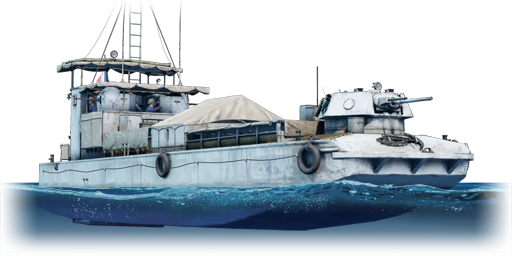
LCM(65)



In 1938, the British Army required a craft to land tanks directly on beaches, prompting the development of the first Motor Landing Craft, later standardised as the LCM Mark I. Designed to carry a light tank and unload rapidly via a hinged bow ramp, its prototypes were ready by 1938–1939, with trials completed just before World War II. In 1941, Higgins Industries adapted the design into an all-steel version, the LCM(3). From 1942, U.S. shipyards mass-produced these craft for the Navy and Army. Thousands served in North Africa, Sicily, Normandy, and the Pacific. A lengthened variant, the LCM(6), entered service late in the war and became a standard post-war landing craft for the U.S. and allied navies.
After the end of WW2, France acquired some LCMs in 1946 and began using them during the French Indochina War. Some LCM(6)s were modified for the Dinassaut (Naval Assault Divisions), which were riverine units of the French Navy, to better accommodate operations during the Indochina War. One of these versions was the LCM Monitor, a gunboat variant featuring a Coventry turret at the front armed with a QF 2-pounder and an 81 mm mortar in the middle. Designed by Arsenal de Saigon in the early 1950s, it was mainly used in Northern Vietnam from 1951 to 1956, where one LCM Monitor (LCM 66) was sunk in the Black River under Vietnamese fire in late 1951. Fewer than 10 Monitors were made.
The French LCM(65) was introduced in Update 2.59 "Sky Odyssey". It has many similarities to the American LCM(6) Zippo, with armour protection, very slow mobility, and 360° heavy firepower. The LCM Monitor is armed with a QF 2-pounder gun capable of firing AP and HE shells, a coaxial 20 mm MG 151 in the turret and another one at the aft, as well as two 12.7 mm Browning machine guns in the middle. The LCM Monitor is capable of engaging targets at any angle without the need to manoeuvre the boat.

| Belt | Belt filling | Armor penetration (mm) at a distance: | |||||
|---|---|---|---|---|---|---|---|
| 10 m | 100 m | 500 m | 1000 m | 1500 m | 2000 m | ||
| HEFI-T/API-T/API-T | 26 | 24 | 19 | 16 | 13 | 12 | |
| API-T/API-T/API-T/HEFI-T | 26 | 24 | 19 | 16 | 13 | 12 | |
| HEFI-T/HEFI-T/HEFI-T/API-T | 26 | 24 | 19 | 16 | 13 | 12 | |
| Ammunition | Type | Armor penetration (mm) at a distance: | |||||
|---|---|---|---|---|---|---|---|
| 10 m | 100 m | 500 m | 1000 m | 1500 m | 2000 m | ||
| HE | 6 | 6 | 5 | 5 | 5 | 5 | |
| APCBC | 89 | 86 | 78 | 70 | 63 | 58 | |
| AP | 80 | 76 | 61 | 50 | 43 | 38 | |
| Belt | Belt filling | Armor penetration (mm) at a distance: | |||||
|---|---|---|---|---|---|---|---|
| 10 m | 100 m | 500 m | 1000 m | 1500 m | 2000 m | ||
| API-T/AP/I/AP | 29 | 27 | 20 | 13 | 9 | 6 | |