
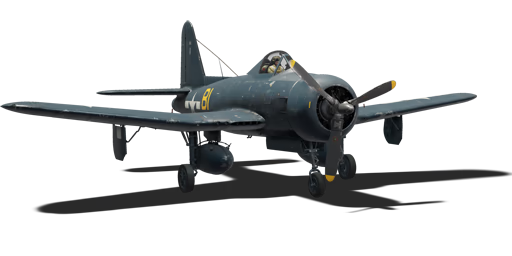
FR-1 Fireball



The Ryan FR Fireball was a mixed-propulsion fighter aircraft developed by the Ryan Aeronautical Company for the US Navy in 1943. The Fireball was designed at the request of then-Rear Admiral John McCain Sr. for a mixed-propulsion fighter. As early jet engines suffered from slow acceleration and were therefore unsuitable for aircraft carriers, the addition of a piston engine would, in theory, remedy this issue by providing additional acceleration at low-to-medium speeds. The first prototype, designated the XFR-1, made its first flight on 25 June 1944, albeit without a jet engine. Throughout the trial phase, the XFR-1 suffered from stability and engine overheating issues that resulted in the loss of all three prototypes in 1945.
Despite the setbacks, the US Navy ordered 1,044 aircraft, designated the FR-1, for production, of which only 66 were delivered before the contract was cancelled on VJ Day. While the FR-1 held the distinction of being the first jet-powered aircraft of the US Navy, its service was short-lived. Due to a combination of stability and compression issues, the FR-1's airframe quickly deteriorated, leading to numerous fatal crashes caused by structural failures. Because of this, and the introduction of the McDonnell FH Phantom jet fighter in 1946, the US Navy decommissioned the FR-1 on 1 August 1947. Only one example survives to this day and is on display at the Planes of Fame Air Museum in Chino, California.
The FR-1 Fireball was introduced in Update 2.53 "Line of Contact" as the first mixed-propulsion aircraft in the game. With a piston engine at the front and a jet engine at the rear, the Fireball is quite unique in terms of flight performance: the propeller-driven airframe design enhances the turn rate and handling at medium-to-high speed, while the jet engine provides excellent acceleration for its rank. However, the Fireball also shares the weaknesses of both types of propulsion, namely sluggish handling at low speeds, limited top speed, and poor energy retention.
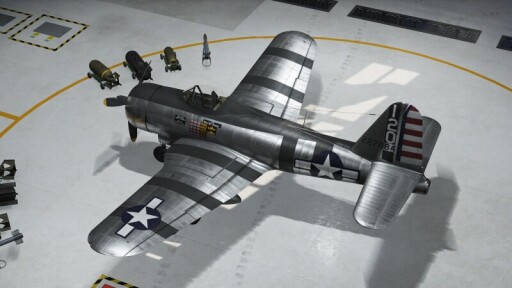

flaps
flaps
flaps
brake
| Belt | Belt filling | Armor penetration (mm) at a distance: | |||||
|---|---|---|---|---|---|---|---|
| 10 m | 100 m | 500 m | 1000 m | 1500 m | 2000 m | ||
| API-T/AP/AP/I | 30 | 27 | 20 | 13 | 9 | 6 | |
| AP-I/AP-I/API-T/I/I | 28 | 26 | 18 | 11 | 7 | 4 | |
| API-T/I/AP/AP/AP-I/AP-I | 30 | 27 | 20 | 13 | 9 | 6 | |
| API-T | 28 | 26 | 18 | 11 | 7 | 4 | |
| AP-I/I/AP-I/I | 28 | 26 | 18 | 11 | 7 | 4 | |
| Name | Weight | Slot | ||||||
|---|---|---|---|---|---|---|---|---|
| 62.8 kg |  | | | | ||||
| 242.6 kg |  | | ||||||
| 500.8 kg |  | | ||||||
| 494.4 kg |  | | ||||||
| Drop tank (100 gal.) | 60 kg |  | | |||||
| Drop tank (130 gal.) | 81 kg | | | |||||

 2 x (65 / 165 / 345) %
2 x 148 %
2 x (65 / 165 / 345) %
2 x 148 %
Flight performance | |
|---|---|
Survivability |
|---|
Weaponry | |
|---|---|