
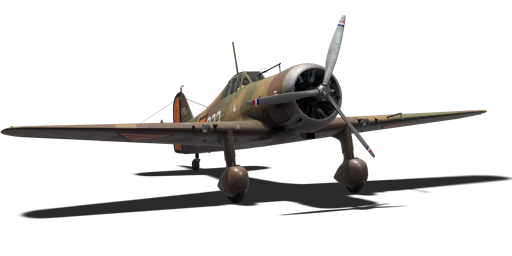
◗Fokker D.XXI




In 1934, the Royal Netherlands East Indies Army Air Force requested an inexpensive fighter aircraft comparable to foreign models. On November 14, Fokker designers submitted several proposals for a monoplane fighter to the Dutch Army Aviation Group. Prior to this, the company had only worked with biplane fighters. The proposed aircraft was a low-wing monoplane with a fully glazed cockpit and a British engine. It could be equipped with machine guns or cannons. In early 1935, the Aviation Group requested a single prototype to be tested by the East Indies Army Air Force. Designated FD-322, the prototype made its first flight on March 27, 1936. Instead of the planned Rolls-Royce engine, the prototype was equipped with a Bristol Mercury engine, which performed poorly. The situation was exacerbated by a change in the Air Force's priorities; they now wanted bombers. Additionally, the Fokker aircraft now had a rival: the Koolhoven F.K.58.
Comparative tests were planned for November, but Koolhoven did not participate due to delays in production. In the absence of alternatives, the Fokker aircraft was adopted as the Fokker D.XXI. Production in the Netherlands ran from July 1938 to September 1939. A total of 36 aircraft were built in the Netherlands, and a significant number were also built in Finland under license. The Dutch Fokkers first saw combat on May 10, 1940, shooting down a Bf 109. On the same day, they shot down some unprotected German Ju 52 transport planes carrying troops. By May 15, most of the Fokker D.XXIs had been shot down or captured by German troops.
The Dutch Fokker D.XXI was introduced in Update 2.47 "Leviathans" as a part of the French air research tree. The aircraft's greatest advantage is its maneuverability compared to other monoplanes. Pilots will also appreciate its good rate of climb. However, it has weak armament, no armor, and low speed.

flaps
flaps
flaps
brake
control
| Belt | Belt filling | Armor penetration (mm) at a distance: | |||||
|---|---|---|---|---|---|---|---|
| 10 m | 100 m | 500 m | 1000 m | 1500 m | 2000 m | ||
| T/AP/AP-I/Ball/I | 13 | 12 | 7 | 3 | 2 | 0 | |
| T/AP/AP-I/AP-I/I | 13 | 12 | 7 | 3 | 2 | 0 | |
| IT/AP-I | 13 | 12 | 7 | 3 | 2 | 0 | |
| AP-I/AP-I/I | 13 | 12 | 7 | 3 | 2 | 0 | |


 ◗Fokker D.XXI
Flight performance | |
|---|---|
Survivability |
|---|
Weaponry |
|---|