
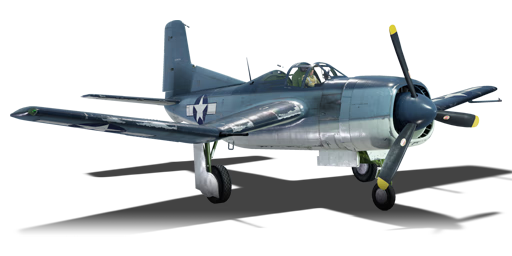
BTD-1



As the SB2C Helldivers failed to live up to the expectations of the US Navy for a replacement for the SBD Dauntless due to numerous defects that delayed its production, the US Navy placed an order with the Douglas Aircraft Company on 20 June 1941 for a new dive bomber to replace both aircraft. The prototype of the Douglas BTD Destroyer, designated as the XSB2D-1, first flew on 8 April 1943, with its layout generally similar to its predecessor (such as the inclusion of a remote-controlled tail gunner). Due to the noticeable improvement over its predecessor as well as the obsolescence of the concept of a dedicated dive and torpedo bomber, the US Navy requested Douglas to modify the design to be capable of using torpedoes, resulting in the BTD-1. In this configuration, the defensive turret was removed in favour of adding more fuel capacity and armour. However, this also resulted in significantly worse performance. After a short production run of 26 aircraft from June 1944 to September 1945, the US Navy cancelled the production of the BTD at the request of Douglas’s chief engineer Ed Heinemann (who worked on both the SBD and the BTD), in favour of prioritising Douglas’s upcoming attacker design, the future AD Skyraider.
Introduced in Update 1.33, the BTD-1 offers noticeable improvements over its predecessors, the SBD Dauntless and the SB2C Helldivers, most notably its flight characteristics. Since most of the payload options of the BTD are carried internally, the plane suffers less from parasitic drag that slows it down. Due to its diverse payloads (including the powerful naval mines), the BTD can be used effectively against both ground and naval targets. Since the plane still suffers from compression at high speed, use of airbrakes is highly recommended. It can also be utilised as a bomber hunter, using the airspawn and its twin 20 mm cannons to shred stray bombers.
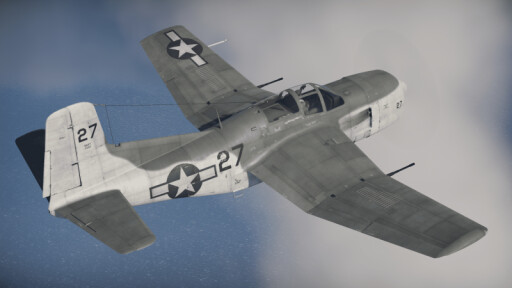

flaps
flaps
flaps
brake
| Belt | Belt filling | Armor penetration (mm) at a distance: | |||||
|---|---|---|---|---|---|---|---|
| 10 m | 100 m | 500 m | 1000 m | 1500 m | 2000 m | ||
| HEI/AP-T | 39 | 36 | 25 | 16 | 10 | 6 | |
| AP-T/AP-T/HEI/HEI | 39 | 36 | 25 | 16 | 10 | 6 | |
| HEI/HEI/HEI/AP-T | 39 | 36 | 25 | 16 | 10 | 6 | |
| AP-T/AP-T/AP-T/HEI | 39 | 36 | 25 | 16 | 10 | 6 | |
| HEI | 5 | 4 | 4 | 4 | 4 | 4 | |
| Name | Weight | Slot | ||||||
|---|---|---|---|---|---|---|---|---|
| 49.9 kg |  | | ||||||
| 242.6 kg |  | |||||||
| 2 × | 485.2 kg |  | ||||||
| 500.8 kg |  | |||||||
| 2 × | 1,001.5 kg |  | ||||||
| 721.2 kg |  | |||||||
| 2 × | 1,442.4 kg |  | ||||||
| 494.4 kg |  | |||||||
| 2 × | 988.8 kg |  | ||||||
| 2 × | 1,929.6 kg |  | ||||||

 2 x (100 / 210 / 360) %
2 x 154 %
2 x (100 / 210 / 360) %
2 x 154 %
Flight performance | |
|---|---|
Survivability |
|---|
Weaponry | ||
|---|---|---|